Tag Archives: Death of Christ

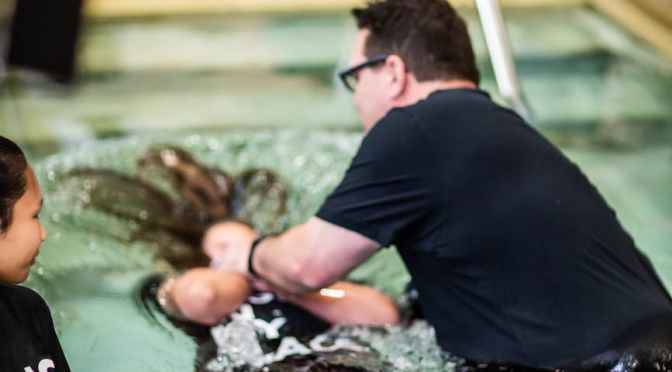
WHY WE MUST BE BURIED WITH CHRIST IN BAPTISM? — BOB PRICHARD

The heart of the gospel is the death, burial and resurrection of Christ. Paul began the great resurrection chapter, “Moreover, brethren, I declare unto you the gospel which I preached unto you, which also ye have received, and wherein ye stand; By which also ye are saved, if ye keep in memory what I preached unto you, unless ye have believed in vain. For I delivered unto you first of all that which I also received, how that Christ died for our sins according to the scriptures; And that he was buried, and that he rose again the third day according to the scriptures” (1 Corinthians 15:1-4).

It was their understanding that they had crucified the Son of God that made men at Pentecost cry out, “Men and brethren, what shall we do?” Peter’s response was “Repent, and be baptized every one of you in the name of Jesus Christ for the remission of sins, and ye shall receive the gift of the Holy Ghost” (Acts 2:36-38).

The baptism that Peter preached that day was the baptism preached in the early church. Paul reminded the Christians of Rome that he and they had both been baptized in the same way, for the same reasons. “Know ye not, that so many of us as were baptized into Jesus Christ were baptized into his death? Therefore we are buried with him by baptism into death: that like as Christ was raised up from the dead by the glory of the Father, even so we also should walk in newness of life” (Romans 6:3-4).

These verses speak of our baptism or burial into Christ, our clothing of ourselves in Him. “For as many of you as have been baptized into Christ have put on Christ” (Galatians 3:27).

I.  BECAUSE WE BELIEVE THE GOSPEL.

Our baptism pictures what we know to be true of Christ. As Jesus introduced the Lord’s Supper, He took bread and the cup and told them that his body and blood were given for us (Luke 22:19-20). We understand that Jesus suffered for us, “that he might sanctify the people with his own blood” (Hebrews 13:12).

We rejoice with the angels that said, “He is not here, but is risen: remember how he spake unto you when he was yet in Galilee, Saying, The Son of man must be delivered into the hands of sinful men, and be crucified, and the third day rise again” (Luke 24:6 -7). Every baptism proclaims the truth of the gospel.

II. BECAUSE HE IS OUR SUBSTITUTE.

He became one with us to be our substitute, because we cannot atone for our own sins. He “made himself of no reputation, and took upon him the form of a servant, and was made in the likeness of men: And being found in fashion as a man, he humbled himself, and became obedient unto death, even the death of the cross” (Philippians 2:7-8).

God “hath made him to be sin for us, who knew no sin; that we might be made the righteousness of God in him” (2 Corinthians 5:21). In baptism we acknowledge that we cannot atone for our own sins. Unless we accept His sacrifice, we must bear our own sins. “For the wages of sin is death; but the gift of God is eternal life through Jesus Christ our Lord” (Romans 6:23).

III. BECAUSE WE ARE DEAD IN SIN.

Baptism is a burial, and the man who is buried is dead. “For all have sinned, and come short of the glory of God” (Romans 3:23). What is dead needs to be buried (John 11:39).

As the head of the church, He gave Himself for the church, for us. “And he is the head of the body, the church: who is the beginning, the firstborn from the dead; that in all things he might have the preeminence” (Colossians 1:18). Buried with Him, we put the old man of sin to death.

IV. BECAUSE WE RISE TO WALK IN NEWNESS OF LIFE.

We have not suffered the true punishment of our sins. “For the wages of sin is death; but the gift of God is eternal life through Jesus Christ our Lord” (Romans 6:23). But Jesus Christ has suffered that punishment, and in our baptism we acknowledge and identify with Him in His suffering and death.

His death is our death to the old way of things. We know that God hates sin, because He was willing to see His only begotten son die for sins. “For God so loved the world, that he gave his only begotten Son, that whosoever believeth in him should not perish, but have everlasting life. For God sent not his Son into the world to condemn the world; but that the world through him might be saved” (John 3:16-17).

We are buried so that we may be alive in Him. “Yet a little while, and the world seeth me no more; but ye see me: because I live, ye shall live also” (John 14:19). That means that our perspective changes. “Set your affection on things above, not on things on the earth. For ye are dead, and your life is hid with Christ in God” (Colossians 3:2-3).

Every Christian should have the attitude of Paul: “I am crucified with Christ: nevertheless I live; yet not I, but Christ liveth in me: and the life which I now live in the flesh I live by the faith of the Son of God, who loved me, and gave himself for me” (Galatians 2:20).

“Therefore if any man be in Christ, he is a new creature: old things are passed away; behold, all things are become new” (2 Corinthians 5:17).

WHAT IS THE GOSPEL OF JESUS CHRIST? — BOB PRICHARD

The theme of all the New Testament is the gospel of Jesus Christ. Practically every page provides information on this important topic. In its simplest terms, the gospel of Jesus Christ is simply the “good news” concerning Him. The Greek word translated as gospel means “good news.” The word “evangelist,” a “preacher of the gospel,” comes from the same root word. In a day when there is so little good news, it is important to recognize that Jesus came to give the world good news.

The message of the gospel is that although man is a sinner, deserving of death, God loved mankind enough to make provision for salvation. Paul warned the Roman Christians that “all have sinned, and come short of the glory of God” (Romans 3:23) and “the wages of sin is death” (Romans 6:23a). Comfort comes, however, in knowing the good news that “the gift of God is eternal life through Jesus Christ our Lord” (Romans 6:23b). Paul reminded them that because they had become Christians, they were “justified freely by his grace through the redemption that is in Christ Jesus” (Romans 3:24). The “amazing grace” of God is truly good news. 

At the heart of the gospel message are the death, burial, and resurrection of Christ. As Peter preached the first “gospel sermon” on the day of Pentecost, he spoke of “Jesus of Nazareth, a man approved of God among you by miracles and wonders and signs” (Acts 2:22). Although He was put to death, death could not hold Him. “This Jesus hath God raised up” (Acts 2:32). Therefore let all the house of Israel know assuredly, that God hath made that same Jesus, whom ye have crucified, both Lord and Christ” (Acts 2:36). The people responded properly: “Now when they heard this, they were pricked in their heart, and said unto Peter and to the rest of the apostles, Men and brethren, what shall we do?” (Acts 2:37). Peter answered by telling them how to accept the good news of Christ: “Repent, and be baptized every one of you in the name of Jesus Christ for the remission of sins, and ye shall receive the gift of the Holy Ghost” (Acts 2:38).

The gospel is especially good news, because its message is universal. Peter continued by telling his Jewish audience, “For the promise is unto you, and to your children, and to all that are afar off, even as many as the Lord our God shall call” (Acts 2:39). The “all that are afar off” meant that the message was to go to a worldwide audience—the church would include the Gentiles as well as the Jews. Faith moved many to obey: “Then they that gladly received his word were baptized: and the same day there were added unto them about three thousand souls” (Acts 2:41). From that day forward, the church grew as more and more people were added to the church (Acts 2:47). Christ commands: “All power is given unto me in heaven and in earth.  Go ye therefore, and teach all nations, baptizing them in the name of the Father, and of the Son, and of the Holy Ghost: Teaching them to observe all things whatsoever I have commanded you: and, lo, I am with you alway, even unto the end of the world. Amen” (Matthew 28:18-20).

WHY DID JESUS REFUSE, AND THEN ACCEPT THE “VINEGAR” OFFERED AT THE CROSS? — BOB PRICHARD

As they took Jesus to Golgotha crucify Him, “They gave him vinegar to drink mingled with gall: and when he had tasted thereof, he would not drink” (Matthew 27:34). Mark described the drink given to Christ as “wine mingled with myrrh” (Mark 15:23). What Matthew and Mark were describing was a cheap Roman vinegar wine which had a drug mixed in to dull the senses. It was the Roman custom that they would offer a man undergoing crucifixion this drugged wine so that he might more easily endure his cross. Jesus refused this wine, however, apparently so that he would be able to undergo His suffering with a clear mind.

As Jesus neared death, he said “I thirst” (John 19:28). One of the natural physical effects of crucifixion was great thirst due to the loss of body fluids. David predicted the death of Christ saying, “They gave me also gall for my meat; and in my thirst they gave me vinegar to drink” (Psalms 69:21). John recognized this fulfillment of prophecy: “After this, Jesus knowing that all things were now accomplished, that the scripture might be fulfilled, saith, I thirst” (John 19:28). In the fulfillment of this prophecy, Jesus demonstrated His humanity. One of the heresies at the end of the first century was the idea that Jesus was not really human.  In his description of Jesus, however, John demonstrated that Jesus was both truly man and truly deity.

John described the last moments of the life of Christ, saying, “Now there was set a vessel full of vinegar: and they filled a sponge with vinegar, and put it upon hyssop, and put it to his mouth. When Jesus therefore had received the vinegar, he said, It is finished: and he bowed his head, and gave up the ghost” (John 19:29-30). Jesus was at the point of death and wished to say His final words. His parched throat and lips needed moisture, so He accepted the vinegar.

It is significant as to how the vinegar was offered to Jesus. “They filled a sponge with vinegar, and put it upon hyssop, and put it to his mouth.” Any Jew who saw the hyssop would immediately think of the night of the first Passover when each family was to slay a perfect lamb and put its blood on the door post, so that the death angel would pass over.  Moses had commanded the Israelites, “Ye shall take a bunch of hyssop, and dip it in the blood that is in the basin, and strike the lintel and the two side posts with the blood that is in the basin; and none of you shall go out at the door of his house until the morning” (Exodus 12:22). It was the blood of the Passover lamb that saved the Israelites from death. On the cross, the perfect lamb of God gave His life’s blood so that men could be saved.

His last words from the cross were, “It is finished.” Jesus came to serve and to carry out the will of the Father. In His life, His ministry, and His death, He perfectly fulfilled the will of His heavenly Father, and made the perfect sacrifice for mankind.