Category Archives: SALVATION

SAFE & SOUND: THE SECURITY OF THE FATHER’S HOUSE — BOB PRICHARD

I was speaking on a minister’s panel for a Hospice group, answering questions about death and care for the terminally ill. One of the Hospice volunteers asked what to say if the patient was concerned about sin in his or her life, and their relationship with God. The Lutheran minister was quick to say, “God is a God of love. Tell them that they have nothing to worry about.”

I had different advice. I said that if the patient had some spiritual concerns that they should be supportive, but also seek to make sure they dealt with whatever was of concern. I could not assume that everyone has a right relationship with God, especially if one was concerned about that relationship.

The Lutheran minister probably represented much of our religious world. I knew him all too well. He was Post-Modernist in his thinking, and basically thought anything goes in the religious world, and everybody is right with God—(except for the churches of Christ, of course).

But the security of the Christian is an issue for many of us, isn’t it. Are we really right with God? Can we know that we have the security of the Father’s house? Are we perpetually in the Father’s house one day and in the far country the next? How can we be sure where we stand with the Father? Perhaps the confidence that the Prodigal had can help us to better understand our relationship with God as Christians.

The Fatal Decision

The Prodigal was safe and sound in his father’s house as the story begins. He lost that security, however. Although in his own mind he probably thought it was the father’s fault for his restrictiveness, or perhaps his elder brother’s attitude, he ultimately had no one to blame but himself. His time in the far country was spent in riotous living, and the portion given by the Father was soon gone. He was not wise like Moses, learning the hard way that the pleasures of sin are only for a season.

“By faith Moses, when he was come to years, refused to be called the son of Pharaoh’s daughter; Choosing rather to suffer affliction with the people of God, than to enjoy the pleasures of sin for a season; Esteeming the reproach of Christ greater riches than the treasures in Egypt: for he had respect unto the recompence of the reward” (Heb. 11:24-26).

The Far Country

The problem of being in the far country is that the security a full wallet seems to provide does not last. He was on a slippery slope, and could do nothing but fall further and further away from safety and security. Paul warns us, “Wherefore let him that thinketh he standeth take heed lest he fall” (1 Cor. 10:12). This was another lesson the Prodigal had to learn through experience.

When Jonathan Edwards first preached his sermon, “Sinners in the Hands of an Angry God,” on July 8, 1741, at Enfield, Connecticut, the response was overwhelming. Edwards warned that “There is nothing that keeps wicked men out of hell, but the mere pleasure of God.” Edwards, through ten “considerations” stressed that God may cast sinners, who certainly deserve hell, into hell at any moment. God is angry with them, and it is only because of his restraints that the wicked are not immediately given to Satan for torment. (“Sinners in the Hands of an Angry God”).

But the Prodigal seemed to know nothing of an angry God. In the far country, he knew only pleasure—and that pleasure was at the expense of the father who had generously given him his inheritance. He needed a wake-up call to see the seriousness of his situation.

The Fields of Swine

To those who first heard Jesus tell the story, there could hardly have been a worse living fate for the boy. “And when he had spent all, there arose a mighty famine in that land; and he began to be in want. And he went and joined himself to a citizen of that country; and he sent him into his fields to feed swine. And he would fain have filled his belly with the husks that the swine did eat: and no man gave unto him” (Luke 15:14-16).

Just feeding the swine was bad enough, but to be so hungry he envied the swine’s food was the ultimate ignominious situation. This was nothing like what he had experienced in the safety and security of his father’s house. This, perhaps more than anything else opened his eyes to all that he was missing by not being in the Father’s house.

The Firm Decision

And when he came to himself, he said, How many hired servants of my father’s have bread enough and to spare, and I perish with hunger! I will arise and go to my father, and will say unto him, Father, I have sinned against heaven, and before thee, And am no more worthy to be called thy son: make me as one of thy hired servants (Luke 15:17-19).

What brought about this decision? The Prodigal “came to himself” (Luke 15:17) and wanted to go home. The plaintive cry we always hear at the nursing home: “Will someone just take me home?”

Is it any wonder that realtors stress that they are selling homes (rather than houses)? Two proverbs sum the situation: “East west, home’s best.” “Home is where the heart is.” In The Death of the Hired Man, poet Robert Frost said “Home is the place where, when you have to go there, they have to take you in” (Daintith, 254). 

He knew that there was safety and security in the Father’s house. And he knew that he could go home, although he thought his rebellion had caused him to forfeit his sonship.

The Father’s House

What made him think that he could go back to the Father’s house? Why did he think he would find safety and security? It was because it was the Father’s house. He knew his Father. And ultimately it is all about the Father.

The Father was His Father. 

It wasn’t that he just knew about his father. He knew his father. He had spent time with him, communed with him, talked to him, learned from him. He had sat at his father’s table, listened (perhaps reluctantly) to his father’s admonitions, and had seen how his father dealt with others.

Perhaps our difficulty of believing we have security in the Father’s house is that we just don’t know Him as well as we should. John tells us of the Word, “But as many as received him, to them gave he power to become the sons of God, even to them that believe on his name: Which were born, not of blood, nor of the will of the flesh, nor of the will of man, but of God” (John 1:12-13). Because He gave us power to become the sons of God, we must grow in our love, understanding and knowledge of Him. Our obedience shows we know him.

“My little children, these things write I unto you, that ye sin not. And if any man sin, we have an advocate with the Father, Jesus Christ the righteous: And he is the propitiation for our sins: and not for ours only, but also for the sins of the whole world. And hereby we do know that we know him, if we keep his commandments” (1 John 1:1-3).

The Father was Generous and Loving.

The Prodigal experienced the generosity of the Father when he demanded his portion of the inheritance and the Father gave it to him, although He was not required to do so. The Father in heaven blesses all men daily, for He “maketh his sun to rise on the evil and on the good, and sendeth rain on the just and on the unjust” (Mat. 5:45). But much more than that, we know that the Father is generous with His children. “And we know that all things work together for good to them that love God, to them who are the called according to his purpose” (Rom. 8:28). We now are in a better place to see the love and generosity of the Father, because we have the full biblical record. “Now all these things happened unto them for ensamples: and they are written for our admonition, upon whom the ends of the world are come” (1 Cor. 10:11).

“For God so loved the world, that he gave his only begotten Son, that whosoever believeth in him should not perish, but have everlasting life. For God sent not his Son into the world to condemn the world; but that the world through him might be saved” (John 3:16-17). How can anyone look at the cross of Christ and doubt the love of the Father? In light of his generosity, why would His children doubt their safety and security in His house?

The Father was Trustworthy.

When the Father divided unto them his living (Luke 15:12), He gave what the sons desired but did not deserve. He fulfilled His obligations, above and beyond His actual obligation. The prodigal never had to question if his father had given all that he said he would.

Can we trust the Son when He says, “Come unto me, all ye that labour and are heavy laden, and I will give you rest. Take my yoke upon you, and learn of me; for I am meek and lowly in heart: and ye shall find rest unto your souls. For my yoke is easy, and my burden is light” (Mat. 11:28-30)? He promises, “All that the Father giveth me shall come to me; and him that cometh to me I will in no wise cast out. For I came down from heaven, not to do mine own will, but the will of him that sent me. And this is the Father’s will which hath sent me, that of all which he hath given me I should lose nothing, but should raise it up again at the last day” (John 6:37-39).

He truly offers us safety and security.

The Father was Wise.

The Father was not a dictatorial autocrat. He wisely allowed the Prodigal to make his own decisions, and make his own mistakes. The Prodigal probably did not recognize the wisdom of his Father when he was originally in the Father’s house. But as he looked back, he could see it. He could see that the Father had provided all that he needed to make the right decision.

The world seldom sees the wisdom of God for what it is. “For the preaching of the cross is to them that perish foolishness; but unto us which are saved it is the power of God. For it is written, I will destroy the wisdom of the wise, and will bring to nothing the understanding of the prudent. Where is the wise? where is the scribe? where is the disputer of this world? hath not God made foolish the wisdom of this world? For after that in the wisdom of God the world by wisdom knew not God, it pleased God by the foolishness of preaching to save them that believe” (1 Cor. 1:18-21).

We should proclaim with Paul: “O the depth of the riches both of the wisdom and knowledge of God! how unsearchable are his judgments, and his ways past finding out! For who hath known the mind of the Lord? or who hath been his counsellor? Or who hath first given to him, and it shall be recompensed unto him again? For of him, and through him, and to him, are all things: to whom be glory for ever. Amen” (Romans 11:33-36).

The Father was Longsuffering.

It must have hurt the Father deeply to see the Prodigal leave the security of the Father’s house. He must have known that the boy would be back, worse for the wear. But He let him go, and longingly waited for his return. “And he arose, and came to his father. But when he was yet a great way off, his father saw him, and had compassion, and ran, and fell on his neck, and kissed him” (Luke 15:20). The longsuffering Father not only waited for the Prodigal to return, but He watched for him, and ran to meet him. Surely this is what the Father has done for us as well!

“For when we were yet without strength, in due time Christ died for the ungodly. For scarcely for a righteous man will one die: yet peradventure for a good man some would even dare to die. But God commendeth his love toward us, in that, while we were yet sinners, Christ died for us. Much more then, being now justified by his blood, we shall be saved from wrath through him” (Romans 5:6-9).

We understand that “The Lord is not slack concerning his promise, as some men count slackness; but is longsuffering to us-ward, not willing that any should perish, but that all should come to repentance” (2 Pet. 3:9). Knowing that He cares this much for us, why don’t we trust Him to save us?

The Good Shepherd tells us: “My sheep hear my voice, and I know them, and they follow me: And I give unto them eternal life; and they shall never perish, neither shall any man pluck them out of my hand. My Father, which gave them me, is greater than all; and no man is able to pluck them out of my Father’s hand” (John 10:27-29).

The Father was Forgiving.

Of all of the qualities of the Father, the most comforting, the most assuring is His forgiveness. Although the Prodigal felt like he was no longer worthy to be accepted as a son, he knew that the Father would be willing to forgive him.

One of the first Bible studies I ever conducted after obeying the gospel was with my Missile Combat Crew Deputy and his wife. I was shocked as we came to the end of the study because the wife was inconsolable. She was crying so hard that we had to break off the end of the study and go home, because she couldn’t talk. The next day, after my Deputy and I went on alert duty, my wife went to talk to the Deputy’s wife, who was so upset the evening before. She was upset because she wanted so much to be a Christian, and knew that she had not obeyed the gospel. But she also knew that God could never forgive her of her sins, and that she couldn’t live the Christian life. When it was explained to her that God could and would forgive her, and that He would help her live faithfully, she was baptized into Christ.

“All we like sheep have gone astray; we have turned every one to his own way; and the LORD hath laid on him the iniquity of us all” (Isaiah 53:6). We have all gone into the far country of sin, yet the Father wants to welcome all of us back, just as He welcomed back the Prodigal.

Paul told Timothy, “This is a faithful saying, and worthy of all acceptation, that Christ Jesus came into the world to save sinners; of whom I am chief. Howbeit for this cause I obtained mercy, that in me first Jesus Christ might show forth all longsuffering, for a pattern to them which should hereafter believe on him to life everlasting” (1 Tim. 1:15-16).

If God could forgive the chief of sinners—surely we can be sure that He forgives us, and know that we have the blessed assurance He offers. John tells us that we may know we have eternal life because God has proved it through the Son. “If we receive the witness of men, the witness of God is greater: for this is the witness of God which he hath testified of his Son. … And this is the record, that God hath given to us eternal life, and this life is in his Son. He that hath the Son hath life; and he that hath not the Son of God hath not life. These things have I written unto you that believe on the name of the Son of God; that ye may know that ye have eternal life, and that ye may believe on the name of the Son of God” (1 John 5:9; 11-12).

The Prodigal, though ashamed of his actions, was not afraid to return to the Father’s house. “Herein is our love made perfect, that we may have boldness in the day of judgment: because as he is, so are we in this world. There is no fear in love; but perfect love casteth out fear: because fear hath torment. He that feareth is not made perfect in love” (1 John 4:17-18).

The gospel is good news, and our faith should show it. “I write unto you, little children, because your sins are forgiven you for his name’s sake” (1 John 1:12). Our sins truly are forgiven in Christ.

In the midst of the Civil War, Abraham Lincoln was asked what he would do with the rebellious Southerners when they were finally defeated and allowed back into the union. He said, “I will treat them as if they had never been away.” Amazingly, that is how the Father forgives. “And the son said unto him, Father, I have sinned against heaven, and in thy sight, and am no more worthy to be called thy son. But the father said to his servants, Bring forth the best robe, and put it on him; and put a ring on his hand, and shoes on his feet: And bring hither the fatted calf, and kill it; and let us eat, and be merry: For this my son was dead, and is alive again; he was lost, and is found. And they began to be merry” (Luke 15:21-24).

The prodigal was safe and sound in the security of the Father’s house.

“The ultimate theme of this story, therefore is not the prodigal son, but the Father who finds us. The ultimate theme is not the faithlessness of men, but the faithfulness of God.

And this is also the reason why the joyful sound of festivity rings out from this story. Wherever forgiveness is proclaimed there is joy and festive garments. We must read and hear this gospel story as it was meant to be: good news! News so good that we should never have imagined it. News that would stagger us if we were able to hear it for the first time as a message that everything about God is so completely what we thought or feared. News that he has sent his Son to us and is inviting us to share in an unspeakable joy.

The ultimate secret of this story is this: There is a homecoming for us all because there is a home.” (Thielicke 29).

Works Cited

The Holy Bible. King James Version. BibleSource. The Zondervan Corporation, 1991. Disc.

Daintith, John et. al. ed. The Macmillan Dictionary of Quotations. Edison, NJ: Chartwell Books, 2000. 

“Sinners in the Hands of an Angry God.” Wikipedia, The Free Encyclopedia. Wikimedia Foundation. Web. 2011.

Thielicke, Helmut. The Waiting Father. San Francisco: Harper & Row. Translated by John W. Doberstein, 1959. Print.


“BAPTISM EVERY FOURTH SUNDAY” — BOB PRICHARD

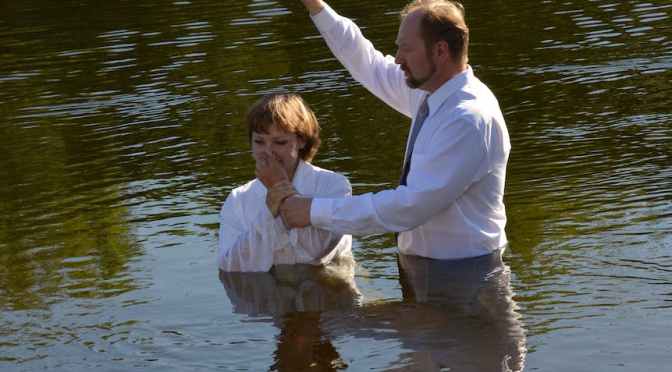
A sign outside a large church building in Birmingham announced “Baptism every fourth Sunday.” I wonder what Peter or Paul would have thought about baptism offered as a kind of fourth Sunday “blue plate” special.

Consider Peter’s experience. On Pentecost, he told the gathered multitude, “Repent and be baptized every one of you in the name of Jesus Christ for the remission of sins” (Acts 2:38). Then just three verses later, Luke tells us that the same day three thousand were added by being baptized for the remission of sins. Daily church growth (Acts 2:47) must have meant daily baptisms.

When Ananias came to Paul and said, “And now why tarriest thou, arise and be baptized, calling on the name of the Lord” (Acts 22:16), he was baptized immediately.

As prisoners in Philippi, Paul and Silas prayed and sang at midnight, and the prisoners heard them. An earthquake shook the jail, so that the jailer planned suicide, thinking the prisoners had escaped. But after they taught the jailer and his family, they were baptized “straightway,” “the same hour of the night” (Acts 16:31).

“Baptism every fourth Sunday” just doesn’t sound like God’s plan.

WHAT’S THE SCORE? — BOB PRICHARD

I have a friend whose wife just can’t understand why so many people are so interested in sports. She says that she doesn’t understand why her husband should actually watch the games. After all, she says, all that matters is the score. Why waste time seeing how the score comes about?

While I can’t exactly agree with her point of view, and I know that other things really do matter, it is true that the winner is judged by the score. Chuck Noll, who coached the Pittsburgh Steelers of the NFL, once commented on why he likes football. “The nice thing about football,” he said, “is that you have a scoreboard to show how you’ve done. In other things in life, you don’t. At least not one that you can see.”

Since life’s scoreboard is one that you can’t see, man has been diligent in trying to make up his own substitute scoreboard. He may think that the quantity of riches amassed is a good scoreboard, or how new his car is, or something like that. But the number of things we have is not necessarily the indicator of life’s score. Neither is how high we rise in our company, or who we know and associate with.

Sometimes in a football game, one team gets more first downs, and gains more yards, and maybe even has a better band, but those things are not what counts in the end. All that really matters in the end is the score. In the game of life, a man may have those earthly things we count so precious, and he may be a good neighbor, and may even be kind to animals, but these are not really what count in the end. 

John saw a great vision of the scoreboard of life. “And I saw a great white throne, and him that sat on it, from whose face the earth and the heaven fled away; and there was found no place for them. And I saw the dead, small and great, stand before God; and the books were opened: and another book was opened, which is the book of life: and the dead were judged out of those things which were written in the books, according to their works. … And whosoever was not found written in the book of life was cast into the lake of fire” (Revelation 20:11-12, 15). How do you stand according to what is written in the books?

IS HE STILL WAITING? — BOB PRICHARD

I read of a Victorian era lady who arranged her library so that no books by male authors were placed beside books by female authors (unless they were married, of course). I’m not exactly sure what she thought those books might do, but it does seem that books do take up more and more shelf space! Keeping up with my books is a big job. I try to treat my personal library like any other real library, with the books accessioned, classified, and properly cataloged. It takes time to process books though, so many sit on the shelf wherever I happen to find the space (irrespective of the author’s sex) until I process them. Two books recently caught my eye.

Sitting next to each other on the shelf, ready to be fully processed were The Hurried Child, by David Elkind, and The Waiting Father, by Helmut Thielicke.  Elkind’s book is about our fast paced, stress filled society that hurries our children to grow up too quickly. Thielicke’s book is a series of sermons on the parables, with the title taken from two sermons on what we usually call the “Prodigal Son.”

The two titles juxtaposed on the shelf reminded me how the pace of our world today causes too many of us to become a “hurried child.” We are not so much hurried to grow up, but to just keep pace with the world swirling around us. We may be too hurried to remember God. How often do we really find the time for serious prayer and communication with our heavenly father? Most of us, it seems, keep such a pace doing our work, keeping up the house, preparing meals, chauffeuring to soccer practice, and doing so, so many other things. Where do we find time for the “Waiting Father”?

Thielicke portrays the Father watching the son leave, and then waiting expectantly:

“I imagine that as he stands there in silence a deep affliction shadows his face and that in itself is eloquent. I am sure he is not thinking that the boy will grow more mature in the far country. He is asking the anxious question: How will he come back?

The father will keep the son in his thoughts.  He will wait for him and never stop watching for him. Every step he takes will give him pain. For the father knows better than this son who sets out, happy and lighthearted on his chosen life. But the voice of his father in his heart will follow him wherever he goes.”

We do not have to go to the far country of the prodigal to be away from the Father. We can simply get too busy for him. “For thus saith the Lord GOD, the Holy One of Israel; In returning and rest shall ye be saved; in quietness and in confidence shall be your strength: and ye would not. But ye said, No; for we will flee upon horses; therefore shall ye flee: and, We will ride upon the swift; therefore shall they that pursue you be swift. … And therefore will the LORD wait, that he may be gracious unto you, and therefore will he be exalted, that he may have mercy upon you: for the LORD is a God of judgment: blessed are all they that wait for him” (Isaiah 30:15-18).

“ONE SIZE FITS ALL” — BOB PRICHARD

“Then Peter said unto them, Repent, and be baptized every one of you in the name of Jesus Christ for the remission of sins, and ye shall receive the gift of the Holy Ghost” (Acts 2:38).

Some  clothing is “one size fits all.” If we are large or small, we may question if something will really “fit all.” But Peter said repentance and baptism was for all.

At Pentecost, Jews came from around the world. They heard the disciples speak “the wonderful works of God” (Acts 2:7-11). Others were there: priests, Pharisees, Sadducees, Levites, religious people. Probably some pick-pockets and thieves took advantage of the occasion. No matter how religious or irreligious, the message that day was a “one size fits all.” Since God is “no respecter of persons” (Acts 10:34), all had the same opportunity and obligation to repent and be baptized.  God’s promise was for those people, their descendants, the Gentiles (“those afar off”), and us (Acts 2:39). None then or today could receive the remission of sins without this obedience.

All, no matter how unworthy, can receive God’s blessings because the simple gospel “fits all.”

DOES SAYING “THE SINNER’S PRAYER” SAVE? — BOB PRICHARD

Preachers sometimes invite their listeners to pray something such as, “God, I am sorry I have sinned. Please forgive me and let Jesus come into my heart. Thank you for forgiving me and giving me eternal life. In Jesus’ name I pray. Amen.” The preacher then says, “Since you have asked Christ into your life, you are now His child and your sins are forgiven.” The problem with this, however, is that the promise of forgiveness is from man, not God. God has never promised to hear or respond to “the sinner’s prayer.”

Prayer is a privilege for God’s people. James said, “The effectual fervent prayer of a righteous man availeth much” (James 5:16b). Peter quoted Psalm 34:15-16, saying “For the eyes of the Lord are over the righteous, and his ears are open unto their prayers: but the face of the Lord is against them that do evil” (1 Peter 3:12). Solomon warned, “He that turneth away his ear from hearing the law, even his prayer shall be abomination” (Proverbs 28:9). The psalmist spoke of the dilemma of the sinner: “If I regard iniquity in my heart, the Lord will not hear me” (Psalm 66:18). 

But what about the prayers of the publican and the Pharisee? While the Pharisee prayed “with himself,” the publican, “standing afar off, would not lift up so much as his eyes unto heaven, but smote upon his breast, saying, God be merciful to me a sinner.” Jesus concluded, “I tell you, this man went down to his house justified rather than the other: for every one that exalteth himself shall be abased; and he that humbleth himself shall be exalted” (Luke 18:11, 13-14). This does not set the pattern for sinners coming to Christ, however, because both the Pharisee and the publican were already in a covenant relationship with God as part of His chosen people, the Jews. They both, despite their sins, had the right to pray to God. 

What about Joel’s prophecy? He said, “It shall come to pass, that whosoever shall call on the name of the LORD shall be delivered: for in mount Zion and in Jerusalem shall be deliverance, as the LORD hath said, and in the remnant whom the LORD shall call” (Joel 2:32). To “call upon the name of the Lord” means to make an appeal through obedience. Saul of Tarsus spent three days in prayer and fasting, but did not receive salvation from the Lord until he called upon the Lord through obedience. Ananias told him, “And now why tarriest thou? arise, and be baptized, and wash away thy sins, calling on the name of the Lord” (Acts 22:16). In his baptism, he called on the name of the Lord and his sins were washed away. He would not have been saved if he had merely prayed “the sinner’s prayer,” and had refused to obey the Lord’s command. Jesus said, “If ye shall ask any thing in my name I will do it” (John 14.14). This is not a blanket promise to any person, but to those who follow Him and have the right to ask things in His name, by His authority. This promise is to the children of God. In the very next verse? He puts it simply, “If ye love me, keep my commandments” (John 14:15). The multitudes cried out at Pentecost, “What shall we do?” Peter did not respond, “Pray the sinner’s prayer,” but “Repent, and be baptized every one of you in the name of Jesus Christ for the remission of sins, and ye shall receive the gift of the Holy Ghost” (Acts 2:37-38). We will be saved if we do what the believers of Pentecost did.

LOST NO MORE — BOB PRICHARD

Lost finally solved its problem.  No more stolen signs. No more lost deliveries. No more confusion. Or at least we would hope so.

On average, Lost lost a road sign every year, and it had a perennial problem of lost deliveries. People loved to come to Lost to have their pictures taken, standing there with a bewildered expression, with a Lost  road sign in the background.

The problem is solved, though, because the small Scottish village of Lost changed  its name to “Lost Farm.” Local official Bruce Luffman told Reuters News Service that in addition to the lost road signs, “Deliveries get lost because they’ve got no idea where ‘Lost’ is, and it’s very confusing” (World, March 13, 2004).

The dictionary defines “lost” as “not made use of, won, or claimed; unable to find the way; no longer visible; lacking assurance or self-confidence: helpless; ruined or destroyed physically or morally: desperate; no longer possessed, no longer known; taken away or beyond reach or attainment: denied; hardened, insensible; absorbed, rapt (as in reverie).” As I read that lengthy definition, I noticed that there is not even one sense in which lost is a good thing, with the exception of the very last one, of being “lost in reverie.”

How bad is it to be lost? Have you ever been so lost that you just had no idea whatsoever where you were? Have you been so lost that you never could have found your way back without the help of someone else?

Much of the time when we are lost, we are not really lost. We may be a bit confused, but we know if we will just backtrack a little bit, or even stoop to breaking the secret men’s code [You can’t admit you are lost], and actually ask for directions, we can find our way. But when we think of being lost spiritually, we realize that the one who is lost is not just lost but dead. When the prodigal returned, the loving father said, “For this my son was dead, and is alive again; he was lost, and is found” (Luke 15:24).

Since being lost is so serious, it is imperative to do all we can to reach others. In 2 Corinthians 4, Paul talks about the treasure of the gospel, a treasure that must be shared with others. “But if our gospel be hid, it is hid to them that are lost: In whom the god of this world hath blinded the minds of them which believe not, lest the light of the glorious gospel of Christ, who is the image of God, should shine unto them” (3-4). Paul says that we don’t preach ourselves, but the wonderful message of Christ, “But we have this treasure in earthen vessels, that the excellency of the power may be of God, and not of us” (7). There is power in the gospel! The lost are counting on us to share the good news with them. Do it today!

“THE 100” — BOB PRICHARD

The Birmingham News (July 3, 2016) released a list, “The 100,” their rating of the 100 greatest football players of all time with Alabama roots. They range from number 1 Don Hutson, Alabama end from the 1930’s, who also played for the Green Bay Packers in the NFL, to number 100, David Palmer, Alabama wide receiver. Familiar names along the way included Cam Newton, Auburn quarterback, #5; Mark Ingram, Alabama running back, #48; and Ken Stabler, Alabama quarterback, #10. 

Rather than rely entirely on opinion, the list was based largely on honors received such as membership in the college and NFL halls of fame, NFL MVP, Heisman trophy, etc. No doubt other factors not revealed were included. I found it interesting that the other end for Alabama when Don Hutson was playing was a fellow Arkansas native, Paul W. “Bear” Bryant. Bryant did not make the list of “The 100.”

Hebrews 11 contains a similar list, given in chronological order, beginning with Abel, who by faith “offered unto God a more excellent sacrifice than Cain, by which he obtained witness that he was righteous, God testifying of his gifts; and by it he being dead yet speaketh” (Hebrews 11:4). The list, sometimes called “Faith’s Hall of Fame,” continues with Enoch who “had this testimony, that he pleased God” (11:5). Other on the list include Noah, Abraham, Sara, Moses, Rahab, and many others, some unnamed. 

Verse 13 is a summary statement for all of those who made the list: “These all died in faith, not having received the promises, but having seen them afar off, and were persuaded of them, and embraced them, and confessed that they were strangers and pilgrims on the earth.”

We are in a better position than these Old Testament saints, because they “received not the promise: God having provided some better thing for us” (11:39-40). We have the full revelation of God’s will, and knowledge that Jesus, “the author and finisher of our faith” has endured the cross for us and “is set down at the right hand of the throne of God” (Hebrews 12:2). 

It is not necessary for our name to be on the list of “The 100,” but it must be in the book of life (Revelation 3:5). Paul looked forward to receiving a crown of righteousness from the Lord, the righteous judge, “and not to me only, but unto all them that love his appearing” (2 Timothy 4:8).

WHY WE MUST BE BURIED WITH CHRIST IN BAPTISM — BOB PRICHARD

The heart of the gospel is the death, burial and resurrection of Christ. Paul began the great resurrection chapter, “Moreover, brethren, I declare unto you the gospel which I preached unto you, which also ye have received, and wherein ye stand; By which also ye are saved, if ye keep in memory what I preached unto you, unless ye have believed in vain. For I delivered unto you first of all that which I also received, how that Christ died for our sins according to the scriptures; And that he was buried, and that he rose again the third day according to the scriptures” (1 Corinthians 15:1-4).

It was their understanding that they had crucified the Son of God that made men at Pentecost cry out, “Men and brethren, what shall we do?” Peter’s response was “Repent, and be baptized every one of you in the name of Jesus Christ for the remission of sins, and ye shall receive the gift of the Holy Ghost” (Acts 2:36-38).

The baptism that Peter preached that day was the baptism preached in the early church. Paul reminded the Christians of Rome that he and they had both been baptized in the same way, for the same reasons. “Know ye not, that so many of us as were baptized into Jesus Christ were baptized into his death? Therefore we are buried with him by baptism into death: that like as Christ was raised up from the dead by the glory of the Father, even so we also should walk in newness of life” (Romans 6:3-4).

These verses speak of our baptism or burial into Christ, our clothing of ourselves in Him. “For as many of you as have been baptized into Christ have put on Christ” (Galatians 3:27).

I.  BECAUSE WE BELIEVE THE GOSPEL.

Our baptism pictures what we know to be true of Christ. As Jesus introduced the Lord’s Supper, He took bread and the cup and told them that his body and blood were given for us (Luke 22:19-20). We understand that Jesus suffered for us, “that he might sanctify the people with his own blood” (Hebrews 13:12).

We rejoice with the angels that said, “He is not here, but is risen: remember how he spake unto you when he was yet in Galilee, Saying, The Son of man must be delivered into the hands of sinful men, and be crucified, and the third day rise again” (Luke 24:6 -7). Every baptism proclaims the truth of the gospel.

II. BECAUSE HE IS OUR SUBSTITUTE.

He became one with us to be our substitute, because we cannot atone for our own sins. He “made himself of no reputation, and took upon him the form of a servant, and was made in the likeness of men: And being found in fashion as a man, he humbled himself, and became obedient unto death, even the death of the cross” (Philippians 2:7-8).

God “hath made him to be sin for us, who knew no sin; that we might be made the righteousness of God in him” (2 Corinthians 5:21). In baptism we acknowledge that we cannot atone for our own sins. Unless we accept His sacrifice, we must bear our own sins. “For the wages of sin is death; but the gift of God is eternal life through Jesus Christ our Lord” (Romans 6:23).

III. BECAUSE WE ARE DEAD IN SIN.

Baptism is a burial, and the man who is buried is dead. “For all have sinned, and come short of the glory of God” (Romans 3:23). What is dead needs to be buried (John 11:39).

As the head of the church, He gave Himself for the church, for us. “And he is the head of the body, the church: who is the beginning, the firstborn from the dead; that in all things he might have the preeminence” (Colossians 1:18). Buried with Him, we put the old man of sin to death.

IV. BECAUSE WE RISE TO WALK IN NEWNESS OF LIFE.

We have not suffered the true punishment of our sins. “For the wages of sin is death; but the gift of God is eternal life through Jesus Christ our Lord” (Romans 6:23). But Jesus Christ has suffered that punishment, and in our baptism we acknowledge and identify with Him in His suffering and death.

His death is our death to the old way of things. We know that God hates sin, because He was willing to see His only begotten son die for sins. “For God so loved the world, that he gave his only begotten Son, that whosoever believeth in him should not perish, but have everlasting life. For God sent not his Son into the world to condemn the world; but that the world through him might be saved” (John 3:16-17).

We are buried so that we may be alive in Him. “Yet a little while, and the world seeth me no more; but ye see me: because I live, ye shall live also” (John 14:19). That means that our perspective changes. “Set your affection on things above, not on things on the earth. For ye are dead, and your life is hid with Christ in God” (Colossians 3:2-3).

Every Christian should have the attitude of Paul: “I am crucified with Christ: nevertheless I live; yet not I, but Christ liveth in me: and the life which I now live in the flesh I live by the faith of the Son of God, who loved me, and gave himself for me” (Galatians 2:20).

“Therefore if any man be in Christ, he is a new creature: old things are passed away; behold, all things are become new” (2 Corinthians 5:17).

“SO FIGHT I” — BOB PRICHARD

Irish boxer Steven Donnelly defeated Mongolian boxer Tuvshinbat Byamba, in a split decision at the 2016 Rio Olympics, but lost at the same time. Lacking confidence before the match, Donnelly made a bet with a bookmaker that he would lose. So he won the match but lost his bet. Punishment from the International Olympic Committee was only a reprimand, because he was unaware of Olympic rules against sports betting and had “no intent to manipulate any event” (WORLD, October 29, 2016, p. 13).

Seems pretty dumb to bet against yourself, unless you are planning to lose. Why would anyone work at cross purposes to himself, betting against himself, and then trying to win the fight?

But before dismissing Steven Donnelly too quickly, we might ask ourselves why we also work at cross purposes to ourselves. The most important thing we could hope for our families is that every member would go to heaven. Yet Christians will neglect worship, roast the elders and preacher, and demonstrate that Christ and His church are surely not the most important thing in their lives, and then be surprised when their children have less faith than they have.

The lure of sin is so powerful that we must be constantly on guard to make sure that our lives are consistent with God’s will, and that we do not lose our priorities. Even Paul had to fight against the evil he found within.  

For the good that I would I do not: but the evil which I would not, that I do. Now if I do that I would not, it is no more I that do it, but sin that dwelleth in me. I find then a law, that, when I would do good, evil is present with me. For I delight in the law of God after the inward man:  But I see another law in my members, warring against the law of my mind, and bringing me into captivity to the law of sin which is in my members. (Romans 7:19-23). 

It was enough to make him want to give up: “O wretched man that I am! who shall deliver me from the body of this death?” Like Paul, we can rejoice:  “I thank God through Jesus Christ our Lord. So then with the mind I myself serve the law of God; but with the flesh the law of sin” (Romans 7:24-25). With every sin, every missed opportunity to serve God, I am betting against myself. Paul says, “I therefore so run, not as uncertainly; so fight I, not as one that beateth the air: But I keep under my body, and bring it into subjection: lest that by any means, when I have preached to others, I myself should be a castaway” (1 Corinthians 9:27).

COSTLY! — BOB PRICHARD

Travel, especially air travel gets very expensive very fast. Your airplane ticket pays for you, your luggage, and the plane itself to be flown through the air. Fortunately, today’s jets can carry the same size load the same distance as forty years ago on half the fuel, due to lighter hulls, more fuel-efficient engines, and improved aerodynamics. But even little things still matter. National Geographic, in 2015, said that a Boeing 737-800 carrying just one extra fifty pound suitcase on every flight would cost $3,627 more to operate over the course of a year. One extra fifteen pound carry-on would cost $980 for the year. Even one extra magazine, weighing just .7 pound would add $46 a year to the cost of operating the plane. And those are 2015 figures! No wonder it is so expensive to fly! (“Explore: Science,” National Geographic, April 2015).

Just living is costly today. Inflation, greater demand for products, and technological innovations contribute to increasing costs. Most things are more costly, as prices have inflated over the years. In my first job, I had to use a crammed-full shopping cart to carry twenty dollars worth of groceries. Today, I can carry twenty dollars worth of groceries in one hand, and the difference is not that I have gotten stronger!

The sacrificial system under the Mosaic law was costly. The animal to be sacrificed was not just any animal, but one that was valuable, perfect, without blemish. In the KJV Old Testament, the phrase “without blemish” is used thirty-eight times in relation to the sacrifice. The high cost helped God’s people to understand the enormity of sin.

Peter, in calling for us to be holy, as the Father is holy, tells us “ye know that ye were not redeemed with corruptible things, as silver and gold, from your vain conversation received by tradition from your fathers; But with the precious blood of Christ, as of a lamb without blemish and without spot” (1 Peter 1:18-19). The precious blood of Christ was the most costly gift ever given to man, so much more costly than gold or silver. 

For when we were yet without strength, in due time Christ died for the ungodly. For scarcely for a righteous man will one die: yet peradventure for a good man some would even dare to die. But God commendeth his love toward us, in that, while we were yet sinners, Christ died for us. Much more then, being now justified by his blood, we shall be saved from wrath through him (Romans 5:6-9).

The cost of living is high, but the cost of dying without benefit of the blood of Christ is much worse!

“REFINANCING THE PAST” — BOB PRICHARD

I enjoy the comics, not only because they allow me to have a chuckle in the midst of an evil and frightening world, but because they often suggest profound thoughts. A “Frank and Ernest” cartoon (9/8/2017) has Ernest speaking to Frank as a loan officer, telling him, “In order to invest in my future, I need to refinance my past.”

It is often prudent to refinance a loan, getting a better interest rate or a more affordable payment. There is usually a cost, but that cost is offset by future savings (if the borrower is acting wisely).

Your future is affected by your past, not only in terms of finances, but in terms of how your life has been invested. Whether you have used your time wisely, been diligent in pursuing an education, or lived above the norms of the world have a tremendous impact. Mistakes of the past, even long past, have a tendency to hurt us when we least expect it, like the “Marlboro Man” who quit many years ago but then faced cancer, or the crisis we face today because we did not plan for the “rainy day.”

When it comes to spiritual matters, even the best of us need to have our past refinanced so that we can have a future. From the time Adam and Eve chose to rebel against God, each of us has followed the same path. “As by one man sin entered into the world, and death by sin; and so death passed upon all men, for that all have sinned” (Romans 5:12). “For all have sinned, and come short of the glory of God” (Romans 3:23). And that sin has a significant cost: “For the wages of sin is death” (Romans 6:23a). In fact, the cost was so high, that the only remedy for this great sin debt was “the precious blood of Christ, as of a lamb without blemish and without spot” (1 Peter 1:19).

In the financial world, it is possible to dig such a serious hole of debt that no refinancing is possible. All that is left is to declare bankruptcy. That is where we find ourselves concerning our sins. We are bankrupt without Christ. Paul acknowledged his bankrupt state: “This is a faithful saying, and worthy of all acceptation, that Christ Jesus came into the world to save sinners; of whom I am chief.” But Christ saved him, and gave him a future. “Howbeit for this cause I obtained mercy, that in me first Jesus Christ might show forth all longsuffering, for a pattern to them which should hereafter believe on him to life everlasting” (1 Timothy 1:15-16). We have followed Paul’s pattern in sin, and we can follow his pattern in obeying the Lord to receive his gracious promise for our future!

LICENSE PLATE THEOLOGY — BOB PRICHARD

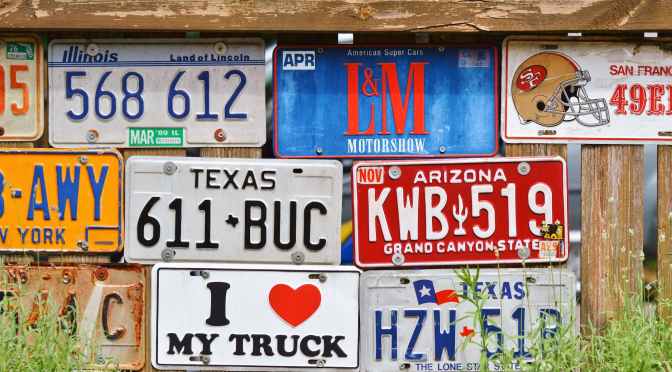
When states first started letting people put messages on their license plates, it became a challenge to decipher the meaning of a tag. There was even a TV game show based on figuring out personalized tags. Often the messages are “cute,” like BOB4UA, meaning Bob is for the University of Alabama. Or ATCHR, suggesting perhaps the person is a teacher. I saw a tag the other day that was not hard to decipher, but it was hard to understand why someone would choose that message. The tag said SINNER. It made me wonder, what is the theology of the person who chose to proclaim this message on the vehicle?-

Was this person feeling guilty for being an employee of the IRS? Jesus compared the prayers of the Pharisee who prayed “with himself,” and “the publican, standing afar off, would not lift up so much as his eyes unto heaven, but smote upon his breast, saying, God be merciful to me a sinner” (Luke 18:13). The Jews hated publicans, but it was not necessarily his work as a tax collector that made him a sinner.

Perhaps this person is on the run. Solomon advises, “He that walketh with wise men shall be wise: but a companion of fools shall be destroyed. Evil pursueth sinners: but to the righteous good shall be repaid” (Proverbs 13:20-21).

Perhaps this person just wants to call attention to the common plight of mankind: “For all have sinned, and come short of the glory of God” (Romans 3:23). Fortunately, this verse is not the end of the story, however. The next two verses remind us, “Being justified freely by his grace through the redemption that is in Christ Jesus: Whom God hath set forth to be a propitiation through faith in his blood, to declare his righteousness for the remission of sins that are past, through the forbearance of God.” (Romans 3:24-25). 

An encounter with Jesus, obedience to Him, changes everything. When Jesus told Zacchaeus He was going to his house that day, “they all murmured, saying, That he was gone to be guest with a man that is a sinner” (Luke 19:7). The end result of the visit was repentance and restitution by Zacchaeus, and the declaration of Jesus,  “This day is salvation come to this house, forsomuch as he also is a son of Abraham. For the Son of man is come to seek and to save that which was lost” (Luke 19:-10). Yes, we have sinned, but I thank God that Jesus gave himself so that we do not have to bear the consequences of our sins. FORGVN!

WHAT DOES IT MEAN TO OBEY THE GOSPEL? — BOB PRICHARD

The gospel of Jesus Christ is the good news that mankind needs. It is a message that must be received and obeyed. Paul warned that the Loving Savior will return “In flaming fire taking vengeance on them that know not God, and that obey not the gospel of our Lord Jesus Christ” (2 Thessalonians 1:8). The Lord will take vengeance on those who obey not the gospel, and He will reward those who do obey the gospel.

Paul stressed the fundamentals of the gospel, reminding the Corinthians what he had preached: “For I delivered unto you first of all that which I also received, how that Christ died for our sins according to the scriptures; And that he was buried, and that he rose again the third day according to the scriptures” (1 Corinthians 15:3- 4). The death, burial, and resurrection of Christ were at the heart of his message. The rest of 1 Corinthians 15 is a discussion of the importance of the resurrection. He began the chapter by reminding the Corinthians that it was the gospel he had preached to them. “Moreover, brethren, I declare unto you the gospel which I preached unto you, which also ye have received, and wherein ye stand; By which also ye are saved, if ye keep in memory what I preached unto you, unless ye have believed in vain” (1 Corinthians 15:1-2). Paul stressed that the gospel is a message to receive, and to stand in, and it is a message that brings salvation when kept in memory.

Paul asserts that we choose the master we serve. “Know ye not, that to whom ye yield yourselves servants to obey, his servants ye are to whom ye obey; whether of sin unto death, or of obedience unto righteousness?” (Romans 6:16). The master we choose is the one we obey. Jesus said, “If ye love me, keep my commandments” (John 14:15). Paul commended the Romans for the choice they had made in obeying Christ and His gospel. “But God be thanked, that ye were the servants of sin, but ye have obeyed from the heart that form of doctrine which was delivered you. Being then made free from sin, ye became the servants of righteousness” (Romans 6:17-18). They had obeyed from the heart that form of doctrine he had delivered to them. Doctrine refers to something taught, and Paul taught the same gospel wherever he went. Centered in the facts of the death, burial and resurrection of Christ, his message was one of the necessity of obeying the will of God and becoming a servant of righteousness.

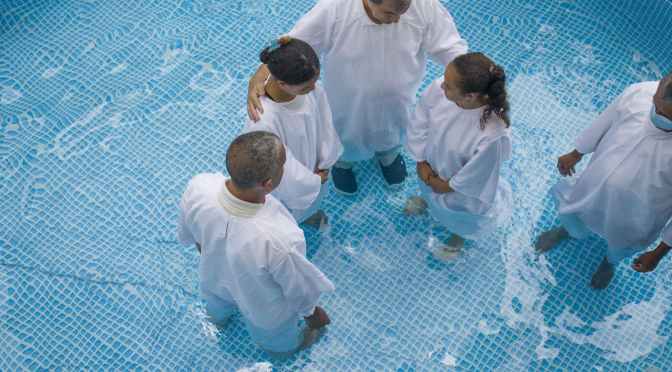
Earlier he stressed that they were buried with Christ in baptism to obey the gospel. “Know ye not, that so many of us as were baptized into Jesus Christ were baptized into his death? Therefore we are buried with him by baptism into death: that like as Christ was raised up from the dead by the glory of the Father, even so we also should walk in newness of life” (Romans 6:3-4). Baptism parallels the death, burial, and resurrection of Christ. Man is dead in sin, and then buried with Christ in baptism. He rises from the waters of baptism in the likeness of Christ’s resurrection to walk in newness of life. He then has the forgiveness of sin, and the joy that comes from obeying the gospel.

PRAY FOR SALVATION? — BOB PRICHARD

Preachers sometimes invite listeners to pray something such as, “God, I am sorry I have sinned. Please forgive me and let Jesus come into my heart. Thank you for forgiving me and giving me eternal life. In Jesus’ name I pray. Amen.” The preacher then says, “Since you have asked Christ into your life, you are now His child, and your sins are forgiven.” The problem, however, is that the promise of forgiveness is from a man, not God. God has never promised to respond to the sinner’s prayer.

Prayer is a privilege for God’s people. James said, “The effective, fervent prayer of a righteous man avails much” (James 5:16). Peter quoted Psalm 34:15–16, saying, “For the eyes of the Lord are on the righteous, and His ears are open to their prayers; but the face of the Lord is against those who do evil” (1 Peter 3:12). Solomon warned, “One who turns away his ear from hearing the law, even his prayer is an abomination” (Proverbs 28:9). The psalmist spoke of the dilemma of the sinner: “If I regard iniquity in my heart, the Lord will not hear” (Psalm 66:18).

But what about the prayers of the publican and the Pharisee? While the Pharisee prayed “with himself,” the publican, “standing afar off, would not so much as raise his eyes to heaven, but beat his breast, saying, ‘God, be merciful to me a sinner!’” 

Jesus concluded, “I tell you, this man went down to his house justified rather than the other; for everyone who exalts himself will be humbled, and he who humbles himself will be exalted” (Luke 18: 11, 13–14). 

This does not set the pattern for sinners coming to Christ, however, because both the Pharisee and the publican were already in a covenant relationship with God as part of His chosen people, the Jews. Both, despite their sins, had the right to pray to God.

What about Joel’s prophecy? He said, “And it shall come to pass that whoever calls on the name of the Lord shall be saved. For in Mount Zion and in Jerusalem there shall be deliverance, as the Lord has said, among the remnant whom the Lord calls” (Joel 2:32). 

To “call on the name of the Lord” means to make an appeal through obedience. Saul of Tarsus spent three days in prayer and fasting, but he did not receive salvation from the Lord until he called on the Lord through obedience. 

Ananias told him, “And now why are you waiting? Arise and be baptized, and wash away your sins, calling on the name of the Lord” (Acts 22:16). In his baptism, he called on the name of the Lord, and his sins were washed away. He would not have been saved if he had merely prayed the sinner’s prayer and had refused to obey the Lord’s command.

Jesus said, “If you ask anything in My name, I will do it” (John 14:14). This is not a blanket promise to any person, but to those who follow Him and have the right to ask things in His name, by His authority. This promise is to the children of God. In the very next verse, He puts it simply: “If you love Me, keep My commandments” (John 14:15). 

The multitudes cried out at Pentecost, “What shall we do?” Peter did not respond, “Pray the sinner’s prayer,” but “Repent, and let every one of you be baptized in the name of Jesus Christ for the remission of sins; and you shall receive the gift of the Holy Spirit” (Acts 2:37–38). We will be saved if we do what the believers of Pentecost did. —Bob Prichard

WHAT ABOUT DEATHBED SALVATION? — BOB PRICHARD 

The emphasis of the Bible concerning salvation is always on “today.” 

Quoting Isaiah, Paul said, “In an acceptable time I have heard you, and in the day of salvation I have helped you. Behold, now is the accepted time; behold, now is the day of salvation” (2 Corinthians 6:2). 

When Jesus saw the interest of Zacchaeus, who had climbed a sycamore tree to see Him, He said, “Zacchaeus, make haste and come down, for today I must stay at your house” (Luke 19:5). As Jesus forgave the sins of the thief on the cross, He said, “Today you will be with Me in Paradise” (Luke 23:43). 

It is never wise to put off responding to God’s love. Some, however, seem to be waiting until they are near death to make things right with God. 

The book of Acts lays out God’s law of pardon for today. At Pentecost, Peter and the apostles made the first offer of pardon under the Christian Age. As the multitude understood they had crucified the Son of God, they realized they needed to respond to God’s love.  

“They were cut to the heart, and said to Peter and the rest of the apostles, ‘Men and brethren, what shall we do?’ Then Peter said, ‘Repent, and let every one of you be baptized in the name of Jesus Christ for the remission of sins, and you shall receive the gift of the Holy Spirit’” (Acts 2:37–38). 

Other conversions in Acts follow this pattern. The Samaritans (Acts 8), the Ethiopian (Acts 8), Saul of Tarsus (Acts 9, 22), Lydia (Acts 16), the jailer (Acts 16), and the Corinthians (Acts 18) realized their need for conversion to Christ, and their faith moved them to repent of sins, confess their faith, and be baptized. Not every conversion mentions each step, but every conversion account does mention baptism.

Does God change His law of pardon for the person on his death bed? There are no New Testament examples of such conversions, so there is no evidence to suggest that God has a different plan for those near death. 

The thief on the cross is not an example for those living today because he lived under the Jewish law and was not subject to the new covenant of Christ (which came into effect after Jesus’ death, Hebrews 9:15–17). He received the forgiveness of sin in the same way that others did during the public ministry of Christ—through the direct pardon of the Savior. He was not subject to the commands of Pentecost, because he lived before the establishment of the church on that day. 

None of us is in the position of deciding the eternal fate of others. We are all in the hands of a just and loving God. By the gracious sacrifice of Christ, God set in motion the means of our salvation. It is up to us to respond to His love in obedience. 

He has warned that the day is coming “when the Lord Jesus is revealed from heaven with His mighty angels, in flaming fire taking vengeance on those who do not know God, and on those who do not obey the gospel of our Lord Jesus Christ” (2 Thessalonians 1:7–8). 

Now is the time to obey Christ and live for him. As long as there is life, there is hope to obey God, but many who plan to repent on their death beds will never have the opportunity. 

WHAT MUST I DO TO BE SAVED? — BOB PRICHARD

We can ask no more important question than “What must I do to be saved?” 

Each of us will one day stand before the judgment seat of Christ, and we are responsible for obeying the Lord. 

Salvation has two parts: God’s part and man’s part. God, because of His great love for mankind, has done His part in sending Christ to die for the sins of men. “God so loved the world that He gave His only begotten Son, that whoever believes in Him should not perish but have everlasting life” (John 3:16). Paul calls this grace the gift of God (Ephesians 2:8). We cannot save ourselves and must rely on God through faith. “Through faith” means that man must also do his part, because no one benefits from a gift until he receives it. 

To find what man’s part in the plan of salvation involves, one must go to the right place. The book of Acts explains God’s plan of salvation through nine specific accounts of conversion: The conversion of the Jews at Pentecost, chapter 2; the Samaritans, chapter 8; the Ethiopian eunuch, chapter 8; Saul of Tarsus, chapters 9 and 22; Cornelius, chapter 10; Lydia, chapter 16; the Philippian jailer, chapter 16; the Corinthians, chapter 18; the Ephesians, chapter 19. In each example, certain common actions, or steps of obedience, were taken by those who became Christians. 

Upon hearing the gospel message, each believed in Jesus as the Son of God. Though the text does not explicitly mention belief each time, it is implied. The Jews at Pentecost, having heard the message, “were cut to the heart, and said to Peter and the rest of the apostles, ‘Men and brethren, what shall we do?’” (Acts 2:37). Their question “What shall we do?” showed that they believed, but they realized that they needed to do more than have simple belief to obtain salvation. James wrote, “You see then that a man is justified by works, and not by faith only” (James 2:24). 

Following their confession of faith in Christ, Peter told the Jews at Pentecost, “Repent, and let every one of you be baptized in the name of Jesus Christ for the remission of sins; and you shall receive the gift of the Holy Spirit” (Acts 2:38). Thus we understand that repentance must accompany faith in Christ.

One must also confess faith in Christ, as the Ethiopian did (Acts 8:37), because Christ will not confess us unless we are willing to confess Him. “Whoever confesses Me before men, him I will also confess before My Father who is in heaven. But whoever denies Me before men, him I will also deny before My Father who is in heaven” (Matthew 10:32–33). 

Baptism is the only step toward salvation explicitly mentioned in every conversion. Each account shows that baptism is necessary for obedience to Christ. Hearing the gospel message, believing in Christ, repenting of past sins, confessing Christ, and being baptized into Christ makes one a Christian, and brings salvation. Then one must serve the Lord faithfully (Revelation 2:10). —Bob Prichard

What Must I Do to Be Saved (WVBS)

What must I do to be saved? The answer to this question has implications both now and for eternity. Sadly, wrong answers are being given all the time. In this study, Don Blackwell opens the Bible and shares with us God’s answer to this question. It is a simple, straight-forward study done in a kind and loving manner. With a question of this magnitude, you cannot afford to be wrong. Won’t you join us for this vital study?

What Must I Do To Be Saved? from World Video Bible School on Vimeo.

Searching For Truth (World Video Bible School)

Searching for Truth is a video/book program that introduces the very foundation of Christianity, the Gospel. It is designed to teach what one needs to know to become a Christian.

INTRODUCTION: Did you know that on the average, 107 people die every minute? That's a staggering number. As much as we might like to go on living, all of us will face death. But what happens to us when we die? Does life after death exist? If so, what kind of life? Does heaven exist? Does hell exist? And if so, what will happen to you when you die? More important, will it matter what you believed or how you lived in this life?

About the Truth | Searching for Truth from World Video Bible School on Vimeo.

LESSON 1 – TRUTH ABOUT THE CREATOR: As we observe the Universe, the Earth, and the amazing human body, it is easy to conclude that these things could not have occurred by accident. They are, in fact, the product of an intelligent Creator. But what kind of Creator? What do we really know about Him? Does He really care about His creation? What is He like? Can we know Him? And where can we go to find the answers to such questions?

About the Creator | Searching for Truth from World Video Bible School on Vimeo.

LESSON 2 – TRUTH ABOUT AUTHORITY: In today’s religious world, there is a great deal of debate about what is right and what is wrong. When it comes to matters of faith, there are a number of differing viewpoints. But which one is correct? And who determines what is right? Who gets to make the rules? Who or what is the final authority in religious matters? Is it the church, the Bible, a creed book, or a council of scholars? Who, or what, has authority in religious matters? In other words, who makes the rules? And where can we go to find the answers?

About Authority in Religion | Searching for Truth from World Video Bible School on Vimeo.

LESSON 3 – TRUTH ABOUT THE CHURCH: The word church is used well over one hundred times in the New Testament. It is obviously a very important word but what, exactly, does it mean? Is the church merely a place for worship? Is it the sum of all the religious denominations? Or, is it something more personal and spiritual? And furthermore, how important is the church? And, does Jesus have a church to which we must belong in order to be saved?

About the Church | Searching for Truth from World Video Bible School on Vimeo.

LESSON 4 – TRUTH ABOUT THE HOUSE OF GOD: Most people in the world live in some kind of house or dwelling. Those houses come in all shapes and sizes—with different floor plans and layouts, and furnished in a lot of different ways. Yet each home is precious and unique to its owner. But have you ever wondered whether or not God owns a house? And if He does, how could we recognize that house if we were to go in search of it today?

About the House of God | Searching for Truth from World Video Bible School on Vimeo.

LESSON 5 – TRUTH ABOUT BAPTISM: In today’s world, there are many differing viewpoints about baptism. Some say that babies should be baptized,while others say that it is reserved only for adults. Some believe that baptism is necessary for salvation, while others do not. What is the truth about baptism? Have you ever wondered about whether or not you needed to be baptized? And, if you have been baptized, was your baptism for the right reason as described in the Bible?

About Baptism | Searching for Truth from World Video Bible School on Vimeo.