Category Archives: BIBLE QUESTIONS

HOW MANY ISRAELITES WHO LEFT EGYPTIAN BONDAGE ENTERED THE PROMISED LAND? — BOB PRICHARD

After being freed from Egyptian bondage, the Israelites made their way to Canaan, the promised land. When they arrived at the border of Canaan, Moses chose twelve men (one from each tribe) to go and spy out the land. After forty days of searching the land, Caleb reported, “Let us go up at once, and possess it; for we are well able to overcome it,” but the report of the majority was an “evil report.”  They said, “We be not able to go up against the people; for they are stronger than we” (Numbers 13:30-31). Only one other spy, Joshua, stood with Caleb against the other ten spies. Unfortunately, the people chose to accept the majority report, and prepared to stone Joshua and Caleb.

God’s anger was kindled against the people because of their faithless decision. He told Moses to tell his murmuring people, “Your carcases shall fall in this wilderness; and all that were numbered of you, according to your whole number, from twenty years old and upward, which have murmured against me, Doubtless ye shall not come into the land, concerning which I sware to make you dwell therein, save Caleb the son of Jephunneh, and Joshua the son of Nun” (Numbers 14:29-30).

God’s condemnation of their unbelief meant that they had to spend forty extra years wandering in the wilderness. During that time, “all that were numbered … from twenty years old and upward” died in the wilderness. The only exceptions among those who were “numbered” were Joshua and Caleb. It is often thought that only two (Joshua and Caleb) of all the thousands who left Egypt were able to enter the promised land. The group that was condemned to die during the wilderness wandering, however, was those who had been numbered. This would not include the entire population, but was limited to those fighting men who had been numbered (counted for battle). God had told Moses, “Take ye the sum of all the congregation of the children of Israel, after their families, by the house of their fathers, with the number of their names, every male by their polls; From twenty years old and upward, all that are able to go forth to war in Israel: thou and Aaron shall number them by their armies” (Numbers 1:2-3). This did not include women or the entire tribe of Levi, who were not fighting men or spies.

When the Israelites arrived again at the promised land forty years later, under the leadership of Joshua, Joshua had to circumcise all of the males, because “All the people that came out of Egypt, that were males, even all the men of war, died in the wilderness by the way, after they came out of Egypt” (Joshua 5:4). Numbers 34:17 indicates that not all of the priests and Levites would die during the forty years of wandering, because God told Moses that the high priest Eleazar, the son of Aaron, would join Joshua in dividing the conquered land. Later, after Israel had captured Canaan, “they came near before Eleazar the priest, and before Joshua the son of Nun” (Joshua 17:4) to receive their portions of the promised land. Thus Israelites who left Egypt, and were allowed to enter the promised land included Joshua, Caleb, Eleazar, and an unknown number of women and Levites.


DO “NEAR DEATH EXPERIENCES” PROVE LIFE AFTER DEATH? — BOB PRICHARD

No. “Near Death Experiences,” or “NDE” are commonly understood to be confirmation of life after death, because those who have had these experiences generally express a common feeling of goodness, moving toward a light, seeing the Lord, or some similar experience. These are not evidence to prove life after death, however, due to their very nature. They are “near death,” not “after death,” and they are simply “experiences.” They are completely subjective, what people feel has happened, and have no real objective validity. Although some who have gone through these experiences may have been pronounced dead by some medical criterion [stopped breathing, no heartbeat, etc.], they were not in fact dead in the Biblical sense. “It is appointed unto men once to die, but after this the judgment” (Hebrews 9:27). The daughter of Jairus (Mark 5), the widow’s son (Luke 7), and Lazarus (John 11) were raised from the dead, but no one is raising the dead today.

The main danger of pinning beliefs on NDE is that they provide no objective basis for understanding life after death. Frequently the experiences are embellished with more and more details as they are explained, and while those who have had the NDE often say what they have experienced is “indescribable,” they none the less describe the indescribable. The Bible, on the other hand, provides an objective basis for believing in life after death. The life, death, burial, and resurrection of Christ are described in detail in the Bible by credible witnesses. These witnesses give real evidence that what Jesus promised is true. He said, “In my Father’s house are many mansions: if it were not so, I would have told you. I go to prepare a place for you. And if I go and prepare a place for you, I will come again, and receive you unto myself; that where I am, there ye may be also” (John 14:2-3). Perhaps the most complete picture of life after death is given in Revelation 21-22, John’s vision of heaven for the redeemed, and eternal condemnation for the wicked.

Paul spoke of a man, perhaps himself, who was “caught up to the third heaven” and “caught up into paradise, and heard unspeakable words, which it is not lawful for a man to utter” (2 Corinthians 12:2-3). While this may have actually been a NDE, Paul indicates “it is not lawful for a man to utter” what he saw and heard. Lazarus was not just “near death,” but actually dead for four days (John 11:39). What did Lazarus see on “the other side”? The scriptures are absolutely silent about what he may have seen or heard. Perhaps God did not intend for us to know more.

Many different explanations have been suggested for the frequently positive feelings of those who believe they have had a NDE. A medical condition called “cerebral anoxia,” caused by a lack of oxygen to the brain when near death, could cause a person to have an altered state of consciousness. Medication administered near death, or the natural release of endorphins by the body could also produce hallucinations later interpreted as NDE. Other explanations could also be given which have no relationship to life after death.

One danger of relying on a positive feeling from a NDE is that while heaven is promised to the faithful, the Bible also warns that hell awaits the wicked. Though the righteous need have no fear of death, “the last enemy” (1 Corinthians 15:26), “the Lord Jesus shall be revealed … taking vengeance on them that know not God, and that obey not the gospel of our Lord Jesus Christ: Who shall be punished with everlasting destruction from the presence of the Lord, and from the glory of his power” (2 Thessalonians 1:7-9). Some may be lulled into a false sense of security, or even contemplate suicide as an easy way out. Unfortunately, not all are prepared for death. Now is the time to prepare!

WILL WE KNOW EACH OTHER IN HEAVEN? — BOB PRICHARD

Anyone who has lost a loved one to death is interested in knowing the answer to this question. Every man will one day face death, and needs assurance of heaven. All of us hope to be reunited with loved ones who have gone on before, but if we will not know each other in heaven, then the bonds made on earth are forever severed in death.

The idea that we will know each other in heaven is sometimes called the doctrine of “future recognition.” It is both reasonable and scriptural. If we know anything in heaven, we will surely know that we are in heaven. We must know ourselves, unless we lose all personal identity and recognition in death. Surely we will know Christ, and that He has redeemed us of our sins, thus allowing us to enjoy the rewards of heaven. If we will know we are in heaven, know who we are, know Christ, and know that He rewards us for our faithfulness, surely we will know one another.

Revelation 6:9-10 describes a scene under the altar of God. The souls of the martyrs, “slain for the word of God, and for the testimony which they held,” cried out for vengeance. They retained their personality in death, were conscious of where they were, and why they were there. They knew that they had been murdered, and that their murderers had not been punished. Surely they knew each other. David, stricken with grief over the death of his son, said, “Can I bring him back again? I shall go to him, but he shall not return to me” (2 Samuel 12:23). It is significant that David said he would “go to” his son. If he would not recognize or know his son, he would feel no comfort.

The story we know as “the rich man and Lazarus” is told in Luke 16:19-31. Whether or not this is a parable, it still indicates much about the state of the dead. The characters were all conscious, were all aware of their surroundings, and possessed a memory of the world they had left. Abraham told the rich man to “remember.” He could remember because he was conscious of who he was, where he was, and who the others were. We also have the example of Moses and Elijah at the Mount of Transfiguration  (Matthew 17). The apostles recognized them, so they had not lost their identity in death.

Many things will change in heaven. There will be no giving and taking in marriage as there is on earth (Luke 20:35-36). But we will know one another, and heaven will be much better than we can imagine. There “God shall wipe away all tears from their eyes; and there shall be no more death, neither sorrow, nor crying, neither shall there be any more pain: for the former things are passed away” (Revelation 21:4). The key is to obey the will of God, because heaven is a prepared place for prepared people (John 14:1-3).  

HOW DOES ONE BECOME A PRIEST ACCORDING TO THE NEW TESTAMENT? — BOB PRICHARD

Priests performed very important tasks under the Old Covenant, with their primary purpose being a representative of man to God. The mediation that the priest offered was mainly through offering sacrifices and intercession to God. Priests, including the high priest, could only come from the tribe of Levi, and were separate from the people.

Under the New Covenant, things are very different, however. The high priest, under whom all other priests must serve is Jesus Christ, who did not bring an animal sacrifice to God, but instead offered Himself as the sacrifice. Peter recognized that the priestly functions in the church would not be performed by a special group of men, but instead they would be performed by all Christians. By virtue of this, all Christians are priests in God’s sight. Peter said, speaking of all Christians, “Ye also, as lively stones, are built up a spiritual house, an holy priesthood, to offer up spiritual sacrifices, acceptable to God by Jesus Christ” (1 Peter 2:5).  

Paul exhorted the Roman Christians, “I beseech you therefore, brethren, by the mercies of God, that ye present your bodies a living sacrifice, holy, acceptable unto God, which is your reasonable service” (Romans 12:1). Only priests were allowed to offer sacrifices under the Old Covenant, so since Paul begged Christians to offer themselves as living sacrifices, he agrees with Peter that Christians are “an holy priesthood.”

Since all Christians are priests, that means that no Christian has to rely on a mere man as mediator between him and God. A Christian needs only go through the great high priest, Jesus Christ.  “For there is one God, and one mediator between God and men, the man Christ Jesus” (1 Timothy 2:5).  

Under the old covenant, men from the tribe of Levi were appointed to their priestly duties in elaborate rituals. They were clothed in ceremonial garments, and ritually cleansed of their sins. Of prime importance in their appointment was ceremonial washing in water, and sprinkling of the sacrificial blood on them. Christians today put on the ceremonial priestly garments, wash in water, and are sprinkled with the blood of Christ’s sacrifice when they obey the Lord in baptism. Paul wrote, “For as many of you as have been baptized into Christ have put on Christ” (Galatians 3:27). As the Christian obeys Christ in baptism, he qualifies to come before the Heavenly Father, because he is symbolically clothed in the priestly garments. As the Christian is immersed in water, the penitent believer makes contact with the cleansing blood of the Lamb of God, Jesus Christ. Paul reminded the Romans what they had done: “Know ye not, that so many of us as were baptized into Jesus Christ were baptized into his death?” (Romans 6:3). As the believer is baptized into the death of Christ, she contacts the cleansing blood of Christ. “Let us draw near with a true heart in full assurance of faith, having our hearts sprinkled from an evil conscience, and our bodies washed with pure water” (Hebrews 10:22).

WHAT DID JESUS MEAN WHEN HE SAID “SALVATION IS OF THE JEWS”? — BOB PRICHARD

John chapter 4 describes the scene at the well outside the little Samaritan village of Sychar. Jesus had offered the Samaritan woman living water, and demonstrated He could truly give her that living water by telling her about her life, and her many husbands. Her wondering response was, “Sir, I perceive that thou art a prophet” (John 4:19). When she spoke of the conflict between the Jews and the Samaritans over whether men should worship in Jerusalem or Mount Gerizim, Jesus spoke of the proper worship then and in the days to come. He said, “Ye worship ye know not what: we know what we worship: for salvation is of the Jews” (John 4:22).

Jesus wanted her to understand that Samaritan worship, based on only the five books of Moses, while rejecting the other inspired books of the Old Testament, was an ignorant worship. “Ye worship ye know not what,” He said. Then He spoke of the Jewish worship, saying, “we know what we worship.” The Samaritan worship was not acceptable to God, because it was a perversion of His plan. The worship of the Jews, centered in the temple at Jerusalem, was still acceptable to God at this time, even though the scribes and Pharisees had made their own worship vain. “But in vain they do worship me, teaching for doctrines the commandments of men” (Matthew 15:9).

When Jesus added to His statement, “for salvation is of the Jews,” He was referring to the fact that Messiah, the Savior of promise, was to come from the Jews. God promised Abraham, the father of the Jewish nation, “I will bless them that bless thee, and curse him that curseth thee: and in thee shall all families of the earth be blessed” (Genesis 12:3). When the woman at the well spoke of the coming Messiah, Jesus plainly told her,  “I that speak unto thee am he” (John 4:25-26). Thus through the Messiah, Jesus Christ, the seed, or descendant of Abraham, God blessed all families of the earth.

The Jews today, like any other family or nation, must turn to Christ for salvation. Jesus told the woman at the well, “the hour cometh, and now is, when the true worshippers shall worship the Father in spirit and in truth: for the Father seeketh such to worship him. God is a Spirit: and they that worship him must worship him in spirit and in truth” (John 4:23-24). Jesus contrasted the Jewish age in which he lived and died with the coming Christian age. Jerusalem was the center of Jewish worship, but worship in the Christian age is acceptable whenever and wherever Christians worship “in spirit and in truth.” Jesus said, “I am the way, the truth, and the life: no man cometh unto the Father, but by me” (John 14:6). He is still the only way to the Father, for the Jew, the Gentile, the Samaritan, or anyone else. Paul asserted that the true heirs of Abraham are not heirs by birth but by faith. “For the promise, that he should be the heir of the world, was not to Abraham, or to his seed, through the law, but through the righteousness of faith. For if they which are of the law be heirs, faith is made void, and the promise made of none effect” (Romans 4:13-14).

HOW DO YOU JOIN THE CHURCH OF CHRIST? — BOB PRICHARD

People join many organizations, from civic clubs like Rotary and Lions, to personal development clubs like Toastmasters, to special interest organizations like the P. T. A. It is natural then that most people think about “joining” the church. As strange as it may seem, however, that one cannot “join the church of Christ.” The idea of joining the church carries with it the thought that the church is just like other organizations that you may join at will. The church is unlike any other organization on earth, however, because of its divine origin.

If you cannot join the church, then how do you become a member of the church? The second chapter of Acts describes the beginning of the Lord’s church, on the day of Pentecost, almost two thousand years ago. The last verse of the chapter says, “And the Lord added to the church daily those who were being saved” (Acts 2:47).  Notice that we do not join the church, but the Lord adds those who are saved to the church. Some discount the value of the Lord’s church, and say that it really is unimportant, but the church is the body of Christ. “He [Christ] is the head of the body, the church: who is the beginning, the firstborn from the dead; that in all things he might have the prominence” (Colossians 1:18). The church is so valuable that Christ sacrificed Himself for it. Paul commanded, “Husbands, love your wives, even as Christ also loved the church, and gave himself for it” (Ephesians 5:25).

Since “the Lord added to the church daily those who were being saved” (Acts 2:47), and the church is the body of Christ, and He “gave himself for it,” salvation and the church are intimately tied together. The Lord gives salvation and adds to His church at the same time. The key then, is “What must I do to be saved?” After hearing the sermon on the day of Pentecost, realizing that they had crucified the very Son of God, the multitude gathered in Jerusalem for Pentecost cried out, “Men and brethren, what shall we do?” (Acts 2:37). Their cry showed that they wanted to turn from sin and obey Christ. Peter’s reply was, “Repent, and be baptized every one of you in the name of Jesus Christ for the remission of sins, and ye shall receive the gift of the Holy Ghost” (Acts 2:38).

Those on Pentecost expressed faith in Jesus Christ by the very nature of their question, “Men and brethren, what shall we do?” Peter said, “repent, and be baptized every one of you in the name of Jesus Christ for the remission [forgiveness] of sins.” The response was such that “they that gladly received his word were baptized: and the same day there were added unto them about three thousand souls” (Acts 2:41). Three thousand obeyed Christ in baptism, and the Lord added them to His church. None “joined the church,” but all were added by the Lord. The other conversion accounts in Acts show that each person found salvation by obeying the Lord in baptism, following repentance and faith in Christ. We do not join the church, but when we obey the Lord, He adds us to His church.

DOES EPHESIANS 2:8-9, WHICH SAYS WE ARE NOT SAVED BY  WORKS, CONTRADICT JAMES 2:24, WHICH SAYS WE ARE SAVED BY WORKS? — BOB PRICHARD

By pitting one verse against another, the Bible sometimes seems contradictory. God, the Creator of the universe inspired the Bible, though, so there cannot be any real contradictions. Apparent contradictions disappear with proper understanding of the text.

Emphasizing man’s need to rely on the grace of God, Paul wrote, “by grace are ye saved through faith; and that not of yourselves: it is the gift of God: not of works, lest any man should boast” (Ephesians 2:8-9). A simple definition of grace is “unmerited favor.” God grants that  unmerited favor for the salvation of mankind. Paul said salvation is “not of works, lest any man should boast,” indicating that man cannot perform any meritorious works that would earn salvation. Salvation is by grace.

The apparent contradiction comes when we compare Ephesians 2:8-9 with James 2: 24, in which James wrote, “Ye see then how that by works a man is justified, and not by faith only.” The two passages are not really in conflict, because James and Paul were each speaking of two different kinds of works, as each emphasized a different aspect of salvation.

Paul emphasized that the grace of God saves, and man cannot earn his salvation by works of merit. The fact that God’s grace saves, however, does not mean that God relieves man of the responsibility to obey Him to receive the benefits of that grace. If salvation is by “grace alone,” with no acts of obedience, then God, “who is no respecter of persons” (Acts 10:34), would automatically save every man, no matter what he did. We are saved by many things, however.  “For we are saved by hope” (Romans 8:24). Hebrews 5:9 tells us that Christ  “became the author of eternal salvation unto all them that obey him.” Peter wrote of the obedience of Noah and his family, saying “the like figure whereunto even baptism doth also now save us” (1 Peter 3:21). The apostle John wrote, “if we walk in the light, as he is in the light, we have fellowship one with another, and the blood of Jesus Christ his Son cleanseth us from all sin” (1 John 1:7).

How can salvation come by grace, by hope, by Christ, by the blood, and by baptism? All of these save because salvation is “by grace through faith” (Ephesians 2:8), that is, an obedient faith. As James said, “faith, if it hath not works, is dead, being alone” (James 2:17). A living faith is a faith that works, that obeys the commands of Christ, including being baptized. As one is baptized into Christ he makes contact with the cleansing blood of Christ (Romans 6:3-7). Hebrews chapter 11, sometimes called “Faith’s Hall of Fame,” is filled with examples of “grace through faith.”  “By faith Abel offered unto God a more excellent sacrifice” (Hebrews 11:4). “By faith Noah … prepared an ark” (Hebrews 11:7). “By faith Abraham … obeyed” (Hebrews 11:8). We cannot earn our salvation through works of merit, but we must obey God to benefit from his marvelous grace. “By grace through faith” we obediently accept God’s love.

IF THERE IS ONE GOD, WHY NOT ONE CHURCH? — BOB PRICHARD

Paul wrote that there is “One God and Father of all, who is above all, and through all, and in you all” (Ephesians 4:6). Most people have little trouble with this idea, understanding that our Heavenly Father created our world and loved us enough to send Christ. Paul also mentions six other “unities.” “There is one body, and one Spirit, even as ye are called in one hope of your calling; One Lord, one faith, one baptism, One God and Father of all, who is above all, and through all, and in you all” (Ephesians 4:4-6). The first of the seven unities Paul mentions is “one body.”    

Paul explained that because Christ obeyed the Father and conquered death, that God “hath put all things under his feet, and gave him to be the head over all things to the church, Which is his body, the fulness of him that filleth all in all” (Ephesians 1:22-23). The church is His body, the “one body” that Paul mentioned in Ephesians 4:4. This is just what we would expect—one head connected with one body. Today’s religious world, however, presents a monstrosity to God, with many churches or bodies claiming to be attached to the one head, Jesus Christ.

The Lord’s desire from the beginning was for the unity of His followers in His church. As He prepared for the cross, Jesus prayed for His disciples, and then said, “Neither pray I for these alone, but for them also which shall believe on me through their word; That they all may be one; as thou, Father, art in me, and I in thee, that they also may be one in us: that the world may believe that thou hast sent me. And the glory which thou gavest me I have given them; that they may be one, even as we are one: I in them, and thou in me, that they may be made perfect in one; and that the world may know that thou hast sent me, and hast loved them, as thou hast loved me” (John 17:20-23). Jesus understood that the unity (or disunity) of His followers would be a powerful witness to the world. Surely the disunity of the current denominational system hinders the spread of the gospel of Christ.

Paul warned the Corinthians against disunity. “Now I beseech you, brethren, by the name of our Lord Jesus Christ, that ye all speak the same thing, and that there be no divisions among you; but that ye be perfectly joined together in the same mind and in the same judgment. For it hath been declared unto me of you, my brethren, by them which are of the house of Chloe, that there are contentions among you. Now this I say, that every one of you saith, I am of Paul; and I of Apollos; and I of Cephas; and I of Christ. Is Christ divided? was Paul crucified for you? or were ye baptized in the name of Paul?” (1 Corinthians 1:10-13). Jesus promised Peter and the disciples, “I will build my church” (Matthew 16:18). He did not promise to build the many denominational bodies we see today, but His church. The way to be a member of His church today is to reject the creeds, manuals, and catechisms of the denominations, and just be a Christian, wearing the name of Christ. This is the plea of the churches of Christ.

WHAT DOES “NO SCRIPTURE IS OF PRIVATE INTERPRETATION” MEAN? — BOB PRICHARD

Peter concludes the first chapter of his second epistle with these words: “We have also a more sure word of prophecy; whereunto ye do well that ye take heed, as unto a light that shineth in a dark place, until the day dawn, and the day star arise in your hearts: Knowing this first, that no prophecy of the scripture is of any private interpretation. For the prophecy came not in old time by the will of man: but holy men of God spake as they were moved by the Holy Ghost” (2 Peter 1:19-21). These verses of scripture (the written words of God) are especially important because of what they tell us about the inspiration of scripture, reminding us that we have a “sure word of prophecy,” meaning we have trustworthy scriptures.

Unfortunately, the words, “no prophecy of the scripture is of any private interpretation,” have been misused by some religious organizations to keep people from studying the scriptures for themselves. Some prefer to keep people in ignorance, teaching that the individual Christian cannot study or understand the scriptures themselves, but must rely on “the church” or church leaders to interpret the scriptures for them. Thus individuals may think that there is no reason to study and reason for themselves. This is contrary to all the rest of scripture, however. Saving faith comes from understanding and obeying the scriptures. All will be judged by the scriptures.

Some suggest that these verses are teaching that since the words of scripture have a definite meaning, then those who interpret scripture are not free to read whatever meaning they want to into the scriptures, but must consider the context of scripture. Surely it is true that no one should be free to read into the scriptures any of their own personal opinions, but this is not Peter’s concern in the passage. There is a better, more reasonable way to understand his words.

Consider the rendering of 2 Peter 2:20-21 in the New American Standard Version. “But know this first of all, that no prophecy of Scripture is a matter of one’s own interpretation, for no prophecy was ever made by an act of human will, but men moved by the Holy Spirit spoke from God.” The prophecy of scripture did not come “by the will of man.” “No prophecy was ever made by an act of human will.” 

The prophets were inspired to write by God, and did not just speak what they wanted to speak, but instead spoke what was revealed to them by God. That is the reason for the amazing accuracy of the teaching of scripture, and the agreement among the different penmen. If each had been free to just write what he wanted to write, then there would be multiplied contradictions among different portions of scripture. The “holy men” were “moved by the Holy Ghost,” literally “borne along,” just as a strong wind propels a ship through the sea. Jesus told His disciples that “when he, the Spirit of truth, is come, he will guide you into all truth: for he shall not speak of himself; but whatsoever he shall hear, that shall he speak: and he will shew you things to come” (John 16:13). As the New Testament writers revealed the full truth of God’s revelation, the Holy Spirit guided them. Their message is one for all men to study, obey, and live by.

WHAT IS THE RESTORATION MOVEMENT? — BOB PRICHARD

The Restoration Movement is the title given by historians to a religious movement begun at the end of the eighteenth century, and continuing to the present. The first participants were primarily in the United States and Britain but those who hold its principles are today found worldwide. Modern day churches of Christ are the heirs of the Restoration Movement. 

Those who began the Restoration Movement came from various religious denominations. They looked at their divided religious world and realized that it could not be pleasing to God. Barton W. Stone, Alexander Campbell, “Raccoon” John Smith and many others decided that they could find religious unity only if they abandoned their respective denominations. They had no desire to establish a new denomination, but sought to restore the original church of the New Testament. Thus “restoration” refers to the restoring of the original order of things concerning the church. The prophet Jeremiah stressed this principle in Jeremiah 6:16, where he said “Thus saith the LORD, Stand ye in the ways, and see, and ask for the old paths, where is the good way,  and walk therein, and ye shall find rest for your souls. But they said, We will not walk therein.” The “old paths” are be found in the Bible, and the Bible alone. We cannot find the “old paths” by merely compromising on existing denominational doctrines. Many in Jeremiah’s day refused to seek the “old paths.” We should not make the mistake they made.

The Restoration Movement differs from other religious movements such as the Protestant Reformation begun by Martin Luther, in that it did not attempt to reform the church, but to restore it by going back to the beginning. This meant doing away with denominational hierarchies and ecclesiastical systems, which are foreign to the Bible. Those following the restoration principles restored simple New Testament worship, with autonomous congregations meeting each Sunday to worship “in spirit and in truth” (John 4:24). The restoration called for the preaching of the clear message of the New Testament plan of salvation, including faith (Ephesians 2:8-9), repentance (Acts 17:30), confession of faith (Matthew 10:32), and baptism into Christ for the remission of sins (Acts 2:38). 

The Restoration Movement is not just a movement of the past but is a continuing movement as Christians search the scriptures and strive to restore everything about the New Testament church, including its missionary zeal and loving generosity. While we appreciate the early leaders for their efforts to discard the denominational traditions they inherited, the purpose of the restoration idea is not to go back to Campbell and Stone, but to the first century church. What is important is what the  Bible teaches. Churches of Christ today still have this plea, that all believers in Christ be united by adhering to the Bible alone. The goal is completely undenominational Christianity. We desire to be Christians, and Christians only. “We preach Christ crucified, unto the Jews a stumblingblock, and unto the Greeks foolishness; but unto them which are called, both Jews and Greeks, Christ the power of God, and the wisdom of God” (1 Corinthians 1:23-24).

WHAT IS THE DURATION OF HELL, IN LIGHT OF JUDE 7? — BOB PRICHARD

It is quite common in today’s religious world to reject the biblical teaching of the reality and duration of hell. Many claim that the old time understanding of “eternal hell fire” is out of character for a loving God, and that when this life is over, the unsaved will simply cease to exist. This is an appealing doctrine to many, because it eliminates the possibility of punishment for sin. However, Jesus said, that the wicked “shall go away into everlasting punishment” (Matthew 25:46). Paul spoke of those who do not know God, and refuse to obey Him, “who shall be punished with everlasting destruction from the presence of the Lord, and from the glory of his power” (2 Thessalonians 1:9).

Hell, the ultimate abode of the wicked, is translated from the Greek word, Gehenna. This is a different term from hades, another Greek word incorrectly rendered as hell in the King James Version. Hades is the abode of all the dead, righteous and unrighteous, before the resurrection. The literal Gehenna, from which hell is derived, was a narrow gorge near Jerusalem that represented the worst of Jewish history. Years before the Jews stained this valley with the blood of their own innocent children offered in sacrifice to the idol Baal. In Christ’s day, Gehenna was a continually burning garbage dump whose name He appropriated to describe the final abode of the wicked.

Again and again the scriptures describe hell as a place of unending punishment for the wicked. Jesus spoke of the day when His angels would gather those who do iniquity and “cast them into a furnace of fire: there shall be wailing and gnashing of teeth” (Matthew 13:42). John described hell, saying  “the smoke of their torment ascendeth up for ever and ever: and they have no rest day nor night” (Revelation 14:11). Other passages describe hell as “outer darkness” (Matthew 8:12), a “furnace of fire” (Matthew 13:42), and “eternal fire” (Jude 7).

Jude 7 speaks of Sodom and Gomorrah, the wicked cities that were “giving themselves over to fornication, and going after strange flesh, are set forth for an example, suffering the vengeance of eternal fire” (Jude 7). Some contend that since the “eternal fire” that destroyed Sodom and Gomorrah burned out, then the eternal fire of hell must do the same. The point Jude was making however, was that the wickedness of Sodom brought God’s wrath, and its destruction was so utter that the only thing to compare it with was eternal fire. Even today, the fire of Sodom is still burning in the sense that it serves as a warning to all men of the importance of obeying God.

What is the duration of hell? Jesus said that the wicked “shall go away into everlasting punishment: but the righteous into life eternal” (Matthew 25:46). Hell is just as eternal as heaven is, and in the same sense. If the fires of hell burn out, and are not eternal, then we should not expect the bliss of heaven for the righteous to be eternal. The term “eternal” literally means “always being.” Hell is eternal, and is not going to burn out. We must prepare to avoid it by obeying the gospel of Jesus Christ.

WHO WERE THE WISE MEN WHO CAME TO SEE CHRIST? — BOB PRICHARD

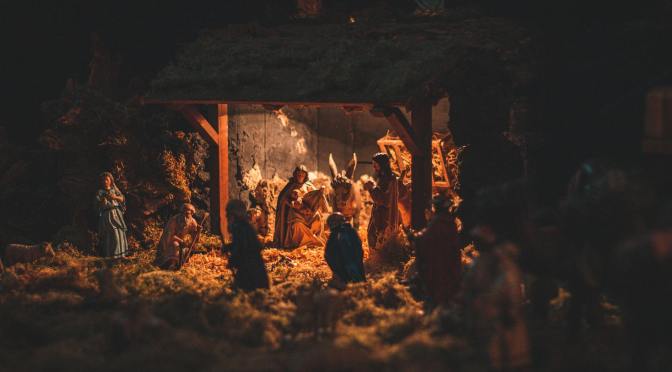
“Now when Jesus was born in Bethlehem of Judaea in the days of Herod the king, behold, there came wise men from the east to Jerusalem, Saying, Where is he that is born King of the Jews? for we have seen his star in the east, and are come to worship him” (Matthew 2:1-2). A star led these wise men, called in the original Greek text the magoi (thus often called the Magi, today). This word is rendered “sorcerer” in Acts 13:6-8, describing a false teacher named Bar-Jesus, and is rendered “astrologer” in Daniel 1-2. The general purpose of the wise men was to give advice to a king, and especially to interpret dreams and omens.

Daniel and his friends were wise men in Babylon. “Then the king commanded   to call the magicians, and the astrologers, and the sorcerers, and the Chaldeans, for to show the king his dreams. So they came and stood before the king” (Daniel 2:2). Among the wise men at any king’s court might be many magicians, astrologers and sorcerers. Astrology, the superstitious study of “signs” found in the heavenly bodies, and astronomy, the scientific study of the heavenly bodies, were linked at that time. It would appear that the wise men who came to see Christ were astronomer-astrologers, because they had observed some special star, and were aware that the star signified a special birth.

It was natural that the wise men would first go to Herod, king of Judaea, to find out what his court knew about the birth of a new king. The wise men probably served in the court of another king in the east, but likely knew little about the Jews or Herod. All that Herod’s advisers could tell him was that Micah prophesied Bethlehem to be the birthplace of the king. “And when he had gathered all the chief priests and scribes of the people together, he demanded of them where Christ should be born. And they said unto him, In Bethlehem of Judaea: for thus it is written by the prophet, And thou Bethlehem, in the land of Juda, art not the least among the princes of Juda: for out of thee shall come a Governor, that shall rule my people Israel” (Matthew 2:4-6).

The arrival of the wise men at Bethlehem was probably not at the time of Christ’s birth, as is usually thought, because He was no longer in the manger, as Luke described, but was now in a house. “When they were come into the house, they saw the young child with Mary his mother, and fell down, and worshipped him: and when they had opened their treasures, they presented unto him gifts; gold, and frankincense, and myrrh” (Matthew 2:11). Although a popular holiday song proclaims that these wise men were “three kings,” they were advisers to kings, rather than kings, and although they brought three gifts (gold, frankincense and myrrh), the Bible does not reveal how many of them there were. They might have been only two men, or many more than three.  

The reason that they were truly “wise men” is that they followed the light from God. Wise men still follow the light of God’s written word. “Thy word is a lamp unto my feet, and a light unto my path” (Psalm 119:105).

WHAT DOES “THE NIGHT COMETH WHEN NO MAN CAN WORK” MEAN? — BOB PRICHARD

As Jesus passed by, he saw a man that had been blind from birth. His disciples asked, “Master, who did sin, this man, or his parents, that he was born blind?” Their question reflected an indifference to the man’s suffering, as well as a theological misunderstanding (that it was possible for a child to sin in the womb). Jesus answered, rejecting the idea that either the man or his parents were responsible for his blindness. “Neither hath this man sinned, nor his parents: but that the works of God should be made manifest in him. I must work the works of him that sent me, while it is day: the night cometh, when no man can work. As long as I am in the world, I am the light of the world” (John 9:1-5). The words of Jesus, “the night cometh, when no man can work,” expressed the urgency He felt for His ministry.

In biblical times, people were bound to work during daylight. Artificial illumination, which allows modern man to work virtually around the clock, was very rare and expensive in the time of Christ. It was almost a proverbial statement, that daylight was the time to work. Very little could be accomplished after the sun went down. Time is always moving forward

The contrast between light and darkness is a prominent theme highlighted in John’s writings. He spoke of Jesus the incarnate Word in chapter one, saying, “In him was life; and the life was the light of men. And the light shineth in darkness; and the darkness comprehended it not” (John 1:4-5). Jesus Himself explained the necessity of working while it was day, saying, “As long as I am in the world, I am the light of the world” (John 9:5). Earlier He had announced to His detractors, “I am the light of the world: he that followeth me shall not walk in darkness, but shall have the light of life” (John 8:12). Light and life mark Christ, while darkness and death mark the world. The immediate response to the blind man was to give him sight and light.

It is significant that the words of urgency, of working while it is day, apply not only to Jesus but to His followers. The American Standard Version, based on better manuscript evidence, renders John 9:4 as “We must work the works of him that sent me, while it is day: the night cometh, when no man can work.” The “We” indicates that His followers share in the responsibility to be urgent in carrying out the will of the Father. Jesus obeys the One Who sent Him, the Heavenly Father. The followers of Christ cannot please the Father unless they are urgent in working the works of the Father, just as Jesus did. “We must” do this while it is day.

Jesus said, “This is the work of God, that ye believe on him whom he hath sent” (John 6:29). We must believe and follow Him. The writer of Hebrews spoke of the perfect obedience of Christ, and the necessity of all of His followers obeying as He did. “Though he were a Son, yet learned he obedience by the things which he suffered;  And being made perfect, he became the author of eternal salvation unto all them that obey him” (Hebrews 5:8-9).

WHAT IS GOD’S PLAN FOR THE ORGANIZATION OF THE CHURCH? — BOB PRICHARD

Jesus promised that He would build His church, saying to Peter, that “I will build my church; and the gates of hell shall not prevail against it” (Matthew 16:18). The heavenly Father “hath put all things under his feet, and gave him to be the head over all things to the church,  Which is his body, the fulness of him that filleth all in all” (Ephesians 1:22-23). Thus Christ is the Head, and the only Head of the church, which is His body. There is no room for any human authority over the church, and the only organization of the church specified in scripture is that of the local congregation. There is no biblical authority for any organization above the local congregation, such as a denomination, convention, association, diocese, or synod. These are all inventions of men.

The apostles were specifically chosen by Christ to direct the church in the beginning, and were sent forth with the promise that “when he, the Spirit of truth, is come, he will guide you into all truth” (John 16:13). That they raised the dead, healed the sick and did other miraculous works demonstrated that they were from God. Due to the special nature of their work, the apostles had no successors. There are no apostles today, nor anyone to stand in their place to speak authoritatively to the church.

The system that God established to oversee the work of the church as the apostles died out was one which allowed each congregation to be self-governed and independent. Three different kinds of leaders were mentioned: elders, deacons, and evangelists. Each congregation was to be overseen by men who are referred to in scripture as elders, bishops, pastors or overseers (all terms applying to the same leaders). The number of elders in each congregation is always plural in the New Testament. There is not even one example of an elder or pastor overseeing a congregation alone. Paul “sent to Ephesus, and called the elders of the church” (Acts 20:17). The deacons are special servants who work under the authority of the bishops, or elders. Paul addressed his Philippian letter to “the servants of Jesus Christ, to all the saints in Christ Jesus which are at Philippi, with the bishops and deacons” (Philippians 1:1). No specific number of deacons or evangelists is given in scripture. Stephen and the other servants chosen with him (Acts 6:1-6) functioned like deacons (though not specifically called deacons).

Paul’s letters to Timothy and Titus give very specific qualifications for the elders and deacons. 1 Timothy 3 gives both positive and negative qualifications for the bishops (or elders) and deacons. Paul writes, “A bishop then must be blameless, the husband of one wife, vigilant, sober, of good behaviour, given to hospitality, apt to teach; Not given to wine, no striker, not greedy of filthy lucre; but patient, not a brawler, not covetous; One that ruleth well his own house, having his children in subjection with all gravity” (1 Timothy 3:2-4). These qualifications are not optional. The qualifications begin with the admonition, “A bishop then must.” Concerning the deacons, he writes, “Likewise must the deacons be grave, not doubletongued, not given to much wine, not greedy of filthy lucre” (1 Timothy 3:8).

The primary mission of the preacher, or evangelist, is to “Preach the word; be instant in season, out of season; reprove, rebuke, exhort with all longsuffering and doctrine” (1 Timothy 4:2). Timothy was not a pastor, or bishop, but an evangelist.

There is no reason that congregations cannot be organized today just as they were in the first century, with elders overseeing the work of the church, with deacons and evangelists serving under their guidance. This is God’s pattern.

WAS PETER THE FIRST POPE? WHERE DID THE IDEA OF A POPE COME FROM? — BOB PRICHARD

According to Roman Catholic doctrine, the pope is the successor to the apostle Peter, who established the papacy by becoming the first bishop of Rome, and pope of the church. The word “pope” is derived from a Latin word meaning father. Today’s pope, in addition to his title of pope has other titles, including the vicar of Christ (having universal authority over the church), successor of St. Peter, supreme pontiff of the universal church, archbishop and metropolitan of Roman province, and sovereign of the State of Vatican City. These lofty titles are claimed, however, without a shred of biblical authority.

All popes supposedly follow the precedent of Peter, and claim their authority because Peter is considered the first pope. While there are traditions about Peter as the first pope, the historical evidence is lacking, and the Bible itself shows that Peter could not have been the first pope. In actuality, the papacy evolved over many years, and the bishop of Rome did not claim the title until A.D. 296, more than two centuries after Peter.

Peter could not have been the first pope because there is no biblical evidence that Peter was ever at Rome. The apostle Paul wrote a letter to the church at Rome, and as he closed the letter, he saluted more than twenty persons by name (Romans 16:3-15), but he never even mentioned Peter. In his last letter to Timothy from Rome, Paul wrote “only Luke is with me,” and “at my first answer no man stood with me, but all men forsook me” (2 Timothy 4:11, 16). Clearly, Peter was not in Rome.

It is required of Catholic priests, including the pope, that they be celibate. But Matthew 8:14 speaks of Peter’s  mother-in-law, showing that he was married. In following Christ, Peter left many things, but he did not leave his wife. Paul asked the question, “Have we not the power to lead about a sister, a wife, as well as other apostles, and as the brethren of the Lord, and Cephas [Peter]” (1 Corinthians 9:5). In 1 Peter, Peter called himself an elder, and according to Paul’s letter to Titus, an elder must be the husband of one wife, with faithful children (Titus 1:6). Speaking as an elder, he encouraged other elders to feed the flock of God, and please the chief Shepherd (Jesus Christ).

Paul reports that he “withstood” Peter “to the face, because he was to be blamed.” He had been eating with Gentile Christians before, but he separated himself because of the influence of some Jews who had come from Jerusalem. Peter’s behavior influenced Barnabas to misbehave as well (Galatians 2:11-21). This is hardly proper behavior by a man who is supposed to be the vicar of Christ.

There is no doubt that Peter was a man of great ability, and a special servant of the Lord, but the church was not built on Peter. Jesus promised the keys to the kingdom to Peter as well as the other apostles, after Peter confessed Jesus as the Christ. This was the rock upon which Jesus would build the church—that Jesus is the Christ, not Peter (Matthew 16:15-19). Peter was prominent in the early church, but he was not pre-eminent, the “supreme pontiff.”

CAN WE SEPARATE THE HUMAN ELEMENT FROM THE DIVINE IN SCRIPTURE? — BOB PRICHARD

“All scripture is given by inspiration of God, and is profitable for doctrine, for reproof, for correction, for instruction in righteousness: That the man of God may be perfect, thoroughly furnished unto all good works” (2 Timothy 3:16-17). Inspiration literally means “God breathed.” All scripture, or written revelation from God, is thus “God breathed.” Peter described the inspiration of the writers of scripture, saying, “Knowing this first, that no prophecy of the scripture is of any private interpretation. For the prophecy came not in old time by the will of man: but holy men of God spake as they were moved by the Holy Ghost” (2 Peter 1:20-21). The words, “moved by the Holy Ghost,” literally means “borne along,” as a ship is borne along by the winds.

Because God used human beings as the instruments to reveal His will to man, there is necessarily a human element involved in scripture. We see this in things such as the number of medical words found in the writings of Luke, a physician (Colossians 4:14), and in the simple Greek of John, a fisherman, as compared to the more complex Greek of Paul, a highly educated man. Even with differences in style, language, and vocabulary, they all were “moved by the Holy Ghost” to write God’s revelation. Jesus promised the apostles, “the Comforter, which is the Holy Ghost, whom the Father will send in my name, he shall teach you all things, and bring all things to your remembrance, whatsoever I have said unto you” (John 14:26). God was the source of Paul’s writing: “Which things also we speak, not in the words which man’s wisdom teacheth, but which the Holy Ghost teacheth; comparing spiritual things with spiritual” (1 Corinthians 2:13).

The writers could make mistakes in their personal lives. Paul did not remember all that he had baptized (1 Corinthians 9:27). He rebuked Peter for his sin (Galatians 2:11-16), and said of himself, “I keep under my body, and bring it into subjection: lest that by any means, when I have preached to others, I myself should be a castaway” (1 Corinthians 9:27). They still wrote without error, however, because of inspiration.  

God chose those who would reveal His will, even before He formed them, in the case of Jeremiah and others. “Then the word of the LORD came unto me, saying, Before I formed thee in the belly I knew thee; and before thou camest forth out of the womb I sanctified thee, and I ordained thee a prophet unto the nations. … Then the LORD put forth his hand, and touched my mouth. And the LORD said unto me, Behold, I have put my words in thy mouth” (Jeremiah 1:4-5, 9).

Scripture is not “God and man,” but “God through man.” It came from human beings borne along by the Holy Ghost, so we cannot separate the human from the divine. God inspired their very words, so that scripture is without error in faith, science, or history. “God, who at sundry times and in divers manners spake in time past unto the fathers by the prophets, Hath in these last days spoken unto us by his Son, whom he hath appointed heir of all things, by whom also he made the worlds” (Hebrews 1:1-2).

IF GOD FORGIVES SIN, WHY IS THERE A JUDGMENT DAY? — BOB PRICHARD

One of the most arresting thoughts that any of us will ever have is that someday we must all stand before the judgment seat of God. “And as it is appointed unto men once to die, but after this the judgment” (Hebrews 9:27). Jesus warned the city of Capernaum “If the mighty works, which have been done in thee, had been done in Sodom, it would have remained until this day.  But I say unto you, That it shall be more tolerable for the land of Sodom in the day of judgment, than for thee” (Matthew 11:23-24). Truly it will be an awful experience to stand unprepared before the throne of God on the day of judgment.

The key to preparation for the day of judgment is to obey the gospel of Christ and receive the forgiveness of sins. Peter told the multitude gathered in Jerusalem for Pentecost, “Repent, and be baptized every one of you in the name of Jesus Christ for the remission [forgiveness] of sins, and ye shall receive the gift of the Holy Ghost” (Acts 2:38). “Then they that gladly received his word were baptized: and the same day there were added unto them about three thousand souls” (Acts 2:41).

For those who have received the forgiveness of sins, there is no fear of standing before the judgment seat of God. Matthew 25 depicts the great judgment scene, with all nations gathered before the throne, with the sheep separated from the goats. The sheep, those who have done God’s will, receive the Lord’s commendation, “Come, ye blessed of my Father, inherit the kingdom prepared for you from the foundation of the world” (Matthew 25:34). The goats, those who have not done God’s will, hear the sad words, “Depart from me, ye cursed, into everlasting fire, prepared for the devil and his angels” (Matthew 25:41).

John also saw the judgment scene. “And I saw the dead, small and great, stand before God; and the books were opened: and another book was opened, which is the book of life: and the dead were judged out of those things which were written in the books, according to their works. And the sea gave up the dead which were in it; and death and hell delivered up the dead which were in them: and they were judged every man according to their works” (Revelation 20:12-13). Each one is judged as to whether his name is in the book of life, and according to what the other books (probably the books of scripture) say about their obedience to the will of God.

When we picture judgment day in our minds, we frequently think of it as a trial, where our good works are balanced against our bad. A more accurate picture of judgment day, however, is that it is a day of final sentencing for those who in life decided their own eternal destiny. Those who obey the gospel of Christ and receive the forgiveness of sin will one day hear the wonderful words, “Come, ye blessed of my Father” (Matthew 25:34), while those who do not obey God will receive the sentence, “Depart from me” (Matthew 25:41).

WHAT IS A CHRISTIAN? — BOB PRICHARD

The prophet Isaiah looked to the coming Messianic age and said, “For Zion’s sake will I not hold my peace, and for Jerusalem’s sake I will not rest, until the righteousness thereof go forth as brightness, and the salvation thereof as a lamp that burneth. And the Gentiles shall see thy righteousness, and all kings thy glory: and thou shalt be called by a new name, which the mouth of the LORD shall name” (Isaiah 62:1-2). “Christian” is that new name God promised to his people. After the gospel had spread from the Jewish world to the Gentile world as well, the church in Antioch took a lead in mission efforts. Because of this “the disciples were called Christians first in Antioch” (Acts 11:26).  

The name of “Christian,” found only three times in the New Testament, is a descriptive name that conveys the idea of association and ownership, that the Christian belongs to and associates with Christ. Peter said, “if any man suffer as a Christian, let him not be ashamed; but let him glorify God on this behalf” (1 Peter 4:16). “Christian” is a name to be treasured, even if it means suffering and death. The Christian belongs to Christ and wants to serve  Him.

As Paul pleaded for Agrippa to follow Christ, Agrippa replied, “Almost thou persuadest me to be a Christian” (Acts 26:28). If Agrippa had been altogether persuaded “to be a Christian,” he would have become a child of God, a member of the Lord’s church, and one born again of the water and the Spirit (John 3:3-5).

Several names, including “the church” described the disciples or followers of Christ before they were called Christians. Luke writes of the believers in Jerusalem that “the Lord added to the church daily such as should be saved” (Acts 2:47). Thus those who had obeyed Peter’s command of Acts 2:38, “Repent, and be baptized every one of you in the name of Jesus Christ for the remission of sins,” were the saved, and members of the church. Paul reminded the Romans what they had done to become Christians. “Know ye not, that so many of us as were baptized into Jesus Christ were baptized into his death? Therefore we are buried with him by baptism into death: that like as Christ was raised up from the dead by the glory of the Father, even so we also should walk in newness of life. For if we have been planted together in the likeness of his death, we shall be also in the likeness of his resurrection: Knowing this, that our old man is crucified with him, that the body of sin might be destroyed, that henceforth we should not serve sin” (Romans 6:3-6).

As he described his conversion, Paul said of the church, “I persecuted this way unto the death, binding and delivering into prisons both men and women” (Acts 22:4). Paul was persecuting people who knew that being a Christian was a way of life. As he told the Romans, “our old man is crucified with him, that the body of sin might be destroyed, that henceforth we should not serve sin” (Romans 6:6). The Christian, who has become a “new creature” (2 Corinthians 5:17) no longer serves sin, but serves Christ. A Christian has obeyed the gospel of Jesus Christ, and lives for Him daily.

WERE CHRIST AND THE APOSTLES MISTAKEN ABOUT HIS RETURN? — BOB PRICHARD

The Lord’s second coming is one of the most often discussed subjects in the New Testament, teaching Christians to eagerly anticipate that return. In the very last section of scripture, the Lord says, “Surely I come quickly” (Revelation 22:20). Paul exhorted, “Knowing the time, that now it is high time to awake out of sleep: for now is our salvation nearer than when we believed. The night is far spent, the day is at hand” (Romans 13:11-12). James adds, “Be ye also patient; stablish your hearts: for the coming of the Lord draweth nigh” (James 5:8). Hearing these words, no doubt many Christians of the first century probably expected the Lord to return immediately. 

Balanced with these and similar passages, however, is the Lord’s assertion that “of that day and hour knoweth no man, no, not the angels of heaven, but my Father only. But as the days of Noe were, so shall also the coming of the Son of man be. For as in the days that were before the flood they were eating and drinking, marrying and giving in marriage, until the day that Noe entered into the ark, And knew not until the flood came, and took them all away; so shall also the coming of the Son of man be” (Matthew 24:36-39). No one knows when He will return, and thus all should be prepared. Paul gave this warning: “For yourselves know perfectly that the day of the Lord so cometh as a thief in the night. For when they shall say, Peace and safety; then sudden destruction cometh upon them, as travail upon a woman with child; and they shall not escape” (1 Thessalonians 5:2-3). How could Paul and Christ so clearly state that no one will know the time of the second coming, if they thought it would be “soon”?

The scriptures thus present the second coming as always imminent [about to happen], but also distant. People have always had difficulty understanding this. Luke tells us that Jesus told a parable of a nobleman giving ten pounds to ten servants, even as he went into a far country “to receive a kingdom,” because “he was nigh to Jerusalem, and because they thought that the kingdom of God should immediately appear” (Luke 19:11-13). The Christian must always “watch and be sober” because the Lord may return any time (1 Thessalonians 5:6), but He may also delay His coming.

While “quickly,” or “at hand” may imply something is to occur in a brief period of time, these terms do not always mean this. When Jesus said “Surely I come quickly” (Revelation 22:20), He was emphasizing that His coming would be sudden. In the same way, indications of something being “at hand” often meant that it was sure to happen, not necessarily immediately. Speaking for the Lord, Moses warned about the fate of Israel: “To me belongeth vengeance, and recompence; their foot shall slide in due time: for the day of their calamity is at hand, and the things that shall come upon them make haste” (Deuteronomy 32:35). This prophecy was not fulfilled for hundreds of years, because God’s standards of time are not the same as man’s. “But, beloved, be not ignorant of this one thing, that one day is with the Lord as a thousand years, and a thousand years as one day” (2 Peter 3:8). Christ and the inspired writers were not mistaken. They were preparing the unprepared for His return. We also must be prepared.

WITH ONLY EIGHT ON THE ARK,  WHERE DID THE RACES COME FROM? — BOB PRICHARD

Genesis 7:13 gives us the census of people that were on the ark: “In the selfsame day entered Noah, and Shem, and Ham, and Japheth, the sons of Noah, and Noah’s wife, and the three wives of his sons with them, into the ark.” With these four men and four women, the earth was repopulated after the flood. Sin necessitated the flood. It was a time when “the earth also was corrupt before God, and the earth was filled with violence. And God looked upon the earth, and, behold, it was corrupt; for all flesh had corrupted his way upon the earth” (Genesis 6:11-12).

The Bible does not tell us when the races originated. It is possible that the races developed from the division of mankind at the tower of Babel, although Moses only says that God confounded their language and scattered them abroad (Genesis 11:1-9). As people scattered and separated, the races could have developed from the gene pool in each area. As people intermarried within a region, certain racial characteristics developed, as well as individual languages.

Modern science has tried to differentiate among the races, recognizing four basic races: Caucasoid, Mongoloid, Negroid and Australoid. The problem with these classifications, however, is that the dominant characteristics that are specific to a race, such as skin color or hair type, are found in the other racial groups. Skin color,  the most obvious racial characteristic, is determined primarily by the amount of melanin in the skin. Thus a “white” person may actually have darker skin than a “black” person. Although general racial characteristics may predominate among certain populations, all human beings are part of the same species, the human race.

We know that all human beings have come from the original man and woman, Adam and Eve, and also that all living human beings are descendants of Noah and his family. Paul declared that God “made of one every nation of men to dwell on all the face of the earth, having determined their appointed seasons, and the bounds of their habitation” (Acts 17:26 ASV). The words “of one,” literally mean “out of one male,” thus Adam. All mankind has descended from Adam.

Since all human beings have descended from the eight on the ark, then all racial characteristics must have been available in the genetic makeup of Noah and his family. Some suggest that Shem and his descendants were Asian, thus Mongoloid; Ham and his descendants were African, thus Negroid; and Japheth and his descendants were European, and thus Caucasoid. More likely, however, Noah and all of his family were a combination of all of our modern day races. The separation into current races was gradual over time.

Neither the biblical nor the non-biblical evidence supports the evolutionary theory, coming from racial prejudice, that the races descended from different primates or “prehuman” men. Since all races of humans can intermarry, all humans are interrelated, with the same ancestry in Adam and Eve.