Category Archives: SALVATION

GOOD NEWS AND BAD NEWS — BOB PRICHARD

The story is told of two softball-loving brothers who made a pact that if one made it to heaven before the other, he would call back to report if there was softball in heaven. According to the story, one brother died, and true to their pact, he called his brother, and said, “I have good news and bad news. The good news is that they have softball in heaven, but the bad news is that you are pitching next Tuesday.” Of course this is just a story, and going to heaven would certainly not be bad news, but life is filled with good and bad news.

SOME BAD NEWS

The worst news of all time is that Adam and Eve sinned against God by eating the forbidden fruit. “And the serpent said unto the woman, Ye shall not surely die: For God doth know that in the day ye eat thereof, then your eyes shall be opened, and ye shall be as gods, knowing good and evil. And when the woman saw that the tree was good for food, and that it was pleasant to the eyes, and a tree to be desired to make one wise, she took of the fruit thereof, and did eat, and gave also unto her husband with her; and he did eat” (Genesis 3:4-6).

Disobeying God didn’t make them wise. It cost them dearly. “For we know that the whole creation groaneth and travaileth in pain together until now” (Romans 8:22). The tragedy is that we follow in their footsteps. “For all have sinned, and come short of the glory of God” (Romans 3:23). “For the wages of sin is death; but the gift of God is eternal life through Jesus Christ our Lord” (Romans 6:23).

SOME GOOD NEWS

Despite our problem of sin, the situation is not hopeless. Paul, as an ambassador for Christ said, “We pray you in Christ’s stead, be ye reconciled to God. For he hath made him to be sin for us, who knew no sin; that we might be made the righteousness of God in him” (2 Corinthians 5:20-21). Peter announced to the multitude on Pentecost, “Therefore let all the house of Israel know assuredly, that God hath made that same Jesus, whom ye have crucified, both Lord and Christ. Now when they heard this, they were pricked in their heart, and said unto Peter and to the rest of the apostles, Men and brethren, what shall we do? Then Peter said unto them, Repent, and be baptized every one of you in the name of Jesus Christ for the remission of sins, and ye shall receive the gift of the Holy Ghost” (Acts 2:36-38). The response was great. “Then they that gladly received his word were baptized: and the same day there were added unto them about three thousand souls” (Acts 2:41). “And the Lord added to the church daily such as should be saved” (Acts 2:47). That is good news!

MORE BAD NEWS

Despite God’s intricate plans for His church, man has disrupted and divided the church of the New Testament. God has given direction of what the church should be in the Bible. Jesus prayed, “Sanctify them through thy truth: thy word is truth” (John 17:17). Later in His prayer, Jesus prayed for modern man: “Neither pray I for these alone [the Apostles], but for them also which shall believe on me through their word; That they all may be one; as thou, Father, art in me, and I in thee, that they also may be one in us: that the world may believe that thou hast sent me” (John 17:20-21).

Sadly, in a nation that has experienced religious freedom, men have used that freedom to deviate from God’s plans and make man-made rules for the church. Paul warned Timothy, “Now the Spirit speaketh expressly, that in the latter times some shall depart from the faith, giving heed to seducing spirits, and doctrines of devils; Speaking lies in hypocrisy; having their conscience seared with a hot iron; Forbidding to marry, and commanding to abstain from meats, which God hath created to be received with thanksgiving of them which believe and know the truth” (1 Timothy 4:1-3). Even in our life-time, we have experiences religious bodies doing these very things.

SOME MORE GOOD NEWS

But our religious world does not have to continue being divided and in defiance of the wishes of the Savior. The Bible is our guidebook, and as long as we stay with the Bible, we can have unity. When we adhere to creeds, handbooks, catechisms and books of discipline, we will necessarily have division. We look back to the example of King Josiah who came to the throne of Judah at 8 years old, and then at 16 began to restore what had been lost. When a copy of the law, which had been lost in the neglected temple was found, Josiah “made a covenant before the LORD, to walk after the LORD, and to keep his commandments, and his testimonies, and his statutes, with all his heart, and with all his soul, to perform the words of the covenant which are written in this book” (2 Chronicles 34:31).

We can do the same thing. In the parable of the sower, Jesus said, “The seed is the word of God” (Luke 8:11). If we will plant the pure seed of the gospel, we can expect to reap the pure harvest of the gospel, the one church of the New Testament. If we will do what they did in New Testament days, we will be members of the same church. Peter commanded those whose hearts were pricked by the gospel, “Repent, and be baptized every one of you in the name of Jesus Christ for the remission of sins, and ye shall receive the gift of the Holy Ghost” (Acts 2:38).

The great news is that you can do the same today. If we can assist you in obeying the gospel of Christ, please contact us.

HOW DOES ONE BECOME A PRIEST ACCORDING TO THE NEW TESTAMENT? — BOB PRICHARD

Priests performed very important tasks under the Old Covenant, with their primary purpose being a representative of man to God. The mediation that the priest offered was mainly through offering sacrifices and intercession to God. Priests, including the high priest, could only come from the tribe of Levi, and were separate from the people.

Under the New Covenant, things are very different, however. The high priest, under whom all other priests must serve is Jesus Christ, who did not bring an animal sacrifice to God, but instead offered Himself as the sacrifice. Peter recognized that the priestly functions in the church would not be performed by a special group of men, but instead they would be performed by all Christians. By virtue of this, all Christians are priests in God’s sight. Peter said, speaking of all Christians, “Ye also, as lively stones, are built up a spiritual house, an holy priesthood, to offer up spiritual sacrifices, acceptable to God by Jesus Christ” (1 Peter 2:5).  

Paul exhorted the Roman Christians, “I beseech you therefore, brethren, by the mercies of God, that ye present your bodies a living sacrifice, holy, acceptable unto God, which is your reasonable service” (Romans 12:1). Only priests were allowed to offer sacrifices under the Old Covenant, so since Paul begged Christians to offer themselves as living sacrifices, he agrees with Peter that Christians are “an holy priesthood.”

Since all Christians are priests, that means that no Christian has to rely on a mere man as mediator between him and God. A Christian needs only go through the great high priest, Jesus Christ.  “For there is one God, and one mediator between God and men, the man Christ Jesus” (1 Timothy 2:5).  

Under the old covenant, men from the tribe of Levi were appointed to their priestly duties in elaborate rituals. They were clothed in ceremonial garments, and ritually cleansed of their sins. Of prime importance in their appointment was ceremonial washing in water, and sprinkling of the sacrificial blood on them. Christians today put on the ceremonial priestly garments, wash in water, and are sprinkled with the blood of Christ’s sacrifice when they obey the Lord in baptism. Paul wrote, “For as many of you as have been baptized into Christ have put on Christ” (Galatians 3:27). As the Christian obeys Christ in baptism, he qualifies to come before the Heavenly Father, because he is symbolically clothed in the priestly garments. As the Christian is immersed in water, the penitent believer makes contact with the cleansing blood of the Lamb of God, Jesus Christ. Paul reminded the Romans what they had done: “Know ye not, that so many of us as were baptized into Jesus Christ were baptized into his death?” (Romans 6:3). As the believer is baptized into the death of Christ, she contacts the cleansing blood of Christ. “Let us draw near with a true heart in full assurance of faith, having our hearts sprinkled from an evil conscience, and our bodies washed with pure water” (Hebrews 10:22).

WHAT DID JESUS MEAN WHEN HE SAID “SALVATION IS OF THE JEWS”? — BOB PRICHARD

John chapter 4 describes the scene at the well outside the little Samaritan village of Sychar. Jesus had offered the Samaritan woman living water, and demonstrated He could truly give her that living water by telling her about her life, and her many husbands. Her wondering response was, “Sir, I perceive that thou art a prophet” (John 4:19). When she spoke of the conflict between the Jews and the Samaritans over whether men should worship in Jerusalem or Mount Gerizim, Jesus spoke of the proper worship then and in the days to come. He said, “Ye worship ye know not what: we know what we worship: for salvation is of the Jews” (John 4:22).

Jesus wanted her to understand that Samaritan worship, based on only the five books of Moses, while rejecting the other inspired books of the Old Testament, was an ignorant worship. “Ye worship ye know not what,” He said. Then He spoke of the Jewish worship, saying, “we know what we worship.” The Samaritan worship was not acceptable to God, because it was a perversion of His plan. The worship of the Jews, centered in the temple at Jerusalem, was still acceptable to God at this time, even though the scribes and Pharisees had made their own worship vain. “But in vain they do worship me, teaching for doctrines the commandments of men” (Matthew 15:9).

When Jesus added to His statement, “for salvation is of the Jews,” He was referring to the fact that Messiah, the Savior of promise, was to come from the Jews. God promised Abraham, the father of the Jewish nation, “I will bless them that bless thee, and curse him that curseth thee: and in thee shall all families of the earth be blessed” (Genesis 12:3). When the woman at the well spoke of the coming Messiah, Jesus plainly told her,  “I that speak unto thee am he” (John 4:25-26). Thus through the Messiah, Jesus Christ, the seed, or descendant of Abraham, God blessed all families of the earth.

The Jews today, like any other family or nation, must turn to Christ for salvation. Jesus told the woman at the well, “the hour cometh, and now is, when the true worshippers shall worship the Father in spirit and in truth: for the Father seeketh such to worship him. God is a Spirit: and they that worship him must worship him in spirit and in truth” (John 4:23-24). Jesus contrasted the Jewish age in which he lived and died with the coming Christian age. Jerusalem was the center of Jewish worship, but worship in the Christian age is acceptable whenever and wherever Christians worship “in spirit and in truth.” Jesus said, “I am the way, the truth, and the life: no man cometh unto the Father, but by me” (John 14:6). He is still the only way to the Father, for the Jew, the Gentile, the Samaritan, or anyone else. Paul asserted that the true heirs of Abraham are not heirs by birth but by faith. “For the promise, that he should be the heir of the world, was not to Abraham, or to his seed, through the law, but through the righteousness of faith. For if they which are of the law be heirs, faith is made void, and the promise made of none effect” (Romans 4:13-14).

THE DOCTRINE OF THE ATONEMENT — BOB PRICHARD

The doctrine of the atonement is central in the Bible. When Adam and Eve sinned in the Garden of Eden, they broke the close fellowship they had with God. To restore that fellowship, it was necessary for God to accomplish the atonement. The Hebrew word used in the Old Testament for atonement means “to cover.” The Greek word used in the New Testament is a word that means “reconciliation.” Our English word implies a restoration of fellowship, being “at one.” For man to have his sins covered, to be reconciled or at one with God, the atonement was necessary.

The ultimate accomplishment of the atonement could come about only through God’s actions. The whole Bible describes this activity, culminating in the sacrifice of Christ as an atonement for man’s sins. God put everything in place to make this possible. “When the fulness of the time was come, God sent forth his Son, made of a woman, made under the law, To redeem them that were under the law, that we might receive the adoption of sons” (Galatians 4:4-5).

Adam and Eve rebelled against God’s will, bringing sin into the world. God gave them the choice of all trees in the garden, with one exception: “Of every tree of the garden thou mayest freely eat: But of the tree of the knowledge of good and evil, thou shalt not eat of it: for in the day that thou eatest thereof thou shalt surely die” (Genesis 2:16-17). Like Adam and Eve, we must bear the consequences of sin—not for their sin, but for our own. “For all have sinned, and come short of the glory of God” (Romans 3:23). We deserve spiritual death because of our sin, but through Christ we can live.

From the beginning, God showed that because of the serious nature of sin, the atonement could come about only through the shedding of blood, the giving of life for life. “Almost all things are by the law purged with blood; and without shedding of blood is no remission” (Hebrews 9:22). God shed the blood of animals to cover Adam and Eve when they left the garden (Genesis 3:21). From Abel to Noah to Job to other patriarchs, faithful men offered sacrifices to God, requiring the shedding of blood.

God told Abraham, “Take now thy son, thine only son Isaac, whom thou lovest, and get thee into the land of Moriah; and offer him there for a burnt offering upon one of the mountains which I will tell thee of” (Genesis 22:2). As he was about to kill Isaac, the angel of the Lord stopped him, saying, “I know that thou fearest God, seeing that thou hast not withheld thy son, thine only son from me.” Though he did not kill Isaac, it was still necessary to offer a sacrifice, so God provided a ram for the sacrifice, for the shedding of blood (Genesis 22:11-14). The sacrifices of the patriarchs, as well as the sacrifices under the Mosaic system, were in preparation for the ultimate sacrifice of Christ. “For if, when we were enemies, we were reconciled to God by the death of his Son, much more, being reconciled, we shall be saved by his life” (Romans 5:10). For this cause, “We preach Christ crucified” (1 Corinthians 1:22).

HOW DO YOU JOIN THE CHURCH OF CHRIST? — BOB PRICHARD

People join many organizations, from civic clubs like Rotary and Lions, to personal development clubs like Toastmasters, to special interest organizations like the P. T. A. It is natural then that most people think about “joining” the church. As strange as it may seem, however, that one cannot “join the church of Christ.” The idea of joining the church carries with it the thought that the church is just like other organizations that you may join at will. The church is unlike any other organization on earth, however, because of its divine origin.

If you cannot join the church, then how do you become a member of the church? The second chapter of Acts describes the beginning of the Lord’s church, on the day of Pentecost, almost two thousand years ago. The last verse of the chapter says, “And the Lord added to the church daily those who were being saved” (Acts 2:47).  Notice that we do not join the church, but the Lord adds those who are saved to the church. Some discount the value of the Lord’s church, and say that it really is unimportant, but the church is the body of Christ. “He [Christ] is the head of the body, the church: who is the beginning, the firstborn from the dead; that in all things he might have the prominence” (Colossians 1:18). The church is so valuable that Christ sacrificed Himself for it. Paul commanded, “Husbands, love your wives, even as Christ also loved the church, and gave himself for it” (Ephesians 5:25).

Since “the Lord added to the church daily those who were being saved” (Acts 2:47), and the church is the body of Christ, and He “gave himself for it,” salvation and the church are intimately tied together. The Lord gives salvation and adds to His church at the same time. The key then, is “What must I do to be saved?” After hearing the sermon on the day of Pentecost, realizing that they had crucified the very Son of God, the multitude gathered in Jerusalem for Pentecost cried out, “Men and brethren, what shall we do?” (Acts 2:37). Their cry showed that they wanted to turn from sin and obey Christ. Peter’s reply was, “Repent, and be baptized every one of you in the name of Jesus Christ for the remission of sins, and ye shall receive the gift of the Holy Ghost” (Acts 2:38).

Those on Pentecost expressed faith in Jesus Christ by the very nature of their question, “Men and brethren, what shall we do?” Peter said, “repent, and be baptized every one of you in the name of Jesus Christ for the remission [forgiveness] of sins.” The response was such that “they that gladly received his word were baptized: and the same day there were added unto them about three thousand souls” (Acts 2:41). Three thousand obeyed Christ in baptism, and the Lord added them to His church. None “joined the church,” but all were added by the Lord. The other conversion accounts in Acts show that each person found salvation by obeying the Lord in baptism, following repentance and faith in Christ. We do not join the church, but when we obey the Lord, He adds us to His church.

DOES EPHESIANS 2:8-9, WHICH SAYS WE ARE NOT SAVED BY  WORKS, CONTRADICT JAMES 2:24, WHICH SAYS WE ARE SAVED BY WORKS? — BOB PRICHARD

By pitting one verse against another, the Bible sometimes seems contradictory. God, the Creator of the universe inspired the Bible, though, so there cannot be any real contradictions. Apparent contradictions disappear with proper understanding of the text.

Emphasizing man’s need to rely on the grace of God, Paul wrote, “by grace are ye saved through faith; and that not of yourselves: it is the gift of God: not of works, lest any man should boast” (Ephesians 2:8-9). A simple definition of grace is “unmerited favor.” God grants that  unmerited favor for the salvation of mankind. Paul said salvation is “not of works, lest any man should boast,” indicating that man cannot perform any meritorious works that would earn salvation. Salvation is by grace.

The apparent contradiction comes when we compare Ephesians 2:8-9 with James 2: 24, in which James wrote, “Ye see then how that by works a man is justified, and not by faith only.” The two passages are not really in conflict, because James and Paul were each speaking of two different kinds of works, as each emphasized a different aspect of salvation.

Paul emphasized that the grace of God saves, and man cannot earn his salvation by works of merit. The fact that God’s grace saves, however, does not mean that God relieves man of the responsibility to obey Him to receive the benefits of that grace. If salvation is by “grace alone,” with no acts of obedience, then God, “who is no respecter of persons” (Acts 10:34), would automatically save every man, no matter what he did. We are saved by many things, however.  “For we are saved by hope” (Romans 8:24). Hebrews 5:9 tells us that Christ  “became the author of eternal salvation unto all them that obey him.” Peter wrote of the obedience of Noah and his family, saying “the like figure whereunto even baptism doth also now save us” (1 Peter 3:21). The apostle John wrote, “if we walk in the light, as he is in the light, we have fellowship one with another, and the blood of Jesus Christ his Son cleanseth us from all sin” (1 John 1:7).

How can salvation come by grace, by hope, by Christ, by the blood, and by baptism? All of these save because salvation is “by grace through faith” (Ephesians 2:8), that is, an obedient faith. As James said, “faith, if it hath not works, is dead, being alone” (James 2:17). A living faith is a faith that works, that obeys the commands of Christ, including being baptized. As one is baptized into Christ he makes contact with the cleansing blood of Christ (Romans 6:3-7). Hebrews chapter 11, sometimes called “Faith’s Hall of Fame,” is filled with examples of “grace through faith.”  “By faith Abel offered unto God a more excellent sacrifice” (Hebrews 11:4). “By faith Noah … prepared an ark” (Hebrews 11:7). “By faith Abraham … obeyed” (Hebrews 11:8). We cannot earn our salvation through works of merit, but we must obey God to benefit from his marvelous grace. “By grace through faith” we obediently accept God’s love.

THE PRICE IS RIGHT —  BOB PRICHARD

Reginald Newman, of Kirksville, MO tried a little price change at his local Wal-Mart. After putting the price tag from a $3.17 water bottle on a $500 TV, he attempted to check out. A grand jury indicted him for attempted stealing by deceit, a charge that could get him seven years in prison and a $5,000 fine (World, May 17/24, 2008). He is paying a high price for his escapade. 

Satan changed the price tag on obeying God. “And the woman said unto the serpent, We may eat of the fruit of the trees of the garden: But of the fruit of the tree which is in the midst of the garden, God hath said, Ye shall not eat of it, neither shall ye touch it, lest ye die. And the serpent said unto the woman, Ye shall not surely die: For God doth know that in the day ye eat thereof, then your eyes shall be opened, and ye shall be as gods, knowing good and evil” (Genesis 3:2-5). Just one word, “not,” changed the price tag for mankind. 

It has been said that the best things in life are free. And there is truth in this saying. What can compare to a beautiful sunset or the hug and kiss of a precious grandchild? But most good things come at a cost. 

A great family may come at the cost of advancement in the business realm. A knowledge of the Bible may come at the cost of missing television or a day of shopping or golfing. A pure life may come at the cost of missing the latest movie or music. 

The antidote to our greatest problem came at the greatest of all costs. “Forasmuch as ye know that ye were not redeemed with corruptible things, as silver and gold, from your vain conversation received by tradition from your fathers; But with the precious blood of Christ, as of a lamb without blemish and without spot: Who verily was foreordained before the foundation of the world, but was manifest in these last times for you” (1 Peter 1:18-20). This was the right price, because God ordained it. Do we appreciate it?

IF GOD FORGIVES SIN, WHY IS THERE A JUDGMENT DAY? — BOB PRICHARD

One of the most arresting thoughts that any of us will ever have is that someday we must all stand before the judgment seat of God. “And as it is appointed unto men once to die, but after this the judgment” (Hebrews 9:27). Jesus warned the city of Capernaum “If the mighty works, which have been done in thee, had been done in Sodom, it would have remained until this day.  But I say unto you, That it shall be more tolerable for the land of Sodom in the day of judgment, than for thee” (Matthew 11:23-24). Truly it will be an awful experience to stand unprepared before the throne of God on the day of judgment.

The key to preparation for the day of judgment is to obey the gospel of Christ and receive the forgiveness of sins. Peter told the multitude gathered in Jerusalem for Pentecost, “Repent, and be baptized every one of you in the name of Jesus Christ for the remission [forgiveness] of sins, and ye shall receive the gift of the Holy Ghost” (Acts 2:38). “Then they that gladly received his word were baptized: and the same day there were added unto them about three thousand souls” (Acts 2:41).

For those who have received the forgiveness of sins, there is no fear of standing before the judgment seat of God. Matthew 25 depicts the great judgment scene, with all nations gathered before the throne, with the sheep separated from the goats. The sheep, those who have done God’s will, receive the Lord’s commendation, “Come, ye blessed of my Father, inherit the kingdom prepared for you from the foundation of the world” (Matthew 25:34). The goats, those who have not done God’s will, hear the sad words, “Depart from me, ye cursed, into everlasting fire, prepared for the devil and his angels” (Matthew 25:41).

John also saw the judgment scene. “And I saw the dead, small and great, stand before God; and the books were opened: and another book was opened, which is the book of life: and the dead were judged out of those things which were written in the books, according to their works. And the sea gave up the dead which were in it; and death and hell delivered up the dead which were in them: and they were judged every man according to their works” (Revelation 20:12-13). Each one is judged as to whether his name is in the book of life, and according to what the other books (probably the books of scripture) say about their obedience to the will of God.

When we picture judgment day in our minds, we frequently think of it as a trial, where our good works are balanced against our bad. A more accurate picture of judgment day, however, is that it is a day of final sentencing for those who in life decided their own eternal destiny. Those who obey the gospel of Christ and receive the forgiveness of sin will one day hear the wonderful words, “Come, ye blessed of my Father” (Matthew 25:34), while those who do not obey God will receive the sentence, “Depart from me” (Matthew 25:41).

WHAT IS A CHRISTIAN? — BOB PRICHARD

The prophet Isaiah looked to the coming Messianic age and said, “For Zion’s sake will I not hold my peace, and for Jerusalem’s sake I will not rest, until the righteousness thereof go forth as brightness, and the salvation thereof as a lamp that burneth. And the Gentiles shall see thy righteousness, and all kings thy glory: and thou shalt be called by a new name, which the mouth of the LORD shall name” (Isaiah 62:1-2). “Christian” is that new name God promised to his people. After the gospel had spread from the Jewish world to the Gentile world as well, the church in Antioch took a lead in mission efforts. Because of this “the disciples were called Christians first in Antioch” (Acts 11:26).  

The name of “Christian,” found only three times in the New Testament, is a descriptive name that conveys the idea of association and ownership, that the Christian belongs to and associates with Christ. Peter said, “if any man suffer as a Christian, let him not be ashamed; but let him glorify God on this behalf” (1 Peter 4:16). “Christian” is a name to be treasured, even if it means suffering and death. The Christian belongs to Christ and wants to serve  Him.

As Paul pleaded for Agrippa to follow Christ, Agrippa replied, “Almost thou persuadest me to be a Christian” (Acts 26:28). If Agrippa had been altogether persuaded “to be a Christian,” he would have become a child of God, a member of the Lord’s church, and one born again of the water and the Spirit (John 3:3-5).

Several names, including “the church” described the disciples or followers of Christ before they were called Christians. Luke writes of the believers in Jerusalem that “the Lord added to the church daily such as should be saved” (Acts 2:47). Thus those who had obeyed Peter’s command of Acts 2:38, “Repent, and be baptized every one of you in the name of Jesus Christ for the remission of sins,” were the saved, and members of the church. Paul reminded the Romans what they had done to become Christians. “Know ye not, that so many of us as were baptized into Jesus Christ were baptized into his death? Therefore we are buried with him by baptism into death: that like as Christ was raised up from the dead by the glory of the Father, even so we also should walk in newness of life. For if we have been planted together in the likeness of his death, we shall be also in the likeness of his resurrection: Knowing this, that our old man is crucified with him, that the body of sin might be destroyed, that henceforth we should not serve sin” (Romans 6:3-6).

As he described his conversion, Paul said of the church, “I persecuted this way unto the death, binding and delivering into prisons both men and women” (Acts 22:4). Paul was persecuting people who knew that being a Christian was a way of life. As he told the Romans, “our old man is crucified with him, that the body of sin might be destroyed, that henceforth we should not serve sin” (Romans 6:6). The Christian, who has become a “new creature” (2 Corinthians 5:17) no longer serves sin, but serves Christ. A Christian has obeyed the gospel of Jesus Christ, and lives for Him daily.

WHAT DOES IT MEAN TO “OBEY THE GOSPEL”? — BOB PRICHARD

The gospel of Jesus Christ is the “good news” that mankind needs. It is a message that must be received and obeyed. Paul warned that the Loving Savior will return “In flaming fire taking vengeance on them that know not God, and that obey not the gospel of our Lord Jesus Christ” (2 Thessalonians 1:8). The Lord will take vengeance on those who “obey not the gospel,” and He will reward those who do obey the gospel.  

Paul stressed the fundamentals of the gospel, reminding the Corinthians what he had preached: “For I delivered unto you first of all that which I also received, how that Christ died for our sins according to the scriptures; And that he was buried, and that he rose again the third day according to the scriptures” (1 Corinthians 15:3-4). The death, burial, and resurrection of Christ were at the heart of his message. The rest of 1 Corinthians 15 is a discussion of the importance of the resurrection. He began the chapter by reminding the Corinthians that it was the gospel he had preached to them. “Moreover, brethren, I declare unto you the gospel which I preached unto you, which also ye have received, and wherein ye stand; By which also ye are saved, if ye keep in memory what I preached unto you, unless ye have believed in vain” (1 Corinthians 15:1-2). Paul stressed that the gospel is a message to receive, and to stand in, and it is a message that brings salvation when kept in memory.

Paul asserts that we choose the master we serve. “Know ye not, that to whom ye yield yourselves servants to obey, his servants ye are to whom ye obey; whether of sin unto death, or of obedience unto righteousness?” (Romans 6:16). The master we choose is the one we obey. Jesus said, “If ye love me, keep my commandments” (John 14:15). Paul commended the Romans for the choice they had made in obeying Christ and His gospel. “But God be thanked, that ye were the servants of sin, but ye have obeyed from the heart that form of doctrine which was delivered you. Being then made free from sin, ye became the servants of righteousness” (Romans 6:17-18). They had obeyed from the heart “that form of doctrine” he had delivered to them. Doctrine refers to something taught, and Paul taught the same gospel wherever he went. Centered in the facts of the death, burial and resurrection of Christ, his message was one of the necessity of obeying the will of God and becoming a servant of righteousness.  

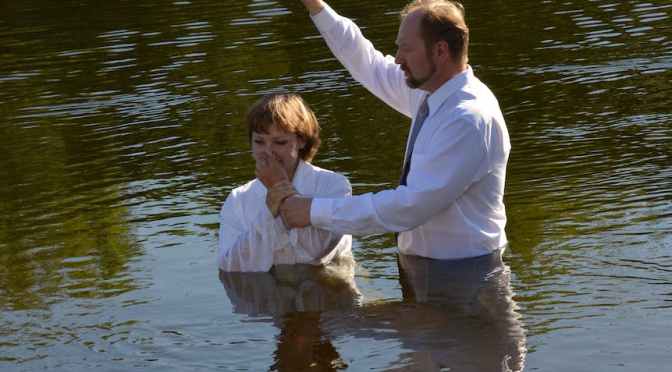
Earlier he stressed that they were buried with Christ in baptism to obey the gospel. “Know ye not, that so many of us as were baptized into Jesus Christ were baptized into his death? Therefore we are buried with him by baptism into death: that like as Christ was raised up from the dead by the glory of the Father, even so we also should walk in newness of life” (Romans 6:3-4). Baptism parallels the death, burial, and resurrection of Christ. Man is dead in sin, and then buried with Christ in baptism. He rises from the waters of baptism in the likeness of Christ’s resurrection to walk in newness of life. He then has the forgiveness of sin, and the joy that comes from obeying the gospel.

CAN A SAVED PERSON EVER SO SIN TO LOSE HIS SOUL? — BOB PRICHARD

The doctrine that once a person is saved, he can never be lost, is usually referred to as the “doctrine of eternal security,” or the “impossibility of apostasy.” This doctrine comforts many, but it is contrary to the scriptures. Several Bible characters fell away.

Demas faithfully served with Paul. Paul wrote, “Luke, the beloved physician, and Demas, greet you” (Colossians 4:14), but then later wrote to Timothy, “Demas hath forsaken me, having loved this present world, and is departed unto Thessalonica” (2 Timothy 4:10). Not only did Demas forsake Paul, but we understand that he forsook the Lord as well, “having loved this present world” too much.

Philip converted Simon the Sorcerer at Samaria, and even baptized him (Acts 8:13), but then Simon sought to buy the ability to give the spiritual gifts. Peter warned him, “Repent therefore of this thy wickedness, and pray God, if perhaps the thought of thine heart may be forgiven thee. For I perceive that thou art in the gall of bitterness, and in the bond of iniquity” (Acts 8:22-23). Simon risked his soul for earthly riches and prestige. Surely he would have been lost if he did not follow Peter’s command to repent.

What about Judas Iscariot? When he betrayed Christ, not one of the other disciples suspected him. They certainly would have suspected him if he had not exercised the same spiritual gifts, healing powers, and casting out of demons as they had. He appeared to be a faithful servant of Christ to all of the other apostles. But who would argue today that he is saved?

God cares for His children, and He also gives those children free will. Each person has the right to choose to obey the gospel of Christ, or to refuse to obey the gospel of Christ, or to renounce Christ entirely. This ability to choose gives man responsibility. A man without free will would not be responsible for his sins. If a person can live any way he wishes to, and commit any sin he wants to after conversion, and he can do this without losing his soul, then that person has lost his free will to choose whether or not to be a Christian.  

Jesus said to the church at Ephesus, “I have somewhat against thee, because thou hast left thy first love. Remember therefore from whence thou art fallen, and repent, and do the first works; or else I will come unto thee quickly, and will remove thy candlestick out of his place, except thou repent” (Revelation 2:4-5). The church at Ephesus, meaning the individual Christians who made up that congregation, had “left” its “first love,” and had “fallen.” The Lord warned them of the consequences if they did not repent.

Peter lists a number of graces such as faith, virtue, and temperance, which each Christian should work to acquire, saying, “if ye do these things, ye shall never fall” (2 Peter 1:10). Peter’s promise, “ye shall never fall,” however, is a conditional statement. We are promised not to fall “if ye do these things,” but implied in the promise is that we will fall if we do not do these things. The doctrine that a child of God can do anything he pleases and never be concerned for his soul is neither scriptural nor reasonable. Every man is accountable to God for how he lives. What dangerous ground a man walks on when he chooses to sin, rather than striving with all his ability to do the Lord’s will!

SHOULD BABIES BE BAPTIZED? — BOB PRICHARD

The practice of baptizing babies, widely accepted today, was completely unknown in the early church. The first explicit mention of the practice in history is in the writings of Tertullian of Carthage, an early church leader, who lived in the third century (some two hundred years after the beginning of the church). Tertullian wrote about the baptism of children as a then new practice, reserved for children who were very sick. Tertullian opposed the practice, saying it was not biblical, but many other church leaders accepted it, and the practice became firmly established in religious tradition. It became the almost universally accepted practice until challenged by the Anabaptists in the sixteenth century, who taught that baptism was reserved for believers.

There is absolutely no mention of baptizing babies in the Bible. Some teach that the “household” conversions of Lydia (Acts 16), Cornelius (Acts 10), or the Philippian jailer (Acts 16) show that infants must have been baptized. The reasoning is that since whole households were converted, there must have been infants included. None of these accounts, however, mention any infants, and the presence of infants cannot be assumed. Every account of conversion in the book of Acts mentions at least one thing, such as believing, which an infant cannot do. There is no reason to assume that infants were present and baptized. 

It is sometimes taught that infants must be baptized because of “original sin.” “Original sin” is supposedly the sin that all humanity inherits from Adam, because we were all involved in his original sin in Eden. Although we choose to sin, we are not responsible for Adam’s sin. Every person is responsible for his own sins, and the child is sinless until he reaches the proper mental maturity to be responsible for his own sins. The prophet Ezekiel declared, “The soul that sinneth, it shall die. The son shall not bear the iniquity of the father, neither shall the father bear the iniquity of the son: the righteousness of the righteous shall be upon him, and the wickedness of the wicked shall be upon him” (Ezekiel 18:20). When Paul said, “For as in Adam all die, even so in Christ shall all be made alive” (1 Corinthians 15:22), He was talking about physical death and the resurrection. If he was saying that we inherit sin from Adam, simply by being humans, then he would also be saying that we inherit eternal life in Christ, simply by being humans. Jesus said, “Suffer little children, and forbid them not, to come unto me: for of such is the kingdom of heaven” (Matthew 19:14). He held up their sinless purity as an example for all.

Infant baptism simply cannot be right, because there is no biblical authority for it. It is an ancient tradition of men, no doubt begun with good intentions, but nevertheless contrary to the Bible. Baptism is for the penitent believer (Acts 2:38). Babies cannot repent, and have no sins to repent of. The Bible picture of baptism is a burial of believers. “Know ye not, that so many of us as were baptized into Jesus Christ were baptized into his death? Therefore we are buried with him by baptism into death: that like as Christ was raised up from the dead by the glory of the Father, even so we also should walk in newness of life. For if we have been planted together in the likeness of his death, we shall be also in the likeness of his resurrection” (Romans 6:3-5). Infant baptism changes God’s plan, and may prevent the adult believer from obeying the gospel, thinking he or she has already been baptized, even though he has not followed the biblical pattern.

WAS THE PHILIPPIAN JAILER SAVED BEFORE BAPTISM? — BOB PRICHARD

The story of the Philippian jailer is found in Acts 16. The jailer was in charge of Paul and Silas, who had been arrested on false charges by the owners of a slave girl. They had cast a demon out of the girl, depriving her owners of the money they made by exploiting her (Acts 16:20-21). Because of this, Paul and Silas were arrested, beaten, and put into the innermost prison, with their feet in the stocks. The jailer was to keep them safely until the officials could deal with them.

Beaten and bleeding, and locked in the inner prison, Paul and Silas prayed and sang praises to God, even though it was midnight (Acts 16:25). Suddenly an earthquake shook the prison, and the jailer, awakening from sleep was ready to kill himself, because he was sure that the prisoners would have escaped. When Paul calmed him, assuring him that the prisoners were still there, “he called for a light, and sprang in, and came trembling, and fell down before Paul and Silas, and brought them out, and said, Sirs, what must I do to be saved?” (Acts 16:29- 30). Paul and Silas answered very simply: “Believe on the Lord Jesus Christ, and thou shalt be saved, and thy house” (Acts 16:31). Since the jailer was not told to be baptized, does this mean that he was saved before baptism? Consider the rest of his story.

Paul and Silas had told the jailer that salvation would come from believing on the Lord Jesus Christ, but what did this jailer know about Jesus Christ? It is unlikely that he had heard any of the sermons that Paul and Silas had preached in Philippi. He probably knew absolutely nothing about Jesus, other than what he had learned from hearing the songs and prayers of Paul and Silas, so they had to teach him. “And they spake unto him the word of the Lord, and to all that were in his house” (Acts 16:32). Did speaking the “word of the Lord” include the necessity of baptism? Remember that it was midnight when Paul and Silas were singing and praying (Acts 16:25). It was after this that the earthquake came, the jailer sprang in and asked “What must I do to be saved?” and they “spake unto him the word of the Lord.” Without question it was in the wee hours of the morning when the jailer responded to their preaching.

Luke tells us, “he took them the same hour of the night, and washed their stripes; and was baptized, he and all his, straightway. And when he had brought them into his house, he set meat before them, and rejoiced, believing in God with all his house” (Acts 16:33-34). When were the jailer and his household baptized? It was “the same hour of the night.” Why didn’t they at least wait until morning light before they were baptized, if baptism was not essential? When did he rejoice?  It was after they were baptized, not before. They rejoiced, knowing that their sins were forgiven, and they had truly obeyed the Lord. The jailer had a saving faith, a faith that responded to the sacrifice of Christ by obeying Him. His obedience in baptism demonstrated his faith, and his faith was demonstrated in his baptism. The jailer was like all other Christians we read of in the New Testament. He was saved after baptism.

WHAT IS THE GOSPEL OF JESUS CHRIST? — BOB PRICHARD

The theme of all the New Testament is the gospel of Jesus Christ. Practically every page provides information on this important topic. In its simplest terms, the gospel of Jesus Christ is simply the “good news” concerning Him. The Greek word translated as gospel means “good news.” The word “evangelist,” a “preacher of the gospel,” comes from the same root word. In a day when there is so little good news, it is important to recognize that Jesus came to give the world good news.

The message of the gospel is that although man is a sinner, deserving of death, God loved mankind enough to make provision for salvation. Paul warned the Roman Christians that “all have sinned, and come short of the glory of God” (Romans 3:23) and “the wages of sin is death” (Romans 6:23a). Comfort comes, however, in knowing the good news that “the gift of God is eternal life through Jesus Christ our Lord” (Romans 6:23b). Paul reminded them that because they had become Christians, they were “justified freely by his grace through the redemption that is in Christ Jesus” (Romans 3:24). The “amazing grace” of God is truly good news. 

At the heart of the gospel message are the death, burial, and resurrection of Christ. As Peter preached the first “gospel sermon” on the day of Pentecost, he spoke of “Jesus of Nazareth, a man approved of God among you by miracles and wonders and signs” (Acts 2:22). Although He was put to death, death could not hold Him. “This Jesus hath God raised up” (Acts 2:32). Therefore let all the house of Israel know assuredly, that God hath made that same Jesus, whom ye have crucified, both Lord and Christ” (Acts 2:36). The people responded properly: “Now when they heard this, they were pricked in their heart, and said unto Peter and to the rest of the apostles, Men and brethren, what shall we do?” (Acts 2:37). Peter answered by telling them how to accept the good news of Christ: “Repent, and be baptized every one of you in the name of Jesus Christ for the remission of sins, and ye shall receive the gift of the Holy Ghost” (Acts 2:38).

The gospel is especially good news, because its message is universal. Peter continued by telling his Jewish audience, “For the promise is unto you, and to your children, and to all that are afar off, even as many as the Lord our God shall call” (Acts 2:39). The “all that are afar off” meant that the message was to go to a worldwide audience—the church would include the Gentiles as well as the Jews. Faith moved many to obey: “Then they that gladly received his word were baptized: and the same day there were added unto them about three thousand souls” (Acts 2:41). From that day forward, the church grew as more and more people were added to the church (Acts 2:47). Christ commands: “All power is given unto me in heaven and in earth.  Go ye therefore, and teach all nations, baptizing them in the name of the Father, and of the Son, and of the Holy Ghost: Teaching them to observe all things whatsoever I have commanded you: and, lo, I am with you alway, even unto the end of the world. Amen” (Matthew 28:18-20).

JUST ONE INGREDIENT — BOB PRICHARD

My daughter Jennifer has become somewhat of a gourmet cook, trying many new dishes through her cooking club. She still likes to make some old family favorites as well, such as “pineapple au gratin.” The whole family was anticipating a wonderful dish. It smelled so good as it cooked, and it looked just as good, but it tasted terrible. Consideration of the situation revealed that it had been made correctly, with one exception—salt had been accidentally substituted for sugar in the dish. It was just one ingredient, but it made all the difference!

A young man who had most things right in his life came to see Jesus, He questioned, “Good Master, what shall I do that I may inherit eternal life?” Jesus told him, “Thou knowest the commandments, Do not commit adultery, Do not kill, Do not steal, Do not bear false witness, Defraud not, Honour thy father and mother.” He replied, “Master, all these have I observed from my youth. Then Jesus beholding him loved him, and said unto him, One thing thou lackest: go thy way, sell whatsoever thou hast, and give to the poor, and thou shalt have treasure in heaven: and come, take up the cross, and follow me. And he was sad at that saying, and went away grieved: for he had great possessions” (Mark 10:17-23).

The recipe for eternal life was almost complete, but he lacked one thing, and it was a big one—because he had great possessions. Jesus loved him, and appreciated his dedication, but his good deeds were not “good enough” to secure eternal life.

The general teaching of our religious world, which stresses faith, and sometimes repentance, usually lacks one thing—obedience to the gospel by being baptized for the remission of sins. Most would say that surely living a good life, keeping the ten commandments, even saying the “sinner’s prayer,” is “good enough.” But nothing substitutes for obedience to the will of God. Salt may look like sugar, but it is not sugar, and it cannot be substituted without spoiling the dish, We must follow God’s recipe for salvation: faith, repentance, confession of Christ, and baptism into Christ. Just one substitution will bring ruin.

DID THE LORD SAVE PAUL ON THE ROAD TO DAMASCUS? — BOB PRICHARD

No. The conversion of Saul of Tarsus (later known as the apostle Paul) is the most thoroughly documented conversion in all the Bible, but it is still widely misunderstood. As Saul was making his way to Damascus to persecute Christians, Jesus appeared to him, but Saul was not saved simply because the Lord appeared to him. Luke records, “And he trembling and astonished said, Lord, what wilt thou have me to do? And the Lord said unto him, Arise, and go into the city, and it shall be told thee what thou must do” (Acts 9:6). The Lord did not save Saul until he completed what he “must do.”

The first mention in scripture of Saul of Tarsus is in Acts 7, where those stoning Stephen, the first Christian martyr, lay their clothes at his feet. Luke reported, “Saul was consenting unto his death. And at that time there was a great persecution against the church which was at Jerusalem; and they were all scattered abroad throughout the regions of Judaea and Samaria, except the apostles” (Acts 8:1). Saul was in the middle of all this persecution: “As for Saul, he made havock of the church, entering into every house, and haling men and women committed them to prison” (Acts 8:3). Because of his zeal for persecuting the church, Saul went to the high priest and asked for letters to the Damascus synagogues, so that he could arrest the Christians in Damascus and bring them back to Jerusalem for punishment.

As Saul journeyed to Damascus, a bright light blinded him, and he heard Jesus say to him, “Saul, Saul, why persecutest thou me?” (Acts 9:4). After Jesus identified Himself to Saul, He sent Saul into Damascus with the words, “Arise, and go into the city, and it shall be told thee what thou must do” (Acts 9:6). Saul then spent the next three days in prayer and fasting. This showed that he was serious about following Christ, but his three days of prayer and fasting did not save him or show that he was saved. His penitent behavior was preparing him for the necessary obedience.

The Lord then directed Ananias, a Christian of Damascus, to go to Saul to tell him what he “must do.” Although it must have been a daunting assignment, Ananias, “a devout man according to the law” came to Saul, a fellow Jew, and said, “Brother Saul, receive thy sight” (Acts 22:12-13). Saul was no longer blind, and Ananias warned him of what was ahead of him if he chose to follow Christ. “The God of our fathers hath chosen thee, that thou shouldest know his will, and see that Just One, and shouldest hear the voice of his mouth.  For thou shalt be his witness unto all men of what thou hast seen and heard” (Acts 22:14-15). Having warned him what lay ahead of him in Christ’s service, Ananias then told Saul what he “must do.” “Why tarriest thou? arise, and be baptized, and wash away thy sins, calling on the name of the Lord” (Acts 22:16). Why was Saul not saved before?  Because he was still in his sins.  That is why he needed to call on the name of the Lord by by washing away his sins. As he obeyed the Lord’s command through the messenger Ananias, he received the forgiveness of his sins and the salvation he had spent three days praying for in his blindness.

WHY WOULD SOMEONE BE BAPTIZED AGAIN? — BOB PRICHARD

Paul wrote that “There is one body, and one Spirit, even as ye are called in one hope of your calling; One Lord, one faith, one baptism, One God and Father of all, who is above all, and through all, and in you all” (Ephesians 4:4-6). Among these great unities is “one baptism,” indicating that only one baptism was applicable to men when Paul wrote. Acts 19:1-7  tells of a group of twelve men that Paul met at Ephesus who knew only John’s baptism, but were baptized into Christ when they understood that they had not fully obeyed God. 

BAPTISM AND FAITH ARE CONNECTED. 

Paul said“unto them, Have ye received the Holy Ghost since ye believed? And they said unto him, We have not so much as heard whether there be any Holy Ghost. And he said unto them, Unto what then were ye baptized? And they said, Unto John’s baptism” (Acts 19:2-3).

Baptism is for believers. “And as they went on their way, they came unto a certain water: and the eunuch said, See, here is water; what doth hinder me to be baptized? And Philip said, If thou believest with all thine heart, thou mayest. And he answered and said, I believe that Jesus Christ is the Son of God” (Acts 8:36-37).

“He that believeth and is baptized shall be saved; but he that believeth not shall be damned” (Mark 16:16).

“For ye are all the children of God by faith in Christ Jesus. For as many of you as have been baptized into Christ have put on Christ” (Galatians 3:26-27).

JOHN’S BAPTISM WAS FROM GOD, BUT WAS NO LONGER EFFECTIVE. 

“Then said Paul, John verily baptized with the baptism of repentance, saying unto the people, that they should believe on him which should come after him, that is, on Christ Jesus. When they heard this, they were baptized in the name of the Lord Jesus” (Acts 19:4-5).

“John did baptize in the wilderness, and preach the baptism of repentance for the remission of sins” (Mark 1:4). “The baptism of John, whence was it? from heaven, or of men? And they reasoned with themselves, saying, If we shall say, From heaven; he will say unto us, Why did ye not then believe him?” (Matthew 21:25). John’s baptism was not scriptural for them. They were subject to baptism into Christ.

PEOPLE CAN BE HONESTLY AND SINCERELY MISTAKEN. 

These twelve menwere honest and sincere, but they needed to be baptized into Christ. Some who honestly think they are saved are lost. Jesus said, “Not every one that saith unto me, Lord, Lord, shall enter into the kingdom of heaven; but he that doeth the will of my Father which is in heaven. Many will say to me in that day, Lord, Lord, have we not prophesied in thy name? and in thy name have cast out devils? and in thy name done many wonderful works? And then will I profess unto them, I never knew you: depart from me, ye that work iniquity” (Matthew 7:21-23).

THE ONE BAPTISM IS NECESSARY TO PLEASE GOD.

Notice that baptism precedes new life: “Know ye not, that so many of us as were baptized into Jesus Christ were baptized into his death? Therefore we are buried with him by baptism into death: that like as Christ was raised up from the dead by the glory of the Father, even so we also should walk in newness of life” (Romans 6:3-4). 

Sins are put off as we are baptized. “And ye are complete in him, which is the head of all principality and power:  In whom also ye are circumcised with the circumcision made without hands, in putting off the body of the sins of the flesh by the circumcision of Christ: Buried with him in baptism, wherein also ye are risen with him through the faith of the operation of God, who hath raised him from the dead” (Colossians 2:10-12).

CERTAIN THINGS ARE NECESSARY FOR SCRIPTURAL BAPTISM.

(1). The proper mode is immersion. “Know ye not, that so many of us as were baptized into Jesus Christ were baptized into his death? Therefore we are buried with him by baptism into death: that like as Christ was raised up from the dead by the glory of the Father, even so we also should walk in newness of life” (Romans 6:3-4).

(2). The proper subject for baptism is the penitent believer. “He that believeth and is baptized shall be saved; but he that believeth not shall be damned” (Mark 16:16).

“Now when they heard this, they were pricked in their heart, and said unto Peter and to the rest of the apostles, Men and brethren, what shall we do? Then Peter said unto them, Repent, and be baptized every one of you in the name of Jesus Christ for the remission of sins, and ye shall receive the gift of the Holy Ghost” (Acts 2:37-38).

(3). The proper purpose for baptism is salvation. “The like figure whereunto even baptism doth also now save us (not the putting away of the filth of the flesh, but the answer of a good conscience toward God,) by the resurrection of Jesus Christ” (1 Peter 3:21). “And now why tarriest thou? arise, and be baptized, and wash away thy sins, calling on the name of the Lord” (Acts 22:16).

HONEST AND SINCERE PEOPLE WILL CHANGE. 

When the men learned they were wrong, they changed. When Saul of Tarsus learned he was wrong, he changed. The people of Thessalonica changed when they understood the gospel of Christ. “For they themselves show of us what manner of entering in we had unto you, and how ye turned to God from idols to serve the living and true God” (1 Thessalonians 1:9).

Have you been baptized according to the scriptures?

WHEN SHOULD A PERSON BE “REBAPTIZED”? — BOB PRICHARD

Strictly speaking, scriptural baptism is a “one time” proposition. Ephesians 4:5 says that there is “one baptism” today. The “one baptism” consists of the immersion of a penitent believer in water, whereby he contacts the blood of Christ, receives the forgiveness of his sins, and the Lord adds him to the church. Even if a person “backslides,” or becomes unfaithful, it is not necessary to be rebaptized, if his original baptism was a scriptural baptism. Simon the sorcerer, in Acts 8, is an example of a Christian who sinned, and was told to pray for forgiveness. Peter told Simon, “Repent therefore of this thy wickedness, and pray God, if perhaps the thought of thine heart may be forgiven thee” (Acts 8:22). Philip the evangelist had properly taught and baptized Simon, so there was no need for him to be rebaptized (Acts 8:13).

Sometimes, however, when a person thinks he is being scripturally baptized, he is really doing no more than getting wet. After further Bible study, he may realize he was not baptized according to the scriptures. Several conditions call for a person who has received “another baptism” to be baptized into Christ. Nearly every religious group practices some form of baptism. But if that baptism is not the “one baptism” of Ephesians 4:5, then it is not a scriptural baptism. For instance, if a person has only been sprinkled with water, and has not been  immersed, or “buried with him by baptism into death” (Romans 6:4), then when he realizes the proper mode of baptism is immersion into Christ, he should be “rebaptized.”

Also, baptism that follows salvation, to join a man-made religious body, is not the “one baptism.” Peter said to the multitude on Pentecost, “Repent and be baptized every one of you in name of Jesus Christ for the remission of sins” (Acts 2:38). The three thousand who obeyed that day, as others of the New Testament, received the remission, or forgiveness of their sins, after baptism. Sectarian baptism, even if by immersion, cannot be the “one baptism” if the person thinks that he has already received the forgiveness of his sins, and is thus saved, before his baptism. The purpose for baptism  makes a difference! Scriptural baptism puts one into the church, the body of Christ, which He has promised to save. “For by one Spirit are we all baptized into one body” (1 Corinthians 12:13).

Often mature believers who committed their lives to Christ and were baptized at an early age begin to question whether they properly understood what they were doing when baptized. If the person was old enough to understand that he was obeying Christ by being  immersed, receiving the forgiveness of his sins, and making Christ the Lord of  his life, then he understood enough. It is only natural that as one grows in his understanding of the scriptures, he  will realize that there was much he did not understand when he first became a Christian. If there is doubt in a person’s mind,  however, concerning his baptism, then he should take action to remove that doubt. The Master said, “If ye love me, keep my commandments” (John 14:15).

SAFE & SOUND: THE SECURITY OF THE FATHER’S HOUSE — BOB PRICHARD

I was speaking on a minister’s panel for a Hospice group, answering questions about death and care for the terminally ill. One of the Hospice volunteers asked what to say if the patient was concerned about sin in his or her life, and their relationship with God. The Lutheran minister was quick to say, “God is a God of love. Tell them that they have nothing to worry about.”

I had different advice. I said that if the patient had some spiritual concerns that they should be supportive, but also seek to make sure they dealt with whatever was of concern. I could not assume that everyone has a right relationship with God, especially if one was concerned about that relationship.

The Lutheran minister probably represented much of our religious world. I knew him all too well. He was Post-Modernist in his thinking, and basically thought anything goes in the religious world, and everybody is right with God—(except for the churches of Christ, of course).

But the security of the Christian is an issue for many of us, isn’t it. Are we really right with God? Can we know that we have the security of the Father’s house? Are we perpetually in the Father’s house one day and in the far country the next? How can we be sure where we stand with the Father? Perhaps the confidence that the Prodigal had can help us to better understand our relationship with God as Christians.

The Fatal Decision

The Prodigal was safe and sound in his father’s house as the story begins. He lost that security, however. Although in his own mind he probably thought it was the father’s fault for his restrictiveness, or perhaps his elder brother’s attitude, he ultimately had no one to blame but himself. His time in the far country was spent in riotous living, and the portion given by the Father was soon gone. He was not wise like Moses, learning the hard way that the pleasures of sin are only for a season.

“By faith Moses, when he was come to years, refused to be called the son of Pharaoh’s daughter; Choosing rather to suffer affliction with the people of God, than to enjoy the pleasures of sin for a season; Esteeming the reproach of Christ greater riches than the treasures in Egypt: for he had respect unto the recompence of the reward” (Heb. 11:24-26).

The Far Country

The problem of being in the far country is that the security a full wallet seems to provide does not last. He was on a slippery slope, and could do nothing but fall further and further away from safety and security. Paul warns us, “Wherefore let him that thinketh he standeth take heed lest he fall” (1 Cor. 10:12). This was another lesson the Prodigal had to learn through experience.

When Jonathan Edwards first preached his sermon, “Sinners in the Hands of an Angry God,” on July 8, 1741, at Enfield, Connecticut, the response was overwhelming. Edwards warned that “There is nothing that keeps wicked men out of hell, but the mere pleasure of God.” Edwards, through ten “considerations” stressed that God may cast sinners, who certainly deserve hell, into hell at any moment. God is angry with them, and it is only because of his restraints that the wicked are not immediately given to Satan for torment. (“Sinners in the Hands of an Angry God”).

But the Prodigal seemed to know nothing of an angry God. In the far country, he knew only pleasure—and that pleasure was at the expense of the father who had generously given him his inheritance. He needed a wake-up call to see the seriousness of his situation.

The Fields of Swine

To those who first heard Jesus tell the story, there could hardly have been a worse living fate for the boy. “And when he had spent all, there arose a mighty famine in that land; and he began to be in want. And he went and joined himself to a citizen of that country; and he sent him into his fields to feed swine. And he would fain have filled his belly with the husks that the swine did eat: and no man gave unto him” (Luke 15:14-16).

Just feeding the swine was bad enough, but to be so hungry he envied the swine’s food was the ultimate ignominious situation. This was nothing like what he had experienced in the safety and security of his father’s house. This, perhaps more than anything else opened his eyes to all that he was missing by not being in the Father’s house.

The Firm Decision

And when he came to himself, he said, How many hired servants of my father’s have bread enough and to spare, and I perish with hunger! I will arise and go to my father, and will say unto him, Father, I have sinned against heaven, and before thee, And am no more worthy to be called thy son: make me as one of thy hired servants (Luke 15:17-19).

What brought about this decision? The Prodigal “came to himself” (Luke 15:17) and wanted to go home. The plaintive cry we always hear at the nursing home: “Will someone just take me home?”

Is it any wonder that realtors stress that they are selling homes (rather than houses)? Two proverbs sum the situation: “East west, home’s best.” “Home is where the heart is.” In The Death of the Hired Man, poet Robert Frost said “Home is the place where, when you have to go there, they have to take you in” (Daintith, 254). 

He knew that there was safety and security in the Father’s house. And he knew that he could go home, although he thought his rebellion had caused him to forfeit his sonship.

The Father’s House

What made him think that he could go back to the Father’s house? Why did he think he would find safety and security? It was because it was the Father’s house. He knew his Father. And ultimately it is all about the Father.

The Father was His Father. 

It wasn’t that he just knew about his father. He knew his father. He had spent time with him, communed with him, talked to him, learned from him. He had sat at his father’s table, listened (perhaps reluctantly) to his father’s admonitions, and had seen how his father dealt with others.

Perhaps our difficulty of believing we have security in the Father’s house is that we just don’t know Him as well as we should. John tells us of the Word, “But as many as received him, to them gave he power to become the sons of God, even to them that believe on his name: Which were born, not of blood, nor of the will of the flesh, nor of the will of man, but of God” (John 1:12-13). Because He gave us power to become the sons of God, we must grow in our love, understanding and knowledge of Him. Our obedience shows we know him.

“My little children, these things write I unto you, that ye sin not. And if any man sin, we have an advocate with the Father, Jesus Christ the righteous: And he is the propitiation for our sins: and not for ours only, but also for the sins of the whole world. And hereby we do know that we know him, if we keep his commandments” (1 John 1:1-3).

The Father was Generous and Loving.

The Prodigal experienced the generosity of the Father when he demanded his portion of the inheritance and the Father gave it to him, although He was not required to do so. The Father in heaven blesses all men daily, for He “maketh his sun to rise on the evil and on the good, and sendeth rain on the just and on the unjust” (Mat. 5:45). But much more than that, we know that the Father is generous with His children. “And we know that all things work together for good to them that love God, to them who are the called according to his purpose” (Rom. 8:28). We now are in a better place to see the love and generosity of the Father, because we have the full biblical record. “Now all these things happened unto them for ensamples: and they are written for our admonition, upon whom the ends of the world are come” (1 Cor. 10:11).

“For God so loved the world, that he gave his only begotten Son, that whosoever believeth in him should not perish, but have everlasting life. For God sent not his Son into the world to condemn the world; but that the world through him might be saved” (John 3:16-17). How can anyone look at the cross of Christ and doubt the love of the Father? In light of his generosity, why would His children doubt their safety and security in His house?

The Father was Trustworthy.

When the Father divided unto them his living (Luke 15:12), He gave what the sons desired but did not deserve. He fulfilled His obligations, above and beyond His actual obligation. The prodigal never had to question if his father had given all that he said he would.

Can we trust the Son when He says, “Come unto me, all ye that labour and are heavy laden, and I will give you rest. Take my yoke upon you, and learn of me; for I am meek and lowly in heart: and ye shall find rest unto your souls. For my yoke is easy, and my burden is light” (Mat. 11:28-30)? He promises, “All that the Father giveth me shall come to me; and him that cometh to me I will in no wise cast out. For I came down from heaven, not to do mine own will, but the will of him that sent me. And this is the Father’s will which hath sent me, that of all which he hath given me I should lose nothing, but should raise it up again at the last day” (John 6:37-39).

He truly offers us safety and security.

The Father was Wise.

The Father was not a dictatorial autocrat. He wisely allowed the Prodigal to make his own decisions, and make his own mistakes. The Prodigal probably did not recognize the wisdom of his Father when he was originally in the Father’s house. But as he looked back, he could see it. He could see that the Father had provided all that he needed to make the right decision.

The world seldom sees the wisdom of God for what it is. “For the preaching of the cross is to them that perish foolishness; but unto us which are saved it is the power of God. For it is written, I will destroy the wisdom of the wise, and will bring to nothing the understanding of the prudent. Where is the wise? where is the scribe? where is the disputer of this world? hath not God made foolish the wisdom of this world? For after that in the wisdom of God the world by wisdom knew not God, it pleased God by the foolishness of preaching to save them that believe” (1 Cor. 1:18-21).

We should proclaim with Paul: “O the depth of the riches both of the wisdom and knowledge of God! how unsearchable are his judgments, and his ways past finding out! For who hath known the mind of the Lord? or who hath been his counsellor? Or who hath first given to him, and it shall be recompensed unto him again? For of him, and through him, and to him, are all things: to whom be glory for ever. Amen” (Romans 11:33-36).

The Father was Longsuffering.

It must have hurt the Father deeply to see the Prodigal leave the security of the Father’s house. He must have known that the boy would be back, worse for the wear. But He let him go, and longingly waited for his return. “And he arose, and came to his father. But when he was yet a great way off, his father saw him, and had compassion, and ran, and fell on his neck, and kissed him” (Luke 15:20). The longsuffering Father not only waited for the Prodigal to return, but He watched for him, and ran to meet him. Surely this is what the Father has done for us as well!

“For when we were yet without strength, in due time Christ died for the ungodly. For scarcely for a righteous man will one die: yet peradventure for a good man some would even dare to die. But God commendeth his love toward us, in that, while we were yet sinners, Christ died for us. Much more then, being now justified by his blood, we shall be saved from wrath through him” (Romans 5:6-9).

We understand that “The Lord is not slack concerning his promise, as some men count slackness; but is longsuffering to us-ward, not willing that any should perish, but that all should come to repentance” (2 Pet. 3:9). Knowing that He cares this much for us, why don’t we trust Him to save us?

The Good Shepherd tells us: “My sheep hear my voice, and I know them, and they follow me: And I give unto them eternal life; and they shall never perish, neither shall any man pluck them out of my hand. My Father, which gave them me, is greater than all; and no man is able to pluck them out of my Father’s hand” (John 10:27-29).

The Father was Forgiving.

Of all of the qualities of the Father, the most comforting, the most assuring is His forgiveness. Although the Prodigal felt like he was no longer worthy to be accepted as a son, he knew that the Father would be willing to forgive him.

One of the first Bible studies I ever conducted after obeying the gospel was with my Missile Combat Crew Deputy and his wife. I was shocked as we came to the end of the study because the wife was inconsolable. She was crying so hard that we had to break off the end of the study and go home, because she couldn’t talk. The next day, after my Deputy and I went on alert duty, my wife went to talk to the Deputy’s wife, who was so upset the evening before. She was upset because she wanted so much to be a Christian, and knew that she had not obeyed the gospel. But she also knew that God could never forgive her of her sins, and that she couldn’t live the Christian life. When it was explained to her that God could and would forgive her, and that He would help her live faithfully, she was baptized into Christ.

“All we like sheep have gone astray; we have turned every one to his own way; and the LORD hath laid on him the iniquity of us all” (Isaiah 53:6). We have all gone into the far country of sin, yet the Father wants to welcome all of us back, just as He welcomed back the Prodigal.

Paul told Timothy, “This is a faithful saying, and worthy of all acceptation, that Christ Jesus came into the world to save sinners; of whom I am chief. Howbeit for this cause I obtained mercy, that in me first Jesus Christ might show forth all longsuffering, for a pattern to them which should hereafter believe on him to life everlasting” (1 Tim. 1:15-16).

If God could forgive the chief of sinners—surely we can be sure that He forgives us, and know that we have the blessed assurance He offers. John tells us that we may know we have eternal life because God has proved it through the Son. “If we receive the witness of men, the witness of God is greater: for this is the witness of God which he hath testified of his Son. … And this is the record, that God hath given to us eternal life, and this life is in his Son. He that hath the Son hath life; and he that hath not the Son of God hath not life. These things have I written unto you that believe on the name of the Son of God; that ye may know that ye have eternal life, and that ye may believe on the name of the Son of God” (1 John 5:9; 11-12).

The Prodigal, though ashamed of his actions, was not afraid to return to the Father’s house. “Herein is our love made perfect, that we may have boldness in the day of judgment: because as he is, so are we in this world. There is no fear in love; but perfect love casteth out fear: because fear hath torment. He that feareth is not made perfect in love” (1 John 4:17-18).

The gospel is good news, and our faith should show it. “I write unto you, little children, because your sins are forgiven you for his name’s sake” (1 John 1:12). Our sins truly are forgiven in Christ.

In the midst of the Civil War, Abraham Lincoln was asked what he would do with the rebellious Southerners when they were finally defeated and allowed back into the union. He said, “I will treat them as if they had never been away.” Amazingly, that is how the Father forgives. “And the son said unto him, Father, I have sinned against heaven, and in thy sight, and am no more worthy to be called thy son. But the father said to his servants, Bring forth the best robe, and put it on him; and put a ring on his hand, and shoes on his feet: And bring hither the fatted calf, and kill it; and let us eat, and be merry: For this my son was dead, and is alive again; he was lost, and is found. And they began to be merry” (Luke 15:21-24).

The prodigal was safe and sound in the security of the Father’s house.

“The ultimate theme of this story, therefore is not the prodigal son, but the Father who finds us. The ultimate theme is not the faithlessness of men, but the faithfulness of God.

And this is also the reason why the joyful sound of festivity rings out from this story. Wherever forgiveness is proclaimed there is joy and festive garments. We must read and hear this gospel story as it was meant to be: good news! News so good that we should never have imagined it. News that would stagger us if we were able to hear it for the first time as a message that everything about God is so completely what we thought or feared. News that he has sent his Son to us and is inviting us to share in an unspeakable joy.

The ultimate secret of this story is this: There is a homecoming for us all because there is a home.” (Thielicke 29).

Works Cited

The Holy Bible. King James Version. BibleSource. The Zondervan Corporation, 1991. Disc.

Daintith, John et. al. ed. The Macmillan Dictionary of Quotations. Edison, NJ: Chartwell Books, 2000. 

“Sinners in the Hands of an Angry God.” Wikipedia, The Free Encyclopedia. Wikimedia Foundation. Web. 2011.

Thielicke, Helmut. The Waiting Father. San Francisco: Harper & Row. Translated by John W. Doberstein, 1959. Print.


“BAPTISM EVERY FOURTH SUNDAY” — BOB PRICHARD

A sign outside a large church building in Birmingham announced “Baptism every fourth Sunday.” I wonder what Peter or Paul would have thought about baptism offered as a kind of fourth Sunday “blue plate” special.

Consider Peter’s experience. On Pentecost, he told the gathered multitude, “Repent and be baptized every one of you in the name of Jesus Christ for the remission of sins” (Acts 2:38). Then just three verses later, Luke tells us that the same day three thousand were added by being baptized for the remission of sins. Daily church growth (Acts 2:47) must have meant daily baptisms.

When Ananias came to Paul and said, “And now why tarriest thou, arise and be baptized, calling on the name of the Lord” (Acts 22:16), he was baptized immediately.

As prisoners in Philippi, Paul and Silas prayed and sang at midnight, and the prisoners heard them. An earthquake shook the jail, so that the jailer planned suicide, thinking the prisoners had escaped. But after they taught the jailer and his family, they were baptized “straightway,” “the same hour of the night” (Acts 16:31).

“Baptism every fourth Sunday” just doesn’t sound like God’s plan.