Category Archives: CHRISTIAN LIVING

NO RAINBOWS AT NOON — BOB PRICHARD

Rainbows are caused by the refraction (bending) of light through raindrops. The water droplets divide light into the seven basic colors of red, orange, yellow, green, blue, indigo and violet, but actually many other minor colors as well. Primary rainbows appear between 40 and 42 degrees above the horizon, with the center of the ark directly opposite the sun. Because of this, you cannot see a rainbow at noon, when the sun is directly overhead (David S. Kidder and Noah D. Oppenheim, The Intellectual Devotional, 2006, p. 235).

I cannot verify that I have never observed a rainbow at noon, but I have observed that the rainbows in my life don’t come in the noonday hours of good times. God gave the rainbow as a token of His covenant after the flood, promising that he would not again destroy the earth by a flood. “And God said, This is the token of the covenant which I make between me and you and every living creature that is with you, for perpetual generations: I do set my bow in the cloud, and it shall be for a token of a covenant between me and the earth” (Genesis 9:12–13).

The Lord says, “Come unto me, all ye that labour and are heavy laden, and I will give you rest. Take my yoke upon you, and learn of me; for I am meek and lowly in heart: and ye shall find rest unto your souls. For my yoke is easy, and my burden is light” (Matthew 11:28–30). The yoke he offers is to be yoked with Him. His yoke is easy because He pulls the extra weight in our lives. In the midst of the storm, this is often hard to see. But when the storm passes, new rainbows of joy and comfort come into our lives.

I can trust the future because I have experienced His loving care through the storms of life. “Yea, though I walk through the valley of the shadow of death, I will fear no evil,” because I know the Good Shepherd is with me, and that with His rod and staff He will comfort me (Psalm 23:4). The rainbows come—but only after the storm. “Jesus loves me this I know.”


NOCICEPTION — BOB PRICHARD

Although we may come to hate it, it is something that we really can’t live without. Sometimes children are born without it, but they seldom live beyond the age of twenty-five. What is nociception? It is the perception of pain. Pain tells us that we need to take our hand off the hot stove, that we have experienced a significant injury, or that we have experienced painful loss.

Most of us have more pain than we would like, but pain has been effective in helping us avoid more serious injury. Those children born without nociception may bite off a finger, break a bone, or scald a hand without ever knowing until they see the injury.

Our perception of pain is a complex process, involving different parts of the brain, to tell us about the location, intensity and type of pain we are experiencing. Our brain sends out messages of distress, and we respond to the problem.

Paul warned Timothy, “Now the Spirit speaketh expressly, that in the latter times some shall depart from the faith, giving heed to seducing spirits, and doctrines of devils: Speaking lies in hypocrisy; having their conscience seared with a hot iron” (1 Timothy 4:1-2). What happens to people with “their conscience seared with a hot iron”? Because the feeling is gone, they can tell lies in hypocrisy, and their conscience never bothers them.

Does your conscience still feel pain when you do wrong, or has it become seared? I find it interesting that even those who brought the woman taken in adultery before the Lord still had a conscience. “He lifted up himself, and said unto them, He that is without sin among you, let him first cast a stone at her. … And they which heard it, being convicted by their own conscience, went out one by one, beginning at the eldest, even unto the last” (John 8:7-9). Nociception is valuable—whether it be physical pain or the pain of a conscience convicted of sin.

HEARING AIDS — BOB PRICHARD

Before I got hearing aids, I did what most people who have a hearing loss do. I tried to make the most of what I thought I heard. It can be funny, because we sometimes think others are saying things that don’t make any sense, and then because we haven’t heard, our response may be nonsense. Sometimes I said, “I’m sorry, I didn’t hear you,” or “Sorry, I didn’t understand what you said.” But most of us get tired of saying that all the time, so we just try to make sense of what we hear, even if the other person said “bread,” and we think she said “red,” or “dread” or “Fred.”

This has a spiritual application. We wonder why people in our religious world seem not able to understand what we know are simple and easy to understand scriptures. How can they read Acts 2:38 and believe that baptism is unnecessary? How can they read the Lord’s prayer for unity in John 17 and believe God approves of denominationalism? The problem is that because of their upbringing and training (or lack thereof), they just don’t hear what the scripture says. They are trying to make sense of it as it fits with their beliefs and preconceptions. It is unfortunately  too rare that people will look at the scriptures with a truly open and receptive mind.

This is one reason that I like the account of the conversion of the Ethiopian eunuch so much. “Philip ran thither to him, and heard him read the prophet Esaias, and said, Understandest thou what thou readest? And he said, How can I, except some man should guide me? And he desired Philip that he would come up and sit with him” (Acts 8:30–31). Not “hearing” what Isaiah 53 said, he asked, “I pray thee, of whom speaketh the prophet this? of himself, or of some other man?” As Philip “preached unto him Jesus” (Acts 8:34-35). As we preach Jesus, we need to see ourselves as hearing aids to people who really want to understand, but just “can’t hear.” Whether they are “in denial” about their hearing loss, or whether they know of their loss, we must help them hear. The power is in the Word.

“THE WHEELBARROW IN THE GARAGE” — BOB PRICHARD

Traveling evangelist Billy Sunday (1862-1935) once said, “Going to church don’t make anybody a Christian, any more than taking a wheelbarrow into a garage makes it an automobile.” There is plenty of truth here. The land is filled with church-going people who are less than they should be. They claim to be Christians, but their lives don’t show it. In The Scarlet Letter, Nathaniel Hawthorne said that “No man, for any considerable period, can wear one face to himself, and another to the multitude, without finally getting bewildered as to which may be the true.” The hypocritical life eventually catches up with even the most skillful of hypocrites.

Just “going to church” will not make anyone a Christian, but neither does staying away from church make anyone any better. There are hypocrites at church each Sunday morning, but there are even bigger hypocrites staying home, pretending that what they are doing is more important than meeting with the saints for worship. Even if some of the saints seem more like “ain’ts,” why would anyone who claims to have any interest in the things of God not be in worship?

Hebrews 10:23-25 reminds us of our responsibilities in worship. “Let us hold fast the profession of our faith without wavering; (for he is faithful that promised;) And let us consider one another to provoke unto love and to good works: Not forsaking the assembling of ourselves together, as the manner of some is; but exhorting one another: and so much the more, as ye see the day approaching.” When we assemble together, we must consider one another by provoking to love and good works, as well as exhorting one another. Power words like “provoking” and “exhorting” indicates that this is serious business.

There’s more to the story, though. The verses immediately following in Hebrews 10 warn, “For if we sin wilfully after that we have received the knowledge of the truth, there remaineth no more sacrifice for sins, But a certain fearful looking for of judgment and fiery indignation, which shall devour the adversaries. He that despised Moses’ law died without mercy under two or three witnesses: Of how much sorer punishment, suppose ye, shall he be thought worthy, who hath trodden under foot the Son of God, and hath counted the blood of the covenant, wherewith he was sanctified, an unholy thing, and hath done despite unto the Spirit of grace?” (10:26-29). It is a serious thing to forsake the assembly of the saints!

COGITO, ERGO SUM — BOB PRICHARD

“Cogito, ergo sum”—“I think, therefore I am” is perhaps the most famous philosophical statement ever made. Scientist and philosopher René Descates wrote these words in his Discourse on Method (1637). He reasoned logically that since he was able to think, he knew he existed. He continued to reason from this point that God exists.

Louis XIV had a different philosophy: “l’etat, c’est moi”—“I am the state.” It is not surprising that he would come to this conclusion in view of the fact that he reigned as king over France for seventy-two years. His absolute monarchy set a pattern followed in several other European countries. No doubt his style of tyrannical behavior contributed to the bloody French revolution of 1789.

Anna B. Warner penned a philosophy for all of us, however, with her words, “Jesus loves me! This I know, For the Bible tells me so.” In her 1860 hymn we find words of comfort and strength! This hymn is a favorite with children, but all of us can benefit from the words written for her Bible class of West Point cadets.

Even if you missed every other doctrinal point in the New Testament, surely you could not miss this one. “For when we were yet without strength, in due time Christ died for the ungodly. For scarcely for a righteous man will one die: yet peradventure for a good man some would even dare to die. But God commendeth his love toward us, in that, while we were yet sinners, Christ died for us” (Romans 5:6–8).

“And many other signs truly did Jesus in the presence of his disciples, which are not written in this book: But these are written, that ye might believe that Jesus is the Christ, the Son of God; and that believing ye might have life through his name” (John 20:30–31).

“Jesus loves me! He who died, Heaven’s gate to open wide; He will wash away my sin, Let his little child come in. Yes, Jesus loves me; Yes, Jesus loves me; Yes, Jesus loves me, The Bible tells me so.”

WRINKLE’S HEADSTONE — BOB PRICHARD

She never really cared that much for the piece of carved stone that her deceased husband had found in an old quarry, but Ruth Beeston thought it would serve well to mark the burial place of her dead cat, Wrinkle. She decided to put it up for auction, however, when a local art historian discovered that it was a thousand year old carving of the apostle Peter. Wrinkle’s former headstone brought $383,000 when it was offered at auction (World, December 25, 2004).

This sort of thing seems to happen often (at least to other people). Someone finds some old thing that everyone thinks is worthless, and then it is discovered to be a priceless antique. Just because something is old, it is not necessarily valuable. Some things are true antiques, and some are just “junque.” Some old things are incredibly valuable. 

Consider how the Bible, a truly ancient book is treated. It is old─the newest parts being over 1900 years old, and some parts even much older. Many think that because of its age, it can’t really be worth much. And yet, to those with the proper discernment, it is the most valuable book ever written.

Paul told Timothy, “All scripture is given by inspiration of God [is literally ‘God breathed’], and is profitable for doctrine, for reproof, for correction, for instruction in righteousness: That the man of God may be perfect, thoroughly furnished unto all good works.” Not only does it give us all that we need, but it is profitable and relevant. It is just as relevant today as when it was written hundreds of years ago.

Ruth Beeston required an art historian to tell her that she unknowingly had something of real value. Surely we understand today how valuable the Bible is, that it is profitable to us for doctrine, reproof, correction, and instruction in righteousness. Unfortunately, many just use that family Bible as a place to store dried flowers, recipes, and the family tree. Wrinkle’s headstone was so much more than Ruth thought. What about the Bible? Have you realized the hidden treasures within?

AMUSING OURSELVES TO DEATH — BOB PRICHARD

Neil Postman described serious problems in modern culture in his insightful 1985 book Amusing Ourselves to Death. His thesis was that public discourse has been reshaped to such an extent by television and entertainment that thoughtful discourse has been replace by “show business: hype, affecting advertising, politics and religion. Postman’s conclusion was that none of these changes have made for improvement. And he wrote, of course, before the internet social media revolution.

The problem with the modern entertainment orientation in religion is that the very object of worship is forgotten. God, who created and commanded worship is the “audience” for worship. “God is a Spirit: and they that worship him must worship him in spirit and in truth” (John 4:24). To worship God in spirit and in truth means that worship is from the heart, not just outward acts, and that it is done in exact obedience to God’s commands. Worship must be directed to Him, not to whims and desires of the worshipers.

God’s regulations for worship as set out in the New Testament are neither boring nor out of date. They are God-centered, while modern entertainment innovations in worship are men-centered. The most often used words related to worship in the New Testament denote the concepts of bowing down or kissing toward deity, offering devotion and love. This is what our worship must include.

There is nothing wrong with the worshiper enjoying worship. God intended the blessings of worship for all His children. But when worship is merely the window dressing for an entertainment performance, it cannot be pleasing to God. The apostle warned, “Whosoever transgresseth, and abideth not in the doctrine of Christ, hath not God” (2 John 9). Paul condemned things that “have indeed a show of wisdom in will-worship” (Colossians 2:23). “Will-worship” is worship fashioned after man’s desires, which God must reject. Worshiping God in spirit and in truth is more important than catering to man’s desire for entertainment.

SECOND ONLY TO THE BIBLE — BOB PRICHARD

It was required reading in Jr. High School. I can still remember trying to slog through it, and not appreciating it at the time. It is the story of a fifty-year-old man setting off on a quest to do great deeds and right all wrongs. Don Quixote, by Miguel de Cervantes was quite innovative when first published (part one in 1605, and part two in 1615). The exploits of this man of La Mancha have inspired many, whether he is a tragic hero, a non-conformist, or simply a buffoon. According to The Intellectual Devotional (2006), “of all the books published throughout history, Don Quixote is second only to the Bible in terms of total number of copies printed.”

With time, I have come to have more appreciation for Don Quixote—appreciation that I lacked when I was in Jr. High. With maturity, I have learned to appreciate many things that I saw little reason for at 13.

Consider the accolade for Don Quixote, “second only to the Bible in terms of number of copies printed.” Have you noticed how often comparisons are made to the Bible? With all of the great and not so great books published every year, the Bible is the perennial best-seller. Perhaps it does not generate the same media frenzy as a new Harry Potter book, but the Bible continues to outsell every other book.

We know why this is so. It is because there is no other book like the Bible. Although other books make similar claims, it is the only book that is truly inspired—“God breathed.” No other book can offer what it offers.

We should join with the psalmist in praising the Bible, which is second to no other book. “For ever, O Lord, Thy word is settled in heaven. Thy faithfulness is unto all generations: Thou hast established the earth, and it abideth. They continue this day according to thine ordinances: For all are thy servants. Unless thy law had been my delights, I should then have perished in mine affliction” (Psalm 119:89–92).

THE ROAD LESS TRAVELED — BOB PRICHARD

Robert Frost’s 1916 poem, “The Road Not Taken,” is one of the most often quoted poems of all time. The poet speaks of two roads, each “just as fair,” but the traveler chose one, concluding “I took the one less traveled by, And that has made all the difference.” Frost indicated that most have misunderstood the poem. The choice was actually random—the traveler didn’t know which was best. The difference wasn’t from a wise choice, but a random choice.

In life, we often have to choose between two roads that seem equally good or bad. We don’t know which road is better, because we cannot see the end of the road with either choice. We just have to choose. But what we must always remember is that when we choose the beginning of the road, we also choose the end of the road. That is why it is so important that we  not only choose the right road in life, but that we periodically evaluate the road we are now on, to see if we should change roads.

Saul of Tarsus was on the road to Damascus to persecute Christians. He entered the city as a blind man, and exited as a follower of the Christ he persecuted. The Lord told Ananias, “Go thy way: for he is a chosen vessel unto me, to bear my name before the Gentiles, and kings, and the children of Israel: For I will show him how great things he must suffer for my name’s sake” (Acts 9:15-16). As Ananias taught him, Saul counted the cost (Luke 14:28) of starting on the road of service to Jesus Christ, and immediately obeyed when Ananias commanded him to be baptized (Acts 22:16).

Jesus warned that there are two ways—the broad way of the world and the narrow way of following Him. “Enter ye in at the strait gate: for wide is the gate, and broad is the way, that leadeth to destruction, and many there be which go in thereat: Because strait is the gate, and narrow is the way, which leadeth unto life, and few there be that find it” (Matthew 7:13-14). The narrow way is definitely “the road less traveled.” But it makes all the difference—not only in this life, but in the world to come. Are you on the right road today? Is it time for a change?

MUST OUR RIGHTEOUSNESS EXCEED THAT OF THE PHARISEES? — BOB PRICHARD

The words of Christ in Matthew 5-7, the “Sermon on the Mount,” are often considered a summary of all Christian living. If all the best of modern psychology were gathered, it would not compare in beauty and simplicity with the Sermon on the Mount. Early in that sermon, Jesus made a strong statement: “For I say unto you, That except your righteousness shall exceed the righteousness of the scribes and Pharisees, ye shall in no case enter into the kingdom of heaven” (Matthew 5:20). To understand the impact of His statement, we must understand who the scribes and Pharisees were.

Scribes were men who devoted their lives to studying and copying the law. The Pharisees, a Jewish religious sect, devoted their lives to keeping the law in every detail. Although there were probably never more than 6,000 Pharisees, they play a large part in the New Testament story. The name “Pharisee” has almost become synonymous with “hypocrite,” but we should first think of them as men who were zealous to keep the law. Each had to swear an oath to keep every last detail of the law. No one has ever been more “religious” than the Pharisees, but at the same time no one ever has been further from the kingdom of God. They knew the law and kept the letter of the law, but ignored entirely the spirit of the law. They were righteous men, but their righteousness was entirely self-righteousness.

Jesus said, “Think not that I am come to destroy the law, or the prophets: I am not come to destroy, but to fulfil. … Whosoever therefore shall break one of these least commandments, and shall teach men so, he shall be called the least in the kingdom of heaven: but whosoever shall do and teach them, the same shall be called great in the kingdom of heaven” (Matthew 5:17-19). In obeying God, however, men could not follow the example of the Pharisees. They were so busy being “religious” that they had no time for really obeying God. Jesus condemned them, saying, “Woe unto you, scribes and Pharisees, hypocrites! for ye pay tithe of mint and anise and cummin, and have omitted the weightier matters of the law, judgment, mercy, and faith: these ought ye to have done, and not to leave the other undone” (Matthew 23:23). So concerned for the smaller matters of the law, even tithing small spices, they disregarded what was really important. The Lord expected them to do both the minor matters of the law, and the weightier matters.

It is always easier to be “religious” than to be righteous. The response of the Pharisees to the will of God was a response of duty only. Our response to God must be one of love. Jesus said that love for Him meant even loving our enemies, as we seek to be perfect, even as our Heavenly Father is perfect (Matthew 5:43-48). The story of the “Good Samaritan” illustrates that we must love others, as Christ has loved us. A righteousness that exceeds that of the scribes and Pharisees is derived from a life of service and obedience to God. Our reliance must be on Him, and His righteousness, and not our own self-righteousness.

MUST WE GIVE THANKS IF WE ARE IN DIFFICULT CIRCUMSTANCES? — BOB PRICHARD

When the world seems to be closing in on us, or when we feel like we have our backs up against the wall, giving thanks may be the last thing we would ever think of. We may reason, if I am in difficult circumstances, then have no responsibility or need to be thankful. After all, we are to be thankful for blessings, not difficult circumstances. This kind of reasoning is not correct, however, because all of God’s children have the responsibility and the need to be thankful.

To be thankful in the midst of difficult times is very hard, yet Paul said, “In every thing give thanks: for this is the will of God in Christ Jesus concerning you” (1 Thessalonians 5:18). How is this possible? Sometimes when we think the situation cannot get any worse, it does! But we must remember, when we belong to and serve God, no situation is hopeless. God’s children can count on His providential care, and His never ending love. The problem is that in the midst of our difficulties, we sometimes have a sort of “spiritual amnesia.” We forget all that God had done for us, and the difficulties He has helped us through.

The psalmist reminded Israel of “his wonderful works that he hath done. For he established a testimony in Jacob, and appointed a law in Israel, which he commanded our fathers, that they should make them known to their children: That the generation to come might know them, even the children which should be born; who should arise and declare them to their children: That they might set their hope in God, and not forget the works of God, but keep his commandments” (Psalm 78:4-7). 

The difficulties most of us have faced pale into insignificance compared to the pain and suffering Job faced. His response to the loss of all of his possessions, and all ten of his children, was to worship God. “Job arose, and rent his mantle, and shaved his head, and fell down upon the ground, and worshipped, and said, Naked came I out of my mother’s womb, and naked shall I return thither: the LORD gave, and the LORD hath taken away; blessed be the name of the LORD” (Job 1:20-21). Job was able to do this because he was a man totally devoted to God. God described him as being “a perfect and an upright man, one that feareth God, and escheweth evil” (Job 1:8). When the difficult times came, Job was ready to trust in the Lord. He did not understand why he was suffering as he was, but He knew that God is worthy to be praised, even in the midst of the most trying times.

The “attitude of gratitude,” the spirit of gratefulness, must mark those who would follow the Lord. As Paul and Silas sat in the depths of the jail at Philippi, their feet in the stocks, having been beaten for their testimony to Christ, they “prayed, and sang praises unto God: and the prisoners heard them” (Acts 16:25). They would not allow the circumstances to keep them from offering praise to God. In the midst of so many things we cannot understand or do not like, we must thank Him for those things we can understand, and the blessings He so richly gives us. Looking back, we should thank Him. Looking ahead, we should trust Him. Looking around, we should serve Him. He is worthy of all the praise and thanksgiving we can give Him.

TITAN ARUM — BOB PRICHARD

One of the rare events of the century happened on July 30, 1996. The Titan arum, the largest flower in the world, bloomed at London’s Kew Garden. The ten foot tall flower, that was growing at the rate of four to six inches a day just before blooming, rarely blooms. The flower in Kew Garden had previously bloomed only four times, in 1889, 1901, 1926 and 1963.  July 30, 1996 was a red letter day for the rare plant native to the forests of Sumatra, Indonesia.

The anticipated blooming was a little off schedule, however, and few were around to “enjoy” the signature scent of Titan arum as it bloomed at 8:00 p.m. that night. I say “enjoy,” because the nickname for the plant is “the corpse flower,” because of its distinct scent. Botanist Peter Boyce described its overpowering scent as “a mixture of rotting flesh and burning sugar, with ammonia over the top.” The smell, that others thought was like the odor of  fish, went away after a few hours. Naturalist David Attenborough said that the the odor was not designed to be appealing to humans, but was attractive to the sweat bee. It seems that a gas mask is the proper attire for appreciating the blooming plant (USA TODAY, August 1, 1996).

No doubt Titan arum has a particular place in God’s creation, along with snakes, spiders, scorpions, and mosquitoes. It is a shame, though, that the biggest flower in the world stinks when it blooms. It is probably a good thing that it rarely blooms.

Have you known any “Titan arums”? There are some who think of themselves as the “biggest flowers in the garden,” but when they “bloom,” they stink. Diotrephes must have been a “Titan arum.” John told the beloved Gaius, “I wrote unto the church: but Diotrephes, who loveth to have the preeminence among them, receiveth us not.  Wherefore, if I come, I will remember his deeds which he doeth, prating against us with malicious words: and not content therewith, neither doth he himself receive the brethren, and forbiddeth them that would, and casteth them out of the church” (3 John 1:9-10).

How much better it would be if we all were the fragrant flowers of the garden, giving off a sweet scent, whether we were big flowers or little flowers. Solomon thought fondly of his lover:  “A garden enclosed is my sister, my spouse; a spring shut up, a fountain sealed. Thy plants are an orchard of pomegranates, with pleasant fruits; camphire, with spikenard, Spikenard and saffron; calamus and cinnamon, with all trees of frankincense; myrrh and aloes, with all the chief spices: A fountain of gardens, a well of living waters, and streams from Lebanon” (Song of Solomon 4:12-15).

Paul thought of the Philippian’s care for him, saying “I have all, and abound: I am full, having received of Epaphroditus the things which were sent from you, an odour of a sweet smell, a sacrifice acceptable, wellpleasing to God” (Philippians 4:18). He reminds us that the saved “are unto God a sweet savour of Christ” (2 Corinthians 2:15). Bloom where you are planted, but don’t make others wish you hadn’t bloomed!

DESIGN DEMANDS A DESIGNER! — BOB PRICHARD

Scientist John Haldane once suggested to theologian Ronald Knox, that in a universe containing millions of planets, it was inevitable that life should appear by chance on at least one of them. Knox replied, “Sir, if Scotland Yard found a body in your Saratoga trunk, would you tell them, ‘There are millions of trunks in the world—surely one of them must contain a body’? I think they still would want to know who put it there.”

With all of the knowledge that science has been able to amass, there is still no clearer or more accurate explanation for how this universe and all the life in it came to be than the words of Moses in Genesis 1:1: “In the beginning God created the heaven and the earth.” Life is not here by accident!

There is a current scientific movement gaining in popularity which recognizes that our universe shows many marks of Intelligent Design. The I.D. scientific movement has many proponents that are not Christians, in fact some leading scientists are really agnostic—they are not sure if the God of the Bible is the Creator. But they understand that the creation, because of its design, demands a Creator. As David asserted in the long ago, “The heavens declare the glory of God; and the firmament showeth his handiwork” (Psalm 19:1).

In the courtrooms of Dayton, Tennessee, William Jennings Bryan and Clarence Darrow debated whether or not teacher John T. Scopes was guilty of teaching evolution in his high school classroom. Scopes was found guilty in the 1925 trial, but public support for forbidding the teaching of a scientific theory like evolution was lost. Now there are those who want to teach the scientific theory of Intelligent Design in our schools. Those in control, however, want to forbid the teaching of I.D. It is Scopes reversed—evolution is the only theory allowed today. Why are people so afraid of considering the evidence for design? We must recognize the power of the Designer!

WHAT DOES THE BIBLE SAY ABOUT CREMATION? — BOB PRICHARD

Cremation refers to disposing of the body of the deceased by burning to ashes. In ancient times, it involved either burning the whole body, or the burning of all but the bones, which were then buried. Cremation was practiced by the Greeks and Romans, but rarely by the Hebrews and early Christians. Achan was burned because of his sin (Joshua 7:25). The bodies of King Saul and his sons were burned, apparently to prevent the Philistines from molesting the bodies. Their bones were then buried (1 Samuel 31:11-13). The Jews buried or placed the body in a sepulchre, believing in the resurrection of the body. From a practical standpoint, fuel for cremation was scarce, while caves for burial were plentiful. The worst of indignities was for the body to be exposed and not receive proper burial.

Man was formed of the dust of the earth (Genesis 2:7), and as soon as he dies, his body begins to return to dust. The Egyptians embalmed the body (the Hebrews did not) in attempts to prevent the natural decay. Modern embalming, caskets, vaults, etc. also slow this decay, but do not prevent it. Cremation hastens that return to the elements which happens naturally upon burial. The human body is described as the “temple of the Holy Spirit” (1 Corinthians 6:19), and must be treated with dignity in life and in death. Some feel that cremation is disrespectful, but it is not clear that cremation is any more disrespectful to the body than are embalming and burial. In either case, a memorial service may be held, and the remains my be interred respectfully. Cremation is frequently chosen today because of the lower expense, and the lack of burial places in some large urban areas.

Cremation raises questions relating to resurrection of the body. The “resurrection body” will be like our natural body in some ways, but in some ways different. “It is sown in corruption; it is raised in incorruption:  It is sown in dishonour; it is raised in glory: it is sown in weakness; it is raised in power: It is sown a natural body; it is raised a spiritual body” (1 Corinthians 15:42-44). Since the natural body is a corruptible body, it really makes no difference (so far as the incorruptible resurrection body is concerned), whether the body is buried, cremated, or eaten by a wild animal. God will certainly give His children the new resurrection bodies they need.

Cremation may be used to escape the reality of death, or may be more traumatic to the family. Viewing the body and the traditional funeral service are often helpful to the family as they deal with grief. What the family believes is best should be chosen, maintaining respect for the body.

IS PROVERBS 22:6 A GUARANTEE TO FAITHFUL PARENTS? — BOB PRICHARD

Solomon said, “Train up a child in the way he should go: and when he is old, he will not depart from it” (Proverbs 22:6). These words bring comfort to many parents who understand that the difficult task of parenting will  be rewarded by faithful children, but there are many parents who are filled with guilt and anguish because their children have gone astray, despite their best efforts. Solomon’s words are simple enough, but they just don’t always seem to come true! All too often godly men and women try with all of their ability to be good parents, but still fail. But it must be understood that Proverbs 22:6 is a proverb, not a promise. A proverb is a general statement of a rule, which may have exceptions. Those “exceptions to the rule” cause heartache.  

Implied in “train up a child in the way he should go” are the concepts of providing real training, and knowing “the way he should go.” Sadly, many parents have no concept of “training up a child.” They do little or nothing to provide the necessary spiritual food their children need.  While they may demand that the church train their children spiritually, they see no need to do this themselves as parents. The word here translated as “train up” is used elsewhere in scripture to mean dedicating something or someone to God’s service, as in 1 Kings 8:63, where “the king and all the children of Israel dedicated the house of the LORD.” Thus Solomon urges all parents to dedicate and train their children for service.

“In the way he should go” literally means “according to his way.” That is, the training or dedication of the child should be according to his natural personal inclination, abilities, age, and qualifications. The idea of “the way he should go” is not so much the way the parent wants him to go, but the way the child should go so as to maximize his talents in service to God. To actually know “the way he should go” implies that the parent will spend a great deal of time learning the needs, desires, and capabilities of the child. To fulfill the proverb requires tremendous commitment.

That investment of the time, energy, and knowledge necessary for each child is worthwhile, though, because “when he is old, he will not depart from it.” The parent who has made the proper investment of training up the child in the way he should go will know that the child has been properly prepared to live wisely before God.

But what about the child who strays. Have the parents failed? Sadly, many times parents do fail. But just as often, the child that goes astray does so because he exercises his own free will to disobey. Many godly men and women, such as the prophet Samuel, lost their children because their children chose to follow the way of the world.

CAN THE AVERAGE PERSON REALLY UNDERSTAND THE BIBLE? — BOB PRICHARD

Yes! Numerous passages of scripture are directly addressed to the common person. “Husbands, love your wives … Wives, submit yourselves unto your own husbands … Children, obey your parents in the Lord” (Ephesians 5:25, 22; 6:1). “I write unto you, little children … I write unto you, fathers … I write unto you, young men” (1 John 2:12-13). The Bible is God’s message to humanity. All will be judged according to the Bible, so a God of Justice would not require mankind to understand the un-understandable.

The Bible’s longest chapter is filled with praise for God’s written Word, indicating that He wants and expects the individual to understand. “The entrance of thy words giveth light; it giveth understanding unto the simple” (Psalm 119:130). The Bible is for the “simple,” not just religious authorities. “I have more understanding than all my teachers: for thy testimonies are my meditation” (verse 99).  It is not through the precepts of men, or their interpretations, but through God’s precepts that we gain understanding:  “I understand more than the ancients, because I keep thy precepts. … Through thy precepts I get understanding: therefore I hate every false way” (verses 100, 104).

Paul told the church at Corinth, “we write none other things unto you, than what ye read or acknowledge” (2 Corinthians 1:13). The modern language NIV renders his  words, “we do not write you anything you cannot read or understand.” Although Paul had written the Corinthians about difficult subjects such as church discipline, spiritual gifts, marriage, and the resurrection, he still expected them to read and understand. In similar fashion, he wrote to the church at Ephesus, “by revelation he made known unto me the mystery; (as I wrote afore in few words, whereby, when ye read, ye may understand my knowledge in the mystery of Christ)” (Ephesians 3:3-4). Paul’s readers could have the same insight into the (no longer hidden) mystery that had been revealed to him in Christ.

As long as people do not believe they can understand the Bible, and refuse to study it for themselves, they will not understand. The key is to put into practice what we do understand! The deepest understanding of God’s Will comes when through study we are “those who by reason of use have their senses exercised to discern both good and evil” (Hebrews 5:14). If the average person cannot really understand the Bible without another intervening to teach, then it means that the God Who created the universe was not able to make Himself understood through the Word. If the average man cannot trust his own understanding, how can he trust another man’s understanding? 2 Peter 1:19-21, written to Christians, says that  “no prophecy of the scripture is of any private interpretation. For the prophecy came not in old time by the will of man: but holy men of God spake as they were moved by the Holy Ghost.”  Peter did not say that  no individual can understand, but that the prophets spoke under the inspiration of the Holy Ghost, revealing God’s message, rather than their own. “Let my cry come near before thee, O LORD: give me understanding according to thy word” (Psalm 119:169).  You can understand the Bible!

DO YOU NEED SOME OF THIS? — BOB PRICHARD

Have you heard about the new toothpaste? It has shoe polish in it. It is made for people who are constantly putting their foot in their mouth!

Don’t all of us wish, sometimes, that we had thought a little before we said what we said? Once those words leave our lips, they are so hard to call back. It is so easy for something we never intended to say to slip out. Of course, if we didn’t think those bad things, they wouldn’t be there to slip out. 

Wisdom speaks to us and says, “Unto you, O men, I call; and my voice is to the sons of man. O ye simple, understand wisdom: and, ye fools, be ye of an understanding heart. Hear; for I will speak of excellent things; and the opening of my lips shall be right things. For my mouth shall speak truth; and wickedness is an abomination to my lips. All the words of my mouth are in righteousness; there is nothing froward or perverse in them. They are all plain to him that understandeth, and right to them that find knowledge. Receive my instruction, and not silver; and knowledge rather than choice gold. For wisdom is better than rubies; and all the things that may be desired are not to be compared to it” (Proverbs 8:4-11). Notice, for wisdom, the opening of the lips is only for right things, for truth. Wickedness is an abomination to the lips of wisdom.

James warned about how hard, but how necessary, it is to control the tongue. “If any man offend not in word, the same is a perfect man, and able also to bridle the whole body. Behold, we put bits in the horses’ mouths, that they may obey us; and we turn about their whole body. Behold also the ships, which though they be so great, and are driven of fierce winds, yet are they turned about with a very small helm, whithersoever the governor listeth. Even so the tongue is a little member, and boasteth great things. Behold, how great a matter a little fire kindleth!” (James 3:2-5).

Solomon reminds us, “Even a fool, when he holdeth his peace, is counted wise: and he that shutteth his lips is esteemed a man of understanding” (Proverbs 17:28). Just for today, let’s really think before we speak, and speak things that are good and right. Otherwise, you may need some of the toothpaste with shoe polish in it!

BEAUTIFUL HARMONY — BOB PRICHARD

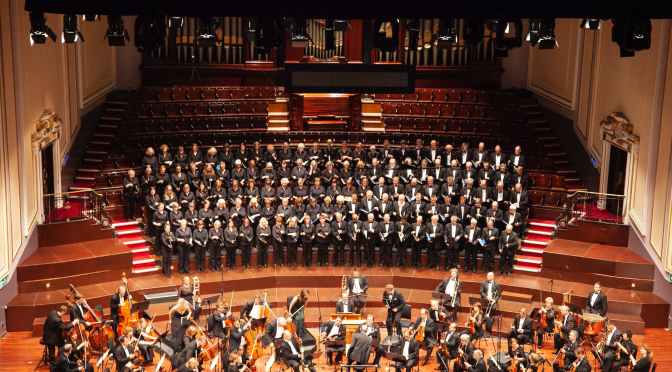
What cooperation! What unity! What harmony! I wish I was describing a congregation of God’s people, but instead, it was the Prague Symphony Orchestra. They performed in the  Knox Concert Series, and I had the chance to hear and see this great orchestra up close. The experience of hearing the orchestra reminded me anew about the importance of unity and cooperation.

The Prague Symphony Orchestra was composed of some 89 musicians, as well as a conductor, stage crew, etc. Almost a third of the musicians were violinists. It was interesting to see all of those bows moving in unison. Their skill was evident. This great skill means they used their God-given talents, and practiced endless hours. George Eliot said, “‘Tis God gives skill, But not without men’s hands: He could not make Antonio Stradivari’s violins without Antonio.” I wonder what we might accomplish in the Lord’s church if we were as diligent in honing our God-given talents and skills to be used in His service in the same way these musicians did.

All of the musicians were playing the same piece of music, and were “on the same page.” They were playing as individuals, under the direction of the conductor. As we follow Christ and scripture, we also work in unity and harmony.

From my vantage point in the concert, I could observe some of the musicians better than others. I was especially interested in the gentleman who played the tambourine during the first piece, Dvorak’s “Carnival Overture.” I never knew that anyone could be so enthusiastic playing the tambourine! It would seem this would not take as much skill as playing a violin, or a cello, or an oboe. Yet he played it with amazing energy and vigor, adding to the overall beauty of the piece, providing just the right accent needed. In the Lord’s work, there are often “parts” which seem minor─preparing the communion, counting the attendance, turning on the heat, etc., but think what a difference it makes when some of those “minor” jobs aren’t done as they should be.

As Paul reminded the Corinthians, “For the body is not one member, but many. If the foot shall say, Because I am not the hand, I am not of the body; is it therefore not of the body? And if the ear shall say, Because I am not the eye, I am not of the body; is it therefore not of the body? If the whole body were an eye, where were the hearing? If the whole were hearing, where were the smelling? But now hath God set the members every one of them in the body, as it hath pleased him. And if they were all one member, where were the body? But now are they many members, yet but one body” (1 Corinthians 12:14-20). We all have something to contribute to the Lord’s work, and we need everyone!

“Behold, how good and how pleasant it is for brethren to dwell together in unity!” (Psalm 133:1).

TIME OUT! — BOB PRICHARD

My then three year-old grandson spent the weekend with his dad at a law school competition in Birmingham. He enjoyed being with his daddy on the trip, but there was quite a bit of time just sitting and waiting for the team to complete various competitions. At one point, after they had been sitting on a bench waiting for a long time, he turned to his dad and asked, “Daddy, How long do we have to stay in ‘time out’?”

Have you been in time out recently? What do we do when we are in “time out,” waiting for God to do what we need Him to do?

“Hast thou not known? hast thou not heard, that the everlasting God, the LORD, the Creator of the ends of the earth, fainteth not, neither is weary? there is no searching of his understanding. He giveth power to the faint; and to them that have no might he increaseth strength. Even the youths shall faint and be weary, and the young men shall utterly fall: But they that wait upon the LORD shall renew their strength; they shall mount up with wings as eagles; they shall run, and not be weary; and they shall walk, and not faint” (Isaiah 40:28-31).

Have you ever watched an eagle fly? As it soars in the sky, it seems that its flight is effortless. Using its strong wings, it knows how to soar as it is lifted by the wind currents.

I haven’t reached that point yet when I can soar while I wait, but I know that God has promised me that when I fully trust in Him. What seems like a child’s “time out,” may just be a time when the Lord is preparing me for greater service, or He may be offering me a test that will make me the patient Christian that I need to be. Normally I want my patience RIGHT NOW, but that is not always God’s way. His way is to trust Him RIGHT NOW, and know that He will work things in His own way, because “we know that all things work together for good to them that love God, to them who are the called according to his purpose” (Romans 8:28).

TAKING HOLY THINGS FOR GRANTED — BOB PRICHARD

In my recent Bible reading, the following passage was significant. “And Nadab and Abihu, the sons of Aaron, took either of them his censer, and put fire therein, and put incense thereon, and offered strange fire before the LORD, which he commanded them not. And there went out fire from the LORD, and devoured them, and they died before the LORD” (Leviticus 10:1-2). 

This tragic situation came about because these two sons of Aaron were careless in their service to God. What struck me in my reading of the passage this time is what I read in the two verses before this. “And Moses and Aaron went into the tabernacle of the congregation, and came out, and blessed the people: and the glory of the LORD appeared unto all the people.  And there came a fire out from before the LORD, and consumed upon the altar the burnt offering and the fat: which when all the people saw, they shouted, and fell on their faces” (Leviticus 9:23-24).

Did you notice what happened? The “glory of the Lord” appeared to the people, and the Lord sent a fire out that consumed the sacrifice, and “all the people saw, they shouted, and fell on their faces.” And then in the very next verse, Nadab and Abihu brought down more fire from the Lord by their disobedience. It makes me wonder, how could they have done this? Weren’t they paying attention? Didn’t they realize the power of God? Didn’t they know what they were doing?

I don’t know all of the reasons that Nadab and Abihu made their fateful choice, but one thing is obvious. They took holy things for granted. They were the right people, with the right implements of worship, doing the right thing, in the right place, but in the wrong way. And they paid for it with their lives.

I wonder how often we are guilty of taking holy things for granted. Have you ever partaken of the Lord’s Supper, and then realized that you didn’t even think about what Christ did for you. Most all of us are guilty of sometimes singing words we don’t mean or believe in worship. When we sing “Anywhere with Jesus,” do we mean it? When we sing, “all to Thee, I surrender,” do we mean it?

The Lord has blessed us with His mercy, in that He has not destroyed us like Nadab and Abihu. But can we continue to take holy things for granted? “Wherefore we receiving a kingdom which cannot be moved, let us have grace, whereby we may serve God acceptably with reverence and godly fear: For our God is a consuming fire” (Hebrews 12:29).