Tag Archives: Baptism

WHAT WAS “BAPTISM FOR THE DEAD”? — BOB PRICHARD

The fifteenth chapter of 1 Corinthians is Paul’s most lengthy and detailed defense of the principle of the resurrection. He stressed that the resurrection is at the very heart of the gospel of Christ: “For I delivered unto you first of all that which I also received, how that Christ died for our sins according to the scriptures; and that he was buried, and that he rose again the third day according to the scriptures” (1 Corinthians 15:3-4). Preaching the gospel is pointless without the resurrection. “If there be no resurrection of the dead, then is Christ not risen: and if Christ be not risen, then is our preaching vain, and your faith is also vain” (1 Corinthians 15:13-14). In the midst of his arguments concerning the principles of resurrection, Paul asked the Corinthians:  “Else what shall they do which are baptized for the dead, if the dead rise not at all? why are they then baptized for the dead?” (1 Corinthians 15:29).

Since this is the only verse in scripture that makes any reference to baptism for the dead, it has been subject to much speculation. Paul did not explicitly approve or condemn the practice. He just used it as an example of the inconsistency of some at Corinth who “baptized for the dead” while rejecting the resurrection. All through the chapter Paul used pronouns such as we, us, our and ye [you], but in this verse he spoke of “they” who are baptized for the dead. Apparently only some Corinthians, and no one else, practiced “baptism for the dead.”

The idea that baptism for the dead involves “proxy baptism,” or the baptism of one person on behalf of another person, such as a dead relative, contradicts many other scriptures. While Peter does say that “baptism doth also now save us” (1 Peter 3:21), the teaching of scripture is clear that is not “baptism alone” that saves us, but the baptism that comes as a result of faith and repentance. If one could procure salvation for the dead through baptism, he would also have to believe and repent for the dead. Paul reminded the Romans that “we are buried with him by baptism into death: that like as Christ was raised up from the dead by the glory of the Father, even so we also should walk in newness of life” (Romans 6:4). Baptism for the dead certainly does not  bring “newness of life” to the dead!

Explanations of “baptism for the dead” that are consistent with other scripture are few. It is possible that some of the Corinthian Christians obeyed the gospel because of death-bed appeals of friends and relatives, so that they were baptized for (in response to the appeals of) the dead. It is also possible that some at Corinth considered that in their baptism they replaced those who were now dead or martyred, thus to fill vacant places in the church left by those who no longer lived. If some at Corinth baptized on behalf of the dead in proxy baptism, they did something that is inconsistent with the rest of scripture. Since no New Testament writer commanded or implied that the practice should continue, there is no evidence that the church should “baptize for the dead” today.

HOW DOES ONE BECOME A PRIEST ACCORDING TO THE NEW TESTAMENT? — BOB PRICHARD

Priests performed very important tasks under the Old Covenant, with their primary purpose being a representative of man to God. The mediation that the priest offered was mainly through offering sacrifices and intercession to God. Priests, including the high priest, could only come from the tribe of Levi, and were separate from the people.

Under the New Covenant, things are very different, however. The high priest, under whom all other priests must serve is Jesus Christ, who did not bring an animal sacrifice to God, but instead offered Himself as the sacrifice. Peter recognized that the priestly functions in the church would not be performed by a special group of men, but instead they would be performed by all Christians. By virtue of this, all Christians are priests in God’s sight. Peter said, speaking of all Christians, “Ye also, as lively stones, are built up a spiritual house, an holy priesthood, to offer up spiritual sacrifices, acceptable to God by Jesus Christ” (1 Peter 2:5).  

Paul exhorted the Roman Christians, “I beseech you therefore, brethren, by the mercies of God, that ye present your bodies a living sacrifice, holy, acceptable unto God, which is your reasonable service” (Romans 12:1). Only priests were allowed to offer sacrifices under the Old Covenant, so since Paul begged Christians to offer themselves as living sacrifices, he agrees with Peter that Christians are “an holy priesthood.”

Since all Christians are priests, that means that no Christian has to rely on a mere man as mediator between him and God. A Christian needs only go through the great high priest, Jesus Christ.  “For there is one God, and one mediator between God and men, the man Christ Jesus” (1 Timothy 2:5).  

Under the old covenant, men from the tribe of Levi were appointed to their priestly duties in elaborate rituals. They were clothed in ceremonial garments, and ritually cleansed of their sins. Of prime importance in their appointment was ceremonial washing in water, and sprinkling of the sacrificial blood on them. Christians today put on the ceremonial priestly garments, wash in water, and are sprinkled with the blood of Christ’s sacrifice when they obey the Lord in baptism. Paul wrote, “For as many of you as have been baptized into Christ have put on Christ” (Galatians 3:27). As the Christian obeys Christ in baptism, he qualifies to come before the Heavenly Father, because he is symbolically clothed in the priestly garments. As the Christian is immersed in water, the penitent believer makes contact with the cleansing blood of the Lamb of God, Jesus Christ. Paul reminded the Romans what they had done: “Know ye not, that so many of us as were baptized into Jesus Christ were baptized into his death?” (Romans 6:3). As the believer is baptized into the death of Christ, she contacts the cleansing blood of Christ. “Let us draw near with a true heart in full assurance of faith, having our hearts sprinkled from an evil conscience, and our bodies washed with pure water” (Hebrews 10:22).

HOW DO YOU JOIN THE CHURCH OF CHRIST? — BOB PRICHARD

People join many organizations, from civic clubs like Rotary and Lions, to personal development clubs like Toastmasters, to special interest organizations like the P. T. A. It is natural then that most people think about “joining” the church. As strange as it may seem, however, that one cannot “join the church of Christ.” The idea of joining the church carries with it the thought that the church is just like other organizations that you may join at will. The church is unlike any other organization on earth, however, because of its divine origin.

If you cannot join the church, then how do you become a member of the church? The second chapter of Acts describes the beginning of the Lord’s church, on the day of Pentecost, almost two thousand years ago. The last verse of the chapter says, “And the Lord added to the church daily those who were being saved” (Acts 2:47).  Notice that we do not join the church, but the Lord adds those who are saved to the church. Some discount the value of the Lord’s church, and say that it really is unimportant, but the church is the body of Christ. “He [Christ] is the head of the body, the church: who is the beginning, the firstborn from the dead; that in all things he might have the prominence” (Colossians 1:18). The church is so valuable that Christ sacrificed Himself for it. Paul commanded, “Husbands, love your wives, even as Christ also loved the church, and gave himself for it” (Ephesians 5:25).

Since “the Lord added to the church daily those who were being saved” (Acts 2:47), and the church is the body of Christ, and He “gave himself for it,” salvation and the church are intimately tied together. The Lord gives salvation and adds to His church at the same time. The key then, is “What must I do to be saved?” After hearing the sermon on the day of Pentecost, realizing that they had crucified the very Son of God, the multitude gathered in Jerusalem for Pentecost cried out, “Men and brethren, what shall we do?” (Acts 2:37). Their cry showed that they wanted to turn from sin and obey Christ. Peter’s reply was, “Repent, and be baptized every one of you in the name of Jesus Christ for the remission of sins, and ye shall receive the gift of the Holy Ghost” (Acts 2:38).

Those on Pentecost expressed faith in Jesus Christ by the very nature of their question, “Men and brethren, what shall we do?” Peter said, “repent, and be baptized every one of you in the name of Jesus Christ for the remission [forgiveness] of sins.” The response was such that “they that gladly received his word were baptized: and the same day there were added unto them about three thousand souls” (Acts 2:41). Three thousand obeyed Christ in baptism, and the Lord added them to His church. None “joined the church,” but all were added by the Lord. The other conversion accounts in Acts show that each person found salvation by obeying the Lord in baptism, following repentance and faith in Christ. We do not join the church, but when we obey the Lord, He adds us to His church.

DOES EPHESIANS 2:8-9, WHICH SAYS WE ARE NOT SAVED BY  WORKS, CONTRADICT JAMES 2:24, WHICH SAYS WE ARE SAVED BY WORKS? — BOB PRICHARD

By pitting one verse against another, the Bible sometimes seems contradictory. God, the Creator of the universe inspired the Bible, though, so there cannot be any real contradictions. Apparent contradictions disappear with proper understanding of the text.

Emphasizing man’s need to rely on the grace of God, Paul wrote, “by grace are ye saved through faith; and that not of yourselves: it is the gift of God: not of works, lest any man should boast” (Ephesians 2:8-9). A simple definition of grace is “unmerited favor.” God grants that  unmerited favor for the salvation of mankind. Paul said salvation is “not of works, lest any man should boast,” indicating that man cannot perform any meritorious works that would earn salvation. Salvation is by grace.

The apparent contradiction comes when we compare Ephesians 2:8-9 with James 2: 24, in which James wrote, “Ye see then how that by works a man is justified, and not by faith only.” The two passages are not really in conflict, because James and Paul were each speaking of two different kinds of works, as each emphasized a different aspect of salvation.

Paul emphasized that the grace of God saves, and man cannot earn his salvation by works of merit. The fact that God’s grace saves, however, does not mean that God relieves man of the responsibility to obey Him to receive the benefits of that grace. If salvation is by “grace alone,” with no acts of obedience, then God, “who is no respecter of persons” (Acts 10:34), would automatically save every man, no matter what he did. We are saved by many things, however.  “For we are saved by hope” (Romans 8:24). Hebrews 5:9 tells us that Christ  “became the author of eternal salvation unto all them that obey him.” Peter wrote of the obedience of Noah and his family, saying “the like figure whereunto even baptism doth also now save us” (1 Peter 3:21). The apostle John wrote, “if we walk in the light, as he is in the light, we have fellowship one with another, and the blood of Jesus Christ his Son cleanseth us from all sin” (1 John 1:7).

How can salvation come by grace, by hope, by Christ, by the blood, and by baptism? All of these save because salvation is “by grace through faith” (Ephesians 2:8), that is, an obedient faith. As James said, “faith, if it hath not works, is dead, being alone” (James 2:17). A living faith is a faith that works, that obeys the commands of Christ, including being baptized. As one is baptized into Christ he makes contact with the cleansing blood of Christ (Romans 6:3-7). Hebrews chapter 11, sometimes called “Faith’s Hall of Fame,” is filled with examples of “grace through faith.”  “By faith Abel offered unto God a more excellent sacrifice” (Hebrews 11:4). “By faith Noah … prepared an ark” (Hebrews 11:7). “By faith Abraham … obeyed” (Hebrews 11:8). We cannot earn our salvation through works of merit, but we must obey God to benefit from his marvelous grace. “By grace through faith” we obediently accept God’s love.

WHY DID PAUL TELL THE CORINTHIANS,  “I THANK GOD THAT I BAPTIZED NONE OF YOU”? — BOB PRICHARD

It seems strange that Paul would tell the Corinthians that he was thankful that he baptized none of them, when he taught more about the importance of baptism than any other New Testament writer. For example, he reminded the Roman Christians of their common experience of baptism into Christ: “Know ye not, that so many of us as were baptized into Jesus Christ were baptized into his death? Therefore we are buried with him by baptism into death: that like as Christ was raised up from the dead by the glory of the Father, even so we also should walk in newness of life” (Romans 6:3-4).

Most apparent contradictions in scripture are easily be explained by looking at the context (the surrounding verses). Problems filled the church in Corinth: abuses of the Lord’s Supper, abuses of miraculous spiritual gifts, problems concerning marriage, Christians taking one another before the law, and most importantly, divisions within the church. Jesus prayed for the unity of all of His followers: “That they all may be one; as thou, Father, art in me, and I in thee, that they also may be one in us: that the world may believe that thou hast sent me” (John 17:21). The church in Corinth, however, was dividing itself into sects and denominations.

Paul wrote, “Now I beseech you, brethren, by the name of our Lord Jesus Christ, that ye all speak the same thing, and that there be no divisions among you; but that ye be perfectly joined together in the same mind and in the same judgment” (1 Corinthians 1:10). Division was so severe, however, that some were saying “I am of Paul,” and others were saying “and I of Apollos; and I of Cephas; and I of Christ.” Paul asked, “Is Christ divided? was Paul crucified for you? or were ye baptized in the name of Paul?” (1 Corinthians 1:12-13). The divisions were so severe that they were no longer simply Christians, or followers of Christ, but they were becoming “Paulite Christians,” “Apollosite Christians,” and “Cephasite Christians.” They were not following Jesus as much as they were following the preachers who had taught or baptized them.

It was because of these terrible divisions that Paul said, “I thank God that I baptized none of you, but Crispus and Gaius; Lest any should say that I had baptized in mine own name. And I baptized also the household of Stephanas: besides, I know not whether I baptized any other. For Christ sent me not to baptize, but to preach the gospel: not with wisdom of words, lest the cross of Christ should be made of none effect. For the preaching of the cross is to them that perish foolishness; but unto us which are saved it is the power of God” (1 Corinthians 1:14-18). Paul did not want to contribute in any way to the divisions within the Corinthian congregation. He was glad there were very few Corinthians who could claim to be “Paulite Christians,” because he had only personally baptized a few. This is likely the reason that Jesus did not personally baptize.  “Jesus himself baptized not, but his disciples” (John 4:2). Paul preached the whole gospel of Christ, which includes water baptism.

WHAT DOES IT MEAN TO “OBEY THE GOSPEL”? — BOB PRICHARD

The gospel of Jesus Christ is the “good news” that mankind needs. It is a message that must be received and obeyed. Paul warned that the Loving Savior will return “In flaming fire taking vengeance on them that know not God, and that obey not the gospel of our Lord Jesus Christ” (2 Thessalonians 1:8). The Lord will take vengeance on those who “obey not the gospel,” and He will reward those who do obey the gospel.  

Paul stressed the fundamentals of the gospel, reminding the Corinthians what he had preached: “For I delivered unto you first of all that which I also received, how that Christ died for our sins according to the scriptures; And that he was buried, and that he rose again the third day according to the scriptures” (1 Corinthians 15:3-4). The death, burial, and resurrection of Christ were at the heart of his message. The rest of 1 Corinthians 15 is a discussion of the importance of the resurrection. He began the chapter by reminding the Corinthians that it was the gospel he had preached to them. “Moreover, brethren, I declare unto you the gospel which I preached unto you, which also ye have received, and wherein ye stand; By which also ye are saved, if ye keep in memory what I preached unto you, unless ye have believed in vain” (1 Corinthians 15:1-2). Paul stressed that the gospel is a message to receive, and to stand in, and it is a message that brings salvation when kept in memory.

Paul asserts that we choose the master we serve. “Know ye not, that to whom ye yield yourselves servants to obey, his servants ye are to whom ye obey; whether of sin unto death, or of obedience unto righteousness?” (Romans 6:16). The master we choose is the one we obey. Jesus said, “If ye love me, keep my commandments” (John 14:15). Paul commended the Romans for the choice they had made in obeying Christ and His gospel. “But God be thanked, that ye were the servants of sin, but ye have obeyed from the heart that form of doctrine which was delivered you. Being then made free from sin, ye became the servants of righteousness” (Romans 6:17-18). They had obeyed from the heart “that form of doctrine” he had delivered to them. Doctrine refers to something taught, and Paul taught the same gospel wherever he went. Centered in the facts of the death, burial and resurrection of Christ, his message was one of the necessity of obeying the will of God and becoming a servant of righteousness.  

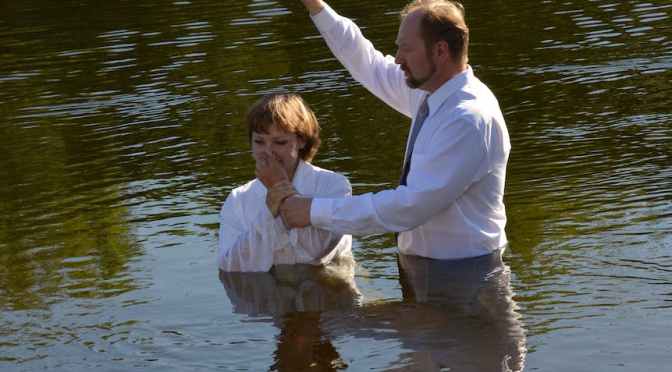
Earlier he stressed that they were buried with Christ in baptism to obey the gospel. “Know ye not, that so many of us as were baptized into Jesus Christ were baptized into his death? Therefore we are buried with him by baptism into death: that like as Christ was raised up from the dead by the glory of the Father, even so we also should walk in newness of life” (Romans 6:3-4). Baptism parallels the death, burial, and resurrection of Christ. Man is dead in sin, and then buried with Christ in baptism. He rises from the waters of baptism in the likeness of Christ’s resurrection to walk in newness of life. He then has the forgiveness of sin, and the joy that comes from obeying the gospel.

SHOULD BABIES BE BAPTIZED? — BOB PRICHARD

The practice of baptizing babies, widely accepted today, was completely unknown in the early church. The first explicit mention of the practice in history is in the writings of Tertullian of Carthage, an early church leader, who lived in the third century (some two hundred years after the beginning of the church). Tertullian wrote about the baptism of children as a then new practice, reserved for children who were very sick. Tertullian opposed the practice, saying it was not biblical, but many other church leaders accepted it, and the practice became firmly established in religious tradition. It became the almost universally accepted practice until challenged by the Anabaptists in the sixteenth century, who taught that baptism was reserved for believers.

There is absolutely no mention of baptizing babies in the Bible. Some teach that the “household” conversions of Lydia (Acts 16), Cornelius (Acts 10), or the Philippian jailer (Acts 16) show that infants must have been baptized. The reasoning is that since whole households were converted, there must have been infants included. None of these accounts, however, mention any infants, and the presence of infants cannot be assumed. Every account of conversion in the book of Acts mentions at least one thing, such as believing, which an infant cannot do. There is no reason to assume that infants were present and baptized. 

It is sometimes taught that infants must be baptized because of “original sin.” “Original sin” is supposedly the sin that all humanity inherits from Adam, because we were all involved in his original sin in Eden. Although we choose to sin, we are not responsible for Adam’s sin. Every person is responsible for his own sins, and the child is sinless until he reaches the proper mental maturity to be responsible for his own sins. The prophet Ezekiel declared, “The soul that sinneth, it shall die. The son shall not bear the iniquity of the father, neither shall the father bear the iniquity of the son: the righteousness of the righteous shall be upon him, and the wickedness of the wicked shall be upon him” (Ezekiel 18:20). When Paul said, “For as in Adam all die, even so in Christ shall all be made alive” (1 Corinthians 15:22), He was talking about physical death and the resurrection. If he was saying that we inherit sin from Adam, simply by being humans, then he would also be saying that we inherit eternal life in Christ, simply by being humans. Jesus said, “Suffer little children, and forbid them not, to come unto me: for of such is the kingdom of heaven” (Matthew 19:14). He held up their sinless purity as an example for all.

Infant baptism simply cannot be right, because there is no biblical authority for it. It is an ancient tradition of men, no doubt begun with good intentions, but nevertheless contrary to the Bible. Baptism is for the penitent believer (Acts 2:38). Babies cannot repent, and have no sins to repent of. The Bible picture of baptism is a burial of believers. “Know ye not, that so many of us as were baptized into Jesus Christ were baptized into his death? Therefore we are buried with him by baptism into death: that like as Christ was raised up from the dead by the glory of the Father, even so we also should walk in newness of life. For if we have been planted together in the likeness of his death, we shall be also in the likeness of his resurrection” (Romans 6:3-5). Infant baptism changes God’s plan, and may prevent the adult believer from obeying the gospel, thinking he or she has already been baptized, even though he has not followed the biblical pattern.

WAS THE PHILIPPIAN JAILER SAVED BEFORE BAPTISM? — BOB PRICHARD

The story of the Philippian jailer is found in Acts 16. The jailer was in charge of Paul and Silas, who had been arrested on false charges by the owners of a slave girl. They had cast a demon out of the girl, depriving her owners of the money they made by exploiting her (Acts 16:20-21). Because of this, Paul and Silas were arrested, beaten, and put into the innermost prison, with their feet in the stocks. The jailer was to keep them safely until the officials could deal with them.

Beaten and bleeding, and locked in the inner prison, Paul and Silas prayed and sang praises to God, even though it was midnight (Acts 16:25). Suddenly an earthquake shook the prison, and the jailer, awakening from sleep was ready to kill himself, because he was sure that the prisoners would have escaped. When Paul calmed him, assuring him that the prisoners were still there, “he called for a light, and sprang in, and came trembling, and fell down before Paul and Silas, and brought them out, and said, Sirs, what must I do to be saved?” (Acts 16:29- 30). Paul and Silas answered very simply: “Believe on the Lord Jesus Christ, and thou shalt be saved, and thy house” (Acts 16:31). Since the jailer was not told to be baptized, does this mean that he was saved before baptism? Consider the rest of his story.

Paul and Silas had told the jailer that salvation would come from believing on the Lord Jesus Christ, but what did this jailer know about Jesus Christ? It is unlikely that he had heard any of the sermons that Paul and Silas had preached in Philippi. He probably knew absolutely nothing about Jesus, other than what he had learned from hearing the songs and prayers of Paul and Silas, so they had to teach him. “And they spake unto him the word of the Lord, and to all that were in his house” (Acts 16:32). Did speaking the “word of the Lord” include the necessity of baptism? Remember that it was midnight when Paul and Silas were singing and praying (Acts 16:25). It was after this that the earthquake came, the jailer sprang in and asked “What must I do to be saved?” and they “spake unto him the word of the Lord.” Without question it was in the wee hours of the morning when the jailer responded to their preaching.

Luke tells us, “he took them the same hour of the night, and washed their stripes; and was baptized, he and all his, straightway. And when he had brought them into his house, he set meat before them, and rejoiced, believing in God with all his house” (Acts 16:33-34). When were the jailer and his household baptized? It was “the same hour of the night.” Why didn’t they at least wait until morning light before they were baptized, if baptism was not essential? When did he rejoice?  It was after they were baptized, not before. They rejoiced, knowing that their sins were forgiven, and they had truly obeyed the Lord. The jailer had a saving faith, a faith that responded to the sacrifice of Christ by obeying Him. His obedience in baptism demonstrated his faith, and his faith was demonstrated in his baptism. The jailer was like all other Christians we read of in the New Testament. He was saved after baptism.

WHAT IS THE GOSPEL OF JESUS CHRIST? — BOB PRICHARD

The theme of all the New Testament is the gospel of Jesus Christ. Practically every page provides information on this important topic. In its simplest terms, the gospel of Jesus Christ is simply the “good news” concerning Him. The Greek word translated as gospel means “good news.” The word “evangelist,” a “preacher of the gospel,” comes from the same root word. In a day when there is so little good news, it is important to recognize that Jesus came to give the world good news.

The message of the gospel is that although man is a sinner, deserving of death, God loved mankind enough to make provision for salvation. Paul warned the Roman Christians that “all have sinned, and come short of the glory of God” (Romans 3:23) and “the wages of sin is death” (Romans 6:23a). Comfort comes, however, in knowing the good news that “the gift of God is eternal life through Jesus Christ our Lord” (Romans 6:23b). Paul reminded them that because they had become Christians, they were “justified freely by his grace through the redemption that is in Christ Jesus” (Romans 3:24). The “amazing grace” of God is truly good news. 

At the heart of the gospel message are the death, burial, and resurrection of Christ. As Peter preached the first “gospel sermon” on the day of Pentecost, he spoke of “Jesus of Nazareth, a man approved of God among you by miracles and wonders and signs” (Acts 2:22). Although He was put to death, death could not hold Him. “This Jesus hath God raised up” (Acts 2:32). Therefore let all the house of Israel know assuredly, that God hath made that same Jesus, whom ye have crucified, both Lord and Christ” (Acts 2:36). The people responded properly: “Now when they heard this, they were pricked in their heart, and said unto Peter and to the rest of the apostles, Men and brethren, what shall we do?” (Acts 2:37). Peter answered by telling them how to accept the good news of Christ: “Repent, and be baptized every one of you in the name of Jesus Christ for the remission of sins, and ye shall receive the gift of the Holy Ghost” (Acts 2:38).

The gospel is especially good news, because its message is universal. Peter continued by telling his Jewish audience, “For the promise is unto you, and to your children, and to all that are afar off, even as many as the Lord our God shall call” (Acts 2:39). The “all that are afar off” meant that the message was to go to a worldwide audience—the church would include the Gentiles as well as the Jews. Faith moved many to obey: “Then they that gladly received his word were baptized: and the same day there were added unto them about three thousand souls” (Acts 2:41). From that day forward, the church grew as more and more people were added to the church (Acts 2:47). Christ commands: “All power is given unto me in heaven and in earth.  Go ye therefore, and teach all nations, baptizing them in the name of the Father, and of the Son, and of the Holy Ghost: Teaching them to observe all things whatsoever I have commanded you: and, lo, I am with you alway, even unto the end of the world. Amen” (Matthew 28:18-20).

DID THE LORD SAVE PAUL ON THE ROAD TO DAMASCUS? — BOB PRICHARD

No. The conversion of Saul of Tarsus (later known as the apostle Paul) is the most thoroughly documented conversion in all the Bible, but it is still widely misunderstood. As Saul was making his way to Damascus to persecute Christians, Jesus appeared to him, but Saul was not saved simply because the Lord appeared to him. Luke records, “And he trembling and astonished said, Lord, what wilt thou have me to do? And the Lord said unto him, Arise, and go into the city, and it shall be told thee what thou must do” (Acts 9:6). The Lord did not save Saul until he completed what he “must do.”

The first mention in scripture of Saul of Tarsus is in Acts 7, where those stoning Stephen, the first Christian martyr, lay their clothes at his feet. Luke reported, “Saul was consenting unto his death. And at that time there was a great persecution against the church which was at Jerusalem; and they were all scattered abroad throughout the regions of Judaea and Samaria, except the apostles” (Acts 8:1). Saul was in the middle of all this persecution: “As for Saul, he made havock of the church, entering into every house, and haling men and women committed them to prison” (Acts 8:3). Because of his zeal for persecuting the church, Saul went to the high priest and asked for letters to the Damascus synagogues, so that he could arrest the Christians in Damascus and bring them back to Jerusalem for punishment.

As Saul journeyed to Damascus, a bright light blinded him, and he heard Jesus say to him, “Saul, Saul, why persecutest thou me?” (Acts 9:4). After Jesus identified Himself to Saul, He sent Saul into Damascus with the words, “Arise, and go into the city, and it shall be told thee what thou must do” (Acts 9:6). Saul then spent the next three days in prayer and fasting. This showed that he was serious about following Christ, but his three days of prayer and fasting did not save him or show that he was saved. His penitent behavior was preparing him for the necessary obedience.

The Lord then directed Ananias, a Christian of Damascus, to go to Saul to tell him what he “must do.” Although it must have been a daunting assignment, Ananias, “a devout man according to the law” came to Saul, a fellow Jew, and said, “Brother Saul, receive thy sight” (Acts 22:12-13). Saul was no longer blind, and Ananias warned him of what was ahead of him if he chose to follow Christ. “The God of our fathers hath chosen thee, that thou shouldest know his will, and see that Just One, and shouldest hear the voice of his mouth.  For thou shalt be his witness unto all men of what thou hast seen and heard” (Acts 22:14-15). Having warned him what lay ahead of him in Christ’s service, Ananias then told Saul what he “must do.” “Why tarriest thou? arise, and be baptized, and wash away thy sins, calling on the name of the Lord” (Acts 22:16). Why was Saul not saved before?  Because he was still in his sins.  That is why he needed to call on the name of the Lord by by washing away his sins. As he obeyed the Lord’s command through the messenger Ananias, he received the forgiveness of his sins and the salvation he had spent three days praying for in his blindness.

WHY WOULD SOMEONE BE BAPTIZED AGAIN? — BOB PRICHARD

Paul wrote that “There is one body, and one Spirit, even as ye are called in one hope of your calling; One Lord, one faith, one baptism, One God and Father of all, who is above all, and through all, and in you all” (Ephesians 4:4-6). Among these great unities is “one baptism,” indicating that only one baptism was applicable to men when Paul wrote. Acts 19:1-7  tells of a group of twelve men that Paul met at Ephesus who knew only John’s baptism, but were baptized into Christ when they understood that they had not fully obeyed God. 

BAPTISM AND FAITH ARE CONNECTED. 

Paul said“unto them, Have ye received the Holy Ghost since ye believed? And they said unto him, We have not so much as heard whether there be any Holy Ghost. And he said unto them, Unto what then were ye baptized? And they said, Unto John’s baptism” (Acts 19:2-3).

Baptism is for believers. “And as they went on their way, they came unto a certain water: and the eunuch said, See, here is water; what doth hinder me to be baptized? And Philip said, If thou believest with all thine heart, thou mayest. And he answered and said, I believe that Jesus Christ is the Son of God” (Acts 8:36-37).

“He that believeth and is baptized shall be saved; but he that believeth not shall be damned” (Mark 16:16).

“For ye are all the children of God by faith in Christ Jesus. For as many of you as have been baptized into Christ have put on Christ” (Galatians 3:26-27).

JOHN’S BAPTISM WAS FROM GOD, BUT WAS NO LONGER EFFECTIVE. 

“Then said Paul, John verily baptized with the baptism of repentance, saying unto the people, that they should believe on him which should come after him, that is, on Christ Jesus. When they heard this, they were baptized in the name of the Lord Jesus” (Acts 19:4-5).

“John did baptize in the wilderness, and preach the baptism of repentance for the remission of sins” (Mark 1:4). “The baptism of John, whence was it? from heaven, or of men? And they reasoned with themselves, saying, If we shall say, From heaven; he will say unto us, Why did ye not then believe him?” (Matthew 21:25). John’s baptism was not scriptural for them. They were subject to baptism into Christ.

PEOPLE CAN BE HONESTLY AND SINCERELY MISTAKEN. 

These twelve menwere honest and sincere, but they needed to be baptized into Christ. Some who honestly think they are saved are lost. Jesus said, “Not every one that saith unto me, Lord, Lord, shall enter into the kingdom of heaven; but he that doeth the will of my Father which is in heaven. Many will say to me in that day, Lord, Lord, have we not prophesied in thy name? and in thy name have cast out devils? and in thy name done many wonderful works? And then will I profess unto them, I never knew you: depart from me, ye that work iniquity” (Matthew 7:21-23).

THE ONE BAPTISM IS NECESSARY TO PLEASE GOD.

Notice that baptism precedes new life: “Know ye not, that so many of us as were baptized into Jesus Christ were baptized into his death? Therefore we are buried with him by baptism into death: that like as Christ was raised up from the dead by the glory of the Father, even so we also should walk in newness of life” (Romans 6:3-4). 

Sins are put off as we are baptized. “And ye are complete in him, which is the head of all principality and power:  In whom also ye are circumcised with the circumcision made without hands, in putting off the body of the sins of the flesh by the circumcision of Christ: Buried with him in baptism, wherein also ye are risen with him through the faith of the operation of God, who hath raised him from the dead” (Colossians 2:10-12).

CERTAIN THINGS ARE NECESSARY FOR SCRIPTURAL BAPTISM.

(1). The proper mode is immersion. “Know ye not, that so many of us as were baptized into Jesus Christ were baptized into his death? Therefore we are buried with him by baptism into death: that like as Christ was raised up from the dead by the glory of the Father, even so we also should walk in newness of life” (Romans 6:3-4).

(2). The proper subject for baptism is the penitent believer. “He that believeth and is baptized shall be saved; but he that believeth not shall be damned” (Mark 16:16).

“Now when they heard this, they were pricked in their heart, and said unto Peter and to the rest of the apostles, Men and brethren, what shall we do? Then Peter said unto them, Repent, and be baptized every one of you in the name of Jesus Christ for the remission of sins, and ye shall receive the gift of the Holy Ghost” (Acts 2:37-38).

(3). The proper purpose for baptism is salvation. “The like figure whereunto even baptism doth also now save us (not the putting away of the filth of the flesh, but the answer of a good conscience toward God,) by the resurrection of Jesus Christ” (1 Peter 3:21). “And now why tarriest thou? arise, and be baptized, and wash away thy sins, calling on the name of the Lord” (Acts 22:16).

HONEST AND SINCERE PEOPLE WILL CHANGE. 

When the men learned they were wrong, they changed. When Saul of Tarsus learned he was wrong, he changed. The people of Thessalonica changed when they understood the gospel of Christ. “For they themselves show of us what manner of entering in we had unto you, and how ye turned to God from idols to serve the living and true God” (1 Thessalonians 1:9).

Have you been baptized according to the scriptures?

WHEN SHOULD A PERSON BE “REBAPTIZED”? — BOB PRICHARD

Strictly speaking, scriptural baptism is a “one time” proposition. Ephesians 4:5 says that there is “one baptism” today. The “one baptism” consists of the immersion of a penitent believer in water, whereby he contacts the blood of Christ, receives the forgiveness of his sins, and the Lord adds him to the church. Even if a person “backslides,” or becomes unfaithful, it is not necessary to be rebaptized, if his original baptism was a scriptural baptism. Simon the sorcerer, in Acts 8, is an example of a Christian who sinned, and was told to pray for forgiveness. Peter told Simon, “Repent therefore of this thy wickedness, and pray God, if perhaps the thought of thine heart may be forgiven thee” (Acts 8:22). Philip the evangelist had properly taught and baptized Simon, so there was no need for him to be rebaptized (Acts 8:13).

Sometimes, however, when a person thinks he is being scripturally baptized, he is really doing no more than getting wet. After further Bible study, he may realize he was not baptized according to the scriptures. Several conditions call for a person who has received “another baptism” to be baptized into Christ. Nearly every religious group practices some form of baptism. But if that baptism is not the “one baptism” of Ephesians 4:5, then it is not a scriptural baptism. For instance, if a person has only been sprinkled with water, and has not been  immersed, or “buried with him by baptism into death” (Romans 6:4), then when he realizes the proper mode of baptism is immersion into Christ, he should be “rebaptized.”

Also, baptism that follows salvation, to join a man-made religious body, is not the “one baptism.” Peter said to the multitude on Pentecost, “Repent and be baptized every one of you in name of Jesus Christ for the remission of sins” (Acts 2:38). The three thousand who obeyed that day, as others of the New Testament, received the remission, or forgiveness of their sins, after baptism. Sectarian baptism, even if by immersion, cannot be the “one baptism” if the person thinks that he has already received the forgiveness of his sins, and is thus saved, before his baptism. The purpose for baptism  makes a difference! Scriptural baptism puts one into the church, the body of Christ, which He has promised to save. “For by one Spirit are we all baptized into one body” (1 Corinthians 12:13).

Often mature believers who committed their lives to Christ and were baptized at an early age begin to question whether they properly understood what they were doing when baptized. If the person was old enough to understand that he was obeying Christ by being  immersed, receiving the forgiveness of his sins, and making Christ the Lord of  his life, then he understood enough. It is only natural that as one grows in his understanding of the scriptures, he  will realize that there was much he did not understand when he first became a Christian. If there is doubt in a person’s mind,  however, concerning his baptism, then he should take action to remove that doubt. The Master said, “If ye love me, keep my commandments” (John 14:15).

“BAPTISM EVERY FOURTH SUNDAY” — BOB PRICHARD

A sign outside a large church building in Birmingham announced “Baptism every fourth Sunday.” I wonder what Peter or Paul would have thought about baptism offered as a kind of fourth Sunday “blue plate” special.

Consider Peter’s experience. On Pentecost, he told the gathered multitude, “Repent and be baptized every one of you in the name of Jesus Christ for the remission of sins” (Acts 2:38). Then just three verses later, Luke tells us that the same day three thousand were added by being baptized for the remission of sins. Daily church growth (Acts 2:47) must have meant daily baptisms.

When Ananias came to Paul and said, “And now why tarriest thou, arise and be baptized, calling on the name of the Lord” (Acts 22:16), he was baptized immediately.

As prisoners in Philippi, Paul and Silas prayed and sang at midnight, and the prisoners heard them. An earthquake shook the jail, so that the jailer planned suicide, thinking the prisoners had escaped. But after they taught the jailer and his family, they were baptized “straightway,” “the same hour of the night” (Acts 16:31).

“Baptism every fourth Sunday” just doesn’t sound like God’s plan.

“ONE SIZE FITS ALL” — BOB PRICHARD

“Then Peter said unto them, Repent, and be baptized every one of you in the name of Jesus Christ for the remission of sins, and ye shall receive the gift of the Holy Ghost” (Acts 2:38).

Some  clothing is “one size fits all.” If we are large or small, we may question if something will really “fit all.” But Peter said repentance and baptism was for all.

At Pentecost, Jews came from around the world. They heard the disciples speak “the wonderful works of God” (Acts 2:7-11). Others were there: priests, Pharisees, Sadducees, Levites, religious people. Probably some pick-pockets and thieves took advantage of the occasion. No matter how religious or irreligious, the message that day was a “one size fits all.” Since God is “no respecter of persons” (Acts 10:34), all had the same opportunity and obligation to repent and be baptized.  God’s promise was for those people, their descendants, the Gentiles (“those afar off”), and us (Acts 2:39). None then or today could receive the remission of sins without this obedience.

All, no matter how unworthy, can receive God’s blessings because the simple gospel “fits all.”

WHY WE MUST BE BURIED WITH CHRIST IN BAPTISM — BOB PRICHARD

The heart of the gospel is the death, burial and resurrection of Christ. Paul began the great resurrection chapter, “Moreover, brethren, I declare unto you the gospel which I preached unto you, which also ye have received, and wherein ye stand; By which also ye are saved, if ye keep in memory what I preached unto you, unless ye have believed in vain. For I delivered unto you first of all that which I also received, how that Christ died for our sins according to the scriptures; And that he was buried, and that he rose again the third day according to the scriptures” (1 Corinthians 15:1-4).

It was their understanding that they had crucified the Son of God that made men at Pentecost cry out, “Men and brethren, what shall we do?” Peter’s response was “Repent, and be baptized every one of you in the name of Jesus Christ for the remission of sins, and ye shall receive the gift of the Holy Ghost” (Acts 2:36-38).

The baptism that Peter preached that day was the baptism preached in the early church. Paul reminded the Christians of Rome that he and they had both been baptized in the same way, for the same reasons. “Know ye not, that so many of us as were baptized into Jesus Christ were baptized into his death? Therefore we are buried with him by baptism into death: that like as Christ was raised up from the dead by the glory of the Father, even so we also should walk in newness of life” (Romans 6:3-4).

These verses speak of our baptism or burial into Christ, our clothing of ourselves in Him. “For as many of you as have been baptized into Christ have put on Christ” (Galatians 3:27).

I.  BECAUSE WE BELIEVE THE GOSPEL.

Our baptism pictures what we know to be true of Christ. As Jesus introduced the Lord’s Supper, He took bread and the cup and told them that his body and blood were given for us (Luke 22:19-20). We understand that Jesus suffered for us, “that he might sanctify the people with his own blood” (Hebrews 13:12).

We rejoice with the angels that said, “He is not here, but is risen: remember how he spake unto you when he was yet in Galilee, Saying, The Son of man must be delivered into the hands of sinful men, and be crucified, and the third day rise again” (Luke 24:6 -7). Every baptism proclaims the truth of the gospel.

II. BECAUSE HE IS OUR SUBSTITUTE.

He became one with us to be our substitute, because we cannot atone for our own sins. He “made himself of no reputation, and took upon him the form of a servant, and was made in the likeness of men: And being found in fashion as a man, he humbled himself, and became obedient unto death, even the death of the cross” (Philippians 2:7-8).

God “hath made him to be sin for us, who knew no sin; that we might be made the righteousness of God in him” (2 Corinthians 5:21). In baptism we acknowledge that we cannot atone for our own sins. Unless we accept His sacrifice, we must bear our own sins. “For the wages of sin is death; but the gift of God is eternal life through Jesus Christ our Lord” (Romans 6:23).

III. BECAUSE WE ARE DEAD IN SIN.

Baptism is a burial, and the man who is buried is dead. “For all have sinned, and come short of the glory of God” (Romans 3:23). What is dead needs to be buried (John 11:39).

As the head of the church, He gave Himself for the church, for us. “And he is the head of the body, the church: who is the beginning, the firstborn from the dead; that in all things he might have the preeminence” (Colossians 1:18). Buried with Him, we put the old man of sin to death.

IV. BECAUSE WE RISE TO WALK IN NEWNESS OF LIFE.

We have not suffered the true punishment of our sins. “For the wages of sin is death; but the gift of God is eternal life through Jesus Christ our Lord” (Romans 6:23). But Jesus Christ has suffered that punishment, and in our baptism we acknowledge and identify with Him in His suffering and death.

His death is our death to the old way of things. We know that God hates sin, because He was willing to see His only begotten son die for sins. “For God so loved the world, that he gave his only begotten Son, that whosoever believeth in him should not perish, but have everlasting life. For God sent not his Son into the world to condemn the world; but that the world through him might be saved” (John 3:16-17).

We are buried so that we may be alive in Him. “Yet a little while, and the world seeth me no more; but ye see me: because I live, ye shall live also” (John 14:19). That means that our perspective changes. “Set your affection on things above, not on things on the earth. For ye are dead, and your life is hid with Christ in God” (Colossians 3:2-3).

Every Christian should have the attitude of Paul: “I am crucified with Christ: nevertheless I live; yet not I, but Christ liveth in me: and the life which I now live in the flesh I live by the faith of the Son of God, who loved me, and gave himself for me” (Galatians 2:20).

“Therefore if any man be in Christ, he is a new creature: old things are passed away; behold, all things are become new” (2 Corinthians 5:17).

Searching For Truth (World Video Bible School)

Searching for Truth is a video/book program that introduces the very foundation of Christianity, the Gospel. It is designed to teach what one needs to know to become a Christian.

INTRODUCTION: Did you know that on the average, 107 people die every minute? That's a staggering number. As much as we might like to go on living, all of us will face death. But what happens to us when we die? Does life after death exist? If so, what kind of life? Does heaven exist? Does hell exist? And if so, what will happen to you when you die? More important, will it matter what you believed or how you lived in this life?

About the Truth | Searching for Truth from World Video Bible School on Vimeo.

LESSON 1 – TRUTH ABOUT THE CREATOR: As we observe the Universe, the Earth, and the amazing human body, it is easy to conclude that these things could not have occurred by accident. They are, in fact, the product of an intelligent Creator. But what kind of Creator? What do we really know about Him? Does He really care about His creation? What is He like? Can we know Him? And where can we go to find the answers to such questions?

About the Creator | Searching for Truth from World Video Bible School on Vimeo.

LESSON 2 – TRUTH ABOUT AUTHORITY: In today’s religious world, there is a great deal of debate about what is right and what is wrong. When it comes to matters of faith, there are a number of differing viewpoints. But which one is correct? And who determines what is right? Who gets to make the rules? Who or what is the final authority in religious matters? Is it the church, the Bible, a creed book, or a council of scholars? Who, or what, has authority in religious matters? In other words, who makes the rules? And where can we go to find the answers?

About Authority in Religion | Searching for Truth from World Video Bible School on Vimeo.

LESSON 3 – TRUTH ABOUT THE CHURCH: The word church is used well over one hundred times in the New Testament. It is obviously a very important word but what, exactly, does it mean? Is the church merely a place for worship? Is it the sum of all the religious denominations? Or, is it something more personal and spiritual? And furthermore, how important is the church? And, does Jesus have a church to which we must belong in order to be saved?

About the Church | Searching for Truth from World Video Bible School on Vimeo.

LESSON 4 – TRUTH ABOUT THE HOUSE OF GOD: Most people in the world live in some kind of house or dwelling. Those houses come in all shapes and sizes—with different floor plans and layouts, and furnished in a lot of different ways. Yet each home is precious and unique to its owner. But have you ever wondered whether or not God owns a house? And if He does, how could we recognize that house if we were to go in search of it today?

About the House of God | Searching for Truth from World Video Bible School on Vimeo.

LESSON 5 – TRUTH ABOUT BAPTISM: In today’s world, there are many differing viewpoints about baptism. Some say that babies should be baptized,while others say that it is reserved only for adults. Some believe that baptism is necessary for salvation, while others do not. What is the truth about baptism? Have you ever wondered about whether or not you needed to be baptized? And, if you have been baptized, was your baptism for the right reason as described in the Bible?

About Baptism | Searching for Truth from World Video Bible School on Vimeo.