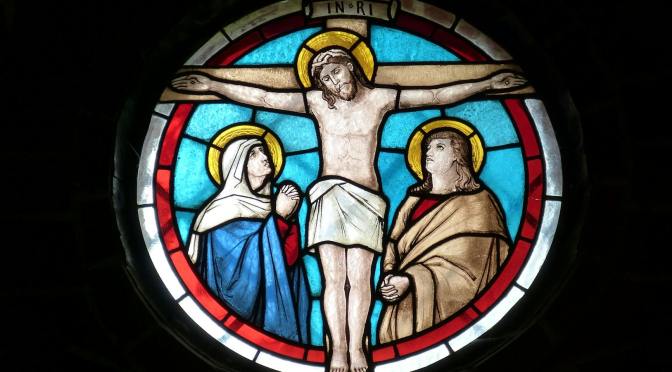
WHAT IS THE PROVIDENCE OF GOD — BOB PRICHARD

God is active in our world today. It is unreasonable to think that He would create a world such as ours and then take no interest in it. Paul’s statement, “We know that all things work together for good to them that love God, to them who are the called according to his purpose” (Romans 8:28), demonstrates His interest in our world. Since this promise must be true, then the real question lies in how God will act to carry this out.

Many believe that the only way God can act in our world is through miracles (acts of direct intervention, above and beyond nature). He does not act through miracles today, however, because with the full revelation of His written word, there is no longer a need for miracles. Paul said miraculous gifts would cease when the perfect revelation of God’s will occurred (see 1 Corinthians 13:8-10; James 1:25). The age of miracles has passed, but God still intervenes through His providence. “Providence” comes from the Latin providentia, meaning foresight. God’s providence is His indirect, non-miraculous support and care of His creation, from its very beginning through eternity. His providence includes not only a general providence over all creation, but also a special providence over His children, such as is demonstrated in the power of prayer (James 5:16).

  We see the difference between miracles, God’s direct intervention, and providence, God’s indirect intervention, by comparing parallel events such as the conception of Christ and the conception of Samuel. The virgin Mary, even before she and Joseph her espoused husband came together, was found “with child of the Holy Ghost,” as Isaiah had prophesied (Matthew 1:18-25). The conception of Christ was thus unique, a miracle, God’s direct intervention in time and history to send the Messiah. On the other hand, Hannah, a righteous woman was barren (unable to have children), so she prayed to God to send her a son. She promised to dedicate the son to His service. Returning home, “Elkanah knew Hannah his wife; and the LORD remembered her. Wherefore it came to pass, when the time was come about after Hannah had conceived, that she bare a son, and called his name Samuel, saying, Because I have asked him of the LORD” (1 Samuel 1:19-20). The conception of Samuel was not a miracle. God, through His providential care, worked through the laws of nature to bring Samuel to Hannah.

In providence, God works “behind the scenes.” We may not realize His providential care until much later. Joseph went from favor in his father’s house to slavery in Potiphar’s house, and from prison to authority in Pharaoh’s palace. Each step of the way he was in God’s providence, although neither he nor his family understood. With the exception of his interpretation of dreams, there was nothing miraculous in the whole chain of events as God providentially preserved His people. As he returned the slave Onesimus to Philemon, Paul said, “perhaps he therefore departed for a season, that thou shouldest receive him for ever” (Philemon 1:15). Paul realized that “perhaps” it was God’s providence. God continues his providential care of His children.

WHAT IS RELIGIOUS PREJUDICE? — BOB PRICHARD

Prejudice is one of the great problems of mankind. War in Northern Ireland, Bosnia, Israel and Gaza, and many other places is primarily over religious prejudice. The root idea of prejudice is to “pre-judge” someone or something, without considering all the evidence. Prejudice results when someone decides “all” are “like this” because a “few” are. Prejudice comes because someone has the attitude, “my mind is made up, don’t confuse me with the facts.” Race, gender, size, religion, or just about any other distinguishing characteristic may be the basis for prejudice. The basic idea is that “we” are better, and “they” are not as good.

The Jews of Christ’s time had an attitude of racial and religious prejudice toward the Samaritans. It was almost beyond the belief of  Christ’s Jewish listeners that there could possibly be a “good Samaritan.” The Samaritan woman at the well acknowledged the division, “for the Jews have no dealings with the Samaritans” (John 4:9). Jesus offered her “living water” that would bring unity to the Jew, the Samaritan, and the Gentile as well. “The hour cometh, and now is, when the true worshippers shall worship the Father in spirit and in truth: for the Father seeketh such to worship him” (John 4:23).  

Jesus came to unite all “true worshippers” who would “worship the Father in spirit and in truth.” By seeking true worshippers, He frequently challenged the religious authorities. “Woe unto you, scribes and Pharisees, hypocrites! for ye shut up the kingdom of heaven against men: for ye neither go in yourselves, neither suffer ye them that are entering to go in. Woe unto you, scribes and Pharisees, hypocrites! for ye devour widows’ houses, and for a pretence make long prayer: therefore ye shall receive the greater damnation” (Matthew 23:13-14). He called the Pharisees “hypocrites” so often that “Pharisee” and “hypocrite” are almost synonymous to us. The Pharisees were the most religious of all the sects of the Jews, but they had lost sight of God’s will. Was Jesus “prejudiced” against the Pharisees because he criticized them? No! He had not “pre-judged” them, but He knew what they were teaching and doing, so he condemned them.

In our religious world, some think that any criticism of what any religious group teaches or practices is “religious prejudice.” It seems that we have reached the point that people can do anything in the name of religion, and because of cries of “religious prejudice,” we should never compare their religious practices to what the Bible says. Criticism that is “pre-judged,” not based on a right consideration of all the evidence is wrong, but too often the “standard” is what men like or dislike, rather than what God has said through His written Word. Jesus said, “He that rejecteth me, and receiveth not my words, hath one that judgeth him: the word that I have spoken, the same shall judge him in the last day” (John 12:48). To say, “this religious group teaches or practices such and such a doctrine, but the Bible says this,” is not religious prejudice. We must be sure that our facts are right, and that we do not misapply or mishandle the Word, but we also must make sure that we abide by what it teaches. We risk our souls if we disregard God’s will.

 HOW DO WE HATE THE SIN BUT LOVE THE SINNER? — BOB PRICHARD

Sin is the universal tragedy of mankind. Paul reminds us, “all have sinned, and come short of the glory of God” (Romans 3:23). Sin’s consequences are severe, for “the wages of sin is death” (Romans 6:23). Man would be hopeless if it were not also true that “the gift of God is eternal life through Jesus Christ our Lord” (Romans 6:23). Because the sin and the sinner become so closely tied together, and because of the seriousness of sin and its consequences, it is hard to love the sinner while hating the sin. 

The only way to properly hate the sin and love the sinner is to follow the example of Christ. His love for the sinner is unquestioned. He submitted to the Father’s plan by going to the cross, “For God so loved the world, that he gave his only begotten Son, that whosoever believeth in him should not perish, but have everlasting life” (John 3:16). Christ was willing to endure the shame and pain of the cross because of His love for sinners. As He cried out, “My God, my God, why hast thou forsaken me?” (Matthew 27:46), He was feeling the pain of separation from the heavenly Father because of mankind’s sins. He knew though, that His mission was to seek out sinners, “For the Son of man is come to seek and to save that which was lost” (Luke 19:10).

The scribes and Pharisees brought a woman taken in the very act of adultery to Jesus, trying to tempt Him. They said, “Now Moses in the law commanded us, that such should be stoned: but what sayest thou?” As they “continued asking him, he lifted up himself, and said unto them, He that is without sin among you, let him first cast a stone at her.” It was not long until only the woman remained, and He asked her, “Woman, where are those thine accusers? hath no man condemned thee?” When she answered, “No man, Lord,” He said, “Neither do I condemn thee: go, and sin no more” (John 8:3-11). Jesus did not make light of her sin, but called her to a higher standard. “Go, and sin no more” demonstrated His hatred of sin while loving the sinner.

Christ reserved His harshest words for those who willingly rejected His message of truth. He told them, “Ye are of your father the devil, and the lusts of your father ye will do. He was a murderer from the beginning, and abode not in the truth, because there is no truth in him. When he speaketh a lie, he speaketh of his own: for he is a liar, and the father of it.  And because I tell you the truth, ye believe me not” (John 8:44-45). They were unwilling to accept the truth He preached, and unwilling to repent of their sins. God’s message to those deceived by Satan is a message of reconciliation. “God was in Christ, reconciling the world unto himself, not imputing their trespasses unto them; and hath committed unto us the word of reconciliation” (2 Corinthians 5:19). That message of reconciliation is a message of love for the sinner, while hating his sinful deeds. The Great Physician has said, “They that be whole need not a physician, but they that are sick” (Matthew 9:12). We must hate the evil deeds of sinners, but offer reconciliation to those sin sick souls that are willing to return to God in obedience.

WHAT IS “THE LORD’S DAY”? — BOB PRICHARD

David reminds us that “the earth is the LORD’S, and the fulness thereof; the world, and they that dwell therein” (Psalm 24:1). All that we have belongs to the Lord, including the days of the week. But in Revelation 1:10, John speaks of a special day he calls the Lord’s day. “I was in the Spirit on the Lord’s day, and heard behind me a great voice, as of a trumpet.” Being “in the Spirit on the Lord’s day” allowed John to receive the Revelation from the Lord of those “things which must shortly come to pass” (Revelation 1:1).

The world of the early church was one in which many had to make a conscious and often life threatening decision. Would they say “Caesar is Lord,” or “Christ is Lord”?  Recognizing that there is “one Lord” (Ephesians 4:5), they knew that there was only one choice: to follow Christ and to do all in His name. “Whatsoever ye do in word or deed, do all in the name of the Lord Jesus, giving thanks to God and the Father by him” (Colossians 3:17). Thus Christians partake of the Lord’s supper (1 Corinthians 11:20) in the name of the Lord on the Lord’s day.

While the designation, “the Lord’s day” is found only in Revelation 1:10, the concept of a day set aside for Christian worship is found from the very beginning of the church, as the early disciples met on the first day of the week. Jesus lived and died under the Old Covenant, and kept and obeyed the laws of the Sabbath, or seventh day of the week. Paul and other disciples went into the Jewish synagogues on the Sabbath day to reason with the Jews about the Christ (Acts 13; 17), but the church did not worship on the Sabbath day. Paul was usually expelled from the synagogues as opposition to his teachings grew, so we know that those Sabbath gatherings of Jews (and some Gentiles) were not meetings of the church.

The pattern of first day worship was established with the resurrection of Christ from the dead on the first day of the week (Luke 24:1). Most, if not all of the post-resurrection appearances of Christ were on the first day of the week. Christ appeared in the midst of the disciples on the first day of the week, the resurrection day (John 20:19), and then again “after eight days” (John 20:26), meaning the next first day of the week, when the previously absent Thomas became a believer in the resurrection. Even as Paul hurried to be in Jerusalem by the day of Pentecost (Acts 20:16), he stopped in Troas to meet with the Christians there, “where we abode seven days” (Acts 20:6). Even though a Sabbath day must have passed during those seven days, the next verse says, “And upon the first day of the week, when the disciples came together to break bread, Paul preached unto them, ready to depart on the morrow; and continued his speech until midnight” (Acts 20:7). That gathering on the first day of the week was a gathering on the Lord’s day by the Christians of Troas and Paul and the other traveling Christians. The scriptures also speak many times of “the day of the Lord”  referring to a day of judgment by the Lord, but this is an entirely different word than “the Lord’s day.”

ARE THE DENOMINATIONS BRANCHES OF THE TRUE VINE? — BOB PRICHARD

As Jesus prepared His apostles for His departure, He told them the parable of the vine and the branches. He had just instituted the Lord’s Supper, with the elements of the bread and the fruit of the vine, so the picture of the vine and the branches would have been very clear to the disciples. Jesus immediately identified Himself as the vine: “I am the true vine, and my Father is the husbandman” (John 15:1). Having identified Himself as the vine, He identified the work of the branches as that of bearing fruit, warning that the husbandman takes away unfruitful branches. “Every branch in me that beareth not fruit he taketh away: and every branch that beareth fruit, he purgeth it, that it may bring forth more fruit” (John 15:2).

Some suggest that this parable is a picture of the contemporary church, with all the various denominations and sects coming together to form the Lord’s church. It is sometimes shown in the form of a tree, with various branches depicting the way in which different religious groups have grown out of one another. The text reveals, however, that the branches are not the different religious sects of “Christendom,” but instead are individual Christians.

Jesus was speaking in John 15 to the apostles, individuals, not religious groups. Notice the emphasis on what the individual disciple must do. “I am the vine, ye are the branches: He that abideth in me, and I in him, the same bringeth forth much fruit: for without me ye can do nothing. If a man abide not in me, he is cast forth as a branch, and is withered; and men gather them, and cast them into the fire, and they are burned. If ye abide in me, and my words abide in you, ye shall ask what ye will, and it shall be done unto you. Herein is my Father glorified, that ye bear much fruit; so shall ye be my disciples” (John 15:5-8). Jesus told the disciples, “ye are the branches,” and “if a man abide not in me.” The branches are people, not churches!

The branches must bear fruit for the husbandman. The fruitfulness that the Lord wants, which is the product of a Christian life, comes only from abiding in Christ. The branch cannot bear fruit of itself, “for without me ye can do nothing” (John 15:4-5). What we can do in Christ, however, is unlimited. “I can do all things through Christ which strengtheneth me” (Philippians 4:13). The key is to be in Christ, abiding in Him. Paul said, “as many of you as have been baptized into Christ have put on Christ” (Galatians 3:27).

Christ did not want His followers to be divided among the various religious groups and denominations. As He prepared for the cross, He prayed, “Neither pray I for these alone [the apostles], but for them also which shall believe on me through their word; That they all may be one; as thou, Father, art in me, and I in thee, that they also may be one in us: that the world may believe that thou hast sent me” (John 17:20-21). He wanted all who believe the testimony of the apostles to be united.

MIND BOGGLING! — BOB PRICHARD

Remember the Rubik’s Cube? That little six colored cube presented quite a challenge to most of us. I remember feeling proud of myself for getting a couple of sides all the same color. In June 2023, Max Park bettered his own world record for solving the puzzle by solving the puzzle in 3.13 seconds. Since there are 43 quintillion unique combinations possible (we’ll take the word of the mathematicians on this), it is truly mind boggling to me that anyone could solve the puzzle in 3.13 minutes, much less 3.13 seconds.

In an age when there are not too many things which we consider awesome, this feat of solving that puzzle so quickly truly amazes me.

We too easily take things for granted. Putting a man on the moon is arguably the greatest technological achievement of the twentieth century. Those of us who were of age will all remember seeing Neil Armstrong taking those first steps for mankind on the moon in 1969. But what about the second and third trips to the moon? The astronauts had to play golf on the moon to even get TV coverage. We so easily lose our sense of awe!

There is so much of scripture that we, out of familiarity, fail to recognize with the proper sense of awe. John 3:16 has been familiar to us since our childhood, and most all of us can easily quote it. But to restore your sense of awe, read it for the personal message it truly is. “For God so loved ME, that he gave his only begotten Son, that I SHOULD believe in him AND should not perish, but have everlasting life.” “But God commendeth his love toward ME, in that, while I WAS yet A sinner, Christ died for ME” (Romans 5:8).

Isn’t it mind boggling and awesome, to consider how much He loved us!

LOST YEARS — BOB PRICHARD

A study of the life of Christ reveals a stark fact. Although there is abundant information about His birth and the events associated with His earliest childhood, we know nothing about His  life between those days and the beginning of His public ministry at age thirty, with the exception of the incident in the temple when He was twelve years old. What was he doing in the intervening years?

In Jesus: A Biography from a Believer, Paul Johnson suggests that Jesus probably worked at a number of different professions, including that of a shepherd and that of a farmer, since He used so many illustrations from the world of the shepherd and the farmer. Surely Joseph  taught Jesus the trade of carpentry. Teaching in the synagogue, He astonished the people , who said, “Is not this the carpenter, the son of Mary, the brother of James, and Joses, and of Juda, and Simon? and are not his sisters here with us? And they were offended at him” (Mark 6:3). From this statement, we surmise that Joseph was no longer living, so Jesus likely waited to begin His public ministry until he had fulfilled his responsibility as the oldest son to care for His mother and younger brothers and sisters, not yet adults.

Although we have no inspired description of those “lost years,” we can see that they were not lost years but years of preparation. The incident in the temple demonstrates that from His youth Jesus was preparing for His life’s work. Mary said, “Son, why hast thou thus dealt with us? behold, thy father and I have sought thee sorrowing. And he said unto them, How is it that ye sought me? wist ye not that I must be about my Father’s business?” (Luke 2:48–49). He knew what was needed was to serve His heavenly Father. He knew He was pursuing knowledge, preparing for His public ministry. When fulness of the time came (Galatians 4:4), He was totally prepared for His ministry. He gave us an example to follow in His suffering (1 Peter 2:21), but also in preparation for service. Are you in a period of “lost years”? Make it a time of preparation for service.

QWERTY — BOB PRICHARD

This article, and virtually every printed article you have ever read in the English language  was typed on a QWERTY keyboard, so named for the first five letters on the upper left of the keyboard, designed in 1873. Why are the letters on the keyboard arranged this way? Early typewriters jammed easily, so the keyboard was designed to make it harder to type quickly. Studies have shown that a better designed ergonomic keyboard would allow the average person to type twice as fast, with 95% less effort. 

Why haven’t we changed to a better keyboard? It is because there are just too many vested interests like typists, computer manufacturers, etc. that would not want the change. If offered a better keyboard, how many would want to change? Would you? I don’t want to have to learn a new keyboard!

Unfortunately, we don’t always want better do we? We are often satisfied with good, even when better is available. We don’t want to go to the extra cost or extra effort for the better. We are satisfied where we are. This may not matter much when it comes to keyboards, but what about spiritual things?

The key word of the book of Hebrews is better. “But now hath he obtained a more excellent ministry, by how much also he is the mediator of a better covenant, which was established on better promises” (Hebrews 8:6). Those in faith’s hall of fame in Hebrews 11 “desire a better country, that is, an heavenly: wherefore God is not ashamed to be called their God: for he hat prepared for them a city” (Hebrews 11:6).

We have the promise of better things because of Christ: “Being made so much better than the angels, as he hath by inheritance obtained a more excellent name than they” (Hebrews 1:4). What are you willing to do, not for a good life, but for the better life? When Jesus said, “seek ye the first the kingdom of God, and his righteousness” (Matthew 6:33) and “whosoever he be of you that forsaketh not all that he hath, cannot be my disciple” (Luke 14:28), wasn’t he challenging us to the better life? Are you satisfied with a QWERTY life?

SHOULD CHRISTIANS SUPPORT A STATE LOTTERY? — BOB PRICHARD

Christians should not buy lottery tickets or support policies allowing them. Lotteries have a long history in the United States. The Continental Congress authorized a lottery to finance the Revolutionary War, and Harvard, Yale, Dartmouth, and other universities raised money through lotteries. The lesson of history is, however, that lotteries do not raise the revenues they promise, and are breeding grounds of corruption and crime. By 1900, all the states in the United States had outlawed lotteries, and it is only in recent years as states sought more sources of revenue that they have turned to lotteries. Thomas Jefferson described the lottery as “a tax on the willing,” and as lotteries have grown, many have proved unable to avoid this tax. While anyone may play the lottery, the players are more likely to be the less educated, lower income people, least able to afford it.

One problem with state-run lotteries is that this puts the government’s stamp of approval on a very harmful activity. The state should not promote gambling, which is dangerous to both individuals and society. Multitudes gamble for the false hope of the lottery, including millions of compulsive gamblers who absolutely cannot stop. The myth of “something for nothing,” and “hitting the jackpot” entices new converts daily. Paul warned that Christians should not take their liberty (such as an ability to gamble without becoming addicted), to cause others to stumble. “But take heed lest by any means this liberty of yours become a stumblingblock to them that are weak” (1 Corinthians 8:9).

The ethic taught by the Bible is that the Christian should be different from the world. In particular, the Christian works diligently and honestly. “Whatsoever ye do, do it heartily, as to the Lord, and not unto men” (Colossians 3:23). “Let him that stole steal no more: but rather let him labour, working with his hands the thing which is good, that he may have to give to him that needeth” (Ephesians 4:28). How can the illusion of “hitting the jackpot” by gambling on the lottery encourage the Christian to work honestly and effectively? The very basis of the lottery is an appeal to mankind’s innate greed, or covetousness. But God says that covetousness is idolatry (Colossians 3:5). “Take heed, and beware of covetousness: for a man’s life consisteth not in the abundance of the things which he possesseth” (Luke 12:15).

Lotteries are supposed to raise new revenues for special needs such as education, but they do not generate any new wealth. They just shift money from the gambler to the state, without producing anything of value, while at the same time costing the state because of the increased crime associated with state-run gambling. Should the state encourage this addicting vice just to balance the budget? Would Jesus have played the lottery?

WAS THE PHILIPPIAN JAILER SAVED BEFORE BAPTISM? — BOB PRICHARD

The story of the Philippian jailer is found in Acts 16. The jailer was in charge of Paul and Silas, who had been arrested on false charges by the owners of a slave girl. They had cast a demon out of the girl, depriving her owners of the money they made by exploiting her (Acts 16:20-21). Because of this, Paul and Silas were arrested, beaten, and put into the innermost prison, with their feet in the stocks. The jailer was to keep them safely until the officials could deal with them.

Beaten and bleeding, and locked in the inner prison, Paul and Silas prayed and sang praises to God, even though it was midnight (Acts 16:25). Suddenly an earthquake shook the prison, and the jailer, awakening from sleep was ready to kill himself, because he was sure that the prisoners would have escaped. When Paul calmed him, assuring him that the prisoners were still there, “he called for a light, and sprang in, and came trembling, and fell down before Paul and Silas, and brought them out, and said, Sirs, what must I do to be saved?” (Acts 16:29- 30). Paul and Silas answered very simply: “Believe on the Lord Jesus Christ, and thou shalt be saved, and thy house” (Acts 16:31). Since the jailer was not told to be baptized, does this mean that he was saved before baptism? Consider the rest of his story.

Paul and Silas had told the jailer that salvation would come from believing on the Lord Jesus Christ, but what did this jailer know about Jesus Christ? It is unlikely that he had heard any of the sermons that Paul and Silas had preached in Philippi. He probably knew absolutely nothing about Jesus, other than what he had learned from hearing the songs and prayers of Paul and Silas, so they had to teach him. “And they spake unto him the word of the Lord, and to all that were in his house” (Acts 16:32). Did speaking the “word of the Lord” include the necessity of baptism? Remember that it was midnight when Paul and Silas were singing and praying (Acts 16:25). It was after this that the earthquake came, the jailer sprang in and asked “What must I do to be saved?” and they “spake unto him the word of the Lord.” Without question it was in the wee hours of the morning when the jailer responded to their preaching.

Luke tells us, “he took them the same hour of the night, and washed their stripes; and was baptized, he and all his, straightway. And when he had brought them into his house, he set meat before them, and rejoiced, believing in God with all his house” (Acts 16:33-34). When were the jailer and his household baptized? It was “the same hour of the night.” Why didn’t they at least wait until morning light before they were baptized, if baptism was not essential? When did he rejoice?  It was after they were baptized, not before. They rejoiced, knowing that their sins were forgiven, and they had truly obeyed the Lord. The jailer had a saving faith, a faith that responded to the sacrifice of Christ by obeying Him. His obedience in baptism demonstrated his faith, and his faith was demonstrated in his baptism. The jailer was like all other Christians we read of in the New Testament. He was saved after baptism.

WHAT IS THE GOSPEL OF JESUS CHRIST? — BOB PRICHARD

The theme of all the New Testament is the gospel of Jesus Christ. Practically every page provides information on this important topic. In its simplest terms, the gospel of Jesus Christ is simply the “good news” concerning Him. The Greek word translated as gospel means “good news.” The word “evangelist,” a “preacher of the gospel,” comes from the same root word. In a day when there is so little good news, it is important to recognize that Jesus came to give the world good news.

The message of the gospel is that although man is a sinner, deserving of death, God loved mankind enough to make provision for salvation. Paul warned the Roman Christians that “all have sinned, and come short of the glory of God” (Romans 3:23) and “the wages of sin is death” (Romans 6:23a). Comfort comes, however, in knowing the good news that “the gift of God is eternal life through Jesus Christ our Lord” (Romans 6:23b). Paul reminded them that because they had become Christians, they were “justified freely by his grace through the redemption that is in Christ Jesus” (Romans 3:24). The “amazing grace” of God is truly good news. 

At the heart of the gospel message are the death, burial, and resurrection of Christ. As Peter preached the first “gospel sermon” on the day of Pentecost, he spoke of “Jesus of Nazareth, a man approved of God among you by miracles and wonders and signs” (Acts 2:22). Although He was put to death, death could not hold Him. “This Jesus hath God raised up” (Acts 2:32). Therefore let all the house of Israel know assuredly, that God hath made that same Jesus, whom ye have crucified, both Lord and Christ” (Acts 2:36). The people responded properly: “Now when they heard this, they were pricked in their heart, and said unto Peter and to the rest of the apostles, Men and brethren, what shall we do?” (Acts 2:37). Peter answered by telling them how to accept the good news of Christ: “Repent, and be baptized every one of you in the name of Jesus Christ for the remission of sins, and ye shall receive the gift of the Holy Ghost” (Acts 2:38).

The gospel is especially good news, because its message is universal. Peter continued by telling his Jewish audience, “For the promise is unto you, and to your children, and to all that are afar off, even as many as the Lord our God shall call” (Acts 2:39). The “all that are afar off” meant that the message was to go to a worldwide audience—the church would include the Gentiles as well as the Jews. Faith moved many to obey: “Then they that gladly received his word were baptized: and the same day there were added unto them about three thousand souls” (Acts 2:41). From that day forward, the church grew as more and more people were added to the church (Acts 2:47). Christ commands: “All power is given unto me in heaven and in earth.  Go ye therefore, and teach all nations, baptizing them in the name of the Father, and of the Son, and of the Holy Ghost: Teaching them to observe all things whatsoever I have commanded you: and, lo, I am with you alway, even unto the end of the world. Amen” (Matthew 28:18-20).

CAN WE BE ONE? — BOB PRICHARD

As Jesus was preparing to face the cross, He went to the Garden of Gethsemane to pray fervently for the disciples, knowing that they would face difficulty in sharing His message of peace and love with the world. Having prayed for the disciples, he also prayed for Christians down through the ages:  Neither pray I for these alone, but for them also which shall believe on me through their word; That they all may be one; as thou, Father, art in me, and I in thee, that they also may be one in us: that the world may believe that thou hast sent me” (John 17:20-21). His prayer was that all who would believe in Him through the word of the apostles would have the same unity that He experienced with the Father. Sadly, men seek disunity and division, ignoring Christ’s prayer. The consequence of this is that many have rejected the gospel of Christ because of the divisions they see within “Christendom.”

In Paul’s day there was “one body, and one Spirit, even as ye are called in one hope of your calling; one Lord, one faith, one baptism, one God and Father of all” (Ephesians 4:4-6). Yet men today claim there are many bodies and many faiths. Most claim to be what might be called “hyphenated Christians.” A person who is a “denominational-Christian” is subject to the creeds, handbooks and bylaws of his denomination. Why not give up the denominational names and creeds? Why not just be Christians, not members of any denomination? 

Lasting unity among the followers of Christ can come only one way⎯by going back to the  Bible and  throwing out the creeds, manuals, and man-made traditions. Paul wrote to a very divided congregation at Corinth, pleading with them to have real Christian unity. “Now I beseech you, brethren, by the name of our Lord Jesus Christ, that ye all speak the same thing, and that there be no divisions among you; but that ye be perfectly joined together in the same mind and in the same judgment” (1 Corinthians 1:10). They could only find unity by being “perfectly joined together in the same mind and in the same judgment.”  Christians can have this unity of mind and judgmentonly by uniting in the teaching of the Bible, the Word of God. Creeds and handbooks can never bring unity.

Sometimes there are unity or “ecumenical” movements among the churches, and some good may be accomplished by these groups banding together for a common cause. There is usually agreement however, that doctrine will be forgotten or overlooked, or else how can one group that teaches baptism is immersion get along with another group that teaches baptism is sprinkling, etc.? Is this really being joined together in the same mind and in the same judgment? If they will not agree on the Bible, how can God’s people agree on anything?  

The Bible is not a dead letter from two thousand years ago. It is “quick, and powerful, and sharper than any twoedged sword, piercing even to the dividing asunder of soul and spirit, and of the joints and marrow, and is a discerner of the thoughts and intents of the heart” (Hebrews 4:12). The Bible, and the Bible alone must be followed for unity today.

WHY DID JESUS REFUSE, AND THEN ACCEPT THE “VINEGAR” OFFERED AT THE CROSS? — BOB PRICHARD

As they took Jesus to Golgotha crucify Him, “They gave him vinegar to drink mingled with gall: and when he had tasted thereof, he would not drink” (Matthew 27:34). Mark described the drink given to Christ as “wine mingled with myrrh” (Mark 15:23). What Matthew and Mark were describing was a cheap Roman vinegar wine which had a drug mixed in to dull the senses. It was the Roman custom that they would offer a man undergoing crucifixion this drugged wine so that he might more easily endure his cross. Jesus refused this wine, however, apparently so that he would be able to undergo His suffering with a clear mind.

As Jesus neared death, he said “I thirst” (John 19:28). One of the natural physical effects of crucifixion was great thirst due to the loss of body fluids. David predicted the death of Christ saying, “They gave me also gall for my meat; and in my thirst they gave me vinegar to drink” (Psalms 69:21). John recognized this fulfillment of prophecy: “After this, Jesus knowing that all things were now accomplished, that the scripture might be fulfilled, saith, I thirst” (John 19:28). In the fulfillment of this prophecy, Jesus demonstrated His humanity. One of the heresies at the end of the first century was the idea that Jesus was not really human.  In his description of Jesus, however, John demonstrated that Jesus was both truly man and truly deity.

John described the last moments of the life of Christ, saying, “Now there was set a vessel full of vinegar: and they filled a sponge with vinegar, and put it upon hyssop, and put it to his mouth. When Jesus therefore had received the vinegar, he said, It is finished: and he bowed his head, and gave up the ghost” (John 19:29-30). Jesus was at the point of death and wished to say His final words. His parched throat and lips needed moisture, so He accepted the vinegar.

It is significant as to how the vinegar was offered to Jesus. “They filled a sponge with vinegar, and put it upon hyssop, and put it to his mouth.” Any Jew who saw the hyssop would immediately think of the night of the first Passover when each family was to slay a perfect lamb and put its blood on the door post, so that the death angel would pass over.  Moses had commanded the Israelites, “Ye shall take a bunch of hyssop, and dip it in the blood that is in the basin, and strike the lintel and the two side posts with the blood that is in the basin; and none of you shall go out at the door of his house until the morning” (Exodus 12:22). It was the blood of the Passover lamb that saved the Israelites from death. On the cross, the perfect lamb of God gave His life’s blood so that men could be saved.

His last words from the cross were, “It is finished.” Jesus came to serve and to carry out the will of the Father. In His life, His ministry, and His death, He perfectly fulfilled the will of His heavenly Father, and made the perfect sacrifice for mankind.

LOST YEARS — BOB PRICHARD

A study of the life of Christ reveals a stark fact. Although there is abundant information about His birth and the events associated with His earliest childhood, we know nothing about His  life between those days and the beginning of His public ministry at age thirty, with the exception of the incident in the temple when He was twelve years old. What was he doing in the intervening years?

In Jesus: A Biography from a Believer, Paul Johnson suggests that Jesus probably worked at a number of different professions, including that of a shepherd and that of a farmer, since He used so many illustrations from the world of the shepherd and the farmer. Surely Joseph  taught Jesus the trade of carpentry. Teaching in the synagogue, He astonished the people , who said, “Is not this the carpenter, the son of Mary, the brother of James, and Joses, and of Juda, and Simon? and are not his sisters here with us? And they were offended at him” (Mark 6:3). From this statement, we surmise that Joseph was no longer living, so Jesus likely waited to begin His public ministry until he had fulfilled his responsibility as the oldest son to care for His mother and younger brothers and sisters, not yet adults.

Although we have no inspired description of those “lost years,” we can see that they were not lost years but years of preparation. The incident in that temple demonstrates that from His youth Jesus was preparing for His life’s work. Mary said, “Son, why hast thou thus dealt with us? behold, thy father and I have sought thee sorrowing. And he said unto them, How is it that ye sought me? wist ye not that I must be about my Father’s business?” (Luke 2:48–49). He knew what was needed was to serve His heavenly Father. He knew He was pursuing knowledge, preparing for His public ministry. When fulness of the time came (Galatians 4:4), He was totally prepared for His ministry. He gave us an example to follow in His suffering (1 Peter 2:21), but also in preparation for service. Are you in a period of “lost years”? Make it a time of preparation for service.

IS IT SINFUL TO “JUDGE” SOMEONE ELSE? — BOB PRICHARD

Most people would assume that is is sinful to judge another person. After all, Jesus said, “Judge not, that ye be not judged” (Matthew 7:1). Because of this statement, many have assumed that it is sinful to correct anyone, because this would mean that one is “judging.” But is it even possible to go through life without ever judging, or discerning between what is right, and what is wrong?

Paul wrote, “Brethren, if a man be overtaken in a fault, ye which are spiritual, restore such an one in the spirit of meekness; considering thyself, lest thou also be tempted. Bear ye one another’s burdens, and so fulfil the law of Christ” (Galatians 6:1-2). How can one determine that his brother is “overtaken in a fault,” without “judging” him? To say, “You cannot condemn my actions, because that would be judging me,” is to say that nothing can ever be determined to be wrong. This idea promotes a moral indifference that nothing is really sinful, and as long as you condemn no one else’s sin, no one can condemn your sin.

Jesus qualified  his teaching about judging: “And why beholdest thou the mote that is in thy brother’s eye, but considerest not the beam that is in thine own eye?” (Matthew 7:3). Jesus commanded, in very “judgmental” terms, “Thou hypocrite, first cast out the beam out of thine own eye; and then shalt thou see clearly to cast out the mote out of thy brother’s eye” (Matthew 7:5). When you remove the beam from your own eye, then you will be in a proper position to help your brother remove the speck from his eye.

Paul said for the spiritual to “bear one another’s burdens,” and to restore the man “overtaken in a fault.” He said that this was done “in the spirit of meekness.” Meekness, a part of the fruit of the Spirit, is the key to proper judging  of the works of another. Meekness is closely related to humility and childlikeness. Jesus said that His followers must humble themselves as little children, if they are to enter into the kingdom.  “Verily I say unto you, Except ye be converted, and become as little children, ye shall not enter into the kingdom of heaven. Whosoever therefore shall humble himself as this little child, the same is greatest in the kingdom of heaven” (Matthew 18:3-4). If we approach the faults of others from the standpoint of meekness and humility, we can properly “judge” them. That is, when we act out of humility and weakness, we will have no thought for our own pride, but will with childlike sincerity correct one another.

In talking about how each member of the body of Christ, the church, is to work together, Paul said that we are to be “speaking the truth in love” (Ephesians 4:15). Is it more loving to leave a person in his sin by saying nothing, or is it more loving to “judge” him, and try to help him leave his sin? If we are truly “speaking the truth in love,” correcting one another in a spirit of meekness, we will please God.

JUST ONE INGREDIENT — BOB PRICHARD

My daughter Jennifer has become somewhat of a gourmet cook, trying many new dishes through her cooking club. She still likes to make some old family favorites as well, such as “pineapple au gratin.” The whole family was anticipating a wonderful dish. It smelled so good as it cooked, and it looked just as good, but it tasted terrible. Consideration of the situation revealed that it had been made correctly, with one exception—salt had been accidentally substituted for sugar in the dish. It was just one ingredient, but it made all the difference!

A young man who had most things right in his life came to see Jesus, He questioned, “Good Master, what shall I do that I may inherit eternal life?” Jesus told him, “Thou knowest the commandments, Do not commit adultery, Do not kill, Do not steal, Do not bear false witness, Defraud not, Honour thy father and mother.” He replied, “Master, all these have I observed from my youth. Then Jesus beholding him loved him, and said unto him, One thing thou lackest: go thy way, sell whatsoever thou hast, and give to the poor, and thou shalt have treasure in heaven: and come, take up the cross, and follow me. And he was sad at that saying, and went away grieved: for he had great possessions” (Mark 10:17-23).

The recipe for eternal life was almost complete, but he lacked one thing, and it was a big one—because he had great possessions. Jesus loved him, and appreciated his dedication, but his good deeds were not “good enough” to secure eternal life.

The general teaching of our religious world, which stresses faith, and sometimes repentance, usually lacks one thing—obedience to the gospel by being baptized for the remission of sins. Most would say that surely living a good life, keeping the ten commandments, even saying the “sinner’s prayer,” is “good enough.” But nothing substitutes for obedience to the will of God. Salt may look like sugar, but it is not sugar, and it cannot be substituted without spoiling the dish, We must follow God’s recipe for salvation: faith, repentance, confession of Christ, and baptism into Christ. Just one substitution will bring ruin.

NO ALTERNATIVE THOUGHT — BOB PRICHARD

The May 14, 2007 issue of National Review had several memorial tributes to the late Patricia Taylor Buckley, the wife of National Review founder and retired Editor at Large William F. Buckley, Jr. In his tribute to his wife, Buckley included a portion of a letter from a friend that praised her elegant greatness. “I am a confirmed nonbeliever, but for once I would like to be mistaken, and hope that, for you, this is not goodbye, but hasta luego (“See you later”—BP).” Buckley concludes, “No alternative thought would make continuing in life, for me, tolerable.” Is not he correct? What is the alternative to knowing that there is something beyond this life, that we will see one another again?

Pity the poor nonbeliever who does not believe in the life to come. Has he considered the fact that if we believers are wrong, and there is  nothing beyond this life, then we will still have had full lives of hope and, the blessing of associating with fellow believers? And if he is wrong, then he will not only have lived a life of hopelessness, having missed the greatest blessings in this life, but he will have also forfeited the blessings God has prepared for His children. “But as it is written, Eye hath not seen, nor ear heard, neither have entered into the heart of man, the things which God hath prepared for them that love him” (1 Corinthians 2:9).

The resurrection of Christ was not only the heart of apostolic preaching, but it was and is the motivation for us to trust and look to the future. “Behold, I shew you a mystery; We shall not all sleep, but we shall all be changed, In a moment, in the twinkling of an eye, at the last trump: for the trumpet shall sound, and the dead shall be raised incorruptible, and we shall be changed. For this corruptible must put on incorruption, and this mortal must put on immortality. So when this corruptible shall have put on incorruption, and this mortal shall have put on immortality, then shall be brought to pass the saying that is written, Death is swallowed up in victory” (1 Corinthians 15:51-54).

IS ANGER ALWAYS WRONG? CAN IT BE CONTROLLED? — BOB PRICHARD

Anger is a destructive emotion that has led to every kind of sin, including murder, as when Cain killed his brother Abel (Genesis 4:4-8). The elder brother of the “prodigal son” refused to go to the party for his brother because “he was angry, and would not go in” (Luke 15:28). Paul wrote “Be ye angry, and sin not: let not the sun go down upon your wrath” (Ephesians 4:26). It is possible to be angry without sinning, but very difficult.

As Jesus saw the moneychangers cheating His people in the temple, He made a scourge of small cords, and drove them out of the temple, saying, “Take these things hence; make not my Father’s house an house of merchandise” (John 2:16). Undoubtedly Jesus was angry. He acted out of  “righteous indignation.” He was angry, but He did not sin because He was zealous for the glory of God. The child of God ought to be angry when the glory of God is challenged, and it is a great tragedy for Christians to be so tolerant that nothing makes them angry.  

James gives a simple prescription for dealing with anger: “Wherefore, my beloved brethren, let every man be swift to hear, slow to speak, slow to wrath: For the wrath of man worketh not the righteousness of God” (James 1:19-20).

To be “swift to hear” means to be a ready listener. All too often we become easily angered because we do no have enough information. When a person really listens to another person, sometimes even “reading between the lines,” he may find that what would have otherwise provoked a reaction of anger may instead provoke a reaction of concern or pity. A reaction of anger is often simply a reaction out of emotion. If one listens to discern all the facts, he can deal with the problem rationally.

To be “slow to speak” means to control the tongue, which is a very difficult task. James himself said, “every kind of beasts, and of birds, and of serpents, and of things in the sea, is tamed, and hath been tamed of mankind: But the tongue can no man tame; it is an unruly evil, full of deadly poison” (James 3:7-8). Solomon said, “Seest thou a man that is hasty in his words? there is more hope of a fool than of him” (Proverbs 29:20). Hasty words spoken in anger will almost always be regretted.

To be “slow to wrath” is also difficult. The old adage of counting to ten works on this principle. If one realizes that he is becoming angry, he can slow the process. Prayer is helpful in this area, as well as the realization that each person controls his own reaction to a problem. A person can choose to be angry in dealing with a problem, or he can choose to cope with the problem without anger.

The “new man” in Christ lays aside worldly anger. “Put off all these; anger, wrath, malice, blasphemy, filthy communication out of your mouth. Lie not one to another, seeing that ye have put off the old man with his deeds; And have put on the new man, which is renewed in knowledge after the image of him that created him: … but Christ is all, and in all” (Colossians 3:8-11).

NO RAINBOWS AT NOON — BOB PRICHARD

Rainbows are caused by the refraction (bending) of light through raindrops. The water droplets divide light into the seven basic colors of red, orange, yellow, green, blue, indigo and violet, but actually many other minor colors as well. Primary rainbows appear between 40 and 42 degrees above the horizon, with the center of the ark directly opposite the sun. Because of this, you cannot see a rainbow at noon, when the sun is directly overhead (David S. Kidder and Noah D. Oppenheim, The Intellectual Devotional, 2006, p. 235).

I cannot verify that I have never observed a rainbow at noon, but I have observed that the rainbows in my life don’t come in the noonday hours of good times. God gave the rainbow as a token of His covenant after the flood, promising that he would not again destroy the earth by a flood. “And God said, This is the token of the covenant which I make between me and you and every living creature that is with you, for perpetual generations: I do set my bow in the cloud, and it shall be for a token of a covenant between me and the earth” (Genesis 9:12–13).

The Lord says, “Come unto me, all ye that labour and are heavy laden, and I will give you rest. Take my yoke upon you, and learn of me; for I am meek and lowly in heart: and ye shall find rest unto your souls. For my yoke is easy, and my burden is light” (Matthew 11:28–30). The yoke he offers is to be yoked with Him. His yoke is easy because He pulls the extra weight in our lives. In the midst of the storm, this is often hard to see. But when the storm passes, new rainbows of joy and comfort come into our lives.

I can trust the future because I have experienced His loving care through the storms of life. “Yea, though I walk through the valley of the shadow of death, I will fear no evil,” because I know the Good Shepherd is with me, and that with His rod and staff He will comfort me (Psalm 23:4). The rainbows come—but only after the storm. “Jesus loves me this I know.”

DID THE LORD SAVE PAUL ON THE ROAD TO DAMASCUS? — BOB PRICHARD

No. The conversion of Saul of Tarsus (later known as the apostle Paul) is the most thoroughly documented conversion in all the Bible, but it is still widely misunderstood. As Saul was making his way to Damascus to persecute Christians, Jesus appeared to him, but Saul was not saved simply because the Lord appeared to him. Luke records, “And he trembling and astonished said, Lord, what wilt thou have me to do? And the Lord said unto him, Arise, and go into the city, and it shall be told thee what thou must do” (Acts 9:6). The Lord did not save Saul until he completed what he “must do.”

The first mention in scripture of Saul of Tarsus is in Acts 7, where those stoning Stephen, the first Christian martyr, lay their clothes at his feet. Luke reported, “Saul was consenting unto his death. And at that time there was a great persecution against the church which was at Jerusalem; and they were all scattered abroad throughout the regions of Judaea and Samaria, except the apostles” (Acts 8:1). Saul was in the middle of all this persecution: “As for Saul, he made havock of the church, entering into every house, and haling men and women committed them to prison” (Acts 8:3). Because of his zeal for persecuting the church, Saul went to the high priest and asked for letters to the Damascus synagogues, so that he could arrest the Christians in Damascus and bring them back to Jerusalem for punishment.

As Saul journeyed to Damascus, a bright light blinded him, and he heard Jesus say to him, “Saul, Saul, why persecutest thou me?” (Acts 9:4). After Jesus identified Himself to Saul, He sent Saul into Damascus with the words, “Arise, and go into the city, and it shall be told thee what thou must do” (Acts 9:6). Saul then spent the next three days in prayer and fasting. This showed that he was serious about following Christ, but his three days of prayer and fasting did not save him or show that he was saved. His penitent behavior was preparing him for the necessary obedience.

The Lord then directed Ananias, a Christian of Damascus, to go to Saul to tell him what he “must do.” Although it must have been a daunting assignment, Ananias, “a devout man according to the law” came to Saul, a fellow Jew, and said, “Brother Saul, receive thy sight” (Acts 22:12-13). Saul was no longer blind, and Ananias warned him of what was ahead of him if he chose to follow Christ. “The God of our fathers hath chosen thee, that thou shouldest know his will, and see that Just One, and shouldest hear the voice of his mouth.  For thou shalt be his witness unto all men of what thou hast seen and heard” (Acts 22:14-15). Having warned him what lay ahead of him in Christ’s service, Ananias then told Saul what he “must do.” “Why tarriest thou? arise, and be baptized, and wash away thy sins, calling on the name of the Lord” (Acts 22:16). Why was Saul not saved before?  Because he was still in his sins.  That is why he needed to call on the name of the Lord by by washing away his sins. As he obeyed the Lord’s command through the messenger Ananias, he received the forgiveness of his sins and the salvation he had spent three days praying for in his blindness.