Category Archives: CHURCH

WHO ARE THE “OTHER SHEEP” OF JOHN 10:16?  — BOB PRICHARD

As Jesus neared the end of His discussion of the “Good Shepherd,” He said, “As the Father knoweth me, even so know I the Father: and I lay down my life for the sheep. And other sheep I have, which are not of this fold: them also I must bring, and they shall hear my voice; and there shall be one fold, and one shepherd” (John 10:15-16). He spoke of “other sheep,” that would hear the voice of the Good Shepherd, and be part of the “one fold” of the “one shepherd.”

Earlier in His ministry, Jesus sent His disciples to preach to the Jews, commanding them, “Go not into the way of the Gentiles, and into any city of the Samaritans enter ye not: But go rather to the lost sheep of the house of Israel” (Matthew 10:5-6). These Jews, the “lost sheep of the house of Israel,” needed the gospel of Christ, so the disciples took the message of Christ to them first. Jesus, however, looked forward to the time when the gospel would be not only for the Jews but for the Gentiles as well. His desire was that the divisions and barriers between the Jews and the Gentiles (anyone who was not a Jew) would be broken down.

With the establishment of the church of Christ on the day of Pentecost, these barriers, broken down by Christ’s sacrifice, were removed. In his sermon to the multitude gathered in Jerusalem, Peter said, “Repent, and be baptized every one of you in the name of Jesus Christ for the remission of sins, and ye shall receive the gift of the Holy Ghost. For the promise is unto you, and to your children, and to all that are afar off, even as many as the Lord our God shall call” (Acts 2:38-39). Peter addressed the saving promise of the gospel to those present, and to “your children, and to all that are afar off.” “All that are afar off” refers to the Gentiles, who were outside the covenant relationship between God and the Jews, His chosen people. Because of the desire of Christ for “one fold” under the “one shepherd,” the gospel message was meant not only for the Jews, but also to the Gentiles.

The gospel of Christ is for the whole world.  Jesus told the disciples, “Go ye into all the world, and preach the gospel to every creature.  He that believeth and is baptized shall be saved; but he that believeth not shall be damned” (Mark 16:15-16). The message is the same to “every creature,” whether Jew or Gentile. The message is that “He that believeth and is baptized shall be saved.”  

The Lord unites Jews and Gentiles in His church today because we live under the “better covenant” of the Christian age. “But now hath he obtained a more excellent ministry, by how much also he is the mediator of a better covenant, which was established upon better promises.  For if that first covenant had been faultless, then should no place have been sought for the second” (Hebrews 8:6-7). The message of Christ provides salvation to the “lost sheep of the house of Israel,” the Jews, and to His “other sheep,” the Gentiles. Every person in the world falls into one of these two categories, and is subject to the gospel of Christ.

VALUES — BOB PRICHARD

Doing some excavating on his North Carolina farm 1799, Conrad Reed discovered a strange rock. Three years later, in 1802, a Fayetteville jeweler offered him $3.50 for the rock. It tuned out that the rock was gold, and had a value of $3,600. This was the beginning of the Reed Gold Mine. In those three years before learning he had a large gold nugget, Reed had been using the rock as a doorstop.

Like Reed, we are often ignorant to the true value of things. We often place the greatest significance on the incidental and neglect the eternal. Not surprisingly, a death, an illness, or another tragedy often makes us stop and think and to consider what is really important.

In explaining to the Christians of Corinth the true meaning and place of spiritual gifts, Paul touched on this point. Though all parts of the body are important, we tend to place the greater emphasis on some parts to the neglect of others. “Nay, much more those members of the body, which seem to be more feeble, are necessary: And those members of the body, which we think to be less honourable, upon these we bestow more abundant honour; and our uncomely parts have more abundant comeliness. For our comely parts have no need: but God hath tempered the body together, having given more abundant honour to that part which lacked: That there should be no schism in the body; but that the members should have the same care one for another” (1 Corinthians 12:22-25).

As a simple comparison, in a week’s time, how does your time spent in grooming and caring for the body compare to the time spent in caring for the inner man? Paul prayed for Ephesians that God would grant them “according to the riches of his glory, to be strengthened with might by his Spirit in the inner man” (Ephesians 3:16). What is really valuable to you? Do you truly value the eternal over the temporal?

WHAT DOES THE BIBLE SAY ABOUT “REVEREND” AS A TITLE FOR MINISTERS? — BOB  PRICHARD

It is a common assumption today that every minister ought to be addressed as “reverend.” Fortunately, though, many ministers are rejecting the use of this title, recognizing that it is unauthorized by the Bible, contrary to the Bible doctrine of the priesthood of all believers, and divisive to the cause of Christ.

The word “reverend” comes from the Latin word reverendus, meaning “worthy of respect.” The dictionary defines it as “a title of respect often used with the name of a clergyman.” “Reverend” is found only one time in the King James Version of the Bible. An unknown psalmist wrote, “He sent redemption unto his people: he hath commanded his covenant for ever: holy and reverend is his name” (Psalm 111:9). The application of the term is to God, not a man. The word is used frequently in the original languages of the Bible, but it is always applied to God, and never to man. Since the practice of using the title “reverend” is so popular today, it may be surprising to remember that neither Jesus nor any of the disciples ever used this or any other man-made title. There is never any mention of “Reverend Paul,” or the “Right Reverend John,” or the “Reverend Mr. Peter.” The use of titles such as “reverend” by the humble servants of Christ would have been contrary to their attitude of service to Christ. 

Paul said, “God forbid that I should glory, save in the cross of our Lord Jesus Christ, by whom the world is crucified unto me, and I unto the world” (Galatians 6:14). In other words, Paul was saying that he would glory in nothing but the cross of Christ. He demonstrated his humble attitude toward serving Christ many times in his letters. Paul was well educated and could have claimed human titles, but he chose to give all of these up for Christ (see Philippians 3:1-7). He began some letters with the words, “Paul, a servant of Jesus Christ.” Many times he simply referred to himself as “a servant” or “a bondservant.” The desire to use man-made religious titles such as “reverend” comes from a desire for exaltation. We must remember the words of Christ: “Whosoever will be great among you, let him be your minister; and whosoever will be chief among you, let him be your servant: even as the Son of man came not to be ministered unto, but to minister, and to give his life a ransom for many” (Matthew 20:26-28). 

The use of titles such as “reverend” helps to perpetuate a wrong concept of the nature of those who serve Christ. Peter referred to all Christians, not just a select clergy, as “an holy priesthood” (1 Peter 2:5). The clergy/laity division of our religious world is a man-made division. Though some, because of special training and a special desire to serve God may serve as ministers or preachers [not titles but descriptive terms of service], and may be called ministers [servants], in actuality every Christian is a minister, or servant, when he serves God. We need to reestablish the concept of the priesthood of all believers in service to Christ. Jesus warned, “Be not ye called Rabbi: for one is your Master, even Christ; and all ye are brethren” (Matthew 23:8).

SINCE THERE IS ONLY ONE GOD, WHY ISN’T THERE JUST ONE CHURCH? — BOB PRICHARD

Paul tells us explicitly that there is “One God and Father of all, who is above all, and through all, and in you all” (Ephesians 4:6). Most people have little trouble with this concept, understanding that our Heavenly Father created our world and loved us enough to send Christ to save us from our sins. Paul does not speak only of  “One God,” however, but mentions seven “unities.” “There is one body, and one Spirit, even as ye are called in one hope of your calling;  One Lord, one faith, one baptism, One God and Father of all, who is above all, and through all, and in you all” (Ephesians 4:4-6). The first of the seven unities Paul mentions is “one body.”    

At the end of the first chapter of the letter to the Ephesians, Paul explained that because Christ obeyed the Father and conquered death, that God “hath put all things under his feet, and gave him to be the head over all things to the church, Which is his body, the fulness of him that filleth all in all” (Ephesians 1:22-23). The church is defined as His body, the “one body” that Paul mentioned in Ephesians 4:4. This is just what we would expect, one head connected with one body. Our religious world today, however, presents a monstrosity to God, with many churches or bodies claiming to be attached to the one head, Jesus Christ.

The Lord’s desire from the beginning was that all of His followers would be united in His church. As He prepared for the cross, Jesus prayed for His disciples, and then said, “Neither pray I for these alone, but for them also which shall believe on me through their word; That they all may be one; as thou, Father, art in me, and I in thee, that they also may be one in us: that the world may believe that thou hast sent me. And the glory which thou gavest me I have given them; that they may be one, even as we are one: I in them, and thou in me, that they may be made perfect in one; and that the world may know that thou hast sent me, and hast loved them, as thou hast loved me” (John 17:20-23). Jesus understood that the unity (or disunity) of His followers would be a powerful witness to the world. Surely the disunity of the current denominational system hinders the spread of the gospel of Christ.

Paul warned the Corinthians against disunity, as they began to follow various preachers, forgetting Christ. “Now I beseech you, brethren, by the name of our Lord Jesus Christ, that ye all speak the same thing, and that there be no divisions among you; but that ye be perfectly joined together in the same mind and in the same judgment. For it hath been declared unto me of you, my brethren, by them which are of the house of Chloe, that there are contentions among you. Now this I say, that every one of you saith, I am of Paul; and I of Apollos; and I of Cephas; and I of Christ. Is Christ divided? was Paul crucified for you? or were ye baptized in the name of Paul?” (1 Corinthians 1:10-13). Jesus promised Peter and the disciples, “I will build my church” (Matthew 16:18). He did not promise to build the many denominational bodies we see today, but His church. The way to be a member of His church today is to reject the creeds, manuals, and catechisms of the denominations, and just be Christians, wearing the name of Christ. This is the plea of the churches of Christ.

IS THE CHURCH OF CHRIST A DENOMINATION? — BOB PRICHARD

A frequent follow-up question to “Are you a Christian?” is “What denomination are you?” “Denomination” is not found in the Bible, and the idea is based on sectarianism and division. “Denomination” is not simply an incidental name, but a choice to be divided from other believers who do not share the same sectarian doctrines. Religious denominations are divisions among people who may all claim to follow the same Lord and same Bible but cannot agree because of their denomination.

As Jesus prayed for His apostles before His arrest, he said, “Neither pray I for these alone, but for them also which shall believe on me through their word; That they all may be one; as thou, Father, art in me, and I in thee, that they also may be one in us: that the world may believe that thou hast sent me” (John 17:20-21). Jesus wanted unity among His apostles, and among “them also which shall believe on me through their word.” He prayed for the unity of everyone who would believe the teaching of the apostles (whether through their direct preaching or through the written word of the Bible). This unity is not possible, however, as long as the divisive denominational system exists.  

The denominational system has developed with various creeds, manuals, handbooks, hierarchies, and systems of organization, which have grown more and more complex over time. Years ago many men and women understood that the denominational system was a violation of God’s will, and sought to leave the denominations so that they could restore the “undenominational” church of Christ of the New Testament. By being just Christians, without being associated with any denomination, they believed that they could better serve and obey God. That is why the modern day churches of Christ are undenominational. They have no creed but the Bible, no denominational or church hierarchy over the local congregation, and no authority for faith and practice other than the Bible. They are not “Church of Christ Christians,” but simply Christians.

There were “seeds of denominationalism” in the church at Corinth. Paul wrote, “it hath been declared unto me of you, my brethren, by them which are of the house of Chloe, that there are contentions among you. Now this I say, that every one of you saith, I am of Paul; and I of Apollos; and I of Cephas; and I of Christ” (1 Corinthians 1:11-12). Some at Corinth were not satisfied to be Christians only, but wanted to be “Paulite Christians,” or “Apollosite Christians,” or “Cephasite Christians.” Paul asked, “Is Christ divided? was Paul crucified for you? or were ye baptized in the name of Paul?” (1:13). They had divided the church into warring factions. Paul emphasized the seriousness of the situation by saying he was glad he had only baptized a few at Corinth, so few could claim to follow Him, instead of Christ (1 Corinthians 1:14-16). Of what denomination were Peter and Paul? They were just Christians, and not members of any denomination. The church of Christ, if it truly is the church we read of in the New Testament, cannot be a denomination and at the same time pleasing to the Lord.

“HOLY GROUND” — BOB PRICHARD

Harry Truman personally persuaded Adlai Stevenson to run for the Democratic Party nomination in 1952. He invited Stevenson to spend the night in the Lincoln Room at the White House. Stevenson walked around the room that night, gazing at the things in it. In awe of his surroundings, Stevenson couldn’t bring himself to sleep on the bed, and chose to sleep on the sofa instead. It wasn’t until later that he learned that the bed was not in the room in Lincoln’s time, but the sofa was.

If Adlai Stevenson could be in awe in the Lincoln Room, think how Moses must have felt when he turned aside to look at the burning bush. “And when the Lord saw that he turned aside to see, God called unto him out of the midst of the bush, and said, Moses, Moses. And he said, Here am I. And he said, Draw not nigh hither: put off thy shoes from off thy feet, for the place whereon thou standest is holy ground. Moreover he said, I am the God of thy father, the God of Abraham, the God of Isaac, and the God of Jacob. And Moses hid his face; for he was afraid to look upon God” (Exodus 3:4–6).

All of this makes me wonder why so many take opportunities for worship so lightly. When Christians gather for worship, they are in the very presence of God, The Lord said, “Again I say unto you, That if two of you shall agree on earth as touching any thing that they shall ask, it shall be done for them of my Father which is in heaven. For where two or three are gathered together in my name, there am I in the midst of them” (Matthew 18:19–20). Do you realize that when we gather together, the Lord is there with us?

You have an appointment with the Lord this Sunday. What is more important than that? See you on the Lord’s Day.

HOW DOES ONE BECOME A PRIEST ACCORDING TO THE NEW TESTAMENT? — BOB PRICHARD

Priests performed very important tasks under the Old Covenant, with their primary purpose being a representative of man to God. The mediation that the priest offered was mainly through offering sacrifices and intercession to God. Priests, including the high priest, could only come from the tribe of Levi, and were separate from the people.

Under the New Covenant, things are very different, however. The high priest, under whom all other priests must serve is Jesus Christ, who did not bring an animal sacrifice to God, but instead offered Himself as the sacrifice. Peter recognized that the priestly functions in the church would not be performed by a special group of men, but instead they would be performed by all Christians. By virtue of this, all Christians are priests in God’s sight. Peter said, speaking of all Christians, “Ye also, as lively stones, are built up a spiritual house, an holy priesthood, to offer up spiritual sacrifices, acceptable to God by Jesus Christ” (1 Peter 2:5).  

Paul exhorted the Roman Christians, “I beseech you therefore, brethren, by the mercies of God, that ye present your bodies a living sacrifice, holy, acceptable unto God, which is your reasonable service” (Romans 12:1). Only priests were allowed to offer sacrifices under the Old Covenant, so since Paul begged Christians to offer themselves as living sacrifices, he agrees with Peter that Christians are “an holy priesthood.”

Since all Christians are priests, that means that no Christian has to rely on a mere man as mediator between him and God. A Christian needs only go through the great high priest, Jesus Christ.  “For there is one God, and one mediator between God and men, the man Christ Jesus” (1 Timothy 2:5).  

Under the old covenant, men from the tribe of Levi were appointed to their priestly duties in elaborate rituals. They were clothed in ceremonial garments, and ritually cleansed of their sins. Of prime importance in their appointment was ceremonial washing in water, and sprinkling of the sacrificial blood on them. Christians today put on the ceremonial priestly garments, wash in water, and are sprinkled with the blood of Christ’s sacrifice when they obey the Lord in baptism. Paul wrote, “For as many of you as have been baptized into Christ have put on Christ” (Galatians 3:27). As the Christian obeys Christ in baptism, he qualifies to come before the Heavenly Father, because he is symbolically clothed in the priestly garments. As the Christian is immersed in water, the penitent believer makes contact with the cleansing blood of the Lamb of God, Jesus Christ. Paul reminded the Romans what they had done: “Know ye not, that so many of us as were baptized into Jesus Christ were baptized into his death?” (Romans 6:3). As the believer is baptized into the death of Christ, she contacts the cleansing blood of Christ. “Let us draw near with a true heart in full assurance of faith, having our hearts sprinkled from an evil conscience, and our bodies washed with pure water” (Hebrews 10:22).

HOW DO YOU JOIN THE CHURCH OF CHRIST? — BOB PRICHARD

People join many organizations, from civic clubs like Rotary and Lions, to personal development clubs like Toastmasters, to special interest organizations like the P. T. A. It is natural then that most people think about “joining” the church. As strange as it may seem, however, that one cannot “join the church of Christ.” The idea of joining the church carries with it the thought that the church is just like other organizations that you may join at will. The church is unlike any other organization on earth, however, because of its divine origin.

If you cannot join the church, then how do you become a member of the church? The second chapter of Acts describes the beginning of the Lord’s church, on the day of Pentecost, almost two thousand years ago. The last verse of the chapter says, “And the Lord added to the church daily those who were being saved” (Acts 2:47).  Notice that we do not join the church, but the Lord adds those who are saved to the church. Some discount the value of the Lord’s church, and say that it really is unimportant, but the church is the body of Christ. “He [Christ] is the head of the body, the church: who is the beginning, the firstborn from the dead; that in all things he might have the prominence” (Colossians 1:18). The church is so valuable that Christ sacrificed Himself for it. Paul commanded, “Husbands, love your wives, even as Christ also loved the church, and gave himself for it” (Ephesians 5:25).

Since “the Lord added to the church daily those who were being saved” (Acts 2:47), and the church is the body of Christ, and He “gave himself for it,” salvation and the church are intimately tied together. The Lord gives salvation and adds to His church at the same time. The key then, is “What must I do to be saved?” After hearing the sermon on the day of Pentecost, realizing that they had crucified the very Son of God, the multitude gathered in Jerusalem for Pentecost cried out, “Men and brethren, what shall we do?” (Acts 2:37). Their cry showed that they wanted to turn from sin and obey Christ. Peter’s reply was, “Repent, and be baptized every one of you in the name of Jesus Christ for the remission of sins, and ye shall receive the gift of the Holy Ghost” (Acts 2:38).

Those on Pentecost expressed faith in Jesus Christ by the very nature of their question, “Men and brethren, what shall we do?” Peter said, “repent, and be baptized every one of you in the name of Jesus Christ for the remission [forgiveness] of sins.” The response was such that “they that gladly received his word were baptized: and the same day there were added unto them about three thousand souls” (Acts 2:41). Three thousand obeyed Christ in baptism, and the Lord added them to His church. None “joined the church,” but all were added by the Lord. The other conversion accounts in Acts show that each person found salvation by obeying the Lord in baptism, following repentance and faith in Christ. We do not join the church, but when we obey the Lord, He adds us to His church.

IF THERE IS ONE GOD, WHY NOT ONE CHURCH? — BOB PRICHARD

Paul wrote that there is “One God and Father of all, who is above all, and through all, and in you all” (Ephesians 4:6). Most people have little trouble with this idea, understanding that our Heavenly Father created our world and loved us enough to send Christ. Paul also mentions six other “unities.” “There is one body, and one Spirit, even as ye are called in one hope of your calling; One Lord, one faith, one baptism, One God and Father of all, who is above all, and through all, and in you all” (Ephesians 4:4-6). The first of the seven unities Paul mentions is “one body.”    

Paul explained that because Christ obeyed the Father and conquered death, that God “hath put all things under his feet, and gave him to be the head over all things to the church, Which is his body, the fulness of him that filleth all in all” (Ephesians 1:22-23). The church is His body, the “one body” that Paul mentioned in Ephesians 4:4. This is just what we would expect—one head connected with one body. Today’s religious world, however, presents a monstrosity to God, with many churches or bodies claiming to be attached to the one head, Jesus Christ.

The Lord’s desire from the beginning was for the unity of His followers in His church. As He prepared for the cross, Jesus prayed for His disciples, and then said, “Neither pray I for these alone, but for them also which shall believe on me through their word; That they all may be one; as thou, Father, art in me, and I in thee, that they also may be one in us: that the world may believe that thou hast sent me. And the glory which thou gavest me I have given them; that they may be one, even as we are one: I in them, and thou in me, that they may be made perfect in one; and that the world may know that thou hast sent me, and hast loved them, as thou hast loved me” (John 17:20-23). Jesus understood that the unity (or disunity) of His followers would be a powerful witness to the world. Surely the disunity of the current denominational system hinders the spread of the gospel of Christ.

Paul warned the Corinthians against disunity. “Now I beseech you, brethren, by the name of our Lord Jesus Christ, that ye all speak the same thing, and that there be no divisions among you; but that ye be perfectly joined together in the same mind and in the same judgment. For it hath been declared unto me of you, my brethren, by them which are of the house of Chloe, that there are contentions among you. Now this I say, that every one of you saith, I am of Paul; and I of Apollos; and I of Cephas; and I of Christ. Is Christ divided? was Paul crucified for you? or were ye baptized in the name of Paul?” (1 Corinthians 1:10-13). Jesus promised Peter and the disciples, “I will build my church” (Matthew 16:18). He did not promise to build the many denominational bodies we see today, but His church. The way to be a member of His church today is to reject the creeds, manuals, and catechisms of the denominations, and just be a Christian, wearing the name of Christ. This is the plea of the churches of Christ.

WHAT IS THE RESTORATION MOVEMENT? — BOB PRICHARD

The Restoration Movement is the title given by historians to a religious movement begun at the end of the eighteenth century, and continuing to the present. The first participants were primarily in the United States and Britain but those who hold its principles are today found worldwide. Modern day churches of Christ are the heirs of the Restoration Movement. 

Those who began the Restoration Movement came from various religious denominations. They looked at their divided religious world and realized that it could not be pleasing to God. Barton W. Stone, Alexander Campbell, “Raccoon” John Smith and many others decided that they could find religious unity only if they abandoned their respective denominations. They had no desire to establish a new denomination, but sought to restore the original church of the New Testament. Thus “restoration” refers to the restoring of the original order of things concerning the church. The prophet Jeremiah stressed this principle in Jeremiah 6:16, where he said “Thus saith the LORD, Stand ye in the ways, and see, and ask for the old paths, where is the good way,  and walk therein, and ye shall find rest for your souls. But they said, We will not walk therein.” The “old paths” are be found in the Bible, and the Bible alone. We cannot find the “old paths” by merely compromising on existing denominational doctrines. Many in Jeremiah’s day refused to seek the “old paths.” We should not make the mistake they made.

The Restoration Movement differs from other religious movements such as the Protestant Reformation begun by Martin Luther, in that it did not attempt to reform the church, but to restore it by going back to the beginning. This meant doing away with denominational hierarchies and ecclesiastical systems, which are foreign to the Bible. Those following the restoration principles restored simple New Testament worship, with autonomous congregations meeting each Sunday to worship “in spirit and in truth” (John 4:24). The restoration called for the preaching of the clear message of the New Testament plan of salvation, including faith (Ephesians 2:8-9), repentance (Acts 17:30), confession of faith (Matthew 10:32), and baptism into Christ for the remission of sins (Acts 2:38). 

The Restoration Movement is not just a movement of the past but is a continuing movement as Christians search the scriptures and strive to restore everything about the New Testament church, including its missionary zeal and loving generosity. While we appreciate the early leaders for their efforts to discard the denominational traditions they inherited, the purpose of the restoration idea is not to go back to Campbell and Stone, but to the first century church. What is important is what the  Bible teaches. Churches of Christ today still have this plea, that all believers in Christ be united by adhering to the Bible alone. The goal is completely undenominational Christianity. We desire to be Christians, and Christians only. “We preach Christ crucified, unto the Jews a stumblingblock, and unto the Greeks foolishness; but unto them which are called, both Jews and Greeks, Christ the power of God, and the wisdom of God” (1 Corinthians 1:23-24).

WHAT IS GOD’S PLAN FOR THE ORGANIZATION OF THE CHURCH? — BOB PRICHARD

Jesus promised that He would build His church, saying to Peter, that “I will build my church; and the gates of hell shall not prevail against it” (Matthew 16:18). The heavenly Father “hath put all things under his feet, and gave him to be the head over all things to the church,  Which is his body, the fulness of him that filleth all in all” (Ephesians 1:22-23). Thus Christ is the Head, and the only Head of the church, which is His body. There is no room for any human authority over the church, and the only organization of the church specified in scripture is that of the local congregation. There is no biblical authority for any organization above the local congregation, such as a denomination, convention, association, diocese, or synod. These are all inventions of men.

The apostles were specifically chosen by Christ to direct the church in the beginning, and were sent forth with the promise that “when he, the Spirit of truth, is come, he will guide you into all truth” (John 16:13). That they raised the dead, healed the sick and did other miraculous works demonstrated that they were from God. Due to the special nature of their work, the apostles had no successors. There are no apostles today, nor anyone to stand in their place to speak authoritatively to the church.

The system that God established to oversee the work of the church as the apostles died out was one which allowed each congregation to be self-governed and independent. Three different kinds of leaders were mentioned: elders, deacons, and evangelists. Each congregation was to be overseen by men who are referred to in scripture as elders, bishops, pastors or overseers (all terms applying to the same leaders). The number of elders in each congregation is always plural in the New Testament. There is not even one example of an elder or pastor overseeing a congregation alone. Paul “sent to Ephesus, and called the elders of the church” (Acts 20:17). The deacons are special servants who work under the authority of the bishops, or elders. Paul addressed his Philippian letter to “the servants of Jesus Christ, to all the saints in Christ Jesus which are at Philippi, with the bishops and deacons” (Philippians 1:1). No specific number of deacons or evangelists is given in scripture. Stephen and the other servants chosen with him (Acts 6:1-6) functioned like deacons (though not specifically called deacons).

Paul’s letters to Timothy and Titus give very specific qualifications for the elders and deacons. 1 Timothy 3 gives both positive and negative qualifications for the bishops (or elders) and deacons. Paul writes, “A bishop then must be blameless, the husband of one wife, vigilant, sober, of good behaviour, given to hospitality, apt to teach; Not given to wine, no striker, not greedy of filthy lucre; but patient, not a brawler, not covetous; One that ruleth well his own house, having his children in subjection with all gravity” (1 Timothy 3:2-4). These qualifications are not optional. The qualifications begin with the admonition, “A bishop then must.” Concerning the deacons, he writes, “Likewise must the deacons be grave, not doubletongued, not given to much wine, not greedy of filthy lucre” (1 Timothy 3:8).

The primary mission of the preacher, or evangelist, is to “Preach the word; be instant in season, out of season; reprove, rebuke, exhort with all longsuffering and doctrine” (1 Timothy 4:2). Timothy was not a pastor, or bishop, but an evangelist.

There is no reason that congregations cannot be organized today just as they were in the first century, with elders overseeing the work of the church, with deacons and evangelists serving under their guidance. This is God’s pattern.

WAS PETER THE FIRST POPE? WHERE DID THE IDEA OF A POPE COME FROM? — BOB PRICHARD

According to Roman Catholic doctrine, the pope is the successor to the apostle Peter, who established the papacy by becoming the first bishop of Rome, and pope of the church. The word “pope” is derived from a Latin word meaning father. Today’s pope, in addition to his title of pope has other titles, including the vicar of Christ (having universal authority over the church), successor of St. Peter, supreme pontiff of the universal church, archbishop and metropolitan of Roman province, and sovereign of the State of Vatican City. These lofty titles are claimed, however, without a shred of biblical authority.

All popes supposedly follow the precedent of Peter, and claim their authority because Peter is considered the first pope. While there are traditions about Peter as the first pope, the historical evidence is lacking, and the Bible itself shows that Peter could not have been the first pope. In actuality, the papacy evolved over many years, and the bishop of Rome did not claim the title until A.D. 296, more than two centuries after Peter.

Peter could not have been the first pope because there is no biblical evidence that Peter was ever at Rome. The apostle Paul wrote a letter to the church at Rome, and as he closed the letter, he saluted more than twenty persons by name (Romans 16:3-15), but he never even mentioned Peter. In his last letter to Timothy from Rome, Paul wrote “only Luke is with me,” and “at my first answer no man stood with me, but all men forsook me” (2 Timothy 4:11, 16). Clearly, Peter was not in Rome.

It is required of Catholic priests, including the pope, that they be celibate. But Matthew 8:14 speaks of Peter’s  mother-in-law, showing that he was married. In following Christ, Peter left many things, but he did not leave his wife. Paul asked the question, “Have we not the power to lead about a sister, a wife, as well as other apostles, and as the brethren of the Lord, and Cephas [Peter]” (1 Corinthians 9:5). In 1 Peter, Peter called himself an elder, and according to Paul’s letter to Titus, an elder must be the husband of one wife, with faithful children (Titus 1:6). Speaking as an elder, he encouraged other elders to feed the flock of God, and please the chief Shepherd (Jesus Christ).

Paul reports that he “withstood” Peter “to the face, because he was to be blamed.” He had been eating with Gentile Christians before, but he separated himself because of the influence of some Jews who had come from Jerusalem. Peter’s behavior influenced Barnabas to misbehave as well (Galatians 2:11-21). This is hardly proper behavior by a man who is supposed to be the vicar of Christ.

There is no doubt that Peter was a man of great ability, and a special servant of the Lord, but the church was not built on Peter. Jesus promised the keys to the kingdom to Peter as well as the other apostles, after Peter confessed Jesus as the Christ. This was the rock upon which Jesus would build the church—that Jesus is the Christ, not Peter (Matthew 16:15-19). Peter was prominent in the early church, but he was not pre-eminent, the “supreme pontiff.”

SHEPHERDS — BOB PRICHARD

“Being a shepherd isn’t just sitting next to your dog on the field all day, smoking a pipe,” said Hungarian Ference Selay, who was trained as an architect, but the worked as a shepherd. Professionals were being enticed to leave city life in Hungary to work as shepherds, who now have to deal with complicated European Union laws. Selay actually spent more time applying for grants than warding off wolves (World, October 29, 2005).

We know the work of shepherds from the Bible. The shepherd king David is an inspiring example of how a man can rise from a humble position to rule a nation. The shepherd defends the sheep, keeps them safe, and cares for them with tenderness. No wonder Psalm 23 is the most loved passage in the Bible. “The LORD is my shepherd; I shall not want” (Psalm 23:1).

We have lost much in that we seldom use the word shepherd to speak of those who oversee the church. Our traditional use of elder implies age and wisdom. We seem to fear using “bishop,” another scriptural word (1 Timothy 3:1-2, Titus 1:7), because it seems to have too much baggage from the denominational misuse of the word. But why don’t we use shepherd? Peter urges, “Feed the flock of God which is among you, taking the oversight thereof, not by constraint, but willingly; not for filthy lucre, but of a ready mind; Neither as being lords over God’s heritage, but being examples to the flock. And when the chief Shepherd shall appear, ye shall receive a crown of glory that fadeth not away” (1 Peter 5:2-4). “Take heed therefore unto yourselves, and to all the flock, over the which the Holy Ghost hath made you overseers, to feed the church of God, which he hath purchased with his own blood” (Acts 20:28).

Knowing how the shepherd fought the lion and bear, and developed the courage to kill Goliath, what’s wrong with the word? “Being a shepherd isn’t just sitting next to your dog on the field all day, smoking a pipe.”

WHAT IS “THE LORD’S DAY”? — BOB PRICHARD

David reminds us that “the earth is the LORD’S, and the fulness thereof; the world, and they that dwell therein” (Psalm 24:1). All that we have belongs to the Lord, including the days of the week. But in Revelation 1:10, John speaks of a special day he calls the Lord’s day. “I was in the Spirit on the Lord’s day, and heard behind me a great voice, as of a trumpet.” Being “in the Spirit on the Lord’s day” allowed John to receive the Revelation from the Lord of those “things which must shortly come to pass” (Revelation 1:1).

The world of the early church was one in which many had to make a conscious and often life threatening decision. Would they say “Caesar is Lord,” or “Christ is Lord”?  Recognizing that there is “one Lord” (Ephesians 4:5), they knew that there was only one choice: to follow Christ and to do all in His name. “Whatsoever ye do in word or deed, do all in the name of the Lord Jesus, giving thanks to God and the Father by him” (Colossians 3:17). Thus Christians partake of the Lord’s supper (1 Corinthians 11:20) in the name of the Lord on the Lord’s day.

While the designation, “the Lord’s day” is found only in Revelation 1:10, the concept of a day set aside for Christian worship is found from the very beginning of the church, as the early disciples met on the first day of the week. Jesus lived and died under the Old Covenant, and kept and obeyed the laws of the Sabbath, or seventh day of the week. Paul and other disciples went into the Jewish synagogues on the Sabbath day to reason with the Jews about the Christ (Acts 13; 17), but the church did not worship on the Sabbath day. Paul was usually expelled from the synagogues as opposition to his teachings grew, so we know that those Sabbath gatherings of Jews (and some Gentiles) were not meetings of the church.

The pattern of first day worship was established with the resurrection of Christ from the dead on the first day of the week (Luke 24:1). Most, if not all of the post-resurrection appearances of Christ were on the first day of the week. Christ appeared in the midst of the disciples on the first day of the week, the resurrection day (John 20:19), and then again “after eight days” (John 20:26), meaning the next first day of the week, when the previously absent Thomas became a believer in the resurrection. Even as Paul hurried to be in Jerusalem by the day of Pentecost (Acts 20:16), he stopped in Troas to meet with the Christians there, “where we abode seven days” (Acts 20:6). Even though a Sabbath day must have passed during those seven days, the next verse says, “And upon the first day of the week, when the disciples came together to break bread, Paul preached unto them, ready to depart on the morrow; and continued his speech until midnight” (Acts 20:7). That gathering on the first day of the week was a gathering on the Lord’s day by the Christians of Troas and Paul and the other traveling Christians. The scriptures also speak many times of “the day of the Lord”  referring to a day of judgment by the Lord, but this is an entirely different word than “the Lord’s day.”

ARE THE DENOMINATIONS BRANCHES OF THE TRUE VINE? — BOB PRICHARD

As Jesus prepared His apostles for His departure, He told them the parable of the vine and the branches. He had just instituted the Lord’s Supper, with the elements of the bread and the fruit of the vine, so the picture of the vine and the branches would have been very clear to the disciples. Jesus immediately identified Himself as the vine: “I am the true vine, and my Father is the husbandman” (John 15:1). Having identified Himself as the vine, He identified the work of the branches as that of bearing fruit, warning that the husbandman takes away unfruitful branches. “Every branch in me that beareth not fruit he taketh away: and every branch that beareth fruit, he purgeth it, that it may bring forth more fruit” (John 15:2).

Some suggest that this parable is a picture of the contemporary church, with all the various denominations and sects coming together to form the Lord’s church. It is sometimes shown in the form of a tree, with various branches depicting the way in which different religious groups have grown out of one another. The text reveals, however, that the branches are not the different religious sects of “Christendom,” but instead are individual Christians.

Jesus was speaking in John 15 to the apostles, individuals, not religious groups. Notice the emphasis on what the individual disciple must do. “I am the vine, ye are the branches: He that abideth in me, and I in him, the same bringeth forth much fruit: for without me ye can do nothing. If a man abide not in me, he is cast forth as a branch, and is withered; and men gather them, and cast them into the fire, and they are burned. If ye abide in me, and my words abide in you, ye shall ask what ye will, and it shall be done unto you. Herein is my Father glorified, that ye bear much fruit; so shall ye be my disciples” (John 15:5-8). Jesus told the disciples, “ye are the branches,” and “if a man abide not in me.” The branches are people, not churches!

The branches must bear fruit for the husbandman. The fruitfulness that the Lord wants, which is the product of a Christian life, comes only from abiding in Christ. The branch cannot bear fruit of itself, “for without me ye can do nothing” (John 15:4-5). What we can do in Christ, however, is unlimited. “I can do all things through Christ which strengtheneth me” (Philippians 4:13). The key is to be in Christ, abiding in Him. Paul said, “as many of you as have been baptized into Christ have put on Christ” (Galatians 3:27).

Christ did not want His followers to be divided among the various religious groups and denominations. As He prepared for the cross, He prayed, “Neither pray I for these alone [the apostles], but for them also which shall believe on me through their word; That they all may be one; as thou, Father, art in me, and I in thee, that they also may be one in us: that the world may believe that thou hast sent me” (John 17:20-21). He wanted all who believe the testimony of the apostles to be united.

“THE WHEELBARROW IN THE GARAGE” — BOB PRICHARD

Traveling evangelist Billy Sunday (1862-1935) once said, “Going to church don’t make anybody a Christian, any more than taking a wheelbarrow into a garage makes it an automobile.” There is plenty of truth here. The land is filled with church-going people who are less than they should be. They claim to be Christians, but their lives don’t show it. In The Scarlet Letter, Nathaniel Hawthorne said that “No man, for any considerable period, can wear one face to himself, and another to the multitude, without finally getting bewildered as to which may be the true.” The hypocritical life eventually catches up with even the most skillful of hypocrites.

Just “going to church” will not make anyone a Christian, but neither does staying away from church make anyone any better. There are hypocrites at church each Sunday morning, but there are even bigger hypocrites staying home, pretending that what they are doing is more important than meeting with the saints for worship. Even if some of the saints seem more like “ain’ts,” why would anyone who claims to have any interest in the things of God not be in worship?

Hebrews 10:23-25 reminds us of our responsibilities in worship. “Let us hold fast the profession of our faith without wavering; (for he is faithful that promised;) And let us consider one another to provoke unto love and to good works: Not forsaking the assembling of ourselves together, as the manner of some is; but exhorting one another: and so much the more, as ye see the day approaching.” When we assemble together, we must consider one another by provoking to love and good works, as well as exhorting one another. Power words like “provoking” and “exhorting” indicates that this is serious business.

There’s more to the story, though. The verses immediately following in Hebrews 10 warn, “For if we sin wilfully after that we have received the knowledge of the truth, there remaineth no more sacrifice for sins, But a certain fearful looking for of judgment and fiery indignation, which shall devour the adversaries. He that despised Moses’ law died without mercy under two or three witnesses: Of how much sorer punishment, suppose ye, shall he be thought worthy, who hath trodden under foot the Son of God, and hath counted the blood of the covenant, wherewith he was sanctified, an unholy thing, and hath done despite unto the Spirit of grace?” (10:26-29). It is a serious thing to forsake the assembly of the saints!

AMUSING OURSELVES TO DEATH — BOB PRICHARD

Neil Postman described serious problems in modern culture in his insightful 1985 book Amusing Ourselves to Death. His thesis was that public discourse has been reshaped to such an extent by television and entertainment that thoughtful discourse has been replace by “show business: hype, affecting advertising, politics and religion. Postman’s conclusion was that none of these changes have made for improvement. And he wrote, of course, before the internet social media revolution.

The problem with the modern entertainment orientation in religion is that the very object of worship is forgotten. God, who created and commanded worship is the “audience” for worship. “God is a Spirit: and they that worship him must worship him in spirit and in truth” (John 4:24). To worship God in spirit and in truth means that worship is from the heart, not just outward acts, and that it is done in exact obedience to God’s commands. Worship must be directed to Him, not to whims and desires of the worshipers.

God’s regulations for worship as set out in the New Testament are neither boring nor out of date. They are God-centered, while modern entertainment innovations in worship are men-centered. The most often used words related to worship in the New Testament denote the concepts of bowing down or kissing toward deity, offering devotion and love. This is what our worship must include.

There is nothing wrong with the worshiper enjoying worship. God intended the blessings of worship for all His children. But when worship is merely the window dressing for an entertainment performance, it cannot be pleasing to God. The apostle warned, “Whosoever transgresseth, and abideth not in the doctrine of Christ, hath not God” (2 John 9). Paul condemned things that “have indeed a show of wisdom in will-worship” (Colossians 2:23). “Will-worship” is worship fashioned after man’s desires, which God must reject. Worshiping God in spirit and in truth is more important than catering to man’s desire for entertainment.

BEAUTIFUL HARMONY — BOB PRICHARD

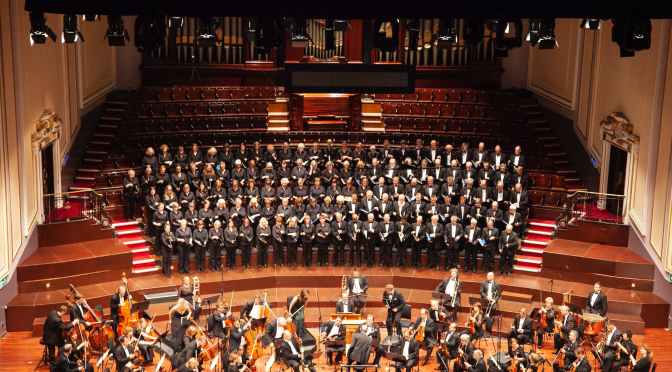
What cooperation! What unity! What harmony! I wish I was describing a congregation of God’s people, but instead, it was the Prague Symphony Orchestra. They performed in the  Knox Concert Series, and I had the chance to hear and see this great orchestra up close. The experience of hearing the orchestra reminded me anew about the importance of unity and cooperation.

The Prague Symphony Orchestra was composed of some 89 musicians, as well as a conductor, stage crew, etc. Almost a third of the musicians were violinists. It was interesting to see all of those bows moving in unison. Their skill was evident. This great skill means they used their God-given talents, and practiced endless hours. George Eliot said, “‘Tis God gives skill, But not without men’s hands: He could not make Antonio Stradivari’s violins without Antonio.” I wonder what we might accomplish in the Lord’s church if we were as diligent in honing our God-given talents and skills to be used in His service in the same way these musicians did.

All of the musicians were playing the same piece of music, and were “on the same page.” They were playing as individuals, under the direction of the conductor. As we follow Christ and scripture, we also work in unity and harmony.

From my vantage point in the concert, I could observe some of the musicians better than others. I was especially interested in the gentleman who played the tambourine during the first piece, Dvorak’s “Carnival Overture.” I never knew that anyone could be so enthusiastic playing the tambourine! It would seem this would not take as much skill as playing a violin, or a cello, or an oboe. Yet he played it with amazing energy and vigor, adding to the overall beauty of the piece, providing just the right accent needed. In the Lord’s work, there are often “parts” which seem minor─preparing the communion, counting the attendance, turning on the heat, etc., but think what a difference it makes when some of those “minor” jobs aren’t done as they should be.

As Paul reminded the Corinthians, “For the body is not one member, but many. If the foot shall say, Because I am not the hand, I am not of the body; is it therefore not of the body? And if the ear shall say, Because I am not the eye, I am not of the body; is it therefore not of the body? If the whole body were an eye, where were the hearing? If the whole were hearing, where were the smelling? But now hath God set the members every one of them in the body, as it hath pleased him. And if they were all one member, where were the body? But now are they many members, yet but one body” (1 Corinthians 12:14-20). We all have something to contribute to the Lord’s work, and we need everyone!

“Behold, how good and how pleasant it is for brethren to dwell together in unity!” (Psalm 133:1).

DOES IT REALLY MATTER WHAT WE DO IN WORSHIP IF WE ARE SINCERE? — BOB PRICHARD

Sincerity in worship is important, but it is not the only or most important thing in worship. It is common for religious people today to think that as long as they are sincere, and enjoy or find meaningful what they are doing, they can do almost anything in worship. This has led to many innovations into worship, as people seek newer and more exciting worship. Modern man’s fascination with new things is not necessarily in accord with God’s will, however. Worship is of utmost importance to God. He demonstrated how serious it is many times, but perhaps no clearer than in the story of Nadab and Abihu.

Nadab and Abihu were the two elder sons of Aaron, the first high priest of the Israelites as they made their way to the Promised Land. As sons of Aaron, they served as priests, and went into the very presence of God. “Then went up Moses, and Aaron, Nadab, and Abihu, and seventy of the elders of Israel:  And they saw the God of Israel: and there was under his feet as it were a paved work of a sapphire stone, and as it were the body of heaven in his clearness” (Exodus 24:9-10). They were leaders of the Israelite worship, and were in line to become the high priest upon Aaron’s death, but they lost their lives because they trifled with the worship of God (Numbers 3:4).

Moses described the death of Nadab and Abihu in Leviticus 10:1-2: “Nadab and Abihu, the sons of Aaron, took either of them his censer, and put fire therein, and put incense thereon, and offered strange fire before the LORD, which he commanded them not. And there went out fire from the LORD, and devoured them, and they died before the LORD.” Nadab and Abihu died because they “offered strange fire before the LORD, which he commanded them not.” They were priests, so they were the right people to lead the worship. They each had their censers used in worship, so they had the right implements to offer worship. They burned incense, which was a proper thing to do in worship. They were there at the tabernacle, the right place for worship. They were the right people, with the right implements of worship, doing the right thing, in the right place, but doing all of this in the wrong way, so God destroyed them! Even their father Aaron realized they had disobeyed God. “Then Moses said unto Aaron, This is it that the LORD spake, saying, I will be sanctified in them that come nigh me, and before all the people I will be glorified. And Aaron held his peace” (Leviticus 10:3). 

Nadab and Abihu received instant punishment from God for disobeying Him by doing what He had not commanded. They were probably very sincere, but they displeased God. Jesus called the scribes and Pharisees hypocrites because they cared more about what they wanted in worship than what God wanted. He condemned them, saying, “Ye hypocrites, well did Esaias prophesy of you, saying, This people draweth nigh unto me with their mouth, and honoureth me with their lips; but their heart is far from me. But in vain they do worship me, teaching for doctrines the commandments of men” (Matthew 15:7-9). If we add anything to our worship that God has not commanded, then we are offering the vain worship of disobedience.

DOES GOD APPROVE OF DENOMINATIONALISM? — BOB PRICHARD

Anyone who observes our religious world notices that it is filled with multiplied denominations. Many see this as a good thing—that anyone can find a denomination that teaches what he wants it to teach, thus the slogan, “Go to the church of your choice.”

This was the attitude expressed by Baptist preacher Charles Spurgeon in a sermon: “I bless God that there are so many denominations. If there were not men who differed a little in their creeds, we should never get as much gospel as we do. … God has sent different men to defend different kinds of truth.” Spurgeon’s Sermons, Vol. 2, 224. We might ask Mr. Spurgeon how there can be different kinds of truth. But on another occasion Mr. Spurgeon recognized the problem of denominations: “”Denominations! A plague upon denominationalism! There should be but one denomination: We should be denominated by the name of Christ, as a wife is named by her husband’s name. As long as the Church of Christ has to say, “My right arm is Episcopalian, and my left arm is Wesleyan, and my right foot is Baptist, and my left foot is Presbyterian or Congregational,” she is not ready for marriage. She will be ready when she has washed out these stains, when all her members have “one Lord, one faith, one baptism.”—Charles Haddon Spurgeon, Messages of Hope and Faith, p. 308.

The question is not whether Spurgeon approves of denominations, but whether God approves. Did God plan for man to “Go to the church of man’s choice”? Does God approve of our divided religious world?

Are religious divisions inevitable? Are all of the denominations in agreement with the fundamentals of the faith? Is it arrogant for anyone to claim that they understand the Bible and that others are in error? Can we know the truth?

Consider these facts about denominationalism.

1. Denominationalism is prompted by a spirit of separation.

Denomination is defined as “the act of naming, a name, an appellation.” The only way the word church is used in the New Testament is in the local sense—one congregation, or in the aggregate—the whole church. Any denomination is always more than the local congregation and less than the whole church, so it is based on separation. This is despite the Lord’s prayer that all of His followers would be united. In the very shadow of the cross, Christ prayed for unity. “Neither pray I for these alone [the apostles], but for them also which shall believe on me through their word [all who claim to be Christians today]; That they all may be one; as thou, Father, art in me, and I in thee, that they also may be one in us: that the world may believe that thou hast sent me” (John 17:20-21). The separation of denominationalism is a great detriment to the world believing the message of Christ.

2. Denominationalism sanctions the way of man’s choice (instead of God’s choice).

Jeremiah lamented, “O LORD, I know that the way of man is not in himself: it is not in man that walketh to direct his steps” (Jeremiah 10:23). Wayward man thinks he is making the right choice, but is too often mistaken. “There is a way that seemeth right unto a man, but the end thereof are the ways of death” (Proverbs 16:25). Remember, if it is up to man, he may pick the wrong church. The Lord will add a man to the right church, though. “And the Lord added to the church daily such as should be saved” (Acts 2:42b).

When the kingdom of Solomon divided into the two competing kingdoms of Israel and Judah, Jeroboam, who ruled the northern kingdom of Israel, realized that he might lose the people if they returned to Jerusalem to the temple, so he offered alternative worship. “Whereupon the king took counsel, and made two calves of gold, and said unto them, It is too much for you to go up to Jerusalem: behold thy gods, O Israel, which brought thee up out of the land of Egypt. And he set the one in Beth-el, and the other put he in Dan. And this thing became a sin: for the people went to worship before the one, even unto Dan.” (1 Kings 12:28-30). This was equivalent of “Attend the church of your choice.”

3. Denominationalism is built on sincerity instead of truth.

Sincerity is important, but is it enough? “And Paul, earnestly beholding the council, said, Men and brethren, I have lived in all good conscience before God until this day” (Acts 23:1). Paul was sincere, but sincerely wrong when he persecuted the church. “Who was before a blasphemer, and a persecutor, and injurious: but I obtained mercy, because I did it ignorantly in unbelief” (1 Timothy 1:13). Most of the people whose conversion we read of in the book of Acts, such as Lydia (Acts 16), and the Ethiopian treasurer (Acts 8), were very sincere in their beliefs. Why did they have to change? Would a sincere atheist need to change?

4. Denominationalism ignores God’s standard for unity.

Notice again the Lord’s prayer for unity. “Neither pray I for these alone, but for them also which shall believe on me through their word; That they all may be one; as thou, Father, art in me, and I in thee, that they also may be one in us: that the world may believe that thou hast sent me. And the glory which thou gavest me I have given them; that they may be one, even as we are one: I in them, and thou in me, that they may be made perfect in one; and that the world may know that thou hast sent me, and hast loved them, as thou hast loved me” (John 17:20-23).

Paul begged the Christians at Corinth to be united. “Now I beseech you, brethren, by the name of our Lord Jesus Christ, that ye all speak the same thing, and that there be no divisions among you; but that ye be perfectly joined together in the same mind and in the same judgment” (1 Corinthians 1:10).

Can you imagine Peter and Paul being members of different churches? Some say, “We are all teaching from the same Bible, going to the same place.” But how can one denomination say baptism is immersion, another say that it is sprinkling, and another say that it is pouring? “Can two walk together, except they be agreed?” (Amos 3:3).

5. Denominationalism destroys faith in the church.

Some say it doesn’t matter which church, if any, you are a member of. “One church is as good as another,” they say. But can any man build a church as good as the church Jesus built? The church Christ built came at great cost. Paul urged the Elders of the church at Ephesus, “Take heed therefore unto yourselves, and to all the flock, over the which the Holy Ghost hath made you overseers, to feed the church of God, which he hath purchased with his own blood” (Acts 20:28).

That church was established in Jerusalem on the first Pentecost after Christ was raised from the dead. Acts 2 tells the full story of how Peter and the other apostles preached the first gospel sermon to the multitudes gathered there, in fulfillment of Joel’s prophecy of the last days (Acts 2:14-21. Peter commanded, “Repent, and be baptized every one of you in the name of Jesus Christ for the remission of sins, and ye shall receive the gift of the Holy Ghost” (Acts 2:38). “Then they that gladly received his word were baptized: and the same day there were added unto them about three thousand souls” (Acts 2:41). “And the Lord added to the church daily such as should be saved” (Acts 2:47b).

You have the choice of being just a Christian. The appeal of the churches of Christ is to be a Christian, a member of the church of the New Testament, not a member of any denomination. If you obey the gospel just like they did in the book of Acts, worship like they did, and follow God’s commands as they did, you can be a member of the same church. The Lord does not want His followers to be divided among the denominations. He just wants us to be Christians, and Christians only. Why would you want to wear any other name religiously but that of Christian?