Tag Archives: Sacrifice

“AS A GOOD SOLDIER” — BOB PRICHARD

What is it like to be deployed to the field to fight to defend our country? USAA Magazine suggested the following to see what it is like:

1. Use 18 scoops of coffee per pot and allow it to sit for five or six hours before drinking.

2. Replace your garage door with a curtain.

3. Sleep on a cot in the garage.

4. Two hours after you’ve fallen asleep, have someone rip open the curtain, shine a flashlight in your eyes, and mumble, “Sorry, wrong cot.”

5. Spread gravel throughout your house and yard.

6. Don’t watch TV except for movies in the middle of the night. Have your family vote on which movie to watch and then show a different one.

7. When you take a shower, wear flip-flops and keep the lights off.

8. Sandbag the floor of your car to protect from mine blasts and fragmentation.

9. Have the paperboy give you a haircut.

10. Set your alarm clock to go off at random times during the night.

And of course, they daily risk their lives.

Paul told Timothy, “Thou therefore endure hardness, as a good soldier of Jesus Christ. No man that warreth entangleth himself with the affairs of this life; that he may please him who hath chosen him to be a soldier” (2 Timothy 2:3-4). Timothy was in the Lord’s army. You and I are also in the Lord’s army.

Why is it that we seem so unwilling to “endure hardness, as a good soldier of Jesus Christ”? Are we too soft to serve? Are we willing to go and do what the Lord requires of us? Or could it be that we are too entangled in the affairs of this life?

How long has it been since you really sacrificed (time, money, energy, resources) for the Lord? Does the Lord consider you a “good soldier”?

THE DOCTRINE OF THE ATONEMENT — BOB PRICHARD

The doctrine of the atonement is central in the Bible. When Adam and Eve sinned in the Garden of Eden, they broke the close fellowship they had with God. To restore that fellowship, it was necessary for God to accomplish the atonement. The Hebrew word used in the Old Testament for atonement means “to cover.” The Greek word used in the New Testament is a word that means “reconciliation.” Our English word implies a restoration of fellowship, being “at one.” For man to have his sins covered, to be reconciled or at one with God, the atonement was necessary.

The ultimate accomplishment of the atonement could come about only through God’s actions. The whole Bible describes this activity, culminating in the sacrifice of Christ as an atonement for man’s sins. God put everything in place to make this possible. “When the fulness of the time was come, God sent forth his Son, made of a woman, made under the law, To redeem them that were under the law, that we might receive the adoption of sons” (Galatians 4:4-5).

Adam and Eve rebelled against God’s will, bringing sin into the world. God gave them the choice of all trees in the garden, with one exception: “Of every tree of the garden thou mayest freely eat: But of the tree of the knowledge of good and evil, thou shalt not eat of it: for in the day that thou eatest thereof thou shalt surely die” (Genesis 2:16-17). Like Adam and Eve, we must bear the consequences of sin—not for their sin, but for our own. “For all have sinned, and come short of the glory of God” (Romans 3:23). We deserve spiritual death because of our sin, but through Christ we can live.

From the beginning, God showed that because of the serious nature of sin, the atonement could come about only through the shedding of blood, the giving of life for life. “Almost all things are by the law purged with blood; and without shedding of blood is no remission” (Hebrews 9:22). God shed the blood of animals to cover Adam and Eve when they left the garden (Genesis 3:21). From Abel to Noah to Job to other patriarchs, faithful men offered sacrifices to God, requiring the shedding of blood.

God told Abraham, “Take now thy son, thine only son Isaac, whom thou lovest, and get thee into the land of Moriah; and offer him there for a burnt offering upon one of the mountains which I will tell thee of” (Genesis 22:2). As he was about to kill Isaac, the angel of the Lord stopped him, saying, “I know that thou fearest God, seeing that thou hast not withheld thy son, thine only son from me.” Though he did not kill Isaac, it was still necessary to offer a sacrifice, so God provided a ram for the sacrifice, for the shedding of blood (Genesis 22:11-14). The sacrifices of the patriarchs, as well as the sacrifices under the Mosaic system, were in preparation for the ultimate sacrifice of Christ. “For if, when we were enemies, we were reconciled to God by the death of his Son, much more, being reconciled, we shall be saved by his life” (Romans 5:10). For this cause, “We preach Christ crucified” (1 Corinthians 1:22).

I AM NOT A VICTIM! — BOB PRICHARD

Under the title, “We’re All Victims,” John Leo wrote about the top 10 “victim stories” of the year, in the November 21, 2005 U.S.News. Leo pointed out that in our politically correct culture, anyone who gets offended is a victim. Leo cited the British Muslims who were “victimized” by tissue boxes picturing Winnie the Pooh and Piglet; and atheists who were “victimized” by actors who thanked God for winning Oscars, as well as students at the University of Wisconsin who were “victimized” by local bars that discontinued discount drinks on weekends in response to a federal campaign to limit binge drinking.

The dictionary defines a victim as “one who is harmed or killed by another; one who is harmed by or made to suffer from an act, circumstance, agency, or condition; a person who is tricked, swindled, or taken advantage of.” 

Yes, everywhere we look, we see victims. But I want you to know that I am not a victim. In fact, I am guilty. I know the truth of Paul’s words in Romans 3:23: “For all have sinned, and come short of the glory of God.” I know that I am a sinner, deserving of God’s punishment. But I know that I will not receive justice for my sins, but instead God’s grace.

“Being justified freely by his grace through the redemption that is in Christ Jesus” (Romans 3:24), reminds me that I have been forgiven through the grace of God when I obeyed the gospel of Christ.

“Then Peter said unto them, Repent, and be baptized every one of you in the name of Jesus Christ for the remission of sins, and ye shall receive the gift of the Holy Ghost” (Acts 2:38). Because I have repented and been baptized, my sins have been remitted.

One more definition of victim: “a living creature slain and offered as a sacrifice during a religious rite.” I am so grateful that Jesus served as that victim for me so that I could have forgiveness.

JESUS GAVE IT ALL— JOSH ALLEN

An old article by William McCormack, entitled “Jesus Christ Gave All” lists numerous ways Jesus gave of Himself. I have adapted and expanded this list.

Jesus gave it all.

He gave His cheek to receive the kiss of betrayal. Now His betrayer had given them a sign, saying, “Whomever I kiss, He is the One; seize Him.”Immediately he went up to Jesus and said, “Greetings, Rabbi!” and kissed Him” (Matthew 26:48-49). “But Jesus said to him, ‘Judas, are you betraying the Son of Man with a kiss?’” (Luke 22:48)

He gave His wrists to be bound. “Then the detachment of troops and the captain and the officers of the Jews arrested Jesus and bound Him.” (John 18:12)

He gave His face to be spat upon“They spat in His face…” (Matthew 26:67)

He gave His “other cheek” (Matthew 5:39) to those who would slap Him and strike Him repeatedly. “Then they spat in His face and beat Him; and others struck Him with the palms of their hands” (Matthew 26:67, Cf. John 19:3)

He gave His tongue to silence. He made no defense before His accusers. He could have brilliantly defeated their arguments (Cf. Matthew 22:46) “But Jesus kept silent…” (Matthew 26:63, Cf. Mark 15:3-4)

He gave His back to the scourge. “So then Pilate took Jesus and scourged Him.” (John 19:1)

He gave His shoulders to wear the robe of mockery. “Then the soldiers of the governor took Jesus into the Praetorium and gathered the whole garrison around Him. And they stripped Him and put a scarlet robe on Him.” (Matthew 27:27-28)

He gave His brow to be pierced by thorns — “When they had twisted a crown of thorns, they put it on His head, and a reed in His right hand. And they bowed the knee before Him and mocked Him, saying, ‘Hail, King of the Jews!’” (Matthew 27:29)

He gave His head to be struck. “Then they spat on Him, and took the reed and struck Him on the head.” (Matthew 27:30)

He gave His eyes to be blindfolded while evil men played a wicked game. “Now the men who held Jesus mocked Him and beat Him. And having blindfolded Him, they struck Him on the face and asked Him, saying, ‘Prophesy! Who is the one who struck You?’ And many other things they blasphemously spoke against Him.” (Luke 22:63-65)

He gave His legs to bear the weight of His Cross“And He, bearing His cross, went out to a place called the Place of a Skull, which is called in Hebrew, Golgotha” (John 19:17). Evidently, He struggled for “…they found a man of Cyrene, Simon by name. Him they compelled to bear His cross” (Matthew 27:32)

He gave His hands and feet to the nails of the cross. “Then they crucified Him” (Matthew 27:35)

He gave His clothes to His executioners. “Then the soldiers, when they had crucified Jesus, took His garments and made four parts, to each soldier a part, and also the tunic. Now the tunic was without seam, woven from the top in one piece. They said therefore among themselves, “Let us not tear it, but cast lots for it, whose it shall be,” that the Scripture might be fulfilled which says: ‘They divided My garments among them, And for My clothing they cast lots.’ Therefore the soldiers did these things.” (John 19:23-24)

He gave His forgiveness to those who hated Him. “Then Jesus said, “Father, forgive them, for they do not know what they do.” (Luke 23:34)

He gave His ears to endure mocking, blasphemous cries. “And those who passed by blasphemed Him, wagging their heads and saying, ‘You who destroy the temple and build it in three days, save Yourself! If You are the Son of God, come down from the cross.’ Likewise the chief priests also, mocking with the scribes and elders, said, ‘He saved others; Himself He cannot save. If He is the King of Israel, let Him now come down from the cross, and we will believe Him. He trusted in God; let Him deliver Him now if He will have Him; for He said, ‘I am the Son of God.’ ’ Even the robbers who were crucified with Him reviled Him with the same thing.” (Matthew 27:39-44)

He gave His mother to His disciple. “When Jesus therefore saw His mother, and the disciple whom He loved standing by, He said to His mother, ‘Woman, behold your son!’ Then He said to the disciple, ‘Behold your mother!’ And from that hour that disciple took her to his own home.” (John 19:25-27).

He gave His lips to drink the bitter cup. “After this, Jesus, knowing that all things were now accomplished, that the Scripture might be fulfilled, said, ‘I thirst!’ Now a vessel full of sour wine was sitting there; and they filled a sponge with sour wine, put it on hyssop, and put it to His mouth. So when Jesus had received the sour wine, He said, ‘It is finished!’…” (John 19:28-30; Cf. Psalm 69:20-21)

He gave His spirit into the hands of the Father. “And when Jesus had cried out with a loud voice, He said, ‘Father, into Your hands I commit My spirit.’ Having said this, He breathed His last.” (Luke 23:46)

He gave His side to the spear. “Therefore, because it was the Preparation Day, that the bodies should not remain on the cross on the Sabbath (for that Sabbath was a high day), the Jews asked Pilate that their legs might be broken, and that they might be taken away. Then the soldiers came and broke the legs of the first and of the other who was crucified with Him. But when they came to Jesus and saw that He was already dead, they did not break His legs. But one of the soldiers pierced His side with a spear, and immediately blood and water came out. And he who has seen has testified, and his testimony is true; and he knows that he is telling the truth, so that you may believe. For these things were done that the Scripture should be fulfilled, “Not one of His bones shall be broken.” And again another Scripture says, ‘They shall look on Him whom they pierced.’” (John 19:31-37)

He gave His body to be brutalized. “But He was wounded for our transgressions, He was bruised for our iniquities; The chastisement for our peace was upon Him, and by His stripes we are healed.” (Isaiah 53:5)

He gave His blood for redemption. “For this is My blood of the new covenant, which is shed for many for the remission of sins” (Matthew 26:28). Peter reminds us that we “were not redeemed with corruptible things, like silver or gold, from your aimless conduct received by tradition from your fathers, but with the precious blood of Christ, as of a lamb without blemish and without spot.” (1 Peter 1:18-19). 

Jesus gave much more than one can ever imagine. “For you know the grace of our Lord Jesus Christ, that though He was rich, yet for your sakes He became poor, that you through His poverty might become rich” (2 Corinthians 8:9, Cf. Philippians 2:5-11). Jesus gave everything for everyone so that He might give everything to everyone. Jesus gave it all for you, and what does He want of you? He wants your all. 

“‘…And you shall love the Lord your God with all your heart, with all your soul, with all your mind, and with all your strength.’ This is the first commandment.’” (Mark 12:28-30, Cf. Luke 9:23-25)

“ME DO IT” — BOB PRICHARD

“What? know ye not that your body is the temple of the Holy Ghost which is in you, which ye have of God, and ye are not your own?” (1 Corinthians 6:19).

Every parent of a two year old has heard the words, “me do it.” They are often the prelude to spills and messes. We want our children to learn independence, but they must also learn to be guided.

Our own spirit of independence is evident when we think of our bodies. “It’s my body. I will do with it what I want.” But once we have given our hearts to God, even our bodies belong to Him. God has invested in us, “bought with a price” (1 Corinthians 6:20), by sacrificing Christ for us and our response must be surrender of all we have and all we are.

We expect our children to grow beyond the “me do it” mentality. We too must learn the value of submission, knowing that we are not our own, but blessed with bodies that are the temple of the Holy Ghost.

“CHURCHILL DISSES AMERICA” — BOB PRICHARD

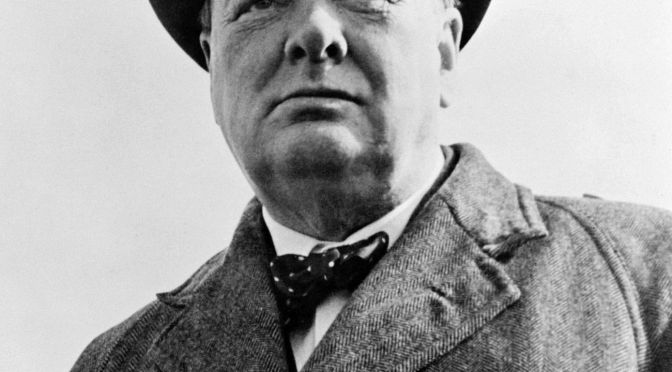
Few individuals contributed more to the allied victory over Hitler in World War II than Winston Churchill, Prime Minister of Great Britain. He recognized the Nazi threat, and then the Soviet threat, when few others did. Many of his decisions were questioned, but ultimately he was vindicated in most of them. Andrew Roberts saw a different side of Churchill by examining the diaries of King George VI. He found that while Churchill was often publicly very supportive of Franklin Roosevelt and the Americans, he was very critical privately. He promoted Anglo-American unity because it served Britain’s interest, and allowed Britain to survive the war.

Roberts suggests two characteristics shown throughout Churchill’s political career: “The first was his capacity ruthlessly to sacrifice the trivial and the short-term for the greater prize. The second was his powerful sense of personal and national destiny” (Andrew Roberts, “Churchill Disses America,” Smithsonian, November 2018, 10-16).

“Seek ye first the kingdom of God, and his righteousness; and all these things shall be added unto you” (Matthew 6:33). Wasn’t Jesus telling us that sacrificing the trivial and the short-term for the greater prize is what we should be all about as the servants of Christ. Paul certainly understood this. After he recounted all of the things that he could claim, things the world prizes, he turned his back on them.

Yea doubtless, and I count all things but loss for the excellency of the knowledge of Christ Jesus my Lord: for whom I have suffered the loss of all things, and do count them but dung, that I may win Christ, And be found in him, not having mine own righteousness, which is of the law, but that which is through the faith of Christ (Philippians 3:8-9).

He then went on to speak of the choice he had made:

Brethren, I count not myself to have apprehended: but this one thing I do, forgetting those things which are behind, and reaching forth unto those things which are before, I press toward the mark for the prize of the high calling of God in Christ Jesus (Philippians 3:13-14).

Not only must we seek the greater prize, we also should recognize we “are a chosen generation, a royal priesthood, an holy nation, a peculiar people; that ye should show forth the praises of him who hath called you out of darkness into his marvellous light” (1 Peter 2:9). First century Christians were accused of turning the world upside down (Acts 17:6). It is our task to continue doing this. That is our “destiny” as a royal priesthood serving our Master.

COSTLY! — BOB PRICHARD

Travel, especially air travel gets very expensive very fast. Your airplane ticket pays for you, your luggage, and the plane itself to be flown through the air. Fortunately, today’s jets can carry the same size load the same distance as forty years ago on half the fuel, due to lighter hulls, more fuel-efficient engines, and improved aerodynamics. But even little things still matter. National Geographic, in 2015, said that a Boeing 737-800 carrying just one extra fifty pound suitcase on every flight would cost $3,627 more to operate over the course of a year. One extra fifteen pound carry-on would cost $980 for the year. Even one extra magazine, weighing just .7 pound would add $46 a year to the cost of operating the plane. And those are 2015 figures! No wonder it is so expensive to fly! (“Explore: Science,” National Geographic, April 2015).

Just living is costly today. Inflation, greater demand for products, and technological innovations contribute to increasing costs. Most things are more costly, as prices have inflated over the years. In my first job, I had to use a crammed-full shopping cart to carry twenty dollars worth of groceries. Today, I can carry twenty dollars worth of groceries in one hand, and the difference is not that I have gotten stronger!

The sacrificial system under the Mosaic law was costly. The animal to be sacrificed was not just any animal, but one that was valuable, perfect, without blemish. In the KJV Old Testament, the phrase “without blemish” is used thirty-eight times in relation to the sacrifice. The high cost helped God’s people to understand the enormity of sin.

Peter, in calling for us to be holy, as the Father is holy, tells us “ye know that ye were not redeemed with corruptible things, as silver and gold, from your vain conversation received by tradition from your fathers; But with the precious blood of Christ, as of a lamb without blemish and without spot” (1 Peter 1:18-19). The precious blood of Christ was the most costly gift ever given to man, so much more costly than gold or silver. 

For when we were yet without strength, in due time Christ died for the ungodly. For scarcely for a righteous man will one die: yet peradventure for a good man some would even dare to die. But God commendeth his love toward us, in that, while we were yet sinners, Christ died for us. Much more then, being now justified by his blood, we shall be saved from wrath through him (Romans 5:6-9).

The cost of living is high, but the cost of dying without benefit of the blood of Christ is much worse!