Tag Archives: Obedience

DOES EPHESIANS 2:8-9, WHICH SAYS WE ARE NOT SAVED BY  WORKS, CONTRADICT JAMES 2:24, WHICH SAYS WE ARE SAVED BY WORKS? — BOB PRICHARD

By pitting one verse against another, the Bible sometimes seems contradictory. God, the Creator of the universe inspired the Bible, though, so there cannot be any real contradictions. Apparent contradictions disappear with proper understanding of the text.

Emphasizing man’s need to rely on the grace of God, Paul wrote, “by grace are ye saved through faith; and that not of yourselves: it is the gift of God: not of works, lest any man should boast” (Ephesians 2:8-9). A simple definition of grace is “unmerited favor.” God grants that  unmerited favor for the salvation of mankind. Paul said salvation is “not of works, lest any man should boast,” indicating that man cannot perform any meritorious works that would earn salvation. Salvation is by grace.

The apparent contradiction comes when we compare Ephesians 2:8-9 with James 2: 24, in which James wrote, “Ye see then how that by works a man is justified, and not by faith only.” The two passages are not really in conflict, because James and Paul were each speaking of two different kinds of works, as each emphasized a different aspect of salvation.

Paul emphasized that the grace of God saves, and man cannot earn his salvation by works of merit. The fact that God’s grace saves, however, does not mean that God relieves man of the responsibility to obey Him to receive the benefits of that grace. If salvation is by “grace alone,” with no acts of obedience, then God, “who is no respecter of persons” (Acts 10:34), would automatically save every man, no matter what he did. We are saved by many things, however.  “For we are saved by hope” (Romans 8:24). Hebrews 5:9 tells us that Christ  “became the author of eternal salvation unto all them that obey him.” Peter wrote of the obedience of Noah and his family, saying “the like figure whereunto even baptism doth also now save us” (1 Peter 3:21). The apostle John wrote, “if we walk in the light, as he is in the light, we have fellowship one with another, and the blood of Jesus Christ his Son cleanseth us from all sin” (1 John 1:7).

How can salvation come by grace, by hope, by Christ, by the blood, and by baptism? All of these save because salvation is “by grace through faith” (Ephesians 2:8), that is, an obedient faith. As James said, “faith, if it hath not works, is dead, being alone” (James 2:17). A living faith is a faith that works, that obeys the commands of Christ, including being baptized. As one is baptized into Christ he makes contact with the cleansing blood of Christ (Romans 6:3-7). Hebrews chapter 11, sometimes called “Faith’s Hall of Fame,” is filled with examples of “grace through faith.”  “By faith Abel offered unto God a more excellent sacrifice” (Hebrews 11:4). “By faith Noah … prepared an ark” (Hebrews 11:7). “By faith Abraham … obeyed” (Hebrews 11:8). We cannot earn our salvation through works of merit, but we must obey God to benefit from his marvelous grace. “By grace through faith” we obediently accept God’s love.

WHAT DOES “THE NIGHT COMETH WHEN NO MAN CAN WORK” MEAN? — BOB PRICHARD

As Jesus passed by, he saw a man that had been blind from birth. His disciples asked, “Master, who did sin, this man, or his parents, that he was born blind?” Their question reflected an indifference to the man’s suffering, as well as a theological misunderstanding (that it was possible for a child to sin in the womb). Jesus answered, rejecting the idea that either the man or his parents were responsible for his blindness. “Neither hath this man sinned, nor his parents: but that the works of God should be made manifest in him. I must work the works of him that sent me, while it is day: the night cometh, when no man can work. As long as I am in the world, I am the light of the world” (John 9:1-5). The words of Jesus, “the night cometh, when no man can work,” expressed the urgency He felt for His ministry.

In biblical times, people were bound to work during daylight. Artificial illumination, which allows modern man to work virtually around the clock, was very rare and expensive in the time of Christ. It was almost a proverbial statement, that daylight was the time to work. Very little could be accomplished after the sun went down. Time is always moving forward

The contrast between light and darkness is a prominent theme highlighted in John’s writings. He spoke of Jesus the incarnate Word in chapter one, saying, “In him was life; and the life was the light of men. And the light shineth in darkness; and the darkness comprehended it not” (John 1:4-5). Jesus Himself explained the necessity of working while it was day, saying, “As long as I am in the world, I am the light of the world” (John 9:5). Earlier He had announced to His detractors, “I am the light of the world: he that followeth me shall not walk in darkness, but shall have the light of life” (John 8:12). Light and life mark Christ, while darkness and death mark the world. The immediate response to the blind man was to give him sight and light.

It is significant that the words of urgency, of working while it is day, apply not only to Jesus but to His followers. The American Standard Version, based on better manuscript evidence, renders John 9:4 as “We must work the works of him that sent me, while it is day: the night cometh, when no man can work.” The “We” indicates that His followers share in the responsibility to be urgent in carrying out the will of the Father. Jesus obeys the One Who sent Him, the Heavenly Father. The followers of Christ cannot please the Father unless they are urgent in working the works of the Father, just as Jesus did. “We must” do this while it is day.

Jesus said, “This is the work of God, that ye believe on him whom he hath sent” (John 6:29). We must believe and follow Him. The writer of Hebrews spoke of the perfect obedience of Christ, and the necessity of all of His followers obeying as He did. “Though he were a Son, yet learned he obedience by the things which he suffered;  And being made perfect, he became the author of eternal salvation unto all them that obey him” (Hebrews 5:8-9).

WHAT DOES IT MEAN TO “OBEY THE GOSPEL”? — BOB PRICHARD

The gospel of Jesus Christ is the “good news” that mankind needs. It is a message that must be received and obeyed. Paul warned that the Loving Savior will return “In flaming fire taking vengeance on them that know not God, and that obey not the gospel of our Lord Jesus Christ” (2 Thessalonians 1:8). The Lord will take vengeance on those who “obey not the gospel,” and He will reward those who do obey the gospel.  

Paul stressed the fundamentals of the gospel, reminding the Corinthians what he had preached: “For I delivered unto you first of all that which I also received, how that Christ died for our sins according to the scriptures; And that he was buried, and that he rose again the third day according to the scriptures” (1 Corinthians 15:3-4). The death, burial, and resurrection of Christ were at the heart of his message. The rest of 1 Corinthians 15 is a discussion of the importance of the resurrection. He began the chapter by reminding the Corinthians that it was the gospel he had preached to them. “Moreover, brethren, I declare unto you the gospel which I preached unto you, which also ye have received, and wherein ye stand; By which also ye are saved, if ye keep in memory what I preached unto you, unless ye have believed in vain” (1 Corinthians 15:1-2). Paul stressed that the gospel is a message to receive, and to stand in, and it is a message that brings salvation when kept in memory.

Paul asserts that we choose the master we serve. “Know ye not, that to whom ye yield yourselves servants to obey, his servants ye are to whom ye obey; whether of sin unto death, or of obedience unto righteousness?” (Romans 6:16). The master we choose is the one we obey. Jesus said, “If ye love me, keep my commandments” (John 14:15). Paul commended the Romans for the choice they had made in obeying Christ and His gospel. “But God be thanked, that ye were the servants of sin, but ye have obeyed from the heart that form of doctrine which was delivered you. Being then made free from sin, ye became the servants of righteousness” (Romans 6:17-18). They had obeyed from the heart “that form of doctrine” he had delivered to them. Doctrine refers to something taught, and Paul taught the same gospel wherever he went. Centered in the facts of the death, burial and resurrection of Christ, his message was one of the necessity of obeying the will of God and becoming a servant of righteousness.  

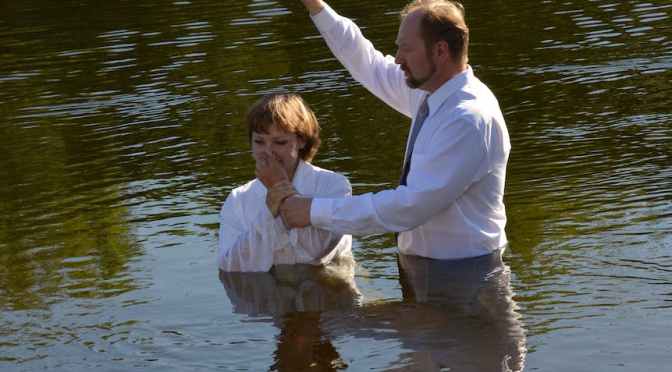
Earlier he stressed that they were buried with Christ in baptism to obey the gospel. “Know ye not, that so many of us as were baptized into Jesus Christ were baptized into his death? Therefore we are buried with him by baptism into death: that like as Christ was raised up from the dead by the glory of the Father, even so we also should walk in newness of life” (Romans 6:3-4). Baptism parallels the death, burial, and resurrection of Christ. Man is dead in sin, and then buried with Christ in baptism. He rises from the waters of baptism in the likeness of Christ’s resurrection to walk in newness of life. He then has the forgiveness of sin, and the joy that comes from obeying the gospel.

MUST THE CHRISTIAN TITHE? — BOB PRICHARD

Tithing is the custom of giving a portion (ten per cent) of products or money to a king or priest. The first biblical mention of tithing is in Genesis 14, when Abram returned from a great military victory and gave a tithe of the plunder he had acquired to Melchizedek, who was the king of Salem, and a priest of God. Later Jacob, Abram’s grandson, promised to give God a tenth: “Jacob vowed a vow, saying, If God will be with me, and will keep me in this way that I go, and will give me bread to eat, and raiment to put on, So that I come again to my father’s house in peace; then shall the LORD be my God: … and of all that thou shalt give me I will surely give the tenth unto thee” (Genesis 28:20-22). Giving a tenth was common among ancient nations, and was a part of the Old Covenant law.

Moses told Israel, “And all the tithe of the land, whether of the seed of the land, or of the fruit of the tree, is the LORD’S: it is holy unto the LORD” (Leviticus 27:30). The payment of the tithe was largely to support the Levites, who did not receive the land inheritance that the other tribes received. The priests and Levites also would sometimes give a tithe (tenth) of the tithe they received (Numbers 18:21-28). The Jews also paid a second tithe, and sometimes even a third tithe at certain times (Deuteronomy 14:22-28; 26:12). The law required all faithful Jews to tithe, regardless of income.

Christ spoke of tithing only once. “Woe unto you, scribes and Pharisees, hypocrites! for ye pay tithe of mint and anise and cummin, and have omitted the weightier matters of the law, judgment, mercy, and faith: these ought ye to have done, and not to leave the other undone. Ye blind guides, which strain at a gnat, and swallow a camel” (Matthew 23:23-24). Jesus did not condemn them for their tithing, but for their attitude in their giving. The scribes and Pharisees pretended to keep the letter of the law, but paid no attention to the spirit of the law.

This is key to understanding the Christian’s responsibility to give. The New Testament never gives any requirement for the Christian to give a tithe (10%). None of the apostles ever required the giving of a tithe, and there is no biblical example of Christians giving a tithe. The Old Covenant tithe was paid to the Levites, and no church or preacher or priest has received authority to demand a tithe of Christians. However, since the poorest of the Jews paid a tithe, surely Christians will want to give sacrificially, from the heart. Some may be able to give ten percent, some fifty per cent, some five per cent. The attitude should be to give as much as possible to the cause of Christ Who redeemed us. “But this I say, He which soweth sparingly shall reap also sparingly; and he which soweth bountifully shall reap also bountifully. Every man according as he purposeth in his heart, so let him give; not grudgingly, or of necessity: for God loveth a cheerful giver” (2 Corinthians 9:6-7). The Christian who realizes how much Christ has given will truly be a cheerful, generous  giver to the Lord’s work.

QWERTY — BOB PRICHARD

This article, and virtually every printed article you have ever read in the English language  was typed on a QWERTY keyboard, so named for the first five letters on the upper left of the keyboard, designed in 1873. Why are the letters on the keyboard arranged this way? Early typewriters jammed easily, so the keyboard was designed to make it harder to type quickly. Studies have shown that a better designed ergonomic keyboard would allow the average person to type twice as fast, with 95% less effort. 

Why haven’t we changed to a better keyboard? It is because there are just too many vested interests like typists, computer manufacturers, etc. that would not want the change. If offered a better keyboard, how many would want to change? Would you? I don’t want to have to learn a new keyboard!

Unfortunately, we don’t always want better do we? We are often satisfied with good, even when better is available. We don’t want to go to the extra cost or extra effort for the better. We are satisfied where we are. This may not matter much when it comes to keyboards, but what about spiritual things?

The key word of the book of Hebrews is better. “But now hath he obtained a more excellent ministry, by how much also he is the mediator of a better covenant, which was established on better promises” (Hebrews 8:6). Those in faith’s hall of fame in Hebrews 11 “desire a better country, that is, an heavenly: wherefore God is not ashamed to be called their God: for he hat prepared for them a city” (Hebrews 11:6).

We have the promise of better things because of Christ: “Being made so much better than the angels, as he hath by inheritance obtained a more excellent name than they” (Hebrews 1:4). What are you willing to do, not for a good life, but for the better life? When Jesus said, “seek ye the first the kingdom of God, and his righteousness” (Matthew 6:33) and “whosoever he be of you that forsaketh not all that he hath, cannot be my disciple” (Luke 14:28), wasn’t he challenging us to the better life? Are you satisfied with a QWERTY life?

WAS THE PHILIPPIAN JAILER SAVED BEFORE BAPTISM? — BOB PRICHARD

The story of the Philippian jailer is found in Acts 16. The jailer was in charge of Paul and Silas, who had been arrested on false charges by the owners of a slave girl. They had cast a demon out of the girl, depriving her owners of the money they made by exploiting her (Acts 16:20-21). Because of this, Paul and Silas were arrested, beaten, and put into the innermost prison, with their feet in the stocks. The jailer was to keep them safely until the officials could deal with them.

Beaten and bleeding, and locked in the inner prison, Paul and Silas prayed and sang praises to God, even though it was midnight (Acts 16:25). Suddenly an earthquake shook the prison, and the jailer, awakening from sleep was ready to kill himself, because he was sure that the prisoners would have escaped. When Paul calmed him, assuring him that the prisoners were still there, “he called for a light, and sprang in, and came trembling, and fell down before Paul and Silas, and brought them out, and said, Sirs, what must I do to be saved?” (Acts 16:29- 30). Paul and Silas answered very simply: “Believe on the Lord Jesus Christ, and thou shalt be saved, and thy house” (Acts 16:31). Since the jailer was not told to be baptized, does this mean that he was saved before baptism? Consider the rest of his story.

Paul and Silas had told the jailer that salvation would come from believing on the Lord Jesus Christ, but what did this jailer know about Jesus Christ? It is unlikely that he had heard any of the sermons that Paul and Silas had preached in Philippi. He probably knew absolutely nothing about Jesus, other than what he had learned from hearing the songs and prayers of Paul and Silas, so they had to teach him. “And they spake unto him the word of the Lord, and to all that were in his house” (Acts 16:32). Did speaking the “word of the Lord” include the necessity of baptism? Remember that it was midnight when Paul and Silas were singing and praying (Acts 16:25). It was after this that the earthquake came, the jailer sprang in and asked “What must I do to be saved?” and they “spake unto him the word of the Lord.” Without question it was in the wee hours of the morning when the jailer responded to their preaching.

Luke tells us, “he took them the same hour of the night, and washed their stripes; and was baptized, he and all his, straightway. And when he had brought them into his house, he set meat before them, and rejoiced, believing in God with all his house” (Acts 16:33-34). When were the jailer and his household baptized? It was “the same hour of the night.” Why didn’t they at least wait until morning light before they were baptized, if baptism was not essential? When did he rejoice?  It was after they were baptized, not before. They rejoiced, knowing that their sins were forgiven, and they had truly obeyed the Lord. The jailer had a saving faith, a faith that responded to the sacrifice of Christ by obeying Him. His obedience in baptism demonstrated his faith, and his faith was demonstrated in his baptism. The jailer was like all other Christians we read of in the New Testament. He was saved after baptism.

JUST ONE INGREDIENT — BOB PRICHARD

My daughter Jennifer has become somewhat of a gourmet cook, trying many new dishes through her cooking club. She still likes to make some old family favorites as well, such as “pineapple au gratin.” The whole family was anticipating a wonderful dish. It smelled so good as it cooked, and it looked just as good, but it tasted terrible. Consideration of the situation revealed that it had been made correctly, with one exception—salt had been accidentally substituted for sugar in the dish. It was just one ingredient, but it made all the difference!

A young man who had most things right in his life came to see Jesus, He questioned, “Good Master, what shall I do that I may inherit eternal life?” Jesus told him, “Thou knowest the commandments, Do not commit adultery, Do not kill, Do not steal, Do not bear false witness, Defraud not, Honour thy father and mother.” He replied, “Master, all these have I observed from my youth. Then Jesus beholding him loved him, and said unto him, One thing thou lackest: go thy way, sell whatsoever thou hast, and give to the poor, and thou shalt have treasure in heaven: and come, take up the cross, and follow me. And he was sad at that saying, and went away grieved: for he had great possessions” (Mark 10:17-23).

The recipe for eternal life was almost complete, but he lacked one thing, and it was a big one—because he had great possessions. Jesus loved him, and appreciated his dedication, but his good deeds were not “good enough” to secure eternal life.

The general teaching of our religious world, which stresses faith, and sometimes repentance, usually lacks one thing—obedience to the gospel by being baptized for the remission of sins. Most would say that surely living a good life, keeping the ten commandments, even saying the “sinner’s prayer,” is “good enough.” But nothing substitutes for obedience to the will of God. Salt may look like sugar, but it is not sugar, and it cannot be substituted without spoiling the dish, We must follow God’s recipe for salvation: faith, repentance, confession of Christ, and baptism into Christ. Just one substitution will bring ruin.

DID THE LORD SAVE PAUL ON THE ROAD TO DAMASCUS? — BOB PRICHARD

No. The conversion of Saul of Tarsus (later known as the apostle Paul) is the most thoroughly documented conversion in all the Bible, but it is still widely misunderstood. As Saul was making his way to Damascus to persecute Christians, Jesus appeared to him, but Saul was not saved simply because the Lord appeared to him. Luke records, “And he trembling and astonished said, Lord, what wilt thou have me to do? And the Lord said unto him, Arise, and go into the city, and it shall be told thee what thou must do” (Acts 9:6). The Lord did not save Saul until he completed what he “must do.”

The first mention in scripture of Saul of Tarsus is in Acts 7, where those stoning Stephen, the first Christian martyr, lay their clothes at his feet. Luke reported, “Saul was consenting unto his death. And at that time there was a great persecution against the church which was at Jerusalem; and they were all scattered abroad throughout the regions of Judaea and Samaria, except the apostles” (Acts 8:1). Saul was in the middle of all this persecution: “As for Saul, he made havock of the church, entering into every house, and haling men and women committed them to prison” (Acts 8:3). Because of his zeal for persecuting the church, Saul went to the high priest and asked for letters to the Damascus synagogues, so that he could arrest the Christians in Damascus and bring them back to Jerusalem for punishment.

As Saul journeyed to Damascus, a bright light blinded him, and he heard Jesus say to him, “Saul, Saul, why persecutest thou me?” (Acts 9:4). After Jesus identified Himself to Saul, He sent Saul into Damascus with the words, “Arise, and go into the city, and it shall be told thee what thou must do” (Acts 9:6). Saul then spent the next three days in prayer and fasting. This showed that he was serious about following Christ, but his three days of prayer and fasting did not save him or show that he was saved. His penitent behavior was preparing him for the necessary obedience.

The Lord then directed Ananias, a Christian of Damascus, to go to Saul to tell him what he “must do.” Although it must have been a daunting assignment, Ananias, “a devout man according to the law” came to Saul, a fellow Jew, and said, “Brother Saul, receive thy sight” (Acts 22:12-13). Saul was no longer blind, and Ananias warned him of what was ahead of him if he chose to follow Christ. “The God of our fathers hath chosen thee, that thou shouldest know his will, and see that Just One, and shouldest hear the voice of his mouth.  For thou shalt be his witness unto all men of what thou hast seen and heard” (Acts 22:14-15). Having warned him what lay ahead of him in Christ’s service, Ananias then told Saul what he “must do.” “Why tarriest thou? arise, and be baptized, and wash away thy sins, calling on the name of the Lord” (Acts 22:16). Why was Saul not saved before?  Because he was still in his sins.  That is why he needed to call on the name of the Lord by by washing away his sins. As he obeyed the Lord’s command through the messenger Ananias, he received the forgiveness of his sins and the salvation he had spent three days praying for in his blindness.

THE ROAD LESS TRAVELED — BOB PRICHARD

Robert Frost’s 1916 poem, “The Road Not Taken,” is one of the most often quoted poems of all time. The poet speaks of two roads, each “just as fair,” but the traveler chose one, concluding “I took the one less traveled by, And that has made all the difference.” Frost indicated that most have misunderstood the poem. The choice was actually random—the traveler didn’t know which was best. The difference wasn’t from a wise choice, but a random choice.

In life, we often have to choose between two roads that seem equally good or bad. We don’t know which road is better, because we cannot see the end of the road with either choice. We just have to choose. But what we must always remember is that when we choose the beginning of the road, we also choose the end of the road. That is why it is so important that we  not only choose the right road in life, but that we periodically evaluate the road we are now on, to see if we should change roads.

Saul of Tarsus was on the road to Damascus to persecute Christians. He entered the city as a blind man, and exited as a follower of the Christ he persecuted. The Lord told Ananias, “Go thy way: for he is a chosen vessel unto me, to bear my name before the Gentiles, and kings, and the children of Israel: For I will show him how great things he must suffer for my name’s sake” (Acts 9:15-16). As Ananias taught him, Saul counted the cost (Luke 14:28) of starting on the road of service to Jesus Christ, and immediately obeyed when Ananias commanded him to be baptized (Acts 22:16).

Jesus warned that there are two ways—the broad way of the world and the narrow way of following Him. “Enter ye in at the strait gate: for wide is the gate, and broad is the way, that leadeth to destruction, and many there be which go in thereat: Because strait is the gate, and narrow is the way, which leadeth unto life, and few there be that find it” (Matthew 7:13-14). The narrow way is definitely “the road less traveled.” But it makes all the difference—not only in this life, but in the world to come. Are you on the right road today? Is it time for a change?

WHEN SHOULD A PERSON BE “REBAPTIZED”? — BOB PRICHARD

Strictly speaking, scriptural baptism is a “one time” proposition. Ephesians 4:5 says that there is “one baptism” today. The “one baptism” consists of the immersion of a penitent believer in water, whereby he contacts the blood of Christ, receives the forgiveness of his sins, and the Lord adds him to the church. Even if a person “backslides,” or becomes unfaithful, it is not necessary to be rebaptized, if his original baptism was a scriptural baptism. Simon the sorcerer, in Acts 8, is an example of a Christian who sinned, and was told to pray for forgiveness. Peter told Simon, “Repent therefore of this thy wickedness, and pray God, if perhaps the thought of thine heart may be forgiven thee” (Acts 8:22). Philip the evangelist had properly taught and baptized Simon, so there was no need for him to be rebaptized (Acts 8:13).

Sometimes, however, when a person thinks he is being scripturally baptized, he is really doing no more than getting wet. After further Bible study, he may realize he was not baptized according to the scriptures. Several conditions call for a person who has received “another baptism” to be baptized into Christ. Nearly every religious group practices some form of baptism. But if that baptism is not the “one baptism” of Ephesians 4:5, then it is not a scriptural baptism. For instance, if a person has only been sprinkled with water, and has not been  immersed, or “buried with him by baptism into death” (Romans 6:4), then when he realizes the proper mode of baptism is immersion into Christ, he should be “rebaptized.”

Also, baptism that follows salvation, to join a man-made religious body, is not the “one baptism.” Peter said to the multitude on Pentecost, “Repent and be baptized every one of you in name of Jesus Christ for the remission of sins” (Acts 2:38). The three thousand who obeyed that day, as others of the New Testament, received the remission, or forgiveness of their sins, after baptism. Sectarian baptism, even if by immersion, cannot be the “one baptism” if the person thinks that he has already received the forgiveness of his sins, and is thus saved, before his baptism. The purpose for baptism  makes a difference! Scriptural baptism puts one into the church, the body of Christ, which He has promised to save. “For by one Spirit are we all baptized into one body” (1 Corinthians 12:13).

Often mature believers who committed their lives to Christ and were baptized at an early age begin to question whether they properly understood what they were doing when baptized. If the person was old enough to understand that he was obeying Christ by being  immersed, receiving the forgiveness of his sins, and making Christ the Lord of  his life, then he understood enough. It is only natural that as one grows in his understanding of the scriptures, he  will realize that there was much he did not understand when he first became a Christian. If there is doubt in a person’s mind,  however, concerning his baptism, then he should take action to remove that doubt. The Master said, “If ye love me, keep my commandments” (John 14:15).

ACCEPTABLE PRAYER — BOB PRICHARD

One of the most evident characteristics of the faithful Christian is an active prayer life. This has marked the church from the beginning. The church at Jerusalem “continued steadfastly … in prayers” (Acts 2:42). Prayer was especially important in times of distress, such as when Peter was imprisoned by Herod, when “prayer was made without ceasing of the church unto God for him” (Acts 12:5), or when Paul and Silas were in jail in Philippi, when “at midnight Paul and Silas prayed, and sang praises unto God” (Acts 16:25). Certainly Christians should pray. Paul told the Christians of Colossae, “Continue in prayer, and watch in the same with thanksgiving” (Colossians 4:2). However, it is often the case that a man who has had no use for Christ or His church will cry out to God for help, and then become very upset when he believes God has not answered his prayer. Under what conditions are our prayers acceptable to God? Has God promised to listen to and answer the prayers of every man, no matter how he lives or how he prays?

WE MUST BE OBEDIENT.

For the eyes of the Lord are over the righteous, and his ears are open unto their prayers: but the face of the Lord is against them that do evil” (1 Peter 3:12). “And whatsoever we ask, we receive of him, because we keep his commandments, and do those things that are pleasing in his sight” (1 John 3:22). Paul warned that the day was coming when Christ would be revealed with His mighty angels, “In flaming fire taking vengeance on them that know not God, and that obey not the gospel of our Lord Jesus Christ” (2 Thessalonians 1:8).

WE MUST PRAY ACCORDING TO HIS WILL.

This is the example of Jesus as He faced the cross. He prayed, “Father, if thou be willing, remove this cup from me: nevertheless not my will, but thine, be done” (Luke 22:42).  “And this is the confidence that we have in him, that, if we ask any thing according to his will, he heareth us” (1 John 5:14). If we are praying for our own will to be done instead of His will, we will not receive the Lord’s blessing. James warns, “Ye ask, and receive not, because ye ask amiss, that ye may consume it upon your lusts” (James 4:3). How can we expect God to hear our prayers when we have wrong motives for prayer?

WE MUST PRAY WITH THE PROPER ATTITUDE.

In the model prayer that Jesus gave His disciples, He said, “If ye forgive men their trespasses, your heavenly Father will also forgive you: But if ye forgive not men their trespasses, neither will your Father forgive your trespasses” (Matthew 6:14-15). We must trust God to keep His promises. “But let him ask in faith, nothing wavering. For he that wavereth is like a wave of the sea driven with the wind and tossed. For let not that man think that he shall receive any thing of the Lord” (James 1:6-7).

WE MUST PRAY IN THE NAME OF CHRIST.

And whatsoever ye shall ask in my name, that will I do, that the Father may be glorified in the Son. If ye shall ask any thing in my name, I will do it” (John 14:13-14). This does not mean just saying the words “in Christ’s name.” It means praying with His authority because we belong to Him. Paul writes, “For ye are all the children of God by faith in Christ Jesus. For as many of you as have been baptized into Christ have put on Christ” (Galatians 3:26-27). Faith in Christ will lead to obedience to Christ in baptism. Jesus said, “He that believeth and is baptized shall be saved; but he that believeth not shall be damned” (Mark 16:16). One who believes in Christ (John 8:24), confesses that faith in Christ (Acts 8:37) and repents and is baptized (Acts 2:38) can pray in the name of Christ with assurance. He has obeyed the gospel of Christ, and followed God’s law of pardon for his sins.

THE BYSTANDER EFFECT — BOB PRICHARD

“Therefore I esteem all thy precepts concerning all things to be right; and I hate every false way” (Psalm 119:128).

A bystander is someone who is present at an event but does not get involved. The bystander effect refers to a situation where the more bystanders there are, the less likely anyone will come to the aid of someone in trouble.

We admire those who take a stand, get involved, and are really for something. The psalm reminds us that the man or woman of God is not only for something, the precepts, all the precepts of God, but that as a result that same servant of God will hate every false way. There is no room for the bystander who tries to be neutral about anything that God teaches. The psalmist is for everything that God is for, and against everything God is against.

The bystander effect may keep us from saying, “Here am I; send me” (Isaiah 6:8), but not if we love God’s precepts.

“ONE SIZE FITS ALL” — BOB PRICHARD

“Then Peter said unto them, Repent, and be baptized every one of you in the name of Jesus Christ for the remission of sins, and ye shall receive the gift of the Holy Ghost” (Acts 2:38).

Some  clothing is “one size fits all.” If we are large or small, we may question if something will really “fit all.” But Peter said repentance and baptism was for all.

At Pentecost, Jews came from around the world. They heard the disciples speak “the wonderful works of God” (Acts 2:7-11). Others were there: priests, Pharisees, Sadducees, Levites, religious people. Probably some pick-pockets and thieves took advantage of the occasion. No matter how religious or irreligious, the message that day was a “one size fits all.” Since God is “no respecter of persons” (Acts 10:34), all had the same opportunity and obligation to repent and be baptized.  God’s promise was for those people, their descendants, the Gentiles (“those afar off”), and us (Acts 2:39). None then or today could receive the remission of sins without this obedience.

All, no matter how unworthy, can receive God’s blessings because the simple gospel “fits all.”

“ME DO IT” — BOB PRICHARD

“What? know ye not that your body is the temple of the Holy Ghost which is in you, which ye have of God, and ye are not your own?” (1 Corinthians 6:19).

Every parent of a two year old has heard the words, “me do it.” They are often the prelude to spills and messes. We want our children to learn independence, but they must also learn to be guided.

Our own spirit of independence is evident when we think of our bodies. “It’s my body. I will do with it what I want.” But once we have given our hearts to God, even our bodies belong to Him. God has invested in us, “bought with a price” (1 Corinthians 6:20), by sacrificing Christ for us and our response must be surrender of all we have and all we are.

We expect our children to grow beyond the “me do it” mentality. We too must learn the value of submission, knowing that we are not our own, but blessed with bodies that are the temple of the Holy Ghost.

DOES SAYING “THE SINNER’S PRAYER” SAVE? — BOB PRICHARD

Preachers sometimes invite their listeners to pray something such as, “God, I am sorry I have sinned. Please forgive me and let Jesus come into my heart. Thank you for forgiving me and giving me eternal life. In Jesus’ name I pray. Amen.” The preacher then says, “Since you have asked Christ into your life, you are now His child and your sins are forgiven.” The problem with this, however, is that the promise of forgiveness is from man, not God. God has never promised to hear or respond to “the sinner’s prayer.”

Prayer is a privilege for God’s people. James said, “The effectual fervent prayer of a righteous man availeth much” (James 5:16b). Peter quoted Psalm 34:15-16, saying “For the eyes of the Lord are over the righteous, and his ears are open unto their prayers: but the face of the Lord is against them that do evil” (1 Peter 3:12). Solomon warned, “He that turneth away his ear from hearing the law, even his prayer shall be abomination” (Proverbs 28:9). The psalmist spoke of the dilemma of the sinner: “If I regard iniquity in my heart, the Lord will not hear me” (Psalm 66:18). 

But what about the prayers of the publican and the Pharisee? While the Pharisee prayed “with himself,” the publican, “standing afar off, would not lift up so much as his eyes unto heaven, but smote upon his breast, saying, God be merciful to me a sinner.” Jesus concluded, “I tell you, this man went down to his house justified rather than the other: for every one that exalteth himself shall be abased; and he that humbleth himself shall be exalted” (Luke 18:11, 13-14). This does not set the pattern for sinners coming to Christ, however, because both the Pharisee and the publican were already in a covenant relationship with God as part of His chosen people, the Jews. They both, despite their sins, had the right to pray to God. 

What about Joel’s prophecy? He said, “It shall come to pass, that whosoever shall call on the name of the LORD shall be delivered: for in mount Zion and in Jerusalem shall be deliverance, as the LORD hath said, and in the remnant whom the LORD shall call” (Joel 2:32). To “call upon the name of the Lord” means to make an appeal through obedience. Saul of Tarsus spent three days in prayer and fasting, but did not receive salvation from the Lord until he called upon the Lord through obedience. Ananias told him, “And now why tarriest thou? arise, and be baptized, and wash away thy sins, calling on the name of the Lord” (Acts 22:16). In his baptism, he called on the name of the Lord and his sins were washed away. He would not have been saved if he had merely prayed “the sinner’s prayer,” and had refused to obey the Lord’s command. Jesus said, “If ye shall ask any thing in my name I will do it” (John 14.14). This is not a blanket promise to any person, but to those who follow Him and have the right to ask things in His name, by His authority. This promise is to the children of God. In the very next verse? He puts it simply, “If ye love me, keep my commandments” (John 14:15). The multitudes cried out at Pentecost, “What shall we do?” Peter did not respond, “Pray the sinner’s prayer,” but “Repent, and be baptized every one of you in the name of Jesus Christ for the remission of sins, and ye shall receive the gift of the Holy Ghost” (Acts 2:37-38). We will be saved if we do what the believers of Pentecost did.

CAN I BORROW YOUR ROPE? — BOB PRICHARD

A farmer came and asked his neighbor if he could borrow his rope. The neighbor said, “No, I can’t let you borrow it.” 

“Why not,” he replied. 

“Because I’m using it to tie up my milk.”

“But you can’t tie up milk with a rope.”

“I know, but when you don’t want to do something, one excuse is as good as another.”

As a preacher, I often hear excuses from people for why they don’t want to do something, and very often they fall in the category of “tying up milk.” I had a teacher in high school who really stressed to us that there is a big difference between an excuse and a reason. If you came into his class and said, “My excuse for being late is … ,” or “My excuse for not having my homework done is … ,” he would say, “I don’t want an excuse, I want a reason!”

Have you been planning to get back in church, read your Bible more, or be baptized? Have you been planning to start coming on Sunday nights or Wednesday nights? Have you been planning to volunteer to teach a class, work with VBS or Lads to Leaders, or do something else you should do? Do you have a reason? Or is it an excuse for not doing what you should do? 

Jesus said, “If ye love me, keep my commandments” (John 14:15). He puts it pretty plainly doesn’t He? There it is in black and white. You may make all the excuses you want to, but if you are not obeying the Lord, you don’t love Him. Is it time to take some action? 

“And why call ye me, Lord, Lord, and do not the things which I say? Whosoever cometh to me, and heareth my sayings, and doeth them, I will show you to whom he is like: He is like a man which built an house, and digged deep, and laid the foundation on a rock: and when the flood arose, the stream beat vehemently upon that house, and could not shake it: for it was founded upon a rock. But he that heareth, and doeth not, is like a man that without a foundation built an house upon the earth; against which the stream did beat vehemently, and immediately it fell; and the ruin of that house was great” (Luke 6:46-49).

WHY WE MUST BE BURIED WITH CHRIST IN BAPTISM — BOB PRICHARD

The heart of the gospel is the death, burial and resurrection of Christ. Paul began the great resurrection chapter, “Moreover, brethren, I declare unto you the gospel which I preached unto you, which also ye have received, and wherein ye stand; By which also ye are saved, if ye keep in memory what I preached unto you, unless ye have believed in vain. For I delivered unto you first of all that which I also received, how that Christ died for our sins according to the scriptures; And that he was buried, and that he rose again the third day according to the scriptures” (1 Corinthians 15:1-4).

It was their understanding that they had crucified the Son of God that made men at Pentecost cry out, “Men and brethren, what shall we do?” Peter’s response was “Repent, and be baptized every one of you in the name of Jesus Christ for the remission of sins, and ye shall receive the gift of the Holy Ghost” (Acts 2:36-38).

The baptism that Peter preached that day was the baptism preached in the early church. Paul reminded the Christians of Rome that he and they had both been baptized in the same way, for the same reasons. “Know ye not, that so many of us as were baptized into Jesus Christ were baptized into his death? Therefore we are buried with him by baptism into death: that like as Christ was raised up from the dead by the glory of the Father, even so we also should walk in newness of life” (Romans 6:3-4).

These verses speak of our baptism or burial into Christ, our clothing of ourselves in Him. “For as many of you as have been baptized into Christ have put on Christ” (Galatians 3:27).

I.  BECAUSE WE BELIEVE THE GOSPEL.

Our baptism pictures what we know to be true of Christ. As Jesus introduced the Lord’s Supper, He took bread and the cup and told them that his body and blood were given for us (Luke 22:19-20). We understand that Jesus suffered for us, “that he might sanctify the people with his own blood” (Hebrews 13:12).

We rejoice with the angels that said, “He is not here, but is risen: remember how he spake unto you when he was yet in Galilee, Saying, The Son of man must be delivered into the hands of sinful men, and be crucified, and the third day rise again” (Luke 24:6 -7). Every baptism proclaims the truth of the gospel.

II. BECAUSE HE IS OUR SUBSTITUTE.

He became one with us to be our substitute, because we cannot atone for our own sins. He “made himself of no reputation, and took upon him the form of a servant, and was made in the likeness of men: And being found in fashion as a man, he humbled himself, and became obedient unto death, even the death of the cross” (Philippians 2:7-8).

God “hath made him to be sin for us, who knew no sin; that we might be made the righteousness of God in him” (2 Corinthians 5:21). In baptism we acknowledge that we cannot atone for our own sins. Unless we accept His sacrifice, we must bear our own sins. “For the wages of sin is death; but the gift of God is eternal life through Jesus Christ our Lord” (Romans 6:23).

III. BECAUSE WE ARE DEAD IN SIN.

Baptism is a burial, and the man who is buried is dead. “For all have sinned, and come short of the glory of God” (Romans 3:23). What is dead needs to be buried (John 11:39).

As the head of the church, He gave Himself for the church, for us. “And he is the head of the body, the church: who is the beginning, the firstborn from the dead; that in all things he might have the preeminence” (Colossians 1:18). Buried with Him, we put the old man of sin to death.

IV. BECAUSE WE RISE TO WALK IN NEWNESS OF LIFE.

We have not suffered the true punishment of our sins. “For the wages of sin is death; but the gift of God is eternal life through Jesus Christ our Lord” (Romans 6:23). But Jesus Christ has suffered that punishment, and in our baptism we acknowledge and identify with Him in His suffering and death.

His death is our death to the old way of things. We know that God hates sin, because He was willing to see His only begotten son die for sins. “For God so loved the world, that he gave his only begotten Son, that whosoever believeth in him should not perish, but have everlasting life. For God sent not his Son into the world to condemn the world; but that the world through him might be saved” (John 3:16-17).

We are buried so that we may be alive in Him. “Yet a little while, and the world seeth me no more; but ye see me: because I live, ye shall live also” (John 14:19). That means that our perspective changes. “Set your affection on things above, not on things on the earth. For ye are dead, and your life is hid with Christ in God” (Colossians 3:2-3).

Every Christian should have the attitude of Paul: “I am crucified with Christ: nevertheless I live; yet not I, but Christ liveth in me: and the life which I now live in the flesh I live by the faith of the Son of God, who loved me, and gave himself for me” (Galatians 2:20).

“Therefore if any man be in Christ, he is a new creature: old things are passed away; behold, all things are become new” (2 Corinthians 5:17).

WHAT DOES IT MEAN TO OBEY THE GOSPEL? — BOB PRICHARD

The gospel of Jesus Christ is the good news that mankind needs. It is a message that must be received and obeyed. Paul warned that the Loving Savior will return “In flaming fire taking vengeance on them that know not God, and that obey not the gospel of our Lord Jesus Christ” (2 Thessalonians 1:8). The Lord will take vengeance on those who obey not the gospel, and He will reward those who do obey the gospel.

Paul stressed the fundamentals of the gospel, reminding the Corinthians what he had preached: “For I delivered unto you first of all that which I also received, how that Christ died for our sins according to the scriptures; And that he was buried, and that he rose again the third day according to the scriptures” (1 Corinthians 15:3- 4). The death, burial, and resurrection of Christ were at the heart of his message. The rest of 1 Corinthians 15 is a discussion of the importance of the resurrection. He began the chapter by reminding the Corinthians that it was the gospel he had preached to them. “Moreover, brethren, I declare unto you the gospel which I preached unto you, which also ye have received, and wherein ye stand; By which also ye are saved, if ye keep in memory what I preached unto you, unless ye have believed in vain” (1 Corinthians 15:1-2). Paul stressed that the gospel is a message to receive, and to stand in, and it is a message that brings salvation when kept in memory.

Paul asserts that we choose the master we serve. “Know ye not, that to whom ye yield yourselves servants to obey, his servants ye are to whom ye obey; whether of sin unto death, or of obedience unto righteousness?” (Romans 6:16). The master we choose is the one we obey. Jesus said, “If ye love me, keep my commandments” (John 14:15). Paul commended the Romans for the choice they had made in obeying Christ and His gospel. “But God be thanked, that ye were the servants of sin, but ye have obeyed from the heart that form of doctrine which was delivered you. Being then made free from sin, ye became the servants of righteousness” (Romans 6:17-18). They had obeyed from the heart that form of doctrine he had delivered to them. Doctrine refers to something taught, and Paul taught the same gospel wherever he went. Centered in the facts of the death, burial and resurrection of Christ, his message was one of the necessity of obeying the will of God and becoming a servant of righteousness.

Earlier he stressed that they were buried with Christ in baptism to obey the gospel. “Know ye not, that so many of us as were baptized into Jesus Christ were baptized into his death? Therefore we are buried with him by baptism into death: that like as Christ was raised up from the dead by the glory of the Father, even so we also should walk in newness of life” (Romans 6:3-4). Baptism parallels the death, burial, and resurrection of Christ. Man is dead in sin, and then buried with Christ in baptism. He rises from the waters of baptism in the likeness of Christ’s resurrection to walk in newness of life. He then has the forgiveness of sin, and the joy that comes from obeying the gospel.

WHAT DOES ECCLESIASTES 3:15 MEAN? — BOB PRICHARD

Men have described the book of Ecclesiastes, authored by the wise man Solomon, in many different ways. Herman Melville, author of Moby Dick, said it is the truest of all books. Others have applied Winston Churchill’s description of Russia, a riddle wrapped in a mystery inside an enigma, to this great book. This sometimes puzzling book shows that the things of the world offer no lasting happiness, and that this life, with all of its labors, is valueless, if there is no future. The book is the story of a man (Solomon), who deliberately tasted every worldly delight, including the forbidden, only to discover that all that the world offers is vanity of vanities (Ecclesiastes 1:2).

Chapter three begins with the familiar words, “There is an appointed time for everything. And there is a time for every event under heaven—A time to give birth and a time to die; A time to plant and a time to uproot what is planted… A time to love and a time to hate; A time for war and a time for peace.” (Ecclesiastes 3:1-2, 8). The general theme of this chapter is the unchanging regularity of the world created by God.

The words of verse 15, as with so many others in the book, seem very cryptic at first reading. “That which is has been already and that which will be has already been, for God seeks what has passed by.” (Ecclesiastes 3:15). Remember that the general theme of the chapter is the unchanging regularity of life. Solomon expressed the same idea earlier in the book. “That which has been is that which will be, and that which has been done is that which will be done. So there is nothing new under the sun.” (Ecclesiastes 1:9). The verse closes with the statement, “there is no new thing under the sun”, meaning there is nothing new in the temporal life. He then asked, “Is there anything of which one might say, ‘See this, it is new’? Already it has existed for ages which were before us.” (Ecclesiastes 1:10). As we look at our world, we see that there are technological advancements, and advancements in other fields, but so far as man’s concern for his fellowman, and the basic things of life, there is no change, no new thing under the sun. As the saying goes, the more things change, the more they stay the same.

Since we live in a regular universe, with God in control, it is up to us to recognize God’s control, and bend our wills to be in conformity to His will. After all, this is what God requires. As Solomon looked at the world under the sun, living as if there were no God, his vision of an unchanging world changed to a conclusion that God truly is in control. The end of Ecclesiastes 3:15 states, “for God seeks what has passed by.” These words parallel the last words of verse 14, which also talks of God’s purpose, and says, “…for God has so worked that men should fear Him.” This points to the fact that God designed our regular universe to draw men to Him.

Solomon ends the saga of his search for happiness with the words, “Let us hear the conclusion of the whole matter: Fear God, and keep his commandments: for this is the whole duty of man” (Ecclesiastes 12:13). Literally, the whole of man is to obey God.