
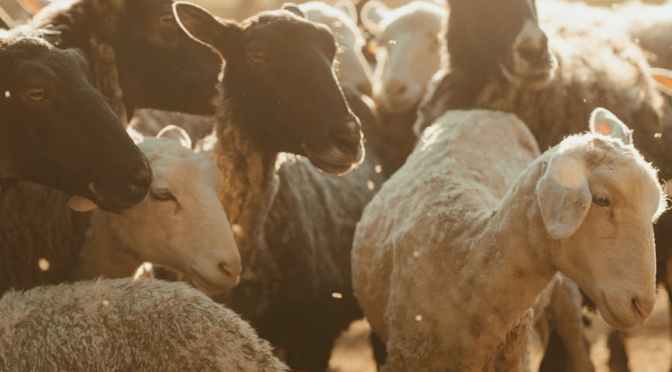
As Jesus neared the end of His discussion of the “Good Shepherd,” He said, “As the Father knoweth me, even so know I the Father: and I lay down my life for the sheep. And other sheep I have, which are not of this fold: them also I must bring, and they shall hear my voice; and there shall be one fold, and one shepherd” (John 10:15-16). He spoke of “other sheep,” that would hear the voice of the Good Shepherd, and be part of the “one fold” of the “one shepherd.”
Earlier in His ministry, Jesus sent His disciples to preach to the Jews, commanding them, “Go not into the way of the Gentiles, and into any city of the Samaritans enter ye not: But go rather to the lost sheep of the house of Israel” (Matthew 10:5-6). These Jews, the “lost sheep of the house of Israel,” needed the gospel of Christ, so the disciples took the message of Christ to them first. Jesus, however, looked forward to the time when the gospel would be not only for the Jews but for the Gentiles as well. His desire was that the divisions and barriers between the Jews and the Gentiles (anyone who was not a Jew) would be broken down.
With the establishment of the church of Christ on the day of Pentecost, these barriers, broken down by Christ’s sacrifice, were removed. In his sermon to the multitude gathered in Jerusalem, Peter said, “Repent, and be baptized every one of you in the name of Jesus Christ for the remission of sins, and ye shall receive the gift of the Holy Ghost. For the promise is unto you, and to your children, and to all that are afar off, even as many as the Lord our God shall call” (Acts 2:38-39). Peter addressed the saving promise of the gospel to those present, and to “your children, and to all that are afar off.” “All that are afar off” refers to the Gentiles, who were outside the covenant relationship between God and the Jews, His chosen people. Because of the desire of Christ for “one fold” under the “one shepherd,” the gospel message was meant not only for the Jews, but also to the Gentiles.
The gospel of Christ is for the whole world. Jesus told the disciples, “Go ye into all the world, and preach the gospel to every creature. He that believeth and is baptized shall be saved; but he that believeth not shall be damned” (Mark 16:15-16). The message is the same to “every creature,” whether Jew or Gentile. The message is that “He that believeth and is baptized shall be saved.”
The Lord unites Jews and Gentiles in His church today because we live under the “better covenant” of the Christian age. “But now hath he obtained a more excellent ministry, by how much also he is the mediator of a better covenant, which was established upon better promises. For if that first covenant had been faultless, then should no place have been sought for the second” (Hebrews 8:6-7). The message of Christ provides salvation to the “lost sheep of the house of Israel,” the Jews, and to His “other sheep,” the Gentiles. Every person in the world falls into one of these two categories, and is subject to the gospel of Christ.

 THE BIBLE MESSENGER