IS PROVERBS 22:6 A GUARANTEE TO FAITHFUL PARENTS? — BOB PRICHARD

Solomon said, “Train up a child in the way he should go: and when he is old, he will not depart from it” (Proverbs 22:6). These words bring comfort to many parents who understand that the difficult task of parenting will  be rewarded by faithful children, but there are many parents who are filled with guilt and anguish because their children have gone astray, despite their best efforts. Solomon’s words are simple enough, but they just don’t always seem to come true! All too often godly men and women try with all of their ability to be good parents, but still fail. But it must be understood that Proverbs 22:6 is a proverb, not a promise. A proverb is a general statement of a rule, which may have exceptions. Those “exceptions to the rule” cause heartache.  

Implied in “train up a child in the way he should go” are the concepts of providing real training, and knowing “the way he should go.” Sadly, many parents have no concept of “training up a child.” They do little or nothing to provide the necessary spiritual food their children need.  While they may demand that the church train their children spiritually, they see no need to do this themselves as parents. The word here translated as “train up” is used elsewhere in scripture to mean dedicating something or someone to God’s service, as in 1 Kings 8:63, where “the king and all the children of Israel dedicated the house of the LORD.” Thus Solomon urges all parents to dedicate and train their children for service.

“In the way he should go” literally means “according to his way.” That is, the training or dedication of the child should be according to his natural personal inclination, abilities, age, and qualifications. The idea of “the way he should go” is not so much the way the parent wants him to go, but the way the child should go so as to maximize his talents in service to God. To actually know “the way he should go” implies that the parent will spend a great deal of time learning the needs, desires, and capabilities of the child. To fulfill the proverb requires tremendous commitment.

That investment of the time, energy, and knowledge necessary for each child is worthwhile, though, because “when he is old, he will not depart from it.” The parent who has made the proper investment of training up the child in the way he should go will know that the child has been properly prepared to live wisely before God.

But what about the child who strays. Have the parents failed? Sadly, many times parents do fail. But just as often, the child that goes astray does so because he exercises his own free will to disobey. Many godly men and women, such as the prophet Samuel, lost their children because their children chose to follow the way of the world.

CAN THE AVERAGE PERSON REALLY UNDERSTAND THE BIBLE? — BOB PRICHARD

Yes! Numerous passages of scripture are directly addressed to the common person. “Husbands, love your wives … Wives, submit yourselves unto your own husbands … Children, obey your parents in the Lord” (Ephesians 5:25, 22; 6:1). “I write unto you, little children … I write unto you, fathers … I write unto you, young men” (1 John 2:12-13). The Bible is God’s message to humanity. All will be judged according to the Bible, so a God of Justice would not require mankind to understand the un-understandable.

The Bible’s longest chapter is filled with praise for God’s written Word, indicating that He wants and expects the individual to understand. “The entrance of thy words giveth light; it giveth understanding unto the simple” (Psalm 119:130). The Bible is for the “simple,” not just religious authorities. “I have more understanding than all my teachers: for thy testimonies are my meditation” (verse 99).  It is not through the precepts of men, or their interpretations, but through God’s precepts that we gain understanding:  “I understand more than the ancients, because I keep thy precepts. … Through thy precepts I get understanding: therefore I hate every false way” (verses 100, 104).

Paul told the church at Corinth, “we write none other things unto you, than what ye read or acknowledge” (2 Corinthians 1:13). The modern language NIV renders his  words, “we do not write you anything you cannot read or understand.” Although Paul had written the Corinthians about difficult subjects such as church discipline, spiritual gifts, marriage, and the resurrection, he still expected them to read and understand. In similar fashion, he wrote to the church at Ephesus, “by revelation he made known unto me the mystery; (as I wrote afore in few words, whereby, when ye read, ye may understand my knowledge in the mystery of Christ)” (Ephesians 3:3-4). Paul’s readers could have the same insight into the (no longer hidden) mystery that had been revealed to him in Christ.

As long as people do not believe they can understand the Bible, and refuse to study it for themselves, they will not understand. The key is to put into practice what we do understand! The deepest understanding of God’s Will comes when through study we are “those who by reason of use have their senses exercised to discern both good and evil” (Hebrews 5:14). If the average person cannot really understand the Bible without another intervening to teach, then it means that the God Who created the universe was not able to make Himself understood through the Word. If the average man cannot trust his own understanding, how can he trust another man’s understanding? 2 Peter 1:19-21, written to Christians, says that  “no prophecy of the scripture is of any private interpretation. For the prophecy came not in old time by the will of man: but holy men of God spake as they were moved by the Holy Ghost.”  Peter did not say that  no individual can understand, but that the prophets spoke under the inspiration of the Holy Ghost, revealing God’s message, rather than their own. “Let my cry come near before thee, O LORD: give me understanding according to thy word” (Psalm 119:169).  You can understand the Bible!

WHEN SHOULD A PERSON BE “REBAPTIZED”? — BOB PRICHARD

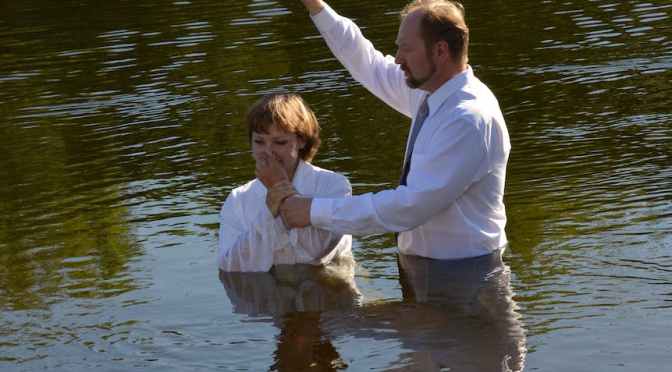
Strictly speaking, scriptural baptism is a “one time” proposition. Ephesians 4:5 says that there is “one baptism” today. The “one baptism” consists of the immersion of a penitent believer in water, whereby he contacts the blood of Christ, receives the forgiveness of his sins, and the Lord adds him to the church. Even if a person “backslides,” or becomes unfaithful, it is not necessary to be rebaptized, if his original baptism was a scriptural baptism. Simon the sorcerer, in Acts 8, is an example of a Christian who sinned, and was told to pray for forgiveness. Peter told Simon, “Repent therefore of this thy wickedness, and pray God, if perhaps the thought of thine heart may be forgiven thee” (Acts 8:22). Philip the evangelist had properly taught and baptized Simon, so there was no need for him to be rebaptized (Acts 8:13).

Sometimes, however, when a person thinks he is being scripturally baptized, he is really doing no more than getting wet. After further Bible study, he may realize he was not baptized according to the scriptures. Several conditions call for a person who has received “another baptism” to be baptized into Christ. Nearly every religious group practices some form of baptism. But if that baptism is not the “one baptism” of Ephesians 4:5, then it is not a scriptural baptism. For instance, if a person has only been sprinkled with water, and has not been  immersed, or “buried with him by baptism into death” (Romans 6:4), then when he realizes the proper mode of baptism is immersion into Christ, he should be “rebaptized.”

Also, baptism that follows salvation, to join a man-made religious body, is not the “one baptism.” Peter said to the multitude on Pentecost, “Repent and be baptized every one of you in name of Jesus Christ for the remission of sins” (Acts 2:38). The three thousand who obeyed that day, as others of the New Testament, received the remission, or forgiveness of their sins, after baptism. Sectarian baptism, even if by immersion, cannot be the “one baptism” if the person thinks that he has already received the forgiveness of his sins, and is thus saved, before his baptism. The purpose for baptism  makes a difference! Scriptural baptism puts one into the church, the body of Christ, which He has promised to save. “For by one Spirit are we all baptized into one body” (1 Corinthians 12:13).

Often mature believers who committed their lives to Christ and were baptized at an early age begin to question whether they properly understood what they were doing when baptized. If the person was old enough to understand that he was obeying Christ by being  immersed, receiving the forgiveness of his sins, and making Christ the Lord of  his life, then he understood enough. It is only natural that as one grows in his understanding of the scriptures, he  will realize that there was much he did not understand when he first became a Christian. If there is doubt in a person’s mind,  however, concerning his baptism, then he should take action to remove that doubt. The Master said, “If ye love me, keep my commandments” (John 14:15).

DO YOU NEED SOME OF THIS? — BOB PRICHARD

Have you heard about the new toothpaste? It has shoe polish in it. It is made for people who are constantly putting their foot in their mouth!

Don’t all of us wish, sometimes, that we had thought a little before we said what we said? Once those words leave our lips, they are so hard to call back. It is so easy for something we never intended to say to slip out. Of course, if we didn’t think those bad things, they wouldn’t be there to slip out. 

Wisdom speaks to us and says, “Unto you, O men, I call; and my voice is to the sons of man. O ye simple, understand wisdom: and, ye fools, be ye of an understanding heart. Hear; for I will speak of excellent things; and the opening of my lips shall be right things. For my mouth shall speak truth; and wickedness is an abomination to my lips. All the words of my mouth are in righteousness; there is nothing froward or perverse in them. They are all plain to him that understandeth, and right to them that find knowledge. Receive my instruction, and not silver; and knowledge rather than choice gold. For wisdom is better than rubies; and all the things that may be desired are not to be compared to it” (Proverbs 8:4-11). Notice, for wisdom, the opening of the lips is only for right things, for truth. Wickedness is an abomination to the lips of wisdom.

James warned about how hard, but how necessary, it is to control the tongue. “If any man offend not in word, the same is a perfect man, and able also to bridle the whole body. Behold, we put bits in the horses’ mouths, that they may obey us; and we turn about their whole body. Behold also the ships, which though they be so great, and are driven of fierce winds, yet are they turned about with a very small helm, whithersoever the governor listeth. Even so the tongue is a little member, and boasteth great things. Behold, how great a matter a little fire kindleth!” (James 3:2-5).

Solomon reminds us, “Even a fool, when he holdeth his peace, is counted wise: and he that shutteth his lips is esteemed a man of understanding” (Proverbs 17:28). Just for today, let’s really think before we speak, and speak things that are good and right. Otherwise, you may need some of the toothpaste with shoe polish in it!

BEAUTIFUL HARMONY — BOB PRICHARD

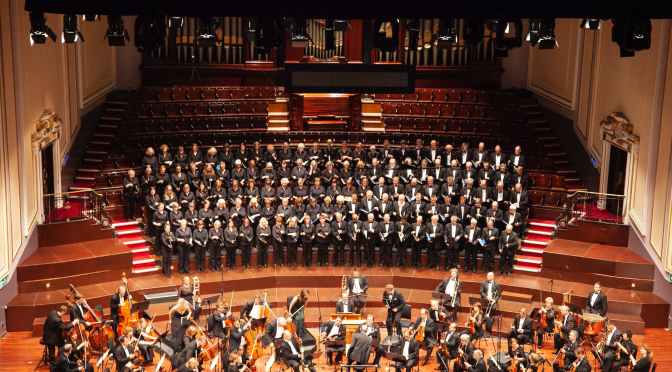
What cooperation! What unity! What harmony! I wish I was describing a congregation of God’s people, but instead, it was the Prague Symphony Orchestra. They performed in the  Knox Concert Series, and I had the chance to hear and see this great orchestra up close. The experience of hearing the orchestra reminded me anew about the importance of unity and cooperation.

The Prague Symphony Orchestra was composed of some 89 musicians, as well as a conductor, stage crew, etc. Almost a third of the musicians were violinists. It was interesting to see all of those bows moving in unison. Their skill was evident. This great skill means they used their God-given talents, and practiced endless hours. George Eliot said, “‘Tis God gives skill, But not without men’s hands: He could not make Antonio Stradivari’s violins without Antonio.” I wonder what we might accomplish in the Lord’s church if we were as diligent in honing our God-given talents and skills to be used in His service in the same way these musicians did.

All of the musicians were playing the same piece of music, and were “on the same page.” They were playing as individuals, under the direction of the conductor. As we follow Christ and scripture, we also work in unity and harmony.

From my vantage point in the concert, I could observe some of the musicians better than others. I was especially interested in the gentleman who played the tambourine during the first piece, Dvorak’s “Carnival Overture.” I never knew that anyone could be so enthusiastic playing the tambourine! It would seem this would not take as much skill as playing a violin, or a cello, or an oboe. Yet he played it with amazing energy and vigor, adding to the overall beauty of the piece, providing just the right accent needed. In the Lord’s work, there are often “parts” which seem minor─preparing the communion, counting the attendance, turning on the heat, etc., but think what a difference it makes when some of those “minor” jobs aren’t done as they should be.

As Paul reminded the Corinthians, “For the body is not one member, but many. If the foot shall say, Because I am not the hand, I am not of the body; is it therefore not of the body? And if the ear shall say, Because I am not the eye, I am not of the body; is it therefore not of the body? If the whole body were an eye, where were the hearing? If the whole were hearing, where were the smelling? But now hath God set the members every one of them in the body, as it hath pleased him. And if they were all one member, where were the body? But now are they many members, yet but one body” (1 Corinthians 12:14-20). We all have something to contribute to the Lord’s work, and we need everyone!

“Behold, how good and how pleasant it is for brethren to dwell together in unity!” (Psalm 133:1).

TIME OUT! — BOB PRICHARD

My then three year-old grandson spent the weekend with his dad at a law school competition in Birmingham. He enjoyed being with his daddy on the trip, but there was quite a bit of time just sitting and waiting for the team to complete various competitions. At one point, after they had been sitting on a bench waiting for a long time, he turned to his dad and asked, “Daddy, How long do we have to stay in ‘time out’?”

Have you been in time out recently? What do we do when we are in “time out,” waiting for God to do what we need Him to do?

“Hast thou not known? hast thou not heard, that the everlasting God, the LORD, the Creator of the ends of the earth, fainteth not, neither is weary? there is no searching of his understanding. He giveth power to the faint; and to them that have no might he increaseth strength. Even the youths shall faint and be weary, and the young men shall utterly fall: But they that wait upon the LORD shall renew their strength; they shall mount up with wings as eagles; they shall run, and not be weary; and they shall walk, and not faint” (Isaiah 40:28-31).

Have you ever watched an eagle fly? As it soars in the sky, it seems that its flight is effortless. Using its strong wings, it knows how to soar as it is lifted by the wind currents.

I haven’t reached that point yet when I can soar while I wait, but I know that God has promised me that when I fully trust in Him. What seems like a child’s “time out,” may just be a time when the Lord is preparing me for greater service, or He may be offering me a test that will make me the patient Christian that I need to be. Normally I want my patience RIGHT NOW, but that is not always God’s way. His way is to trust Him RIGHT NOW, and know that He will work things in His own way, because “we know that all things work together for good to them that love God, to them who are the called according to his purpose” (Romans 8:28).

TAKING HOLY THINGS FOR GRANTED — BOB PRICHARD

In my recent Bible reading, the following passage was significant. “And Nadab and Abihu, the sons of Aaron, took either of them his censer, and put fire therein, and put incense thereon, and offered strange fire before the LORD, which he commanded them not. And there went out fire from the LORD, and devoured them, and they died before the LORD” (Leviticus 10:1-2). 

This tragic situation came about because these two sons of Aaron were careless in their service to God. What struck me in my reading of the passage this time is what I read in the two verses before this. “And Moses and Aaron went into the tabernacle of the congregation, and came out, and blessed the people: and the glory of the LORD appeared unto all the people.  And there came a fire out from before the LORD, and consumed upon the altar the burnt offering and the fat: which when all the people saw, they shouted, and fell on their faces” (Leviticus 9:23-24).

Did you notice what happened? The “glory of the Lord” appeared to the people, and the Lord sent a fire out that consumed the sacrifice, and “all the people saw, they shouted, and fell on their faces.” And then in the very next verse, Nadab and Abihu brought down more fire from the Lord by their disobedience. It makes me wonder, how could they have done this? Weren’t they paying attention? Didn’t they realize the power of God? Didn’t they know what they were doing?

I don’t know all of the reasons that Nadab and Abihu made their fateful choice, but one thing is obvious. They took holy things for granted. They were the right people, with the right implements of worship, doing the right thing, in the right place, but in the wrong way. And they paid for it with their lives.

I wonder how often we are guilty of taking holy things for granted. Have you ever partaken of the Lord’s Supper, and then realized that you didn’t even think about what Christ did for you. Most all of us are guilty of sometimes singing words we don’t mean or believe in worship. When we sing “Anywhere with Jesus,” do we mean it? When we sing, “all to Thee, I surrender,” do we mean it?

The Lord has blessed us with His mercy, in that He has not destroyed us like Nadab and Abihu. But can we continue to take holy things for granted? “Wherefore we receiving a kingdom which cannot be moved, let us have grace, whereby we may serve God acceptably with reverence and godly fear: For our God is a consuming fire” (Hebrews 12:29).

ACCEPTABLE PRAYER — BOB PRICHARD

One of the most evident characteristics of the faithful Christian is an active prayer life. This has marked the church from the beginning. The church at Jerusalem “continued steadfastly … in prayers” (Acts 2:42). Prayer was especially important in times of distress, such as when Peter was imprisoned by Herod, when “prayer was made without ceasing of the church unto God for him” (Acts 12:5), or when Paul and Silas were in jail in Philippi, when “at midnight Paul and Silas prayed, and sang praises unto God” (Acts 16:25). Certainly Christians should pray. Paul told the Christians of Colossae, “Continue in prayer, and watch in the same with thanksgiving” (Colossians 4:2). However, it is often the case that a man who has had no use for Christ or His church will cry out to God for help, and then become very upset when he believes God has not answered his prayer. Under what conditions are our prayers acceptable to God? Has God promised to listen to and answer the prayers of every man, no matter how he lives or how he prays?

WE MUST BE OBEDIENT.

For the eyes of the Lord are over the righteous, and his ears are open unto their prayers: but the face of the Lord is against them that do evil” (1 Peter 3:12). “And whatsoever we ask, we receive of him, because we keep his commandments, and do those things that are pleasing in his sight” (1 John 3:22). Paul warned that the day was coming when Christ would be revealed with His mighty angels, “In flaming fire taking vengeance on them that know not God, and that obey not the gospel of our Lord Jesus Christ” (2 Thessalonians 1:8).

WE MUST PRAY ACCORDING TO HIS WILL.

This is the example of Jesus as He faced the cross. He prayed, “Father, if thou be willing, remove this cup from me: nevertheless not my will, but thine, be done” (Luke 22:42).  “And this is the confidence that we have in him, that, if we ask any thing according to his will, he heareth us” (1 John 5:14). If we are praying for our own will to be done instead of His will, we will not receive the Lord’s blessing. James warns, “Ye ask, and receive not, because ye ask amiss, that ye may consume it upon your lusts” (James 4:3). How can we expect God to hear our prayers when we have wrong motives for prayer?

WE MUST PRAY WITH THE PROPER ATTITUDE.

In the model prayer that Jesus gave His disciples, He said, “If ye forgive men their trespasses, your heavenly Father will also forgive you: But if ye forgive not men their trespasses, neither will your Father forgive your trespasses” (Matthew 6:14-15). We must trust God to keep His promises. “But let him ask in faith, nothing wavering. For he that wavereth is like a wave of the sea driven with the wind and tossed. For let not that man think that he shall receive any thing of the Lord” (James 1:6-7).

WE MUST PRAY IN THE NAME OF CHRIST.

And whatsoever ye shall ask in my name, that will I do, that the Father may be glorified in the Son. If ye shall ask any thing in my name, I will do it” (John 14:13-14). This does not mean just saying the words “in Christ’s name.” It means praying with His authority because we belong to Him. Paul writes, “For ye are all the children of God by faith in Christ Jesus. For as many of you as have been baptized into Christ have put on Christ” (Galatians 3:26-27). Faith in Christ will lead to obedience to Christ in baptism. Jesus said, “He that believeth and is baptized shall be saved; but he that believeth not shall be damned” (Mark 16:16). One who believes in Christ (John 8:24), confesses that faith in Christ (Acts 8:37) and repents and is baptized (Acts 2:38) can pray in the name of Christ with assurance. He has obeyed the gospel of Christ, and followed God’s law of pardon for his sins.

SAFE & SOUND: THE SECURITY OF THE FATHER’S HOUSE — BOB PRICHARD

I was speaking on a minister’s panel for a Hospice group, answering questions about death and care for the terminally ill. One of the Hospice volunteers asked what to say if the patient was concerned about sin in his or her life, and their relationship with God. The Lutheran minister was quick to say, “God is a God of love. Tell them that they have nothing to worry about.”

I had different advice. I said that if the patient had some spiritual concerns that they should be supportive, but also seek to make sure they dealt with whatever was of concern. I could not assume that everyone has a right relationship with God, especially if one was concerned about that relationship.

The Lutheran minister probably represented much of our religious world. I knew him all too well. He was Post-Modernist in his thinking, and basically thought anything goes in the religious world, and everybody is right with God—(except for the churches of Christ, of course).

But the security of the Christian is an issue for many of us, isn’t it. Are we really right with God? Can we know that we have the security of the Father’s house? Are we perpetually in the Father’s house one day and in the far country the next? How can we be sure where we stand with the Father? Perhaps the confidence that the Prodigal had can help us to better understand our relationship with God as Christians.

The Fatal Decision

The Prodigal was safe and sound in his father’s house as the story begins. He lost that security, however. Although in his own mind he probably thought it was the father’s fault for his restrictiveness, or perhaps his elder brother’s attitude, he ultimately had no one to blame but himself. His time in the far country was spent in riotous living, and the portion given by the Father was soon gone. He was not wise like Moses, learning the hard way that the pleasures of sin are only for a season.

“By faith Moses, when he was come to years, refused to be called the son of Pharaoh’s daughter; Choosing rather to suffer affliction with the people of God, than to enjoy the pleasures of sin for a season; Esteeming the reproach of Christ greater riches than the treasures in Egypt: for he had respect unto the recompence of the reward” (Heb. 11:24-26).

The Far Country

The problem of being in the far country is that the security a full wallet seems to provide does not last. He was on a slippery slope, and could do nothing but fall further and further away from safety and security. Paul warns us, “Wherefore let him that thinketh he standeth take heed lest he fall” (1 Cor. 10:12). This was another lesson the Prodigal had to learn through experience.

When Jonathan Edwards first preached his sermon, “Sinners in the Hands of an Angry God,” on July 8, 1741, at Enfield, Connecticut, the response was overwhelming. Edwards warned that “There is nothing that keeps wicked men out of hell, but the mere pleasure of God.” Edwards, through ten “considerations” stressed that God may cast sinners, who certainly deserve hell, into hell at any moment. God is angry with them, and it is only because of his restraints that the wicked are not immediately given to Satan for torment. (“Sinners in the Hands of an Angry God”).

But the Prodigal seemed to know nothing of an angry God. In the far country, he knew only pleasure—and that pleasure was at the expense of the father who had generously given him his inheritance. He needed a wake-up call to see the seriousness of his situation.

The Fields of Swine

To those who first heard Jesus tell the story, there could hardly have been a worse living fate for the boy. “And when he had spent all, there arose a mighty famine in that land; and he began to be in want. And he went and joined himself to a citizen of that country; and he sent him into his fields to feed swine. And he would fain have filled his belly with the husks that the swine did eat: and no man gave unto him” (Luke 15:14-16).

Just feeding the swine was bad enough, but to be so hungry he envied the swine’s food was the ultimate ignominious situation. This was nothing like what he had experienced in the safety and security of his father’s house. This, perhaps more than anything else opened his eyes to all that he was missing by not being in the Father’s house.

The Firm Decision

And when he came to himself, he said, How many hired servants of my father’s have bread enough and to spare, and I perish with hunger! I will arise and go to my father, and will say unto him, Father, I have sinned against heaven, and before thee, And am no more worthy to be called thy son: make me as one of thy hired servants (Luke 15:17-19).

What brought about this decision? The Prodigal “came to himself” (Luke 15:17) and wanted to go home. The plaintive cry we always hear at the nursing home: “Will someone just take me home?”

Is it any wonder that realtors stress that they are selling homes (rather than houses)? Two proverbs sum the situation: “East west, home’s best.” “Home is where the heart is.” In The Death of the Hired Man, poet Robert Frost said “Home is the place where, when you have to go there, they have to take you in” (Daintith, 254). 

He knew that there was safety and security in the Father’s house. And he knew that he could go home, although he thought his rebellion had caused him to forfeit his sonship.

The Father’s House

What made him think that he could go back to the Father’s house? Why did he think he would find safety and security? It was because it was the Father’s house. He knew his Father. And ultimately it is all about the Father.

The Father was His Father. 

It wasn’t that he just knew about his father. He knew his father. He had spent time with him, communed with him, talked to him, learned from him. He had sat at his father’s table, listened (perhaps reluctantly) to his father’s admonitions, and had seen how his father dealt with others.

Perhaps our difficulty of believing we have security in the Father’s house is that we just don’t know Him as well as we should. John tells us of the Word, “But as many as received him, to them gave he power to become the sons of God, even to them that believe on his name: Which were born, not of blood, nor of the will of the flesh, nor of the will of man, but of God” (John 1:12-13). Because He gave us power to become the sons of God, we must grow in our love, understanding and knowledge of Him. Our obedience shows we know him.

“My little children, these things write I unto you, that ye sin not. And if any man sin, we have an advocate with the Father, Jesus Christ the righteous: And he is the propitiation for our sins: and not for ours only, but also for the sins of the whole world. And hereby we do know that we know him, if we keep his commandments” (1 John 1:1-3).

The Father was Generous and Loving.

The Prodigal experienced the generosity of the Father when he demanded his portion of the inheritance and the Father gave it to him, although He was not required to do so. The Father in heaven blesses all men daily, for He “maketh his sun to rise on the evil and on the good, and sendeth rain on the just and on the unjust” (Mat. 5:45). But much more than that, we know that the Father is generous with His children. “And we know that all things work together for good to them that love God, to them who are the called according to his purpose” (Rom. 8:28). We now are in a better place to see the love and generosity of the Father, because we have the full biblical record. “Now all these things happened unto them for ensamples: and they are written for our admonition, upon whom the ends of the world are come” (1 Cor. 10:11).

“For God so loved the world, that he gave his only begotten Son, that whosoever believeth in him should not perish, but have everlasting life. For God sent not his Son into the world to condemn the world; but that the world through him might be saved” (John 3:16-17). How can anyone look at the cross of Christ and doubt the love of the Father? In light of his generosity, why would His children doubt their safety and security in His house?

The Father was Trustworthy.

When the Father divided unto them his living (Luke 15:12), He gave what the sons desired but did not deserve. He fulfilled His obligations, above and beyond His actual obligation. The prodigal never had to question if his father had given all that he said he would.

Can we trust the Son when He says, “Come unto me, all ye that labour and are heavy laden, and I will give you rest. Take my yoke upon you, and learn of me; for I am meek and lowly in heart: and ye shall find rest unto your souls. For my yoke is easy, and my burden is light” (Mat. 11:28-30)? He promises, “All that the Father giveth me shall come to me; and him that cometh to me I will in no wise cast out. For I came down from heaven, not to do mine own will, but the will of him that sent me. And this is the Father’s will which hath sent me, that of all which he hath given me I should lose nothing, but should raise it up again at the last day” (John 6:37-39).

He truly offers us safety and security.

The Father was Wise.

The Father was not a dictatorial autocrat. He wisely allowed the Prodigal to make his own decisions, and make his own mistakes. The Prodigal probably did not recognize the wisdom of his Father when he was originally in the Father’s house. But as he looked back, he could see it. He could see that the Father had provided all that he needed to make the right decision.

The world seldom sees the wisdom of God for what it is. “For the preaching of the cross is to them that perish foolishness; but unto us which are saved it is the power of God. For it is written, I will destroy the wisdom of the wise, and will bring to nothing the understanding of the prudent. Where is the wise? where is the scribe? where is the disputer of this world? hath not God made foolish the wisdom of this world? For after that in the wisdom of God the world by wisdom knew not God, it pleased God by the foolishness of preaching to save them that believe” (1 Cor. 1:18-21).

We should proclaim with Paul: “O the depth of the riches both of the wisdom and knowledge of God! how unsearchable are his judgments, and his ways past finding out! For who hath known the mind of the Lord? or who hath been his counsellor? Or who hath first given to him, and it shall be recompensed unto him again? For of him, and through him, and to him, are all things: to whom be glory for ever. Amen” (Romans 11:33-36).

The Father was Longsuffering.

It must have hurt the Father deeply to see the Prodigal leave the security of the Father’s house. He must have known that the boy would be back, worse for the wear. But He let him go, and longingly waited for his return. “And he arose, and came to his father. But when he was yet a great way off, his father saw him, and had compassion, and ran, and fell on his neck, and kissed him” (Luke 15:20). The longsuffering Father not only waited for the Prodigal to return, but He watched for him, and ran to meet him. Surely this is what the Father has done for us as well!

“For when we were yet without strength, in due time Christ died for the ungodly. For scarcely for a righteous man will one die: yet peradventure for a good man some would even dare to die. But God commendeth his love toward us, in that, while we were yet sinners, Christ died for us. Much more then, being now justified by his blood, we shall be saved from wrath through him” (Romans 5:6-9).

We understand that “The Lord is not slack concerning his promise, as some men count slackness; but is longsuffering to us-ward, not willing that any should perish, but that all should come to repentance” (2 Pet. 3:9). Knowing that He cares this much for us, why don’t we trust Him to save us?

The Good Shepherd tells us: “My sheep hear my voice, and I know them, and they follow me: And I give unto them eternal life; and they shall never perish, neither shall any man pluck them out of my hand. My Father, which gave them me, is greater than all; and no man is able to pluck them out of my Father’s hand” (John 10:27-29).

The Father was Forgiving.

Of all of the qualities of the Father, the most comforting, the most assuring is His forgiveness. Although the Prodigal felt like he was no longer worthy to be accepted as a son, he knew that the Father would be willing to forgive him.

One of the first Bible studies I ever conducted after obeying the gospel was with my Missile Combat Crew Deputy and his wife. I was shocked as we came to the end of the study because the wife was inconsolable. She was crying so hard that we had to break off the end of the study and go home, because she couldn’t talk. The next day, after my Deputy and I went on alert duty, my wife went to talk to the Deputy’s wife, who was so upset the evening before. She was upset because she wanted so much to be a Christian, and knew that she had not obeyed the gospel. But she also knew that God could never forgive her of her sins, and that she couldn’t live the Christian life. When it was explained to her that God could and would forgive her, and that He would help her live faithfully, she was baptized into Christ.

“All we like sheep have gone astray; we have turned every one to his own way; and the LORD hath laid on him the iniquity of us all” (Isaiah 53:6). We have all gone into the far country of sin, yet the Father wants to welcome all of us back, just as He welcomed back the Prodigal.

Paul told Timothy, “This is a faithful saying, and worthy of all acceptation, that Christ Jesus came into the world to save sinners; of whom I am chief. Howbeit for this cause I obtained mercy, that in me first Jesus Christ might show forth all longsuffering, for a pattern to them which should hereafter believe on him to life everlasting” (1 Tim. 1:15-16).

If God could forgive the chief of sinners—surely we can be sure that He forgives us, and know that we have the blessed assurance He offers. John tells us that we may know we have eternal life because God has proved it through the Son. “If we receive the witness of men, the witness of God is greater: for this is the witness of God which he hath testified of his Son. … And this is the record, that God hath given to us eternal life, and this life is in his Son. He that hath the Son hath life; and he that hath not the Son of God hath not life. These things have I written unto you that believe on the name of the Son of God; that ye may know that ye have eternal life, and that ye may believe on the name of the Son of God” (1 John 5:9; 11-12).

The Prodigal, though ashamed of his actions, was not afraid to return to the Father’s house. “Herein is our love made perfect, that we may have boldness in the day of judgment: because as he is, so are we in this world. There is no fear in love; but perfect love casteth out fear: because fear hath torment. He that feareth is not made perfect in love” (1 John 4:17-18).

The gospel is good news, and our faith should show it. “I write unto you, little children, because your sins are forgiven you for his name’s sake” (1 John 1:12). Our sins truly are forgiven in Christ.

In the midst of the Civil War, Abraham Lincoln was asked what he would do with the rebellious Southerners when they were finally defeated and allowed back into the union. He said, “I will treat them as if they had never been away.” Amazingly, that is how the Father forgives. “And the son said unto him, Father, I have sinned against heaven, and in thy sight, and am no more worthy to be called thy son. But the father said to his servants, Bring forth the best robe, and put it on him; and put a ring on his hand, and shoes on his feet: And bring hither the fatted calf, and kill it; and let us eat, and be merry: For this my son was dead, and is alive again; he was lost, and is found. And they began to be merry” (Luke 15:21-24).

The prodigal was safe and sound in the security of the Father’s house.

“The ultimate theme of this story, therefore is not the prodigal son, but the Father who finds us. The ultimate theme is not the faithlessness of men, but the faithfulness of God.

And this is also the reason why the joyful sound of festivity rings out from this story. Wherever forgiveness is proclaimed there is joy and festive garments. We must read and hear this gospel story as it was meant to be: good news! News so good that we should never have imagined it. News that would stagger us if we were able to hear it for the first time as a message that everything about God is so completely what we thought or feared. News that he has sent his Son to us and is inviting us to share in an unspeakable joy.

The ultimate secret of this story is this: There is a homecoming for us all because there is a home.” (Thielicke 29).

Works Cited

The Holy Bible. King James Version. BibleSource. The Zondervan Corporation, 1991. Disc.

Daintith, John et. al. ed. The Macmillan Dictionary of Quotations. Edison, NJ: Chartwell Books, 2000. 

“Sinners in the Hands of an Angry God.” Wikipedia, The Free Encyclopedia. Wikimedia Foundation. Web. 2011.

Thielicke, Helmut. The Waiting Father. San Francisco: Harper & Row. Translated by John W. Doberstein, 1959. Print.

WHERE WILL WE BE IN 2040? — BOB PRICHARD

(Note: Originally written in 2006)

Peter Singer is a professor of ethics at Princeton University. He is well known for supporting euthanasia and infanticide and many other controversial practices. He made a prediction about the future of public opinion in the September-October issue of Foreign Policy. He forecast that by 2040, “only a rump of hard-core, know-nothing religious fundamentalists will defend the view that every human life, from conception to death, is sacrosanct.”

Marvin Olasky, editor in chief of World magazine challenged Dr. Singer, as to whether his support for killing the very young (not just abortion, but killing unwanted young children) or the terminally ill, was not like the Nazi programs. Singer, who had three grandparents killed by the Nazis, said in Writings on an Ethical Life that the Nazi program was racially biased and designed to eliminate “social ballast” and “useless mouths,” while the euthanasia he advocates is a free choice of ill adults who want to die, or by parents who believe that their disabled children are better off dead.

Olasky points out that “The two positions are different, but they have a common denominator: It’s OK to kill socially inconvenient people. Hitler said the government should decide who’s convenient (sic) and Mr. Singer wants individuals to decide, but the slope is slippery. Already we’re seeing government hospitals ceasing to treat the elderly or ill unless someone objects loudly. When health care is government-paid, demands for ‘cost containment’ by euthanasia will grow” (World, October 29, 2005).

What about Singer’s projection? What will people think in 2040? Will we let the truth ring out? Will we be the only ones left in 2040 who will stand up for the value of all life? “Keep thee far from a false matter; and the innocent and righteous slay thou not: for I will not justify the wicked” (Exodus 23:7). We as Christians need to be vocal in supporting life.

“TEN DOLLARS BILL GREEN AMERICAN” — BOB PRICHARD

Among items in a display at the National Archives is a letter to Franklin Roosevelt, dated November 6, 1940, postmarked from Santiago, Cuba. To “my good friend Roosevelt. I am twelve years old. I am boy but think very much I do not think I am writting (sic) to the President of the United States. If you like, give me a ten dollars bill green american and I would like to have one of them.” The letter was signed “Sr. Fidel Castro.” Edwards Park comments: “The future premier of Cuba got an acknowledgment, but no ten bucks. Pity. Might have changed the political profile of the Western Hemisphere” (Smithsonian, February 1989). 

Would “ten dollars bill green american” have really changed the political profile of the Western Hemisphere? Perhaps. Perhaps not. But what about “ten dollars bill green american” in the hands of a dedicated missionary carrying the gospel to Cuba? Could Christians in American have changed the course of political history by intervening with the gospel? Certainly!

Jesus had a special interest in children. When the disciples asked who was greatest in the kingdom, He said, “Verily I say unto you, Except ye be converted, and become as little children, ye shall not enter into the kingdom of heaven. Whosoever therefore shall humble himself as this little child, the same is greatest in the kingdom of heaven. And whoso shall receive one such little child in my name receiveth me. But whoso shall offend one of these little ones which believe in me, it were better for him that a millstone were hanged about his neck, and that he were drowned in the depth of the sea” (Matthew 18:3-6). 

We all have responsibilities to children, to do all we can to teach and prepare, to “receive them in his name,” while also being sure that we do nothing to hinder their righteous development by “offending” one of them. What could the church do today if every member had enough interest in young people to invest a little more time, energy, and money in their development here and abroad? If each one would just give “ten dollars bill green american” extra this year, what could we accomplish? Is “ten dollars bill green american” too much to ask?

“FIGHTING SPREADS DEVILS’ CANCER” — BOB PRICHARD

The headline on my article came from the cover of the February 4, 2006 issue of Science News. You can bet when I saw that headline, I had to read the accompanying article. The devils discussed in the article are some fierce creatures from Tasmania, with the scientific name Sarcophilus harissii, but with the common nameTasmanian devils. Scientists at the University of Tasmania in Hobart have found that fighting Tasmanian devils have been transmitting cancer by biting one another on the neck and face. The resulting tumors usually cause the animal to die of starvation within six months of the lesions appearing.

The real Devil also kills by biting and devouring. Peter warns us, “Be sober, be vigilant; because your adversary the devil, as a roaring lion, walketh about, seeking whom he may devour: Whom resist stedfast in the faith, knowing that the same afflictions are accomplished in your brethren that are in the world” (1 Peter 5:8-9).

We must be careful that we do not fall into the devil’s trap by acting like little devils ourselves. Paul writes, “For, brethren, ye have been called unto liberty; only use not liberty for an occasion to the flesh, but by love serve one another. For all the law is fulfilled in one word, even in this; Thou shalt love thy neighbour as thyself. But if ye bite and devour one another, take heed that ye be not consumed one of another. This I say then, Walk in the Spirit, and ye shall not fulfil the lust of the flesh” (Galatians 5:13-16). 

My favorite cartoon character is Taz, the Tasmanian devil. I like to see him whirling around in that tornado, because I know that some comic mayhem is going to happen. Comic mayhem is one thing, but real mayhem in the church is certainly not comic. Let us see that we do not bite and devour one another!

ASTRONOMY IN PERSPECTIVE — BOB PRICHARD

An astronomer once remarked to Fulton J. Sheen: “To an astronomer, man is nothing but an infinitesimal dot in an infinite universe.” “An interesting point of view,” Sheen responded, “but you seem to forget that your infinitesimal dot of a man is still the astronomer.”

David reminds us of what man the astronomer sees when he looks into the skies. “The heavens declare the glory of God; and the firmament showeth his handiwork. Day unto day uttereth speech, and night unto night showeth knowledge. There is no speech nor language, where their voice is not heard. Their line is gone out through all the earth, and their words to the end of the world” (Psalm 19:1-4).

In view of God’s majesty, David marveled that the Creator of the universe would have so much concern for man. “When I consider thy heavens, the work of thy fingers, the moon and the stars, which thou hast ordained; What is man, that thou art mindful of him? and the son of man, that thou visitest him? For thou hast made him a little lower than the angels, and hast crowned him with glory and honour. Thou madest him to have dominion over the works of thy hands; thou hast put all things under his feet” (Psalm 8:3-6).

Isn’t it mind boggling to realize that God has not only entrusted man with a world to care for, but also sacrificed His Son for the sins of mankind? “For when we were yet without strength, in due time Christ died for the ungodly. For scarcely for a righteous man will one die: yet peradventure for a good man some would even dare to die. But God commendeth his love toward us, in that, while we were yet sinners, Christ died for us. Much more then, being now justified by his blood, we shall be saved from wrath through him. For if, when we were enemies, we were reconciled to God by the death of his Son, much more, being reconciled, we shall be saved by his life” (Romans 5:6-11).

THE SEVEN CHURCHES OF ASIA — BOB PRICHARD

The seven churches of Asia were blessed by being the first recipients of the revelation given to John on the Lord’s Day on Patmos. The first of the seven beatitudes of the Revelation promised, “Blessed is he that readeth, and they that hear the words of this prophecy, and keep those things which are written therein: for the time is at hand” (Revelation 1:3). The Alpha and Omega, the first and the last ordered John to write in a book what he would see, and send it to these seven congregations. The Lord’s message was tailored to the specific needs of each congregation, with correction of error and encouragement and blessing for “he that hath an ear to hear.”   

The message to the seven churches was needed then. It dealt with “things which must shortly come to pass” (1:1). Those who overlook the immediate message of the letters to the actual congregations, and try to mold them into an outline of history do violence to the text. The Christians of Ephesus, Smyrna, Pergamum, Thyatira, Sardis, Philadelphia and Laodicea were real people, living in real cities on the subcontinent of Asia Minor, now the nation of Turkey.

Each of the letters has common characteristics. Each is addressed to the “angel of the church,” likely its evangelist. In each letter Christ identifies Himself with characteristics from His description in chapter one. Each letter begins with a commendation of the good He sees in the congregation, with the exception of Laodicea which received no commendation. Each receives a reprimand for its shortcomings, with the exception of Smyrna and Philadelphia, which received no reprimand. Each received a promise for its faithfulness.

These “perfect seven” congregations were not the only congregations in Asia Minor, but likely formed a roughly circular postal route, beginning with Ephesus, the city closest to John on Patmos. The intention was to share all seven letters, as well as the rest of the Revelation with these and the other congregations.  After mentioning Laodicea and Hierapolis, Paul told the Colossians, “when this epistle is read among you, cause that it be read also in the church of the Laodiceans; and that ye likewise read the epistle from Laodicea” (Colossians 4:16).

These Christians faced a secular world not unlike ours, and the cloud of emperor worship hung over them. The general message is encouragement that the one whose number is 666 will be decisively defeated.

EPHESUS (2:1-7). Ephesus was the foremost city of Asia Minor, commanding the Cayster River basin. It was the home of the temple of Diana, one of the seven wonders of the ancient world. On his second missionary journey, Paul came to Ephesus from Corinth, accompanied by Aquila and Priscilla, and reasoned with the Jews in the synagogue (Acts 18:18-21). Returning later, Paul baptized twelve men who knew only the baptism of John and then spoke boldly in the synagogue for about three months (Acts 19:1-9). On his third missionary journey he stayed there for three years (Acts 20:31).  His work hurt the sale of items for Diana, resulting in a riot that forced Paul to leave town.

The Lord who knows well (Hebrews 4:13) commended their diligence in examining and exposing false apostles, and for their tireless labor, but He reprimanded them for leaving their first love, their love for one another and for Christ. He does not accuse them of having no love, but of a less-intense love. Unfortunately many Christians today lose their zeal for the Lord and His work with time. If they could restore that first love, they still might be pleasing to Him. Failure means removal of their lampstand. The overcomer will eat of the tree of life in the midst of the paradise of God. 

SMYRNA (2:8-11). Smyrna was about fifty miles north of Ephesus, the busiest seaport of Asia Minor. It boasted many temples, including a temple erected in 23 A.D. in honor of Tiberius Caesar on the citadel overlooking the city. “The first and the last” addressed a church in tribulation and .poverty and persecution by the synagogue of Satan, made up of those not true Jews (Romans 2:28-29). He warned that they would have tribulation “ten days,” a relatively short time. Though they had become poor, likely because of their faithfulness, in the Lord’s eyes they were rich. The Lord encouraged faithfulness unto death (lifelong faithfulness as well as faithfulness unto the point of death) with the promise of a crown of life, a crown of victory. “Blessed is the man that endureth temptation: for when he is tried, he shall receive the crown of life, which the Lord hath promised to them that love him” (James 1:12). He promised the overcomer that he would not be hurt of the second death.

PERGAMUM (2:12-17). Located aboutsixty-five miles northwest of Smyrna,had served as the capital of the kingdom of Mysia, and had boasted a library of 200,000 volumes which was given by Antony as a gift to Cleopatra. The temple of Zeus, the chief of the Greek gods, stood on a hill a thousand feet above the city. It was the home to temples to other Roman emperors, as well as Aesculapius, god of healing, associated with the serpent. The physician and writer Galen worked there in the second century A.D. The One with “the sharp sword with two edges” recognized that the Christians of Pergamum dwelt where Satan’s seat is—possibly referring to the temple of Zeus or the temple of Aesculapius. They had been loyal, even with the martyrdom of Antipas. “Yea, and all that will live godly in Christ Jesus shall suffer persecution” (2 Timothy 3:12). Despite their faithfulness, they had compromised with error, allowing the false doctrine of the Nicolaitans and those who followed in the footsteps of the false prophet Balaam (Numbers 25), teaching compromise on the issues of idolatry and fornication, the most abhorrent sins to God’s people. Without repentance, the Lord would fight against them with the sword of His mouth. To the overcomer he offered to eat of the hidden manna (heavenly bread) and to be given a white stone with the new name, likely the white stone of acquittal in court.

THYATIRA (2:18-29). Thyatira was a wealthy merchant city in northern Lydia on the Lycus River. It was the home of Lydia, the seller of purple and the first Christian in Europe (Acts 16:13-15). Many gods were worshipped, especially Aesculapius, Bacchus, Diana, and Apollo. It was dominated by trade guilds, which were closely aligned with pagan worship. “The Son of God, who hath his eyes like unto a flame of fire, and his feet are like fine brass” commended the church because its last works were greater than the first, which should describe all growing Christians. However, they had suffered a Jezebel (1 Kings 16) to seduce Christians with idolatry and fornication. Though the Lord gave her time and opportunity to repent, she and her children would be killed with death, so that all would know the power of God. Those rejecting Jezebel were counseled to hold fast until His coming. He offered the overcomer power and rulership over the nations and the morning star.

SARDIS (3:1-6). Sardis was one of the oldest and most important cities of Asia Minor, noted for its natural defenses because of Mt. Tmolus and the Pactolus River. Destroyed by an earthquake in 17 A.D., it rebuilt with the help of its taxes remitted by Emperor Tiberius. The worship of Cybele, the mother goddess was prominent among its pagan religions. “He that hath the seven spirits of God, and the seven stars” knew that Sardis had a name that it was alive but was dead. Its reputation did not square with its actual spiritual condition. Sardis was counseled to remember and hold fast and repent. He warned them to be watchful, a special message since the city had twice fallen to enemies because it was not watchful. The only commendation is that a few had not defiled their garments, so they would walk with Him in white. He promised the overcomer that his name would not be blotted out of the book of life.

Philadelphia (3:7-13). The “city of brotherly love” was founded about 189 B.C. It was renowned for its wines and the beauty of the city. The One that is holy and true, having the key of David, had no censure for this church. An open door of opportunity was before them, and although their strength was weak, they kept His word and did not deny His name. Because of their faithfulness, the Lord promised to keep them from the hour of temptation and to cause the synagogue of Satan to come and worship before them. He promised to make the overcomer a pillar in the temple of God, with the name of God and the New Jerusalem and His new name written upon him.

Laodicea (3:14-22). Laodicea was a wealthy city forty miles east of Ephesus on the Lycus River. It was known for its high grade black wool, banks and medical school which specialized in eye remedies. “The Amen, the faithful and true witness, the beginning of the creation of God” found nothing to commend in the church at Laodicea. Its lukewarm spirit, like the lukewarm mineral waters of the area made Him sick. He preferred the honesty of coldness over the insincerity of lukewarmness. They thought themselves as rich, well-clothed and sighted, but were actually poor, naked and blind, and needed the true gold, raiment and eye-salve He offered. He continued to knock at the door of their hearts, but ends the letter still on the outside. Yet to the overcomer He offered to be set down on the throne of the Father with Him.

Recommended for further reading:

Barclay, William. Letters to the Seven Churches. Nashville: Abingdon, 1957.

Tolle, James M. The Seven Churches of Asia. Fullerton, CA: Tolle, 1968.

Yamauchi, Edwin M. New Testament Cities in Western Asia Minor. Grand Rapids: Baker, 1980.

(published in Gospel Advocate, 2012)

HOW STRONG IS YOUR ROPE? — BOB PRICHARD

In his book, A Grief Observed, C. S. Lewis said, “You never know how much you really believe until its truth or falsehood becomes a matter of life and death. It is easy to say you believe a rope to be strong as long as you are merely using it to cord a box. But suppose you had to hang by that rope over a precipice. Wouldn’t you then first discover how much you really trusted it?”

Consider three questions: What kind of faith do you have in God and His word? Has your faith been tested yet? Have you been in that situation where it is a matter of life and death, hanging over that precipice? If your faith has not yet been tested, you can be sure that the time is coming when it will be tested. 

James said, “Even so faith, if it hath not works, is dead, being alone. Yea, a man may say, Thou hast faith, and I have works: show me thy faith without thy works, and I will show thee my faith by my works. Thou believest that there is one God; thou doest well: the devils also believe, and tremble. But wilt thou know, O vain man, that faith without works is dead?” (James 2:17-20). 

Is your faith dead or alive? “Was not Abraham our father justified by works, when he had offered Isaac his son upon the altar? Seest thou how faith wrought with his works, and by works was faith made perfect? And the scripture was fulfilled which saith, Abraham believed God, and it was imputed unto him for righteousness: and he was called the Friend of God. Ye see then how that by works a man is justified, and not by faith only” (James 2:21-24). Abraham was ready. His rope held, even to the point of sacrificing Isaac. How strong is your rope? Will it hold? If not, now is the time to strengthen it!

DOES IT REALLY MATTER WHAT WE DO IN WORSHIP IF WE ARE SINCERE? — BOB PRICHARD

Sincerity in worship is important, but it is not the only or most important thing in worship. It is common for religious people today to think that as long as they are sincere, and enjoy or find meaningful what they are doing, they can do almost anything in worship. This has led to many innovations into worship, as people seek newer and more exciting worship. Modern man’s fascination with new things is not necessarily in accord with God’s will, however. Worship is of utmost importance to God. He demonstrated how serious it is many times, but perhaps no clearer than in the story of Nadab and Abihu.

Nadab and Abihu were the two elder sons of Aaron, the first high priest of the Israelites as they made their way to the Promised Land. As sons of Aaron, they served as priests, and went into the very presence of God. “Then went up Moses, and Aaron, Nadab, and Abihu, and seventy of the elders of Israel:  And they saw the God of Israel: and there was under his feet as it were a paved work of a sapphire stone, and as it were the body of heaven in his clearness” (Exodus 24:9-10). They were leaders of the Israelite worship, and were in line to become the high priest upon Aaron’s death, but they lost their lives because they trifled with the worship of God (Numbers 3:4).

Moses described the death of Nadab and Abihu in Leviticus 10:1-2: “Nadab and Abihu, the sons of Aaron, took either of them his censer, and put fire therein, and put incense thereon, and offered strange fire before the LORD, which he commanded them not. And there went out fire from the LORD, and devoured them, and they died before the LORD.” Nadab and Abihu died because they “offered strange fire before the LORD, which he commanded them not.” They were priests, so they were the right people to lead the worship. They each had their censers used in worship, so they had the right implements to offer worship. They burned incense, which was a proper thing to do in worship. They were there at the tabernacle, the right place for worship. They were the right people, with the right implements of worship, doing the right thing, in the right place, but doing all of this in the wrong way, so God destroyed them! Even their father Aaron realized they had disobeyed God. “Then Moses said unto Aaron, This is it that the LORD spake, saying, I will be sanctified in them that come nigh me, and before all the people I will be glorified. And Aaron held his peace” (Leviticus 10:3). 

Nadab and Abihu received instant punishment from God for disobeying Him by doing what He had not commanded. They were probably very sincere, but they displeased God. Jesus called the scribes and Pharisees hypocrites because they cared more about what they wanted in worship than what God wanted. He condemned them, saying, “Ye hypocrites, well did Esaias prophesy of you, saying, This people draweth nigh unto me with their mouth, and honoureth me with their lips; but their heart is far from me. But in vain they do worship me, teaching for doctrines the commandments of men” (Matthew 15:7-9). If we add anything to our worship that God has not commanded, then we are offering the vain worship of disobedience.

WHO’S IN CHARGE? — BOB PRICHARD

“No man can serve two masters: for either he will hate the one, and love the other; or else he will hold to the one, and despise the other. Ye cannot serve God and mammon” (Matthew 6:24).

The old saying warns, “Too many cooks spoil the broth.” The thought is that someone (hopefully the best cook), will be in charge, without everyone trying to make the soup. The same is true of the “soup” of our life. Many voices, many masters are clamoring for control of our lives. Mammon, “material wealth” is especially loud in demanding our attention. But as the rich fool learned, what matters is being “rich toward God” (Luke 12 21).

How to be rich toward God is simple: we make Him the Master of our lives. He is the pilot of our lives, the guide for all we do. Knowing that He is our Master, so many decisions of life are simplified. We look to Jesus, because, “he that hath seen me hath seen the Father” (John 14:9).

Is it any wonder that so many are in hot water today because of their divided loyalties?

THE BYSTANDER EFFECT — BOB PRICHARD

“Therefore I esteem all thy precepts concerning all things to be right; and I hate every false way” (Psalm 119:128).

A bystander is someone who is present at an event but does not get involved. The bystander effect refers to a situation where the more bystanders there are, the less likely anyone will come to the aid of someone in trouble.

We admire those who take a stand, get involved, and are really for something. The psalm reminds us that the man or woman of God is not only for something, the precepts, all the precepts of God, but that as a result that same servant of God will hate every false way. There is no room for the bystander who tries to be neutral about anything that God teaches. The psalmist is for everything that God is for, and against everything God is against.

The bystander effect may keep us from saying, “Here am I; send me” (Isaiah 6:8), but not if we love God’s precepts.

“BAPTISM EVERY FOURTH SUNDAY” — BOB PRICHARD

A sign outside a large church building in Birmingham announced “Baptism every fourth Sunday.” I wonder what Peter or Paul would have thought about baptism offered as a kind of fourth Sunday “blue plate” special.

Consider Peter’s experience. On Pentecost, he told the gathered multitude, “Repent and be baptized every one of you in the name of Jesus Christ for the remission of sins” (Acts 2:38). Then just three verses later, Luke tells us that the same day three thousand were added by being baptized for the remission of sins. Daily church growth (Acts 2:47) must have meant daily baptisms.

When Ananias came to Paul and said, “And now why tarriest thou, arise and be baptized, calling on the name of the Lord” (Acts 22:16), he was baptized immediately.

As prisoners in Philippi, Paul and Silas prayed and sang at midnight, and the prisoners heard them. An earthquake shook the jail, so that the jailer planned suicide, thinking the prisoners had escaped. But after they taught the jailer and his family, they were baptized “straightway,” “the same hour of the night” (Acts 16:31).

“Baptism every fourth Sunday” just doesn’t sound like God’s plan.

JESUS GAVE IT ALL— JOSH ALLEN

An old article by William McCormack, entitled “Jesus Christ Gave All” lists numerous ways Jesus gave of Himself. I have adapted and expanded this list.

Jesus gave it all.

He gave His cheek to receive the kiss of betrayal. Now His betrayer had given them a sign, saying, “Whomever I kiss, He is the One; seize Him.”Immediately he went up to Jesus and said, “Greetings, Rabbi!” and kissed Him” (Matthew 26:48-49). “But Jesus said to him, ‘Judas, are you betraying the Son of Man with a kiss?’” (Luke 22:48)

He gave His wrists to be bound. “Then the detachment of troops and the captain and the officers of the Jews arrested Jesus and bound Him.” (John 18:12)

He gave His face to be spat upon“They spat in His face…” (Matthew 26:67)

He gave His “other cheek” (Matthew 5:39) to those who would slap Him and strike Him repeatedly. “Then they spat in His face and beat Him; and others struck Him with the palms of their hands” (Matthew 26:67, Cf. John 19:3)

He gave His tongue to silence. He made no defense before His accusers. He could have brilliantly defeated their arguments (Cf. Matthew 22:46) “But Jesus kept silent…” (Matthew 26:63, Cf. Mark 15:3-4)

He gave His back to the scourge. “So then Pilate took Jesus and scourged Him.” (John 19:1)

He gave His shoulders to wear the robe of mockery. “Then the soldiers of the governor took Jesus into the Praetorium and gathered the whole garrison around Him. And they stripped Him and put a scarlet robe on Him.” (Matthew 27:27-28)

He gave His brow to be pierced by thorns — “When they had twisted a crown of thorns, they put it on His head, and a reed in His right hand. And they bowed the knee before Him and mocked Him, saying, ‘Hail, King of the Jews!’” (Matthew 27:29)

He gave His head to be struck. “Then they spat on Him, and took the reed and struck Him on the head.” (Matthew 27:30)

He gave His eyes to be blindfolded while evil men played a wicked game. “Now the men who held Jesus mocked Him and beat Him. And having blindfolded Him, they struck Him on the face and asked Him, saying, ‘Prophesy! Who is the one who struck You?’ And many other things they blasphemously spoke against Him.” (Luke 22:63-65)

He gave His legs to bear the weight of His Cross“And He, bearing His cross, went out to a place called the Place of a Skull, which is called in Hebrew, Golgotha” (John 19:17). Evidently, He struggled for “…they found a man of Cyrene, Simon by name. Him they compelled to bear His cross” (Matthew 27:32)

He gave His hands and feet to the nails of the cross. “Then they crucified Him” (Matthew 27:35)

He gave His clothes to His executioners. “Then the soldiers, when they had crucified Jesus, took His garments and made four parts, to each soldier a part, and also the tunic. Now the tunic was without seam, woven from the top in one piece. They said therefore among themselves, “Let us not tear it, but cast lots for it, whose it shall be,” that the Scripture might be fulfilled which says: ‘They divided My garments among them, And for My clothing they cast lots.’ Therefore the soldiers did these things.” (John 19:23-24)

He gave His forgiveness to those who hated Him. “Then Jesus said, “Father, forgive them, for they do not know what they do.” (Luke 23:34)

He gave His ears to endure mocking, blasphemous cries. “And those who passed by blasphemed Him, wagging their heads and saying, ‘You who destroy the temple and build it in three days, save Yourself! If You are the Son of God, come down from the cross.’ Likewise the chief priests also, mocking with the scribes and elders, said, ‘He saved others; Himself He cannot save. If He is the King of Israel, let Him now come down from the cross, and we will believe Him. He trusted in God; let Him deliver Him now if He will have Him; for He said, ‘I am the Son of God.’ ’ Even the robbers who were crucified with Him reviled Him with the same thing.” (Matthew 27:39-44)

He gave His mother to His disciple. “When Jesus therefore saw His mother, and the disciple whom He loved standing by, He said to His mother, ‘Woman, behold your son!’ Then He said to the disciple, ‘Behold your mother!’ And from that hour that disciple took her to his own home.” (John 19:25-27).

He gave His lips to drink the bitter cup. “After this, Jesus, knowing that all things were now accomplished, that the Scripture might be fulfilled, said, ‘I thirst!’ Now a vessel full of sour wine was sitting there; and they filled a sponge with sour wine, put it on hyssop, and put it to His mouth. So when Jesus had received the sour wine, He said, ‘It is finished!’…” (John 19:28-30; Cf. Psalm 69:20-21)

He gave His spirit into the hands of the Father. “And when Jesus had cried out with a loud voice, He said, ‘Father, into Your hands I commit My spirit.’ Having said this, He breathed His last.” (Luke 23:46)

He gave His side to the spear. “Therefore, because it was the Preparation Day, that the bodies should not remain on the cross on the Sabbath (for that Sabbath was a high day), the Jews asked Pilate that their legs might be broken, and that they might be taken away. Then the soldiers came and broke the legs of the first and of the other who was crucified with Him. But when they came to Jesus and saw that He was already dead, they did not break His legs. But one of the soldiers pierced His side with a spear, and immediately blood and water came out. And he who has seen has testified, and his testimony is true; and he knows that he is telling the truth, so that you may believe. For these things were done that the Scripture should be fulfilled, “Not one of His bones shall be broken.” And again another Scripture says, ‘They shall look on Him whom they pierced.’” (John 19:31-37)

He gave His body to be brutalized. “But He was wounded for our transgressions, He was bruised for our iniquities; The chastisement for our peace was upon Him, and by His stripes we are healed.” (Isaiah 53:5)

He gave His blood for redemption. “For this is My blood of the new covenant, which is shed for many for the remission of sins” (Matthew 26:28). Peter reminds us that we “were not redeemed with corruptible things, like silver or gold, from your aimless conduct received by tradition from your fathers, but with the precious blood of Christ, as of a lamb without blemish and without spot.” (1 Peter 1:18-19). 

Jesus gave much more than one can ever imagine. “For you know the grace of our Lord Jesus Christ, that though He was rich, yet for your sakes He became poor, that you through His poverty might become rich” (2 Corinthians 8:9, Cf. Philippians 2:5-11). Jesus gave everything for everyone so that He might give everything to everyone. Jesus gave it all for you, and what does He want of you? He wants your all. 

“‘…And you shall love the Lord your God with all your heart, with all your soul, with all your mind, and with all your strength.’ This is the first commandment.’” (Mark 12:28-30, Cf. Luke 9:23-25)