Category Archives: CHRISTIAN LIVING

WHERE DO WE FIND AUTHORITY FOR OUR RELIGIOUS PRACTICES TODAY? — BOB PRICHARD

We must have a way to make choices and settle matters of difference in our religious practices. We cannot do this unless there is an accepted standard of authority. Authority means “the power or right to command or enforce obedience, to make final decisions, to have jurisdiction.” Authority is related to that which is lawful, or that which men are at liberty to do. Authority is important in all areas of life, but is nowhere more important than in the area of religious practice. What is authorized, or what is not authorized in the area of religion has eternal consequences. The best authority must be objective, rather than subjective. An objective authority is unchangeable, and thus provides a constant standard. A subjective authority is one that is changeable (often based on an individual’s opinion), so it cannot provide a real standard by which to measure.

In the realm of religion, there can be only one authority, and that is the Bible, the written word of God. It is the only acceptable authority because it is the only inspired authority. It is an objective authority because it is an unchanging authority, not subject to the whims of man. There are many other authorities sometimes followed in religion today, but they are not truly authoritative because they are subjective. Subjective authorities include the church, the pope, preachers, church leaders, and those claiming to receive modern day revelations. All of these “authorities” are changeable, and often disagree with one another, even in the most fundamental areas.

The Bible clearly claims for itself inspiration from God. As Jesus appeared to the two disciples on the road to Emmaus, “beginning at Moses and all the prophets, he expounded unto them in all the scriptures the things concerning himself” (Luke 24:27). Jesus was able to expound, or explain from the Old Testament [“Moses and all the Prophets”] its prophecies concerning Him. These were called “the scriptures,” meaning the written word of God. As Jesus prayed to the Father, concerning His disciples, He said, “Sanctify them through thy truth: thy word is truth” (John 17:17). The word of God, because it is truth, provides an unchanging guide for life. Paul told Timothy, “scripture is given by inspiration of God, and is profitable for doctrine, for reproof, for correction, for instruction in righteousness” (2 Timothy 3:16). The word “inspiration” literally means “God breathed,” indicating that it comes directly from God through men.

Because the Bible is the only “God breathed” guide for the practice of religion today, it and it alone must be obeyed. Paul was thankful that the Thessalonians properly received his teachings. “Ye received it not as the word of men, but as it is in truth, the word of God” (1 Thessalonians 2:13). Although we do not have Paul among us today, we have the written, authoritative record of his inspired teachings in the New Testament.    

SERREFINE — BOB PRICHARD

13-year-old Evan O’Dorney of Danville, CA took home the 2007 Scripps National Spelling Bee championship by spelling the medical term serrefine (small forceps). Spelling bees have been around since before we were children, but seem to be getting new life these days, with the finals of the spelling bee making prime time on ABC. I applaud this, because correct spelling is having a hard time competing with email and text messaging short cuts. [RU4it?]

Jesus commented about spelling: “Think not that I am come to destroy the law, or the prophets: I am not come to destroy, but to fulfill. For verily I say unto you, Till heaven and earth pass, one jot or one tittle shall in no wise pass from the law, till all be fulfilled” (Matthew 5:17-18). The jot referred to is the Hebrew letter yod, the smallest letters in the alphabet. The tittle referred to a small marking that distinguished some Hebrew letters from others. Both served significant purposes for understanding, despite being very small.

Jesus stressed the importance of the law and obedience to it, and that His life and ministry would fulfill the law. His death brought reconciliation. “For he is our peace, who hath made both one, and hath broken down the middle wall of partition between us; Having abolished in his flesh the enmity, even the law of commandments contained in ordinances; for to make in himself of twain one new man, so making peace; And that he might reconcile both unto God in one body by the cross, having slain the enmity thereby” (Ephesians 2:14-16).

“And you, being dead in your sins and the uncircumcision of your flesh, hath he quickened together with him, having forgiven you all trespasses; Blotting out the handwriting of ordinances that was against us, which was contrary to us, and took it out of the way, nailing it to his cross; And having spoiled principalities and powers, he made a shew of them openly, triumphing over them in it” (Colossians 2:13-15). He fulfilled every jot and tittle of the law, just as He promised. His life and death spells hope for us—and that is a spelling bee we all need to win!

LIBRARY INSPIRATION — BOB PRICHARD

Two huge stone lions sit outside the New York public library.   Mayor Fiorello La Guardia named them “Patience” and “Fortitude,” during the midst of the Great Depression, to let New Yorkers know that they could survive the economic disaster. 

Patience is key in running the Christian race.  Hebrews 12:1-2 urges, “Seeing we also are compassed about with so great a cloud of witnesses, let us lay aside every weight, and the sin which doth so easily beset us, and let us run with patience the race that is set before us, Looking unto Jesus the author and finisher of our faith; who for the joy that was set before him endured the cross, despising the shame, and is set down at the right hand of the throne of God.”

Fortitude is “strength of mind that allows one to endure pain or adversity with courage.” This is what Paul spoke of when he said “we glory in tribulations also: knowing that tribulation worketh patience; And patience, experience; and experience, hope: And hope maketh not ashamed; because the love of God is shed abroad in our hearts by the Holy Ghost which is given unto us” (Romans 5:3-5).

VALUES — BOB PRICHARD

Doing some excavating on his North Carolina farm 1799, Conrad Reed discovered a strange rock. Three years later, in 1802, a Fayetteville jeweler offered him $3.50 for the rock. It tuned out that the rock was gold, and had a value of $3,600. This was the beginning of the Reed Gold Mine. In those three years before learning he had a large gold nugget, Reed had been using the rock as a doorstop.

Like Reed, we are often ignorant to the true value of things. We often place the greatest significance on the incidental and neglect the eternal. Not surprisingly, a death, an illness, or another tragedy often makes us stop and think and to consider what is really important.

In explaining to the Christians of Corinth the true meaning and place of spiritual gifts, Paul touched on this point. Though all parts of the body are important, we tend to place the greater emphasis on some parts to the neglect of others. “Nay, much more those members of the body, which seem to be more feeble, are necessary: And those members of the body, which we think to be less honourable, upon these we bestow more abundant honour; and our uncomely parts have more abundant comeliness. For our comely parts have no need: but God hath tempered the body together, having given more abundant honour to that part which lacked: That there should be no schism in the body; but that the members should have the same care one for another” (1 Corinthians 12:22-25).

As a simple comparison, in a week’s time, how does your time spent in grooming and caring for the body compare to the time spent in caring for the inner man? Paul prayed for Ephesians that God would grant them “according to the riches of his glory, to be strengthened with might by his Spirit in the inner man” (Ephesians 3:16). What is really valuable to you? Do you truly value the eternal over the temporal?

WHAT IS THE PARABLE OF THE WINE BOTTLE? — BOB PRICHARD

The weeping prophet Jeremiah told the parable of the wine bottle to the nation of Israel. Israel turned away from God repeatedly, and did not realize the consequences of disobedience. They thought they would continue to prosper, but God warned them that judgment was coming. He spoke of Israel saying, “This evil people, which refuse to hear my words, which walk in the imagination of their heart, and walk after other gods, to serve them, and to worship them, shall even be as this girdle, which is good for nothing. For as the girdle cleaveth to the loins of a man, so have I caused to cleave unto me the whole house of Israel and the whole house of Judah, saith the LORD; that they might be unto me for a people, and for a name, and for a praise, and for a glory: but they would not hear” (Jeremiah 13:10-11). Their pride was their downfall.

Jeremiah told them: “Thus saith the LORD God of Israel, Every bottle shall be filled with wine: and they shall say unto thee, Do we not certainly know that every bottle shall be filled with wine? Then shalt thou say unto them, Thus saith the LORD, Behold, I will fill all the inhabitants of this land, even the kings that sit upon David’s throne, and the priests, and the prophets, and all the inhabitants of Jerusalem, with drunkenness. And I will dash them one against another, even the fathers and the sons together, saith the LORD: I will not pity, nor spare, nor have mercy, but destroy them” (Jeremiah 13:12-14). There may have been a common proverb about Israel that “every wine bottle shall be filled,” indicating that Israel would be very prosperous. God wanted Israel to know, however, that the wine of God’s wrath would fill the wine bottle. 

How fitting that Jeremiah described God’s wrath upon a disobedient nation with destruction as that which comes in drunkenness. Israel thought it would enjoy the pleasures of a full wine bottle, but God warned that the wine bottle brings destruction, as fathers and sons dashed together for destruction. The carnage on today’s highways by the drunk driver is testimony to the fact that the wine bottle still brings destruction. The effects of the use and abuse of alcohol are devastating to families daily in our nation. Those who use alcohol hurt not only themselves but family, friends, and other innocent victims caught in the wake of destruction associated with drinking. Solomon warned, “Wine is a mocker, strong drink is raging: and whosoever is deceived thereby is not wise” (Proverbs 20:1).

Despite Israel’s wickedness, God offered hope if they would listen to his admonition.  “Give glory to the LORD your God, before he cause darkness, and before your feet stumble upon the dark mountains, and, while ye look for light, he turn it into the shadow of death, and make it gross darkness” (Jeremiah 10:16). The warning continued, however, “But if ye will not hear it, my soul shall weep in secret places for your pride; and mine eye shall weep sore, and run down with tears, because the Lord’s flock is carried away captive” (Jeremiah 10:17). History tells us that unrepentant Israel went into captivity. Pray that our nation will repent of its pride and wickedness.

BOB DOLE’S SOLUTION — BOB PRICHARD

Bob Dole, senator from Kansas, and presidential candidate in 1996, was severely injured in battle just a few months before the end of World War II. Initially paralyzed from the neck down, he endured years of surgeries and treatment which allowed him to walk again, but he never regained much use of his right arm. To look “normal,” he learned to hold a pen in that paralyzed right hand, and shook hands, with his left hand.

Bob Dole found a solution to his problem to look normal. But I wonder how often folks carry that Bible in hand, not to read and study it, but to “look normal.” Or even worse, to suggest a faith that is not even there. Don’t just carry your Bible, use it!

The Pharisees of Jesus’ day were more interested in looking religious than in actually being religious. Three times in Matthew 6, Jesus said, “They have their reward.” They impressed men, but Jesus did not approve. The better example is the Bereans who “received the word with all readiness of mind, and searched the scriptures daily, whether those things were so” (Acts 17:11).

Your Bible is the revealed word of God, “a light to your path.” Don’t allow it to just be a prop in your hand.

WHY DID PAUL ADVISE TIMOTHY TO “USE A LITTLE WINE”? — BOB PRICHARD

Timothy was Paul’s “son in the faith” (1 Timothy 1:2). He carried heavy responsibilities for teaching, evangelizing, and building up the church. Paul told him, “Let no man despise thy youth; but be thou an example of the believers, in word, in conversation, in charity, in spirit, in faith, in purity” (1 Timothy 4:12). No doubt Timothy took this responsibility to heart, and wanted to make sure that he did nothing that might detract from his mission or hurt his influence. Among those things that would hurt his influence was the use of wine. Paul had warned, “Be not drunk with wine, wherein is excess; but be filled with the Spirit” (Ephesians 5:18). He also warned that drinking wine could be a stumbling block to a brother (Romans 14:21).

In his first letter to Timothy, Paul gave qualifications for elders or bishops, and deacons. Among the qualifications for an elder was that he should be one who is “not given to wine” (1 Timothy 3:3). Likewise, the deacon was to be one “not given to much wine” (1 Timothy 3:8). Clearly, Timothy understood the dangers of using wine, and knew that he should avoid its use. Why then, would Paul follow his admonition to Timothy, “keep thyself pure,” with the command,  “Drink no longer water, but use a little wine for thy stomach’s sake and thine often infirmities” (1 Timothy 5:22-23)? The obvious answer is that Paul was suggesting to Timothy that he, because of his particular medical problems, should use a “little” wine strictly for medicinal purposes.

The water available in the first century was often polluted and unfit for consumption, especially by someone with medical problems, as Timothy must have had. It was a common practice to add a little wine to water to let the alcohol in the wine kill the bacteria, and make the water drinkable. Timothy must have been suffering health problems because he was avoiding all use of wine, and drinking unfit water. Paul’s admonition to “drink no longer water,” meant “stop drinking only water” (NIV). Paul’s command to Timothy was not a general green light for all Christians to “use a little wine,” but was specific to Timothy’s need and circumstances, for his medical problem. The nature of medicine is that you should take it when necessary. It is not only usually bad for you when you do not need it, but sometimes even life threatening. Medicine usually works as a toxin, or poison in the system, to force the body to respond and restore an imbalance caused by illness. No one should ever take another person’s medicine without competent medical authority.

Timothy’s hesitancy to use even a “little wine” for a medical purpose shows that he understood the dangers of alcohol (which was not nearly as potent as today’s alcohol). No Christian concerned about his or her influence or physical and mental health will use alcohol for any purpose other than medicinal purposes (but not self-medication)! Alcohol is useful for medical purposes because it is a good solvent. Alcohol dissolves chemicals, minerals and homes.  Casual use of alcohol costs our society in illness, injury, and violence. Fortunate is the home that has never been hurt by someone using alcohol.

“AS A GOOD SOLDIER” — BOB PRICHARD

What is it like to be deployed to the field to fight to defend our country? USAA Magazine suggested the following to see what it is like:

1. Use 18 scoops of coffee per pot and allow it to sit for five or six hours before drinking.

2. Replace your garage door with a curtain.

3. Sleep on a cot in the garage.

4. Two hours after you’ve fallen asleep, have someone rip open the curtain, shine a flashlight in your eyes, and mumble, “Sorry, wrong cot.”

5. Spread gravel throughout your house and yard.

6. Don’t watch TV except for movies in the middle of the night. Have your family vote on which movie to watch and then show a different one.

7. When you take a shower, wear flip-flops and keep the lights off.

8. Sandbag the floor of your car to protect from mine blasts and fragmentation.

9. Have the paperboy give you a haircut.

10. Set your alarm clock to go off at random times during the night.

And of course, they daily risk their lives.

Paul told Timothy, “Thou therefore endure hardness, as a good soldier of Jesus Christ. No man that warreth entangleth himself with the affairs of this life; that he may please him who hath chosen him to be a soldier” (2 Timothy 2:3-4). Timothy was in the Lord’s army. You and I are also in the Lord’s army.

Why is it that we seem so unwilling to “endure hardness, as a good soldier of Jesus Christ”? Are we too soft to serve? Are we willing to go and do what the Lord requires of us? Or could it be that we are too entangled in the affairs of this life?

How long has it been since you really sacrificed (time, money, energy, resources) for the Lord? Does the Lord consider you a “good soldier”?

“HOLY GROUND” — BOB PRICHARD

Harry Truman personally persuaded Adlai Stevenson to run for the Democratic Party nomination in 1952. He invited Stevenson to spend the night in the Lincoln Room at the White House. Stevenson walked around the room that night, gazing at the things in it. In awe of his surroundings, Stevenson couldn’t bring himself to sleep on the bed, and chose to sleep on the sofa instead. It wasn’t until later that he learned that the bed was not in the room in Lincoln’s time, but the sofa was.

If Adlai Stevenson could be in awe in the Lincoln Room, think how Moses must have felt when he turned aside to look at the burning bush. “And when the Lord saw that he turned aside to see, God called unto him out of the midst of the bush, and said, Moses, Moses. And he said, Here am I. And he said, Draw not nigh hither: put off thy shoes from off thy feet, for the place whereon thou standest is holy ground. Moreover he said, I am the God of thy father, the God of Abraham, the God of Isaac, and the God of Jacob. And Moses hid his face; for he was afraid to look upon God” (Exodus 3:4–6).

All of this makes me wonder why so many take opportunities for worship so lightly. When Christians gather for worship, they are in the very presence of God, The Lord said, “Again I say unto you, That if two of you shall agree on earth as touching any thing that they shall ask, it shall be done for them of my Father which is in heaven. For where two or three are gathered together in my name, there am I in the midst of them” (Matthew 18:19–20). Do you realize that when we gather together, the Lord is there with us?

You have an appointment with the Lord this Sunday. What is more important than that? See you on the Lord’s Day.

DO “NEAR DEATH EXPERIENCES” PROVE LIFE AFTER DEATH? — BOB PRICHARD

No. “Near Death Experiences,” or “NDE” are commonly understood to be confirmation of life after death, because those who have had these experiences generally express a common feeling of goodness, moving toward a light, seeing the Lord, or some similar experience. These are not evidence to prove life after death, however, due to their very nature. They are “near death,” not “after death,” and they are simply “experiences.” They are completely subjective, what people feel has happened, and have no real objective validity. Although some who have gone through these experiences may have been pronounced dead by some medical criterion [stopped breathing, no heartbeat, etc.], they were not in fact dead in the Biblical sense. “It is appointed unto men once to die, but after this the judgment” (Hebrews 9:27). The daughter of Jairus (Mark 5), the widow’s son (Luke 7), and Lazarus (John 11) were raised from the dead, but no one is raising the dead today.

The main danger of pinning beliefs on NDE is that they provide no objective basis for understanding life after death. Frequently the experiences are embellished with more and more details as they are explained, and while those who have had the NDE often say what they have experienced is “indescribable,” they none the less describe the indescribable. The Bible, on the other hand, provides an objective basis for believing in life after death. The life, death, burial, and resurrection of Christ are described in detail in the Bible by credible witnesses. These witnesses give real evidence that what Jesus promised is true. He said, “In my Father’s house are many mansions: if it were not so, I would have told you. I go to prepare a place for you. And if I go and prepare a place for you, I will come again, and receive you unto myself; that where I am, there ye may be also” (John 14:2-3). Perhaps the most complete picture of life after death is given in Revelation 21-22, John’s vision of heaven for the redeemed, and eternal condemnation for the wicked.

Paul spoke of a man, perhaps himself, who was “caught up to the third heaven” and “caught up into paradise, and heard unspeakable words, which it is not lawful for a man to utter” (2 Corinthians 12:2-3). While this may have actually been a NDE, Paul indicates “it is not lawful for a man to utter” what he saw and heard. Lazarus was not just “near death,” but actually dead for four days (John 11:39). What did Lazarus see on “the other side”? The scriptures are absolutely silent about what he may have seen or heard. Perhaps God did not intend for us to know more.

Many different explanations have been suggested for the frequently positive feelings of those who believe they have had a NDE. A medical condition called “cerebral anoxia,” caused by a lack of oxygen to the brain when near death, could cause a person to have an altered state of consciousness. Medication administered near death, or the natural release of endorphins by the body could also produce hallucinations later interpreted as NDE. Other explanations could also be given which have no relationship to life after death.

One danger of relying on a positive feeling from a NDE is that while heaven is promised to the faithful, the Bible also warns that hell awaits the wicked. Though the righteous need have no fear of death, “the last enemy” (1 Corinthians 15:26), “the Lord Jesus shall be revealed … taking vengeance on them that know not God, and that obey not the gospel of our Lord Jesus Christ: Who shall be punished with everlasting destruction from the presence of the Lord, and from the glory of his power” (2 Thessalonians 1:7-9). Some may be lulled into a false sense of security, or even contemplate suicide as an easy way out. Unfortunately, not all are prepared for death. Now is the time to prepare!


WILL WE KNOW EACH OTHER IN HEAVEN? — BOB PRICHARD

Anyone who has lost a loved one to death is interested in knowing the answer to this question. Every man will one day face death, and needs assurance of heaven. All of us hope to be reunited with loved ones who have gone on before, but if we will not know each other in heaven, then the bonds made on earth are forever severed in death.

The idea that we will know each other in heaven is sometimes called the doctrine of “future recognition.” It is both reasonable and scriptural. If we know anything in heaven, we will surely know that we are in heaven. We must know ourselves, unless we lose all personal identity and recognition in death. Surely we will know Christ, and that He has redeemed us of our sins, thus allowing us to enjoy the rewards of heaven. If we will know we are in heaven, know who we are, know Christ, and know that He rewards us for our faithfulness, surely we will know one another.

Revelation 6:9-10 describes a scene under the altar of God. The souls of the martyrs, “slain for the word of God, and for the testimony which they held,” cried out for vengeance. They retained their personality in death, were conscious of where they were, and why they were there. They knew that they had been murdered, and that their murderers had not been punished. Surely they knew each other. David, stricken with grief over the death of his son, said, “Can I bring him back again? I shall go to him, but he shall not return to me” (2 Samuel 12:23). It is significant that David said he would “go to” his son. If he would not recognize or know his son, he would feel no comfort.

The story we know as “the rich man and Lazarus” is told in Luke 16:19-31. Whether or not this is a parable, it still indicates much about the state of the dead. The characters were all conscious, were all aware of their surroundings, and possessed a memory of the world they had left. Abraham told the rich man to “remember.” He could remember because he was conscious of who he was, where he was, and who the others were. We also have the example of Moses and Elijah at the Mount of Transfiguration  (Matthew 17). The apostles recognized them, so they had not lost their identity in death.

Many things will change in heaven. There will be no giving and taking in marriage as there is on earth (Luke 20:35-36). But we will know one another, and heaven will be much better than we can imagine. There “God shall wipe away all tears from their eyes; and there shall be no more death, neither sorrow, nor crying, neither shall there be any more pain: for the former things are passed away” (Revelation 21:4). The key is to obey the will of God, because heaven is a prepared place for prepared people (John 14:1-3).  

HOW DOES ONE BECOME A PRIEST ACCORDING TO THE NEW TESTAMENT? — BOB PRICHARD

Priests performed very important tasks under the Old Covenant, with their primary purpose being a representative of man to God. The mediation that the priest offered was mainly through offering sacrifices and intercession to God. Priests, including the high priest, could only come from the tribe of Levi, and were separate from the people.

Under the New Covenant, things are very different, however. The high priest, under whom all other priests must serve is Jesus Christ, who did not bring an animal sacrifice to God, but instead offered Himself as the sacrifice. Peter recognized that the priestly functions in the church would not be performed by a special group of men, but instead they would be performed by all Christians. By virtue of this, all Christians are priests in God’s sight. Peter said, speaking of all Christians, “Ye also, as lively stones, are built up a spiritual house, an holy priesthood, to offer up spiritual sacrifices, acceptable to God by Jesus Christ” (1 Peter 2:5).  

Paul exhorted the Roman Christians, “I beseech you therefore, brethren, by the mercies of God, that ye present your bodies a living sacrifice, holy, acceptable unto God, which is your reasonable service” (Romans 12:1). Only priests were allowed to offer sacrifices under the Old Covenant, so since Paul begged Christians to offer themselves as living sacrifices, he agrees with Peter that Christians are “an holy priesthood.”

Since all Christians are priests, that means that no Christian has to rely on a mere man as mediator between him and God. A Christian needs only go through the great high priest, Jesus Christ.  “For there is one God, and one mediator between God and men, the man Christ Jesus” (1 Timothy 2:5).  

Under the old covenant, men from the tribe of Levi were appointed to their priestly duties in elaborate rituals. They were clothed in ceremonial garments, and ritually cleansed of their sins. Of prime importance in their appointment was ceremonial washing in water, and sprinkling of the sacrificial blood on them. Christians today put on the ceremonial priestly garments, wash in water, and are sprinkled with the blood of Christ’s sacrifice when they obey the Lord in baptism. Paul wrote, “For as many of you as have been baptized into Christ have put on Christ” (Galatians 3:27). As the Christian obeys Christ in baptism, he qualifies to come before the Heavenly Father, because he is symbolically clothed in the priestly garments. As the Christian is immersed in water, the penitent believer makes contact with the cleansing blood of the Lamb of God, Jesus Christ. Paul reminded the Romans what they had done: “Know ye not, that so many of us as were baptized into Jesus Christ were baptized into his death?” (Romans 6:3). As the believer is baptized into the death of Christ, she contacts the cleansing blood of Christ. “Let us draw near with a true heart in full assurance of faith, having our hearts sprinkled from an evil conscience, and our bodies washed with pure water” (Hebrews 10:22).

THE PRICE IS RIGHT —  BOB PRICHARD

Reginald Newman, of Kirksville, MO tried a little price change at his local Wal-Mart. After putting the price tag from a $3.17 water bottle on a $500 TV, he attempted to check out. A grand jury indicted him for attempted stealing by deceit, a charge that could get him seven years in prison and a $5,000 fine (World, May 17/24, 2008). He is paying a high price for his escapade. 

Satan changed the price tag on obeying God. “And the woman said unto the serpent, We may eat of the fruit of the trees of the garden: But of the fruit of the tree which is in the midst of the garden, God hath said, Ye shall not eat of it, neither shall ye touch it, lest ye die. And the serpent said unto the woman, Ye shall not surely die: For God doth know that in the day ye eat thereof, then your eyes shall be opened, and ye shall be as gods, knowing good and evil” (Genesis 3:2-5). Just one word, “not,” changed the price tag for mankind. 

It has been said that the best things in life are free. And there is truth in this saying. What can compare to a beautiful sunset or the hug and kiss of a precious grandchild? But most good things come at a cost. 

A great family may come at the cost of advancement in the business realm. A knowledge of the Bible may come at the cost of missing television or a day of shopping or golfing. A pure life may come at the cost of missing the latest movie or music. 

The antidote to our greatest problem came at the greatest of all costs. “Forasmuch as ye know that ye were not redeemed with corruptible things, as silver and gold, from your vain conversation received by tradition from your fathers; But with the precious blood of Christ, as of a lamb without blemish and without spot: Who verily was foreordained before the foundation of the world, but was manifest in these last times for you” (1 Peter 1:18-20). This was the right price, because God ordained it. Do we appreciate it?

BE NOT CONFORMED — BOB PRICHARD

Poet e. e. cummings (who always seemed weird because he didn’t use capitals in his name), has some wise words in his A Poet’s Advice to Students (1955). “To be nobody-but-yourself—in a world which is doing its best, night and day, to make you everybody else—means to fight the hardest battle which any human being can fight; and never stop fighting.”

His words echo Paul’s warning to the Christians of Rome. After discussing the goodness and severity of God toward the Jews and the Gentiles, he begs them to stand apart from the world. “I beseech you therefore, brethren, by the mercies of God, that ye present your bodies a living sacrifice, holy, acceptable unto God, which is your reasonable service. And be not conformed to this world: but be ye transformed by the renewing of your mind, that ye may prove what is that good, and acceptable, and perfect, will of God” (Romans 12:1–2). 

As cummings and Paul remind us, the world is working overtime to make us like it. The media, the peer pressure, and our own desire to “fit in” make it hard for us to be different. Pressure to conform is severe and subtle at the same time.

If we watch the same TV shows, go to the same movies, engage in the same social and recreational activities, read the same books and magazines, and do what everyone else does, will we be able to be different from the world? The key to resisting the world is to be truly “transformed by the renewing of our minds.” Where is our focus today? “If ye then be risen with Christ, seek those things which are above, where Christ sitteth on the right hand of God. Set your affection on things above, not on things on the earth. For ye are dead, and your life is hid with Christ in God” (Colossians 3:1-3).

Let’s be different, truly different!

IT’S TOO LATE, THEN — BOB PRICHARD

When you are driving down the interstate, you can’t help but read the bumper stickers and signs on the vehicles in front of you. A sign on a beer truck caught my attention. It read, “The Miller Brewing Company invites you to Think When You Drink.” Illustrating the sign were some broken yellow lines like you see in the center of the highway.

What does “Think When You Drink” mean? Since the sign had a highway illustration, maybe they were telling me that if I drink and drive, I should think about the fact that I am taking my life and the lives of everyone around me in my hands, and risking mayhem and injury, since drunk drivers are fifteen times more likely to be in a fatal accident than non-drinkers.

Perhaps they were telling me that I need to drive carefully so that I will not receive a DUI  (Driving Under the Influence) citation that will jeopardize my driver’s license or increase my insurance premiums by thousands of dollars.

Perhaps they were telling me that since every drink kills brain cells and impairs my judgment, I need to try extra hard when making those split second decisions necessary for driving a vehicle weighing thousands of pounds at sixty-five miles per hour.

I really don’t know what Miller Beer had in mind by saying “Think When You Drink,” because when you begin to drink it is already TOO LATE to think. Every single drink impairs judgment and has its effect. The wisdom of Solomon is still true: “Wine is a mocker, strong drink is raging: and whosoever is deceived thereby is not wise” (Proverbs 20:1).

There are at least ten million alcoholics in the United States, not to mention millions of other problem drinkers. The average alcoholic has four others in the family, and the family suffers tremendously when a member drinks. Alcohol drains more than fifteen billion dollars from the economy each year through lost work time, health and welfare services, property damage, and increased medical costs.

A better slogan for the beer company would be, “Think and Then Don’t Drink.” I don’t expect to see that slogan, though, because it would hurt the sale of their bottled poison.

“Who hath woe? who hath sorrow? Who hath contentions? who hath babbling? Who hath wounds without cause? Who hath redness of eyes? They that tarry long at the wine; They that go to seek mixed wine. Look not thou upon the wine when it is red, When it giveth his colour in the cup, When it moveth itself aright. At the last it biteth like a serpent, And stingeth like an adder” (Proverbs 23:29-32).

WHAT IS A CHRISTIAN? — BOB PRICHARD

The prophet Isaiah looked to the coming Messianic age and said, “For Zion’s sake will I not hold my peace, and for Jerusalem’s sake I will not rest, until the righteousness thereof go forth as brightness, and the salvation thereof as a lamp that burneth. And the Gentiles shall see thy righteousness, and all kings thy glory: and thou shalt be called by a new name, which the mouth of the LORD shall name” (Isaiah 62:1-2). “Christian” is that new name God promised to his people. After the gospel had spread from the Jewish world to the Gentile world as well, the church in Antioch took a lead in mission efforts. Because of this “the disciples were called Christians first in Antioch” (Acts 11:26).  

The name of “Christian,” found only three times in the New Testament, is a descriptive name that conveys the idea of association and ownership, that the Christian belongs to and associates with Christ. Peter said, “if any man suffer as a Christian, let him not be ashamed; but let him glorify God on this behalf” (1 Peter 4:16). “Christian” is a name to be treasured, even if it means suffering and death. The Christian belongs to Christ and wants to serve  Him.

As Paul pleaded for Agrippa to follow Christ, Agrippa replied, “Almost thou persuadest me to be a Christian” (Acts 26:28). If Agrippa had been altogether persuaded “to be a Christian,” he would have become a child of God, a member of the Lord’s church, and one born again of the water and the Spirit (John 3:3-5).

Several names, including “the church” described the disciples or followers of Christ before they were called Christians. Luke writes of the believers in Jerusalem that “the Lord added to the church daily such as should be saved” (Acts 2:47). Thus those who had obeyed Peter’s command of Acts 2:38, “Repent, and be baptized every one of you in the name of Jesus Christ for the remission of sins,” were the saved, and members of the church. Paul reminded the Romans what they had done to become Christians. “Know ye not, that so many of us as were baptized into Jesus Christ were baptized into his death? Therefore we are buried with him by baptism into death: that like as Christ was raised up from the dead by the glory of the Father, even so we also should walk in newness of life. For if we have been planted together in the likeness of his death, we shall be also in the likeness of his resurrection: Knowing this, that our old man is crucified with him, that the body of sin might be destroyed, that henceforth we should not serve sin” (Romans 6:3-6).

As he described his conversion, Paul said of the church, “I persecuted this way unto the death, binding and delivering into prisons both men and women” (Acts 22:4). Paul was persecuting people who knew that being a Christian was a way of life. As he told the Romans, “our old man is crucified with him, that the body of sin might be destroyed, that henceforth we should not serve sin” (Romans 6:6). The Christian, who has become a “new creature” (2 Corinthians 5:17) no longer serves sin, but serves Christ. A Christian has obeyed the gospel of Jesus Christ, and lives for Him daily.

NEWS JUNKIE — BOB PRICHARD

I have always followed the news, so much that you might call me a “news junkie.” I like to know what is going on in the world. I like to hear the news on radio and TV, and I subscribe to news magazines. Going through a news magazine to tear out articles for my files, it struck me that there is much information in those news magazines that is timely and helpful, but much of it gets outdated very quickly. 

It is interesting to go back and look at an article on something such as the chances of a presidential candidate winning an election, after he or she has already dropped out. It is surprising to go back just a couple of months and find how little importance there is in some articles that were a “must read” then. 

The Bible, on the other hand, is always relevant. If we read the Bible with “first century glasses,” we not only find how the original readers saw the message, but we can also see how to apply it to our lives today. 

Current events are a reflection of man’s triumphs and tragedies, originating from man’s basic nature. Despite centuries of technological progress, little has changed. It caused Solomon to be pessimistic: “What profit hath a man of all his labour which he taketh under the sun? One generation passeth away, and another generation cometh: but the earth abideth for ever. … The thing that hath been, it is that which shall be; and that which is done is that which shall be done: and there is no new thing under the sun” (Ecclesiastes 1:3-4, 9). 

But we don’t have to be pessimistic. “I will delight myself in thy commandments, which I have loved. … Great peace have they which love thy law: and nothing shall offend them” (Psalm 119:47,165). The world makes cosmetic changes, “But the word of the Lord endureth for ever” (1 Peter 1:25).

ARM OF STONEWALL JACKSON — BOB PRICHARD

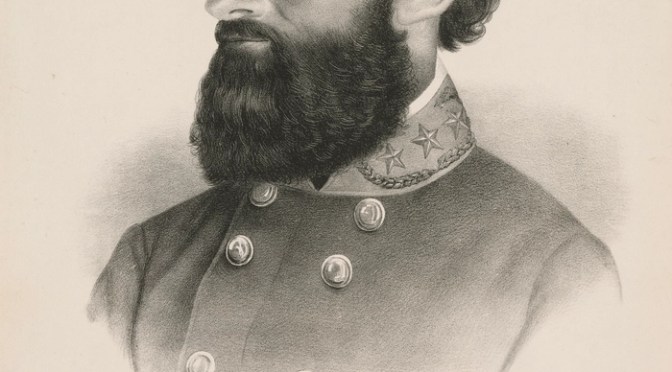
One of the more unusual Civil War monuments is found in a yard next to an Antebellum house near Chancellorsville, Virginia. The small stone bears the words, “Arm of Stonewall Jackson May 3 1863.”

Thomas Jonathan Jackson, was a teacher at the Virginia Military Institute at the outbreak of the Civil War, and was well known as a man of faith, and one who was loved by the enslaved people of Lexington because of his kindness and unceasing efforts for their moral instruction. He entered the Confederate army as a major, and quickly promoted to brigadier general. Because of the rigid steadiness of his troops at critical moments in the first battle of Bull Run, he was given the nickname of “Stonewall.”

His last battle, at Chancellorsville, was his greatest victory. After the battle, on the night of May 2, 1863, he was surveying his troops, when he was mistaken for federal cavalry and shot by his own troops. His injuries required the amputation of his left arm, which ordinarily would have been cremated. Because of the Confederate general’s popularity, however, the surgeon decided to bury it there at Chancellorsville. Jackson died seven days later, and was buried at Lexington, Virginia. Robert E. Lee said that the loss of Jackson was like the loss of his right arm.

His unusual death and burial raises questions. What will happen in the resurrection? Paul promises Christians: “Behold, I show you a mystery; We shall not all sleep, but we shall all be changed, In a moment, in the twinkling of an eye, at the last trump: for the trumpet shall sound, and the dead shall be raised incorruptible, and we shall be changed. For this corruptible must put on incorruption, and this mortal must put on immortality. So when this corruptible shall have put on incorruption, and this mortal shall have put on immortality, then shall be brought to pass the saying that is written, Death is swallowed up in victory” (1 Corinthians 15:51-54). God will take care of everything.

I AM NOT A VICTIM! — BOB PRICHARD

Under the title, “We’re All Victims,” John Leo wrote about the top 10 “victim stories” of the year, in the November 21, 2005 U.S.News. Leo pointed out that in our politically correct culture, anyone who gets offended is a victim. Leo cited the British Muslims who were “victimized” by tissue boxes picturing Winnie the Pooh and Piglet; and atheists who were “victimized” by actors who thanked God for winning Oscars, as well as students at the University of Wisconsin who were “victimized” by local bars that discontinued discount drinks on weekends in response to a federal campaign to limit binge drinking.

The dictionary defines a victim as “one who is harmed or killed by another; one who is harmed by or made to suffer from an act, circumstance, agency, or condition; a person who is tricked, swindled, or taken advantage of.” 

Yes, everywhere we look, we see victims. But I want you to know that I am not a victim. In fact, I am guilty. I know the truth of Paul’s words in Romans 3:23: “For all have sinned, and come short of the glory of God.” I know that I am a sinner, deserving of God’s punishment. But I know that I will not receive justice for my sins, but instead God’s grace.

“Being justified freely by his grace through the redemption that is in Christ Jesus” (Romans 3:24), reminds me that I have been forgiven through the grace of God when I obeyed the gospel of Christ.

“Then Peter said unto them, Repent, and be baptized every one of you in the name of Jesus Christ for the remission of sins, and ye shall receive the gift of the Holy Ghost” (Acts 2:38). Because I have repented and been baptized, my sins have been remitted.

One more definition of victim: “a living creature slain and offered as a sacrifice during a religious rite.” I am so grateful that Jesus served as that victim for me so that I could have forgiveness.

CAUSES AND REASONS — BOB PRICHARD

In his book, Why Good Arguments Often Fail (IVP, 2006), James W. Sire tries to help Christians make more persuasive arguments for Christ. He discusses logical fallacies that plague us, and ways to speak the truth without falling into these fallacies. He also draws a distinction between causes for what we believe, and reasons for what we believe, especially as they relate to faith in God.

He cites several answers that might be given for belief in God: “My parents are Christians,” “I grew up going to church,” etc. These, he says, are causes—that is, they are not based on rational thought, but have been formed by sociological forces. On the other hand, responses such as “My belief in God gives me hope,” “My faith provides meaning and direction for my life,” or “There is a lot of evidence that Jesus was and is the Son of God,” are reasons—based on rational consideration of the evidence.

Why does it matter? He gives two reasons: (1) “It is important for Christians because without some sense of why they are Christians, they may hold their faith with reservations (and thus weaken their Christian life) or lose their faith entirely.” (2) “The distinction is important because one of the charges against Christians is that they believe what they do primarily—or solely—because they have been raised in a Christian environment. They have been caused to believe. If they thought about it, skeptics say, they would change their minds” (Pages 48-49).

Sire makes me think that we really need to teach our young people to examine the evidence for their faith. Peter exhorts, “But sanctify the Lord God in your hearts: and be ready always to give an answer to every man that asketh you a reason of the hope that is in you with meekness and fear” (1 Peter 3:15). We need to be ready to give the reason for our belief—not the cause. It is of great benefit to have Christian parents, a Christian environment, and Christian influence. At the same time, our faith must be examined. Can you give the reason for your faith?