Category Archives: BIBLE

WHY WOULD SOMEONE BE BAPTIZED AGAIN? — BOB PRICHARD

Paul wrote that “There is one body, and one Spirit, even as ye are called in one hope of your calling; One Lord, one faith, one baptism, One God and Father of all, who is above all, and through all, and in you all” (Ephesians 4:4-6). Among these great unities is “one baptism,” indicating that only one baptism was applicable to men when Paul wrote. Acts 19:1-7  tells of a group of twelve men that Paul met at Ephesus who knew only John’s baptism, but were baptized into Christ when they understood that they had not fully obeyed God. 

BAPTISM AND FAITH ARE CONNECTED. 

Paul said“unto them, Have ye received the Holy Ghost since ye believed? And they said unto him, We have not so much as heard whether there be any Holy Ghost. And he said unto them, Unto what then were ye baptized? And they said, Unto John’s baptism” (Acts 19:2-3).

Baptism is for believers. “And as they went on their way, they came unto a certain water: and the eunuch said, See, here is water; what doth hinder me to be baptized? And Philip said, If thou believest with all thine heart, thou mayest. And he answered and said, I believe that Jesus Christ is the Son of God” (Acts 8:36-37).

“He that believeth and is baptized shall be saved; but he that believeth not shall be damned” (Mark 16:16).

“For ye are all the children of God by faith in Christ Jesus. For as many of you as have been baptized into Christ have put on Christ” (Galatians 3:26-27).

JOHN’S BAPTISM WAS FROM GOD, BUT WAS NO LONGER EFFECTIVE. 

“Then said Paul, John verily baptized with the baptism of repentance, saying unto the people, that they should believe on him which should come after him, that is, on Christ Jesus. When they heard this, they were baptized in the name of the Lord Jesus” (Acts 19:4-5).

“John did baptize in the wilderness, and preach the baptism of repentance for the remission of sins” (Mark 1:4). “The baptism of John, whence was it? from heaven, or of men? And they reasoned with themselves, saying, If we shall say, From heaven; he will say unto us, Why did ye not then believe him?” (Matthew 21:25). John’s baptism was not scriptural for them. They were subject to baptism into Christ.

PEOPLE CAN BE HONESTLY AND SINCERELY MISTAKEN. 

These twelve menwere honest and sincere, but they needed to be baptized into Christ. Some who honestly think they are saved are lost. Jesus said, “Not every one that saith unto me, Lord, Lord, shall enter into the kingdom of heaven; but he that doeth the will of my Father which is in heaven. Many will say to me in that day, Lord, Lord, have we not prophesied in thy name? and in thy name have cast out devils? and in thy name done many wonderful works? And then will I profess unto them, I never knew you: depart from me, ye that work iniquity” (Matthew 7:21-23).

THE ONE BAPTISM IS NECESSARY TO PLEASE GOD.

Notice that baptism precedes new life: “Know ye not, that so many of us as were baptized into Jesus Christ were baptized into his death? Therefore we are buried with him by baptism into death: that like as Christ was raised up from the dead by the glory of the Father, even so we also should walk in newness of life” (Romans 6:3-4). 

Sins are put off as we are baptized. “And ye are complete in him, which is the head of all principality and power:  In whom also ye are circumcised with the circumcision made without hands, in putting off the body of the sins of the flesh by the circumcision of Christ: Buried with him in baptism, wherein also ye are risen with him through the faith of the operation of God, who hath raised him from the dead” (Colossians 2:10-12).

CERTAIN THINGS ARE NECESSARY FOR SCRIPTURAL BAPTISM.

(1). The proper mode is immersion. “Know ye not, that so many of us as were baptized into Jesus Christ were baptized into his death? Therefore we are buried with him by baptism into death: that like as Christ was raised up from the dead by the glory of the Father, even so we also should walk in newness of life” (Romans 6:3-4).

(2). The proper subject for baptism is the penitent believer. “He that believeth and is baptized shall be saved; but he that believeth not shall be damned” (Mark 16:16).

“Now when they heard this, they were pricked in their heart, and said unto Peter and to the rest of the apostles, Men and brethren, what shall we do? Then Peter said unto them, Repent, and be baptized every one of you in the name of Jesus Christ for the remission of sins, and ye shall receive the gift of the Holy Ghost” (Acts 2:37-38).

(3). The proper purpose for baptism is salvation. “The like figure whereunto even baptism doth also now save us (not the putting away of the filth of the flesh, but the answer of a good conscience toward God,) by the resurrection of Jesus Christ” (1 Peter 3:21). “And now why tarriest thou? arise, and be baptized, and wash away thy sins, calling on the name of the Lord” (Acts 22:16).

HONEST AND SINCERE PEOPLE WILL CHANGE. 

When the men learned they were wrong, they changed. When Saul of Tarsus learned he was wrong, he changed. The people of Thessalonica changed when they understood the gospel of Christ. “For they themselves show of us what manner of entering in we had unto you, and how ye turned to God from idols to serve the living and true God” (1 Thessalonians 1:9).

Have you been baptized according to the scriptures?

DESIGN DEMANDS A DESIGNER! — BOB PRICHARD

Scientist John Haldane once suggested to theologian Ronald Knox, that in a universe containing millions of planets, it was inevitable that life should appear by chance on at least one of them. Knox replied, “Sir, if Scotland Yard found a body in your Saratoga trunk, would you tell them, ‘There are millions of trunks in the world—surely one of them must contain a body’? I think they still would want to know who put it there.”

With all of the knowledge that science has been able to amass, there is still no clearer or more accurate explanation for how this universe and all the life in it came to be than the words of Moses in Genesis 1:1: “In the beginning God created the heaven and the earth.” Life is not here by accident!

There is a current scientific movement gaining in popularity which recognizes that our universe shows many marks of Intelligent Design. The I.D. scientific movement has many proponents that are not Christians, in fact some leading scientists are really agnostic—they are not sure if the God of the Bible is the Creator. But they understand that the creation, because of its design, demands a Creator. As David asserted in the long ago, “The heavens declare the glory of God; and the firmament showeth his handiwork” (Psalm 19:1).

In the courtrooms of Dayton, Tennessee, William Jennings Bryan and Clarence Darrow debated whether or not teacher John T. Scopes was guilty of teaching evolution in his high school classroom. Scopes was found guilty in the 1925 trial, but public support for forbidding the teaching of a scientific theory like evolution was lost. Now there are those who want to teach the scientific theory of Intelligent Design in our schools. Those in control, however, want to forbid the teaching of I.D. It is Scopes reversed—evolution is the only theory allowed today. Why are people so afraid of considering the evidence for design? We must recognize the power of the Designer!

WHAT WAS THE ATTITUDE OF CHRIST TOWARD THE SCRIPTURES? — BOB PRICHARD

The attitude of Christ toward the scriptures was one of complete trust, knowing that He relied on His heavenly father completely. He said, “My doctrine is not mine, but his that sent me” (John 7:16). He astonished the people because He spoke with authority, by appealing to the scriptures (Matthew 7:28-29). He warned that it was by his words that all will be judged:  “He that rejecteth me, and receiveth not my words, hath one that judgeth him: the word that I have spoken, the same shall judge him in the last day” (John 12:48).

Christ’s teaching was filled with quotations of and allusions to scripture. He spoke of the creation, the institution of marriage, Noah, Sodom, Abraham, Elijah, Zechariah, and a host of other Bible characters and events. He spoke of these people and events as being historical. Modern “scholars” frequently deny that Moses wrote the first five books of the Bible, but Jesus upholds Mosaic authorship (John 7:19).  When Satan came to test Him at the beginning of His ministry, He answered each challenge by quoting scripture: “It is written … it is written … it is said” (Luke 4:4, 8, 12). Even in death, He quoted scripture. When He cried out, “My God, my God, why hast thou forsaken me?” (Matthew 27:46), He was quoting from Psalm 22:1, and thus calling attention to the fact that He was fulfilling many prophecies in that very psalm. Even as He made His way to the cross, He submitted to the scripture, knowing that all must be fulfilled. “For I say unto you, that this that is written must yet be accomplished in me, And he was reckoned among the transgressors: for the things concerning me have an end” (Luke 22:37).

The very basis of Christ’s teaching was the written word. “The Pharisees also came unto him, tempting him, and saying unto him, Is it lawful for a man to put away his wife for every cause? And he answered and said unto them, Have ye not read, that he which made them at the beginning made them male and female, And said, For this cause shall a man leave father and mother, and shall cleave to his wife: and they twain shall be one flesh? Wherefore they are no more twain, but one flesh. What therefore God hath joined together, let not man put asunder” (Matthew 19:3-6). Not only did Jesus appeal to the scriptures for authority, but He counted them as the final authority in debate. When the Pharisees sought to entrap Him concerning marriage, Jesus asked, “Have ye not read that which was spoken unto you by God, saying, I am the God of Abraham, and the God of Isaac, and the God of Jacob? God is not the God of the dead, but of the living” (Matthew 22:31-32). God spoke in words that could be read, and Jesus counted them as the final authority.

Jesus came to fulfill scripture, upholding its authority to the smallest detail. “Think not that I am come to destroy the law, or the prophets: I am not come to destroy, but to fulfil.  For verily I say unto you, Till heaven and earth pass, one jot or one tittle shall in no wise pass from the law, till all be fulfilled” (Matthew 5:17-18). We can do no less than to uphold and defend the authority of the written Word.

WHY IS THERE SO MUCH CONFUSION ABOUT THE BOOK OF REVELATION? — BOB PRICHARD

There is probably no book of the Bible that is more often misunderstood, misapplied, or abused than the book of Revelation. It has been the “jumping-off” point for cults and wild religious speculation for centuries. Simply understanding the purpose of the book and its nature would end confusion. It begins, “The Revelation of Jesus Christ, which God gave unto him, to show unto his servants things which must shortly come to pass; and he sent and signified it by his angel unto his servant John” (Revelation 1:1). John received the message of the book through the angel of God, and that message was a “Revelation of Jesus Christ” which God gave to show his servants “things which must shortly come to pass.”

Abusers of the book of Revelation often claim that its message has been hidden until now, and that they are the only ones who can explain its message. But the very nature of the book of Revelation, is that it reveals, or makes known the hidden things. Many would try to lead us to believe that no one until the twentieth century could understand what the book meant, and yet God intended for His followers from the beginning to understand and benefit from it. God did not hide His message to believers in Revelation, He disclosed it! God wanted His servants to understand these “things which must shortly come to pass.” If God has waited until the present to let us understand what the book means, then the words “shortly come to pass” have little meaning. The book would have had no meaning to the first readers.

The first century readers of the book of Revelation were literally in a fight for their lives. The rise of emperor worship in the Roman empire was making it harder and harder for Christians to live and maintain their commitment to the understanding that there is one Lord and that Lord was not the Roman emperor. “To us there is but one God, the Father, of whom are all things, and we in him; and one Lord Jesus Christ, by whom are all things, and we by him” (1 Corinthians 8:6). History shows that Christians were thrown to the lions, burned at the stake, crucified, and martyred for their faith. It even reached the point that “no man might buy or sell, save he that had the mark, or the name of the beast, or the number of his name” (Revelation 13:17). Only those who had worshipped “the beast,” the Roman emperor, could engage in commerce.

God planned the language of the book of Revelation, with its many symbols, to reveal the message to His people, but prevent the Roman authorities from understanding. The Christians who were working to maintain their faith in the midst of persecution could take strength from knowing that Satan and his followers must lose. Knowing that “the kingdoms of this world are become the kingdoms of our Lord, and of his Christ; and he shall reign for ever and ever” (Revelation 11:15) comforted them. Revelation has comforted Christians down through the centuries with its message of hope in the darkest hour. The key is to see its over-all message, without demanding to explain every symbol.

CAN THE AVERAGE PERSON REALLY UNDERSTAND THE BIBLE? — BOB PRICHARD

Yes! Numerous passages of scripture are directly addressed to the common person. “Husbands, love your wives … Wives, submit yourselves unto your own husbands … Children, obey your parents in the Lord” (Ephesians 5:25, 22; 6:1). “I write unto you, little children … I write unto you, fathers … I write unto you, young men” (1 John 2:12-13). The Bible is God’s message to humanity. All will be judged according to the Bible, so a God of Justice would not require mankind to understand the un-understandable.

The Bible’s longest chapter is filled with praise for God’s written Word, indicating that He wants and expects the individual to understand. “The entrance of thy words giveth light; it giveth understanding unto the simple” (Psalm 119:130). The Bible is for the “simple,” not just religious authorities. “I have more understanding than all my teachers: for thy testimonies are my meditation” (verse 99).  It is not through the precepts of men, or their interpretations, but through God’s precepts that we gain understanding:  “I understand more than the ancients, because I keep thy precepts. … Through thy precepts I get understanding: therefore I hate every false way” (verses 100, 104).

Paul told the church at Corinth, “we write none other things unto you, than what ye read or acknowledge” (2 Corinthians 1:13). The modern language NIV renders his  words, “we do not write you anything you cannot read or understand.” Although Paul had written the Corinthians about difficult subjects such as church discipline, spiritual gifts, marriage, and the resurrection, he still expected them to read and understand. In similar fashion, he wrote to the church at Ephesus, “by revelation he made known unto me the mystery; (as I wrote afore in few words, whereby, when ye read, ye may understand my knowledge in the mystery of Christ)” (Ephesians 3:3-4). Paul’s readers could have the same insight into the (no longer hidden) mystery that had been revealed to him in Christ.

As long as people do not believe they can understand the Bible, and refuse to study it for themselves, they will not understand. The key is to put into practice what we do understand! The deepest understanding of God’s Will comes when through study we are “those who by reason of use have their senses exercised to discern both good and evil” (Hebrews 5:14). If the average person cannot really understand the Bible without another intervening to teach, then it means that the God Who created the universe was not able to make Himself understood through the Word. If the average man cannot trust his own understanding, how can he trust another man’s understanding? 2 Peter 1:19-21, written to Christians, says that  “no prophecy of the scripture is of any private interpretation. For the prophecy came not in old time by the will of man: but holy men of God spake as they were moved by the Holy Ghost.”  Peter did not say that  no individual can understand, but that the prophets spoke under the inspiration of the Holy Ghost, revealing God’s message, rather than their own. “Let my cry come near before thee, O LORD: give me understanding according to thy word” (Psalm 119:169).  You can understand the Bible!

IF YOU COULDN’T READ — BOB PRICHARD

One of the pearls of wisdom uttered by the Beaver, the title character on the fifties TV show “Leave it to Beaver,” was his observation in defense of education that “If you couldn’t read, you couldn’t look up what’s on television.” To a child, certainly a great argument for literacy!

We have almost universal literacy today, but the Literacy Project estimates that forty-five million Americans are actually functionally illiterate, and that 44% of Americans do not read a book in a year.

But the statistics are probably worse in relation to biblical literacy. Even church-going folks often don’t know where to look up things in the Bible, and never read their Bibles.

The psalmist thought of the scriptures as a lamp unto his feet and a light unto his path (Psalm 119:105). Jesus said, “If a man love me, he will keep my words: and my Father will love him, and we will come unto him, and make our abode with him” (John 14:23). How can we keep Jesus’s words of eternal life if we do not read the Bible?

If you can’t read, get some help. And if you can read, don’t neglect your Bible.

MATHEW OR MATTHEW? — BOB PRICHARD

“Spell checkers” are one of the great inventions of our day. Even though I am a good speller, I am sometimes a careless typist. The “spell checker” is great for catching those transposed letters that come too often from trying to type too fast. 

I just recently made a discovery about my spell-checker, though. It is not always right. Not only will it not flag correctly spelled words which are not the words I meant, it also doesn’t catch some variants of words that I expected it to catch. It seems that I have had a problem lately in my lessons by typing Mathew when I meant Matthew. (Just one “t” missing, but it makes a difference). It seems that my software is just fine with spelling it “Mathew” instead of “Matthew.” I have relied on the “spell checker” to proofread for me, but will have to be more careful in the future, knowing that it may not catch the misspelled Matthew.

This little insight reminds me that we must be careful what or whom we trust. Not everything you read on the internet is correct or reliable. It is not uncommon for us to look to some great preacher of the past or present for wisdom or judgment. There is nothing wrong with this, but whoever it is, we need to be sure that we use our reasoning abilities and we truly search the scriptures. We may too easily accept some things because of who teaches them, but even the best of us are sometimes wrong.

  Luke commends the Christians of Berea: “These were more noble than those in Thessalonica, in that they received the word with all readiness of mind, and searched the scriptures daily, whether those things were so” (Acts 17:11). The Bereans were searching the scriptures daily to consider if what they were being taught by men like Paul and Silas was correct. If it is necessary to check up on Paul, it is also necessary to check up on our present day preachers and teachers, even including Bob Prichard. And it is also necessary to check on ourselves. Do we believe what we believe because we have really searched the scriptures, or have we just accepted what was taught? And letting someone else proofread certainly won’t hurt!

DO CHRISTIANS BECOME ANGELS IN HEAVEN? — BOB PRICHARD

No. It is sometimes said in funerals, especially if the funeral is for a small child, “There is now another angel in heaven.” But there is no evidence in scripture that any person becomes an angel upon death, and in fact the scriptures teach otherwise. This myth that departed humans become angels is very popular with today’s entertainment industry, and numerous movies and television programs  have been made with  this theme. Often a person supposedly goes to heaven, but must come back to earth to perform some good deed, in order to earn his “angel wings,” or some such thing.  These ideas come from man’s imagination, not from God’s revelation!

Angels are created beings, separate and apart from human beings. The psalmist said, “Praise ye him, all his angels: praise ye him, all his hosts. … for he commanded and they were created” (Psalm 148:2, 5). Not only were the angels created, they were apparently created before the foundation of  the world. Job 38 speaks of the creation of  the world, when “the sons of God (or angels) shouted for joy” (Job 38:7). Nehemiah wrote, “Thou, even thou, art LORD alone; thou hast made heaven, the heaven of heavens, with all their host, the earth, and all things that are therein” (Nehemiah 9:6). That heavenly host which worships God is made up of angels.

We know that men, good and evil, can and do die. Jesus told the story of  Lazarus the beggar in Luke 16. “And it came to pass, that the beggar died, and was carried by the angels into Abraham’s bosom” (Luke 16:22). Lazarus died, but he was still Lazarus, and did not become an angel. Instead, he was carried to Paradise by angels. 1 Corinthians 15 clearly teaches the resurrection. Paul writes, “Behold, I show you a mystery; We shall not all sleep, but we shall all be changed, In a moment, in the twinkling of an eye, at the last trump: for the trumpet shall sound, and the dead shall be raised incorruptible, and we shall be changed. For this corruptible must put on incorruption, and this mortal must put on immortality” (1 Corinthians 15:51-53). The Bible teaches resurrection. If men become angels at death, it would not be resurrection, but reincarnation.

Angels are a distinct creation of God. They are neither divine, nor human, nor animal. The first chapter  of Hebrews emphasizes the fact that Jesus as God was above the angels. Christ “sat down on the right hand of the Majesty on high; Being made so much better than the angels, as he hath by inheritance obtained a more excellent name than they” (Hebrews 1:3-4). But because of His love for man, “We see Jesus, who was made a little lower than the angels for the suffering of death, crowned with glory and honour; that he by the grace of God should taste death for every man” (Hebrews 2:9).

“ONE SIZE FITS ALL” — BOB PRICHARD

“Then Peter said unto them, Repent, and be baptized every one of you in the name of Jesus Christ for the remission of sins, and ye shall receive the gift of the Holy Ghost” (Acts 2:38).

Some  clothing is “one size fits all.” If we are large or small, we may question if something will really “fit all.” But Peter said repentance and baptism was for all.

At Pentecost, Jews came from around the world. They heard the disciples speak “the wonderful works of God” (Acts 2:7-11). Others were there: priests, Pharisees, Sadducees, Levites, religious people. Probably some pick-pockets and thieves took advantage of the occasion. No matter how religious or irreligious, the message that day was a “one size fits all.” Since God is “no respecter of persons” (Acts 10:34), all had the same opportunity and obligation to repent and be baptized.  God’s promise was for those people, their descendants, the Gentiles (“those afar off”), and us (Acts 2:39). None then or today could receive the remission of sins without this obedience.

All, no matter how unworthy, can receive God’s blessings because the simple gospel “fits all.”

IS “ALLAH” THE GOD OF THE BIBLE? — BOB PRICHARD

Allah is the name given to the one God in the Qur’an [Koran], the holy book of Islam. When a Muslim prays, he prays to Allah. The name “Allah” is the Arabic form of a simple generic word for god found in the Semitic languages (Hebrew, Arabic, Akkadian, etc.) The biblical word is El which is found more than two hundred times in the Old Testament. It is commonly found in compound names for God, such as Elohim and El Shaddai. This is not evident in our English translations, because most of the time the words are simply translated as God or Lord. 

El Shaddai is usually translated as “God Almighty.” “I appeared unto Abraham, unto Isaac, and unto Jacob, by the name of God Almighty [El Shaddai]” (Exodus 6:3). Elohim is the most common Hebrew name for God, being found over two thousand five hundred times in the Old Testament, such as Genesis 1:1, which reads, “In the beginning God [Elohim] created the heaven and the earth.” Elohim is plural in form, but is used as a singular name with plural verbs or adjectives. “And God [Elohim] said, Let us make man in our image, after our likeness” (Genesis 1.26). This use of a singular noun with plural modifiers is sometimes called the plural of magnitude, or plural majesty, indicating the greatness of God. This is also at least a hint of the fact of the trinity. The Father is God, the Son is God, and the Holy Spirit is God. They are not three gods, but three different persons in the Godhead. As Paul said of Christ, “in him dwelleth all the fulness of the Godhead bodily” (Colossians 2:9). 

In some senses, then, Allah could be considered just another name for God. In fact, the word most often used for God in the Arabic translation of the Bible is Allah. In many ways, the story of God in the Qur’an is a retelling of the Old Testament God. In the Qur’an, Allah is the great Creator God, the God of Abraham and Ishmael (not Isaac). Allah is the God who reveals His will through His prophets. The word of the prophets is considered the very word of God. 

One striking problem with the Qur’an’s portrait of God, which shows it to be inadequate, is in what it says (and does not say) about Jesus. Jesus is mentioned some sixty-three times in the Qur’an, and is recognized as a great prophet (although Muhammad is a greater prophet). His virgin birth, and even some of His miracles (including some non-biblical miracles) are described. According to the Qur’an, however, He did not die on the cross, He is not the Son of God, He is not a member of the Godhead, and He did not sacrifice Himself for mankind. This is truly a tragedy, because Jesus said, “I am the way, the truth, and the life: no man cometh unto the Father, but by me” (John 14:6). By this He tells us that He is the only way to the Father. As Peter explained to the rulers of the Jews, it was by the authority of the name of Jesus that he and John had healed the lame man at the Beautiful gate. “This is the stone which was set at nought of you builders, which is become the head of the corner. Neither is there salvation in any other: for there is none other name under heaven given among men, whereby we must be saved” (Acts 4:11-12). “No man hath seen God at any time; the only begotten Son, which is in the bosom of the Father, he hath declared him” (John 1:18).

STUCK IN MY HEAD — BOB PRICHARD

A tune was stuck in my head. It was a jazzy clarinet tune.  I was racking my brain trying to figure out what it was, and where it came from, when I happened to see a Land Rover TV commercial playing the tune. I had picked up the tune without paying attention.

Without even trying, our minds scoop up what we see, hear, smell, and feel. God has created us in such a way that we can remember an event from twenty-five years ago like it happened yesterday.

Knowing it is possible for us to absorb so many things without even thinking about it, shouldn’t we be extra cautious about where we go, what we do, and what we expose our minds to? The more we fill our minds with good things, the more good things there will be to well up into our conscious or unconscious minds. We need David’s attitude: “How precious also are thy thoughts unto me, O God! how great is the sum of them!” (Psalm 139:17).

The song was “Baby Elephant Walk,” written by Henry Mancini for the 1962 movie Hatari. Listen to it, and it will probably get stuck in your head, too! Why not spend some time this week putting good things from God in your head!

WHAT DOES THE TENTH COMMANDMENT MEAN TO CHRISTIANS? — BOB PRICHARD

The tenth commandment deals with an “internal” sin, one that may be known only to God and the sinner. It warns against coveting: “Thou shalt not covet thy neighbour’s house, thou shalt not covet thy neighbour’s wife, nor his manservant nor his maidservant, nor his ox, nor his ass, nor any thing that is thy neighbour’s” (Exodus 20:17). Coveting is an evil desire that leads to other sins. James wrote, “But every man is tempted, when he is drawn away of his own lust, and enticed. Then when lust hath conceived, it bringeth forth sin: and sin, when it is finished, bringeth forth death” (James 1:14-15). Death is the ultimate result of coveting. Not every desire is sinful. The commandment gives a summary of basic categories of possessions, and condemns the sinful lusting for that which belongs to others.

The sin of coveting has long plagued mankind. The sin of Adam and Eve was not just in the taking of the forbidden fruit, but their desire to “be as gods, knowing good and evil” (Genesis 3:4). After their great victory at Jericho, God’s people were defeated at Ai, because of the covetousness of Achan who saw among the spoils of Jericho an expensive garment, silver and gold, which he coveted. He took them, and brought death upon the Israelites and his own family.

Many have fallen when they coveted. Ahab coveted Naboth’s vineyard, and lost his life. David coveted Uriah the Hittite’s wife, Bathsheba, and brought tremendous pain on himself, his family, and his kingdom. Paul spoke of the seriousness of covetousness: “What shall we say then? is the law sin? God forbid. Nay, I had not known sin, but by the law: for I had not known lust, except the law had said, Thou shalt not covet. But sin, taking occasion by the commandment, wrought in me all manner of concupiscence [covetous desires]. For without the law sin was dead” (Romans 7:8).

Covetousness, being a secret sin, is betrayed by actions. The life of the tax collector Zacchaeus betrayed his misplaced priorities, put right by his contact with Christ. Many show the hold covetousness has on them by where they place their treasure. Jesus said, “Lay not up for yourselves treasures upon earth, where moth and rust doth corrupt, and where thieves break through and steal: But lay up for yourselves treasures in heaven, where neither moth nor rust doth corrupt, and where thieves do not break through nor steal: For where your treasure is, there will your heart be also” (Matthew 6:19-21). Many times a covetous heart is revealed by a conversation that speaks only of money and materialism. Christians who cannot get over their worries may betray an attitude of covetousness, because the kingdom of God is not their first priority. Perhaps even worse, the attitude that “the end justifies the means” betrays a heart of covetousness. No doubt Demas tried to rationalize his sinful behavior. Paul lamented, “Demas hath forsaken me having loved this present world” (2 Timothy 4:10).

Paul warns: no covetous man “hath any inheritance in the kingdom of Christ and of God” Ephesians 5:5). Jesus focused on the heart, “for out of the heart proceed evil thoughts, murders, adulteries, fornications, thefts, false witness, blasphemies” (Matthew 15:19). Avoiding covetousness means trusting God and relying on His grace. 

WHAT DOES THE NINTH COMMANDMENT MEAN TO CHRISTIANS? — BOB PRICHARD

The ninth commandment states: “Thou shalt not bear false witness against thy neighbor” (Exodus 20:16). The essence of the commandment is honesty. It seems that many today believe that honesty is not only not the best policy, but unnecessary except in the most extreme circumstances. Our words do matter, though. The psalmist said, “Let the words of my mouth, and the meditation of my heart, be acceptable in thy sight, O LORD, my strength, and my redeemer”  (Psalm 19:14). The words of our mouths and the meditations of our hearts are inseparably linked. The enemies of Jesus did not use their tongues for truth. “O generation of vipers, how can ye, being evil, speak good things? for out of the abundance of the heart the mouth speaketh. A good man out of the good treasure of the heart bringeth forth good things: and an evil man out of the evil treasure bringeth forth evil things” (Matthew 12:34-35). 

The prohibition of bearing false witness is most literally the giving false witness in court. Lying under oath is always a serious crime. Paul told the Ephesians, “Wherefore putting away lying, speak every man truth with his neighbour: for we are members one of another” (Ephesians 4:25). Falsehood in court is a serious sin against one’s neighbor. For the Christian, lying hurts the very members of the body of Christ. 

Words falsely used can have devastating effect. Lies such as slander, designed to hurt others, are especially hurtful. Jesus criticized the Pharisees for their slander of John, the forerunner of His ministry. “For John came neither eating nor drinking, and they say, He hath a devil” (Matthew 11:18). Christ’s enemies would tell any lie to stop Him. “Now the chief priests, and elders, and all the council, sought false witness against Jesus, to put him to death” (Matthew 26:59). James warned that we must be kind and honest with our tongues: “Therewith bless we God, even the Father; and therewith curse we men, which are made after the similitude of God. Out of the same mouth proceedeth blessing and cursing. My brethren, these things ought not so to be” (James 3:9-10). To remain silent in the face of evil, withholding love and concern, also violates the sense of the command. 

Jesus called Satan the father of lies (John 8:43-44). When we lie because we are filled with hatred, or to make ourselves look better, or to avoid unpleasantness, or for financial gain, we place ourselves squarely in the camp of Satan. 

The words of the Christian must be words of truth. Jesus said, “I am the way, the truth, and the life: no man cometh unto the Father, but by me” (John 14:6). Solomon warned, “A false witness shall not be unpunished, and he that speaketh lies shall perish” (Proverbs 19:9). Revelation 21:8 warns: “But the fearful, and unbelieving, and the abominable, and murderers, and whoremongers, and sorcerers, and idolaters, and all liars, shall have their part in the lake which burneth with fire and brimstone: which is the second death.” Liars face the same fate as murderers and idolaters! Psalm 119, the longest chapter in the Bible has as its subject the love of God’s word and love of truth. These are fundamental to the life of the Christian!

WHAT DOES THE EIGHTH COMMANDMENT MEAN TO CHRISTIANS? — BOB PRICHARD

The eighth commandment, “Thou shalt not steal” (Exodus 20:15), is unusual among the Ten Commandments, in that almost everyone agrees that it should be followed. It is still violated very often, as society make allowances for those who want to “cut corners,” not realizing it is condoning stealing. Peter tells the Christian, “Let none of you suffer us a murderer, or as a thief, or as an evildoer, or as a busybody in other men’s matters” (1 Peter 4:15). Who wants to be known as a thief? 

The commandment deals with “things.” God has given us many blessings, including the right to have and enjoy things. Prohibiting thievery stresses this blessing. The early church experimented with the common holding of all things among the believers, as each “sold their possessions and goods, and parted them to all men, us every man had need” (Acts 2:44-45). The normal situation, however, has been for individuals to possess things. 

There is nothing wrong with having possessions, as long as the possessor understands that everything comes from God and we are merely stewards. Jesus often spoke of the need for us to be good stewards. “And the Lord said, Who then is that faithful and wise steward, whom his lord shall make ruler over his household, to give them their portion of meat in due season? Blessed is that servant, whom his lord when he cometh shall find so doing. Of a truth I say unto you, that he will make him ruler over all that he hath” (Luke 12:42-44).

Stealing is common today. Taking the property of others without just compensation, although sometimes legal, is stealing. The misuse and squandering of things, even if acquired honestly is bad stewardship, and thus stealing. Many believe that stealing by “creative bookkeeping,” false advertising, or by stealing through the computer is not really stealing, because “nobody gets hurt,” just the big corporation or government. These things are a clear violation of the intent of the eighth commandment, however. Even if no individual is harmed directly, it is still wrong. Even the frivolous wasting of resources or the miserly holding of resources, such as by Scrooge in Dickens’ A Christmas Carol, fits the definition of stealing. 

The Christian who considers stealing because of the pressures of life lacks faith. Jesus taught that we should trust God to provide as we pray, “Give us this day our daily bread” (Matthew 6:11). Christians are tempted to steal sometimes because they are self-centered, rather than being Christ-centered. The very essence of sin is to put our own desires above that of all others. Either Christ or self will rule the heart. If it is self, selfishness will follow. Another temptation to stealing comes from the natural laziness that so many have within them. Man too often wants the easy way out, and stealing offers the lure of gain without work. God expects us, however, to pray, work hard, and trust Him to provide. Jesus pleads for honesty. “Therefore all things whatsoever ye would that men should do to you, do ye even so to them: for this is the law and the prophets” (Matthew 7:12). Thinking of others will help us pursue the virtue of generosity, and avoid the sin of stealing.

WHAT DOES THE SEVENTH COMMAND MEAN TO CHRISTIANS?  — BOB PRICHARD

The message of the seventh commandment is one that modern man seems to have outgrown. The command, “Thou shalt not commit adultery” (Exodus 20:14), seems outdated in our sophisticated times. The idea of monogamous marriage seems stifling to many in an era of sexual freedom. Few realize, however, that this command opens the door to true sexual freedom and expression, and is liberating, rather than burdensome. 

The focus of scripture is not on preventing adultery as much as it is in developing fulfilling marriage. “Therefore shall a man leave his father and his mother, and shall cleave unto his wife: and they shall be one flesh” (Genesis 2:24). Marriage involves a commitment, both emotionally and physically, and when that commitment is made, the two so joined must remain committed. The seventh commandment also limits sexual intercourse to marriage, and thus forbids it to those who are unmarried. It is strictly a privilege of husband and wife. Sex is not wrong. It is God’s gift. He limits it, however, to the marriage relationship. When God’s gift is misused, calamity results. 

In the Old Testament era, some practiced polygamy. Although sometimes done for humanitarian reasons, such as the care of a widow, or of a brother’s wife, many such as Abraham, David, and Solomon reaped bitter fruit from the practice. Too many today practice “serial polygamy” by taking one mate after another, without considering the consequences. “Now the body is not for fornication, but for the Lord; and the Lord for the body. … Flee fornication. Every sin that a man doeth is without the body; but he that committeth fornication sinneth against his own body. What? know ye not that your body is the temple of the Holy Ghost which is in you, which ye have of God, and ye are not your own? For ye are bought with a price: therefore glorify God in your body, and in your spirit, which are God’s” (1 Corinthians 6:13b, 18-20). 

Jesus reprimanded the Pharisees, reminding them that adultery is a sin committed with the mind as well as the body. “Ye have heard that it was said by them of old time, Thou shalt not commit adultery: But I say unto you, That whosoever looketh on a woman to lust after her hath committed adultery with her already in his heart” (Matthew 5:27-28). Jesus considered fornication, or adultery, so serious that it is the one cause for divorce (Matthew 5:31-32; Matthew 19:3-19). 

Jesus came to seek and save the lost, and His ministry included offering forgiveness to those involved in sexual sin, such as the adulterous woman brought before Him. He showed her grace. “Neither do I condemn thee: go, and sin no more” (John 8:11). He balanced forgiveness with repentance and a desire to end sin. 

Fidelity in the marriage relationship is important, because it reflects the relationship that God wants to maintain with His people. The prophets equated the fall into idolatry with spiritual adultery. When man lusts after some of the gods of today, such as popularity, power, and sex, he commits spiritual adultery. All are subject to the lure of sin, so we must remain vigilant against all sin, especially the sin of adultery.

WHAT DOES THE SIXTH COMMANDMENT MEAN TO CHRISTIANS? — BOB PRICHARD

We may be living in the most violent time in history. There are more than a million violent crimes in the United States each year, nearly fifty thousand suicides and a million abortions. As minister Owen M. Weatherly commented, “The most crucial problem which men face today is their unfortunate habit of killing one another.” God spoke to Cain after he had murdered Abel, saying, “What hast thou done? the voice of thy brother’s blood crieth unto me from the ground” (Genesis 4:10) In contrast to the violence of today, the sixth commandment says: “Thou shalt not kill” (Exodus 20:13). 

Hebrew has at least ten words for killing. The word God chose for the sixth commandment is one rarely used, found only five times in scripture. It refers to the deliberate, violent, premeditated taking of a life, or murder. For this reason, most modern versions, such as the NIV or NASB translate the verse, “You shall not murder.” Jesus stressed that murder begins in the heart: “Ye have heard that it was said to them of old time, Thou shalt not kill; and whosoever shall kill shall be in danger of the judgment: but I say unto you, that every one who is angry with his brother shall be in danger of the judgment; and whosoever shall say to his brother, Raca, shall be in danger of the council and whosoever shall say, Thou fool, shall be in danger of the hell of fire” (Matthew 5:21-22).

Did this commandment prohibit all killing? This hardly seems possible, since the very next chapter commands killing under some circumstances. Exodus 21:12, “He that smiteth a man, so that he dieth, shall surely be put to death,” is only one of numerous passages that specify death for certain crimes. God did not contradict Himself, but merely clarified the law. While murder, the taking of the life of an innocent party is prohibited, there must be, at least in certain cases, situations in which the state is permitted, or even required to take life. Under these guidelines, the capital punishment of a convicted criminal could be permitted, while euthanasia and abortion, the taking of innocent life, are always wrong. The forbidding of murder really strikes at the roots of many sins that lead to murder, such as racism, greed, pride, lust, envy, and hatred. It is not practical for the state to pass laws against all of these sins, but the prohibition of murder certainly helps keep them in check. 

While the commandment commands a negative, “Thou shalt not kill,” there must also be implied the positive of preserving life. Jesus taught that we must love our neighbor as ourselves. That means that we will be peace loving, merciful, and caring to all. Paul reminds us, “For the whole law is fulfilled in one word, even in this: Thou shalt love thy neighbor as thyself. But if ye bite and devour one another, take heed that ye be not consumed one of another” (Galatians 5:14-15). In His Sermon on the Mount, Jesus warned that we are not to retaliate for the wrong doings of others (Matthew 5:38- 42), and that those seeking to please God will not hate others (Matthew 5:43-48).  Jesus gave us the “golden rule,” that “All things therefore whatsoever ye would that men should do unto you, even so do ye also unto them: for this is the law and the prophets” (Matthew 7:12)

WHAT DOES THE FIFTH COMMANDMENT MEAN TO CHRISTIANS? — BOB PRICHARD

“Honour thy father and thy mother: that thy days may be long upon the land which the LORD thy God giveth thee” (Exodus 20:12). With this commandment, there is a shift of emphasis from the preceding commandments. There is less direct emphasis on man’s relationship with God, and more on man’s relationship with man. This commandment is foundational for both children and adults, stressing the importance of learning authority, which must begin in the home. Without proper respect for parents and their authority in the home, there will not be proper respect for God and His authority. 

The root meaning of the word honor [honour KJV], in the original language, is “to be heavy, or burdensome.” It is a burden for those receiving the honor to bear it properly, as well as for the giver of honor to give it as it should be given. Parents have responsibility and authority to teach their children about God. This should not be a matter of conceit for the parents, however, but should be a matter of grave concern. Parents should carefully consider what they teach their children, and ask them to do, because the ultimate authority always remains with God. Children should never be asked or expected to do that which is contrary to God’s will. As the apostles said before the authorities, “We ought to obey God rather than men” (Acts 5:29). 

Parents should be recognized as a gift to us. Children should be thankful for the gift of life through their parents, and all of the good things done by parents for children. Parents deserve loyalty, even when they are less than perfect (we know that only God is perfect). Along with that loyalty and gratitude children give to parents, they also should show their love and concern. Although it might be technically possible for children to honor their parents without loving them, it is certainly not God’s ideal. God loves and cares for His children, and often expresses that through parents. Authority without love often destroys. As Paul said, “Ye fathers, provoke not your children to wrath: but bring them up in the nurture and admonition of the Lord” (Ephesians 6:4). Honor and love go hand in hand. Jesus said, “If a man love me, he will keep my words: and my Father will love him, and we will come unto him, and make our abode with him” (John 14:23). 

Paul speaks of this commandment, saying, “Honour thy father and mother; which is the first commandment with promise” (Ephesians 6:2). This commandment offers a promise of blessing. The well being of any nation rests on the well being of the home. If things are right in the home, they will be right in the nation. Home life has incredibly far reaching results. The nation that neglects the home is headed for trouble. 

Jesus modeled obedience to the Heavenly Father, and added richness to our understanding by stressing the love of God as Father. Many of the religious leaders of the day tried to get around their obligations to their parents, but Jesus stressed how important the family is, warning them that their neglect of their parents was “making the word of God of none effect” (Mark 7 :9-13). “A wise son maketh a glad father: but a foolish man despiseth his mother” (Proverbs 15:20).

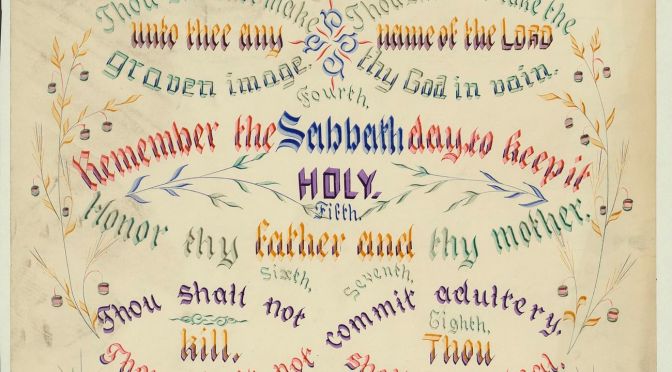
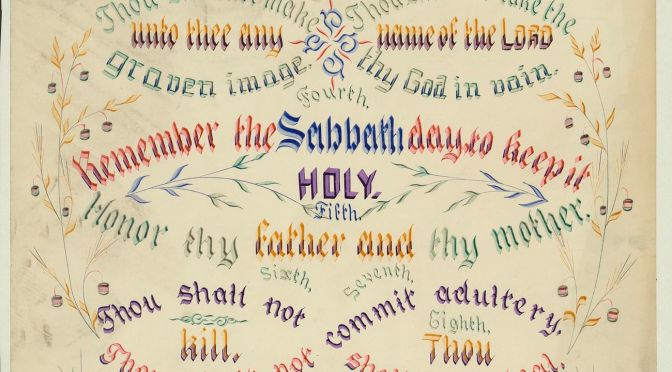
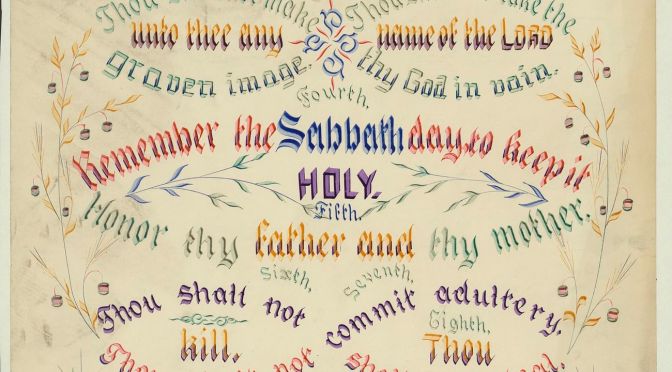
WHAT DOES THE SECOND COMMANDMENT MEAN TO CHRISTIANS? — BOB PRICHARD

The second of the Ten Commandments, found in Exodus 20, gives timeless principles concerning God’s attitude about worship. Christians, who are “delivered from the law” (Romans 7:6-7), learn principles from the Ten Commandments that allow them to live under the better covenant of Christianity (Hebrews 8:6-7) 

The commandment reads: “Thou shalt not make unto thee any graven image, or any likeness of any thing that is in heaven above, or that is in the earth beneath, or that is in the water under the earth: Thou shalt not bow down thyself to them, nor serve them: for I the LORD thy God am a jealous God, visiting the iniquity of the fathers upon the children unto the third and fourth generation of them that hate me; And showing mercy unto thousands of them that love me, and keep my commandments” (Exodus 20:4-6). Israel had to understand clearly that God would not tolerate idolatry. 

Idolatry, the worship of a creature, or inanimate object, seems inherently absurd to the modern mind. While modern man might not carve a statue, and then bow before it as ancient man did, he still has his idols, the false gods he worships. The problem of the idolater is not so much the idol as it is the spiritual blindness of the idolater. To place anything above God, whether it be possessions, family, occupation, or leisure activity, is to become an idolater. It has been well observed that sometimes the modern churchgoer may have his true god parked outside the place of worship. 

The command forbids making graven images to represent God to a worshipper. No image can ever “capture” God. As Paul told the Athenians, who worshipped so many gods, including an “unknown god,” “Forasmuch then as we are the offspring of God, we ought not to think that the Godhead is like unto gold, or silver, or stone, graven by art and man’s device. And the times of this ignorance God winked at; but now commandeth all men every where to repent” (Acts 17:29-30). God’s Word must always govern worship to Him, because man has always had a tendency to worship the thing rather than the One Whom it represents. Despite God’s care of Israel, they easily slipped back into an idolatrous way of thinking. On one occasion they took the ark of the covenant into battle against the Philistines, as a sort of “good luck charm,” and wound up losing the ark, as well as the battle (1 Samuel 4). They also began to worship the bronze serpent Moses raised as a symbol of salvation (Numbers 21:4-9), so that King Hezekiah had to destroy it with the other marks of idolatry (2 Kings 18:4). 

The commandment gives a lengthy “enforcement statement,” which stresses that God will not share His people with any other god, but will bless all those who do His will. As Jesus met with the woman at the well, who wanted to sidestep the discussion of her checkered past, He reminded her, “God is a Spirit: and they that worship him must worship him in spirit and in truth” (John 4:24). Jesus warned that worship is vain when men worship God “teaching for doctrine the commandments of men” (Matthew 15:8-9). Blessings for future generations depend on proper worship today! 

WHAT DOES THE FIRST COMMANDMENT MEAN TO CHRISTIANS? — BOB PRICHARD

The Ten Commandments, found in Exodus 20, form the basis for modern western civilization. In their summary of the proper attitude to God and one another, they provide fundamental concepts that allow people to function in obedience to God. The relevance of the Ten Commandments for the Christian lies in the timeless principles they describe. Paul explained that the Christian is no longer bound by the old covenant, including the ten commandments, because Christ brought the Jew and the Gentile together, “having abolished in his flesh the enmity, even the law of commandments contained in ordinances; for to make in himself of twain one new man, so making peace” (Ephesians 2:15). In giving His life, Christ was “blotting out the handwriting of ordinances that was against us, which was contrary to us, and took it out of the way, nailing it to his cross” (Colossians 2.14). Christians are “delivered from the law” (Romans 7:6-7) to live under the better covenant of Christianity (Hebrews 8:6-7). 

The first commandment emphasizes that God must be first in the life of His children. “And God spake all these words, saying, I am the LORD thy God, which have brought thee out of the land of Egypt, out of the house of bondage. Thou shalt have no other gods before me” (Exodus 20:1-3). As God reminded Israel that He had delivered them from Egyptian bondage, the first commandment demands, “Thou shalt have no other gods before me.”

The Israelites lived in a world of many gods vying for the allegiance of men. God demanded that they recognize Him and Him alone as God. “Thou shalt have no other gods before me” is literally “Thou shalt have no other gods before my face.” Just as a woman with two husbands would be unacceptable to either husband, God demands undivided loyalty from all who claim to follow Him. The Jews could not adopt the pagan practices of their neighbors and maintain the purity God demanded. Peter and the other apostles understood the principle, refusing to be silenced by the Sanhedrin, saying, “We ought to obey God rather than men” (Acts 5:29). In like manner, Christ demanded undivided loyalty from His followers. “He that loveth father or mother more than me is not worthy of me: and he that loveth son or daughter more than me is not worthy of me. And he that taketh not his cross, and followeth after me, is not worthy of me” (Matthew 10:37-38). 

The command, “Thou shalt have no other gods before me,” is also a demand for wholehearted love. God redeemed Israel from Egyptian bondage, and today He redeems mankind from the bondage of sin. The magnificence of His creation and the sacrifice of Christ for us shows that He truly is worthy of our love. Jesus summed up the proper attitude to the Father: “Thou shalt love the Lord thy God with all thy heart, and with all thy soul, and with all thy mind This is the first and great commandment. And the second is like unto it, Thou shalt love thy neighbour as thyself’” (Matthew 22:37-39). If we do this, we can truly insure that we put no other gods before Him. 

WHAT DOES “NO SCRIPTURE IS OF PRIVATE INTERPRETATION” MEAN? — BOB PRICHARD

Peter concludes the first chapter of his second epistle with these words. “We have also a more sure word of prophecy; whereunto ye do well that ye take heed, as unto a light that shineth in a dark place, until the day dawn, and the day star arise in your hearts: Knowing this first, that no prophecy of the scripture is of any private interpretation. For the prophecy came not in old time by the will of man: but holy men of God spake us they were moved by the Holy Ghost” (2 Peter 1:19-21). These verses of scripture are especially important because of what they tell us about the inspiration of scripture, reminding us that we have a “sure word of prophecy,” that is, trustworthy scriptures.

Unfortunately, the words, “no prophecy of the scripture is of any private interpretation,” have been misused by some religious organizations to keep people from studying the scriptures for themselves. Some prefer to keep the people in ignorance, teaching that the individual Christian cannot study or understand the scriptures themselves, but must rely on “the church” or church leaders to interpret the scriptures for them. Thus individuals may think there is no reason to study and reason for themselves. This is contrary to all the rest of the scripture, however. Saving faith comes from understanding and obeying the scriptures. All will be judged by the scriptures. 

Some suggest that what Peter was teaching in these verses is that since the words of scripture have a definite meaning, then those who interpret scripture are not free to read whatever meaning they want to into the scriptures, but must consider the context of scripture. Surely it is true that no one should be free to read into the scriptures any of their own personal opinions, and context must always be considered, but this is not Peter’s concern in this passage.

There is a better, more reasonable way to understand the words. Consider the rendering of 2 Peter 1:20-21 in the New American Standard Version: “But know this first of all, that no prophecy of Scripture is a matter of one’s own interpretation, for no prophecy was ever made by an act of human will, but men moved by the Holy Spirit spoke from God.” The prophecy of scripture did not come “by the will of man.” “No prophecy was ever made by an act of human will.” The prophets were inspired to write by God, and did not just speak what they wanted to speak, but they spoke what was revealed to them by God. That is the reason for the amazing accuracy of the teaching of scripture, and the agreement among the different writers. If each had been free to just write what he wanted to write, then there would be multiplied contradictions among all of the different portions of scripture. 

The “holy men” were “moved by the Holy Ghost,” literally “borne along” just as a strong wind propels a ship through the sea. Jesus told his disciples, “when he, the Spirit of truth, is come, he will guide you into all truth: for he shall not speak of himself; but whatsoever he shall hear, thst shall he speak: und he will show you things to come” (John 16:13) As the New Testament writers revealed the full truth of God’s revelation, the Holy Spirit guided them. Their message is one for all men study, obey, and live by.