Category Archives: BIBLE QUESTIONS

IS PROVERBS 22:6 A GUARANTEE TO FAITHFUL PARENTS? — BOB PRICHARD

Solomon said, “Train up a child in the way he should go: and when he is old, he will not depart from it” (Proverbs 22:6). These words bring comfort to many parents who understand that the difficult task of parenting will  be rewarded by faithful children, but there are many parents who are filled with guilt and anguish because their children have gone astray, despite their best efforts. Solomon’s words are simple enough, but they just don’t always seem to come true! All too often godly men and women try with all of their ability to be good parents, but still fail. But it must be understood that Proverbs 22:6 is a proverb, not a promise. A proverb is a general statement of a rule, which may have exceptions. Those “exceptions to the rule” cause heartache.  

Implied in “train up a child in the way he should go” are the concepts of providing real training, and knowing “the way he should go.” Sadly, many parents have no concept of “training up a child.” They do little or nothing to provide the necessary spiritual food their children need.  While they may demand that the church train their children spiritually, they see no need to do this themselves as parents. The word here translated as “train up” is used elsewhere in scripture to mean dedicating something or someone to God’s service, as in 1 Kings 8:63, where “the king and all the children of Israel dedicated the house of the LORD.” Thus Solomon urges all parents to dedicate and train their children for service.

“In the way he should go” literally means “according to his way.” That is, the training or dedication of the child should be according to his natural personal inclination, abilities, age, and qualifications. The idea of “the way he should go” is not so much the way the parent wants him to go, but the way the child should go so as to maximize his talents in service to God. To actually know “the way he should go” implies that the parent will spend a great deal of time learning the needs, desires, and capabilities of the child. To fulfill the proverb requires tremendous commitment.

That investment of the time, energy, and knowledge necessary for each child is worthwhile, though, because “when he is old, he will not depart from it.” The parent who has made the proper investment of training up the child in the way he should go will know that the child has been properly prepared to live wisely before God.

But what about the child who strays. Have the parents failed? Sadly, many times parents do fail. But just as often, the child that goes astray does so because he exercises his own free will to disobey. Many godly men and women, such as the prophet Samuel, lost their children because their children chose to follow the way of the world.

CAN THE AVERAGE PERSON REALLY UNDERSTAND THE BIBLE? — BOB PRICHARD

Yes! Numerous passages of scripture are directly addressed to the common person. “Husbands, love your wives … Wives, submit yourselves unto your own husbands … Children, obey your parents in the Lord” (Ephesians 5:25, 22; 6:1). “I write unto you, little children … I write unto you, fathers … I write unto you, young men” (1 John 2:12-13). The Bible is God’s message to humanity. All will be judged according to the Bible, so a God of Justice would not require mankind to understand the un-understandable.

The Bible’s longest chapter is filled with praise for God’s written Word, indicating that He wants and expects the individual to understand. “The entrance of thy words giveth light; it giveth understanding unto the simple” (Psalm 119:130). The Bible is for the “simple,” not just religious authorities. “I have more understanding than all my teachers: for thy testimonies are my meditation” (verse 99).  It is not through the precepts of men, or their interpretations, but through God’s precepts that we gain understanding:  “I understand more than the ancients, because I keep thy precepts. … Through thy precepts I get understanding: therefore I hate every false way” (verses 100, 104).

Paul told the church at Corinth, “we write none other things unto you, than what ye read or acknowledge” (2 Corinthians 1:13). The modern language NIV renders his  words, “we do not write you anything you cannot read or understand.” Although Paul had written the Corinthians about difficult subjects such as church discipline, spiritual gifts, marriage, and the resurrection, he still expected them to read and understand. In similar fashion, he wrote to the church at Ephesus, “by revelation he made known unto me the mystery; (as I wrote afore in few words, whereby, when ye read, ye may understand my knowledge in the mystery of Christ)” (Ephesians 3:3-4). Paul’s readers could have the same insight into the (no longer hidden) mystery that had been revealed to him in Christ.

As long as people do not believe they can understand the Bible, and refuse to study it for themselves, they will not understand. The key is to put into practice what we do understand! The deepest understanding of God’s Will comes when through study we are “those who by reason of use have their senses exercised to discern both good and evil” (Hebrews 5:14). If the average person cannot really understand the Bible without another intervening to teach, then it means that the God Who created the universe was not able to make Himself understood through the Word. If the average man cannot trust his own understanding, how can he trust another man’s understanding? 2 Peter 1:19-21, written to Christians, says that  “no prophecy of the scripture is of any private interpretation. For the prophecy came not in old time by the will of man: but holy men of God spake as they were moved by the Holy Ghost.”  Peter did not say that  no individual can understand, but that the prophets spoke under the inspiration of the Holy Ghost, revealing God’s message, rather than their own. “Let my cry come near before thee, O LORD: give me understanding according to thy word” (Psalm 119:169).  You can understand the Bible!

WHEN SHOULD A PERSON BE “REBAPTIZED”? — BOB PRICHARD

Strictly speaking, scriptural baptism is a “one time” proposition. Ephesians 4:5 says that there is “one baptism” today. The “one baptism” consists of the immersion of a penitent believer in water, whereby he contacts the blood of Christ, receives the forgiveness of his sins, and the Lord adds him to the church. Even if a person “backslides,” or becomes unfaithful, it is not necessary to be rebaptized, if his original baptism was a scriptural baptism. Simon the sorcerer, in Acts 8, is an example of a Christian who sinned, and was told to pray for forgiveness. Peter told Simon, “Repent therefore of this thy wickedness, and pray God, if perhaps the thought of thine heart may be forgiven thee” (Acts 8:22). Philip the evangelist had properly taught and baptized Simon, so there was no need for him to be rebaptized (Acts 8:13).

Sometimes, however, when a person thinks he is being scripturally baptized, he is really doing no more than getting wet. After further Bible study, he may realize he was not baptized according to the scriptures. Several conditions call for a person who has received “another baptism” to be baptized into Christ. Nearly every religious group practices some form of baptism. But if that baptism is not the “one baptism” of Ephesians 4:5, then it is not a scriptural baptism. For instance, if a person has only been sprinkled with water, and has not been  immersed, or “buried with him by baptism into death” (Romans 6:4), then when he realizes the proper mode of baptism is immersion into Christ, he should be “rebaptized.”

Also, baptism that follows salvation, to join a man-made religious body, is not the “one baptism.” Peter said to the multitude on Pentecost, “Repent and be baptized every one of you in name of Jesus Christ for the remission of sins” (Acts 2:38). The three thousand who obeyed that day, as others of the New Testament, received the remission, or forgiveness of their sins, after baptism. Sectarian baptism, even if by immersion, cannot be the “one baptism” if the person thinks that he has already received the forgiveness of his sins, and is thus saved, before his baptism. The purpose for baptism  makes a difference! Scriptural baptism puts one into the church, the body of Christ, which He has promised to save. “For by one Spirit are we all baptized into one body” (1 Corinthians 12:13).

Often mature believers who committed their lives to Christ and were baptized at an early age begin to question whether they properly understood what they were doing when baptized. If the person was old enough to understand that he was obeying Christ by being  immersed, receiving the forgiveness of his sins, and making Christ the Lord of  his life, then he understood enough. It is only natural that as one grows in his understanding of the scriptures, he  will realize that there was much he did not understand when he first became a Christian. If there is doubt in a person’s mind,  however, concerning his baptism, then he should take action to remove that doubt. The Master said, “If ye love me, keep my commandments” (John 14:15).

DOES IT REALLY MATTER WHAT WE DO IN WORSHIP IF WE ARE SINCERE? — BOB PRICHARD

Sincerity in worship is important, but it is not the only or most important thing in worship. It is common for religious people today to think that as long as they are sincere, and enjoy or find meaningful what they are doing, they can do almost anything in worship. This has led to many innovations into worship, as people seek newer and more exciting worship. Modern man’s fascination with new things is not necessarily in accord with God’s will, however. Worship is of utmost importance to God. He demonstrated how serious it is many times, but perhaps no clearer than in the story of Nadab and Abihu.

Nadab and Abihu were the two elder sons of Aaron, the first high priest of the Israelites as they made their way to the Promised Land. As sons of Aaron, they served as priests, and went into the very presence of God. “Then went up Moses, and Aaron, Nadab, and Abihu, and seventy of the elders of Israel:  And they saw the God of Israel: and there was under his feet as it were a paved work of a sapphire stone, and as it were the body of heaven in his clearness” (Exodus 24:9-10). They were leaders of the Israelite worship, and were in line to become the high priest upon Aaron’s death, but they lost their lives because they trifled with the worship of God (Numbers 3:4).

Moses described the death of Nadab and Abihu in Leviticus 10:1-2: “Nadab and Abihu, the sons of Aaron, took either of them his censer, and put fire therein, and put incense thereon, and offered strange fire before the LORD, which he commanded them not. And there went out fire from the LORD, and devoured them, and they died before the LORD.” Nadab and Abihu died because they “offered strange fire before the LORD, which he commanded them not.” They were priests, so they were the right people to lead the worship. They each had their censers used in worship, so they had the right implements to offer worship. They burned incense, which was a proper thing to do in worship. They were there at the tabernacle, the right place for worship. They were the right people, with the right implements of worship, doing the right thing, in the right place, but doing all of this in the wrong way, so God destroyed them! Even their father Aaron realized they had disobeyed God. “Then Moses said unto Aaron, This is it that the LORD spake, saying, I will be sanctified in them that come nigh me, and before all the people I will be glorified. And Aaron held his peace” (Leviticus 10:3). 

Nadab and Abihu received instant punishment from God for disobeying Him by doing what He had not commanded. They were probably very sincere, but they displeased God. Jesus called the scribes and Pharisees hypocrites because they cared more about what they wanted in worship than what God wanted. He condemned them, saying, “Ye hypocrites, well did Esaias prophesy of you, saying, This people draweth nigh unto me with their mouth, and honoureth me with their lips; but their heart is far from me. But in vain they do worship me, teaching for doctrines the commandments of men” (Matthew 15:7-9). If we add anything to our worship that God has not commanded, then we are offering the vain worship of disobedience.

DO CHRISTIANS BECOME ANGELS IN HEAVEN? — BOB PRICHARD

No. It is sometimes said in funerals, especially if the funeral is for a small child, “There is now another angel in heaven.” But there is no evidence in scripture that any person becomes an angel upon death, and in fact the scriptures teach otherwise. This myth that departed humans become angels is very popular with today’s entertainment industry, and numerous movies and television programs  have been made with  this theme. Often a person supposedly goes to heaven, but must come back to earth to perform some good deed, in order to earn his “angel wings,” or some such thing.  These ideas come from man’s imagination, not from God’s revelation!

Angels are created beings, separate and apart from human beings. The psalmist said, “Praise ye him, all his angels: praise ye him, all his hosts. … for he commanded and they were created” (Psalm 148:2, 5). Not only were the angels created, they were apparently created before the foundation of  the world. Job 38 speaks of the creation of  the world, when “the sons of God (or angels) shouted for joy” (Job 38:7). Nehemiah wrote, “Thou, even thou, art LORD alone; thou hast made heaven, the heaven of heavens, with all their host, the earth, and all things that are therein” (Nehemiah 9:6). That heavenly host which worships God is made up of angels.

We know that men, good and evil, can and do die. Jesus told the story of  Lazarus the beggar in Luke 16. “And it came to pass, that the beggar died, and was carried by the angels into Abraham’s bosom” (Luke 16:22). Lazarus died, but he was still Lazarus, and did not become an angel. Instead, he was carried to Paradise by angels. 1 Corinthians 15 clearly teaches the resurrection. Paul writes, “Behold, I show you a mystery; We shall not all sleep, but we shall all be changed, In a moment, in the twinkling of an eye, at the last trump: for the trumpet shall sound, and the dead shall be raised incorruptible, and we shall be changed. For this corruptible must put on incorruption, and this mortal must put on immortality” (1 Corinthians 15:51-53). The Bible teaches resurrection. If men become angels at death, it would not be resurrection, but reincarnation.

Angels are a distinct creation of God. They are neither divine, nor human, nor animal. The first chapter  of Hebrews emphasizes the fact that Jesus as God was above the angels. Christ “sat down on the right hand of the Majesty on high; Being made so much better than the angels, as he hath by inheritance obtained a more excellent name than they” (Hebrews 1:3-4). But because of His love for man, “We see Jesus, who was made a little lower than the angels for the suffering of death, crowned with glory and honour; that he by the grace of God should taste death for every man” (Hebrews 2:9).

IS “ALLAH” THE GOD OF THE BIBLE? — BOB PRICHARD

Allah is the name given to the one God in the Qur’an [Koran], the holy book of Islam. When a Muslim prays, he prays to Allah. The name “Allah” is the Arabic form of a simple generic word for god found in the Semitic languages (Hebrew, Arabic, Akkadian, etc.) The biblical word is El which is found more than two hundred times in the Old Testament. It is commonly found in compound names for God, such as Elohim and El Shaddai. This is not evident in our English translations, because most of the time the words are simply translated as God or Lord. 

El Shaddai is usually translated as “God Almighty.” “I appeared unto Abraham, unto Isaac, and unto Jacob, by the name of God Almighty [El Shaddai]” (Exodus 6:3). Elohim is the most common Hebrew name for God, being found over two thousand five hundred times in the Old Testament, such as Genesis 1:1, which reads, “In the beginning God [Elohim] created the heaven and the earth.” Elohim is plural in form, but is used as a singular name with plural verbs or adjectives. “And God [Elohim] said, Let us make man in our image, after our likeness” (Genesis 1.26). This use of a singular noun with plural modifiers is sometimes called the plural of magnitude, or plural majesty, indicating the greatness of God. This is also at least a hint of the fact of the trinity. The Father is God, the Son is God, and the Holy Spirit is God. They are not three gods, but three different persons in the Godhead. As Paul said of Christ, “in him dwelleth all the fulness of the Godhead bodily” (Colossians 2:9). 

In some senses, then, Allah could be considered just another name for God. In fact, the word most often used for God in the Arabic translation of the Bible is Allah. In many ways, the story of God in the Qur’an is a retelling of the Old Testament God. In the Qur’an, Allah is the great Creator God, the God of Abraham and Ishmael (not Isaac). Allah is the God who reveals His will through His prophets. The word of the prophets is considered the very word of God. 

One striking problem with the Qur’an’s portrait of God, which shows it to be inadequate, is in what it says (and does not say) about Jesus. Jesus is mentioned some sixty-three times in the Qur’an, and is recognized as a great prophet (although Muhammad is a greater prophet). His virgin birth, and even some of His miracles (including some non-biblical miracles) are described. According to the Qur’an, however, He did not die on the cross, He is not the Son of God, He is not a member of the Godhead, and He did not sacrifice Himself for mankind. This is truly a tragedy, because Jesus said, “I am the way, the truth, and the life: no man cometh unto the Father, but by me” (John 14:6). By this He tells us that He is the only way to the Father. As Peter explained to the rulers of the Jews, it was by the authority of the name of Jesus that he and John had healed the lame man at the Beautiful gate. “This is the stone which was set at nought of you builders, which is become the head of the corner. Neither is there salvation in any other: for there is none other name under heaven given among men, whereby we must be saved” (Acts 4:11-12). “No man hath seen God at any time; the only begotten Son, which is in the bosom of the Father, he hath declared him” (John 1:18).

WHAT DOES THE TENTH COMMANDMENT MEAN TO CHRISTIANS? — BOB PRICHARD

The tenth commandment deals with an “internal” sin, one that may be known only to God and the sinner. It warns against coveting: “Thou shalt not covet thy neighbour’s house, thou shalt not covet thy neighbour’s wife, nor his manservant nor his maidservant, nor his ox, nor his ass, nor any thing that is thy neighbour’s” (Exodus 20:17). Coveting is an evil desire that leads to other sins. James wrote, “But every man is tempted, when he is drawn away of his own lust, and enticed. Then when lust hath conceived, it bringeth forth sin: and sin, when it is finished, bringeth forth death” (James 1:14-15). Death is the ultimate result of coveting. Not every desire is sinful. The commandment gives a summary of basic categories of possessions, and condemns the sinful lusting for that which belongs to others.

The sin of coveting has long plagued mankind. The sin of Adam and Eve was not just in the taking of the forbidden fruit, but their desire to “be as gods, knowing good and evil” (Genesis 3:4). After their great victory at Jericho, God’s people were defeated at Ai, because of the covetousness of Achan who saw among the spoils of Jericho an expensive garment, silver and gold, which he coveted. He took them, and brought death upon the Israelites and his own family.

Many have fallen when they coveted. Ahab coveted Naboth’s vineyard, and lost his life. David coveted Uriah the Hittite’s wife, Bathsheba, and brought tremendous pain on himself, his family, and his kingdom. Paul spoke of the seriousness of covetousness: “What shall we say then? is the law sin? God forbid. Nay, I had not known sin, but by the law: for I had not known lust, except the law had said, Thou shalt not covet. But sin, taking occasion by the commandment, wrought in me all manner of concupiscence [covetous desires]. For without the law sin was dead” (Romans 7:8).

Covetousness, being a secret sin, is betrayed by actions. The life of the tax collector Zacchaeus betrayed his misplaced priorities, put right by his contact with Christ. Many show the hold covetousness has on them by where they place their treasure. Jesus said, “Lay not up for yourselves treasures upon earth, where moth and rust doth corrupt, and where thieves break through and steal: But lay up for yourselves treasures in heaven, where neither moth nor rust doth corrupt, and where thieves do not break through nor steal: For where your treasure is, there will your heart be also” (Matthew 6:19-21). Many times a covetous heart is revealed by a conversation that speaks only of money and materialism. Christians who cannot get over their worries may betray an attitude of covetousness, because the kingdom of God is not their first priority. Perhaps even worse, the attitude that “the end justifies the means” betrays a heart of covetousness. No doubt Demas tried to rationalize his sinful behavior. Paul lamented, “Demas hath forsaken me having loved this present world” (2 Timothy 4:10).

Paul warns: no covetous man “hath any inheritance in the kingdom of Christ and of God” Ephesians 5:5). Jesus focused on the heart, “for out of the heart proceed evil thoughts, murders, adulteries, fornications, thefts, false witness, blasphemies” (Matthew 15:19). Avoiding covetousness means trusting God and relying on His grace. 

WHAT DOES THE NINTH COMMANDMENT MEAN TO CHRISTIANS? — BOB PRICHARD

The ninth commandment states: “Thou shalt not bear false witness against thy neighbor” (Exodus 20:16). The essence of the commandment is honesty. It seems that many today believe that honesty is not only not the best policy, but unnecessary except in the most extreme circumstances. Our words do matter, though. The psalmist said, “Let the words of my mouth, and the meditation of my heart, be acceptable in thy sight, O LORD, my strength, and my redeemer”  (Psalm 19:14). The words of our mouths and the meditations of our hearts are inseparably linked. The enemies of Jesus did not use their tongues for truth. “O generation of vipers, how can ye, being evil, speak good things? for out of the abundance of the heart the mouth speaketh. A good man out of the good treasure of the heart bringeth forth good things: and an evil man out of the evil treasure bringeth forth evil things” (Matthew 12:34-35). 

The prohibition of bearing false witness is most literally the giving false witness in court. Lying under oath is always a serious crime. Paul told the Ephesians, “Wherefore putting away lying, speak every man truth with his neighbour: for we are members one of another” (Ephesians 4:25). Falsehood in court is a serious sin against one’s neighbor. For the Christian, lying hurts the very members of the body of Christ. 

Words falsely used can have devastating effect. Lies such as slander, designed to hurt others, are especially hurtful. Jesus criticized the Pharisees for their slander of John, the forerunner of His ministry. “For John came neither eating nor drinking, and they say, He hath a devil” (Matthew 11:18). Christ’s enemies would tell any lie to stop Him. “Now the chief priests, and elders, and all the council, sought false witness against Jesus, to put him to death” (Matthew 26:59). James warned that we must be kind and honest with our tongues: “Therewith bless we God, even the Father; and therewith curse we men, which are made after the similitude of God. Out of the same mouth proceedeth blessing and cursing. My brethren, these things ought not so to be” (James 3:9-10). To remain silent in the face of evil, withholding love and concern, also violates the sense of the command. 

Jesus called Satan the father of lies (John 8:43-44). When we lie because we are filled with hatred, or to make ourselves look better, or to avoid unpleasantness, or for financial gain, we place ourselves squarely in the camp of Satan. 

The words of the Christian must be words of truth. Jesus said, “I am the way, the truth, and the life: no man cometh unto the Father, but by me” (John 14:6). Solomon warned, “A false witness shall not be unpunished, and he that speaketh lies shall perish” (Proverbs 19:9). Revelation 21:8 warns: “But the fearful, and unbelieving, and the abominable, and murderers, and whoremongers, and sorcerers, and idolaters, and all liars, shall have their part in the lake which burneth with fire and brimstone: which is the second death.” Liars face the same fate as murderers and idolaters! Psalm 119, the longest chapter in the Bible has as its subject the love of God’s word and love of truth. These are fundamental to the life of the Christian!

WHAT DOES THE EIGHTH COMMANDMENT MEAN TO CHRISTIANS? — BOB PRICHARD

The eighth commandment, “Thou shalt not steal” (Exodus 20:15), is unusual among the Ten Commandments, in that almost everyone agrees that it should be followed. It is still violated very often, as society make allowances for those who want to “cut corners,” not realizing it is condoning stealing. Peter tells the Christian, “Let none of you suffer us a murderer, or as a thief, or as an evildoer, or as a busybody in other men’s matters” (1 Peter 4:15). Who wants to be known as a thief? 

The commandment deals with “things.” God has given us many blessings, including the right to have and enjoy things. Prohibiting thievery stresses this blessing. The early church experimented with the common holding of all things among the believers, as each “sold their possessions and goods, and parted them to all men, us every man had need” (Acts 2:44-45). The normal situation, however, has been for individuals to possess things. 

There is nothing wrong with having possessions, as long as the possessor understands that everything comes from God and we are merely stewards. Jesus often spoke of the need for us to be good stewards. “And the Lord said, Who then is that faithful and wise steward, whom his lord shall make ruler over his household, to give them their portion of meat in due season? Blessed is that servant, whom his lord when he cometh shall find so doing. Of a truth I say unto you, that he will make him ruler over all that he hath” (Luke 12:42-44).

Stealing is common today. Taking the property of others without just compensation, although sometimes legal, is stealing. The misuse and squandering of things, even if acquired honestly is bad stewardship, and thus stealing. Many believe that stealing by “creative bookkeeping,” false advertising, or by stealing through the computer is not really stealing, because “nobody gets hurt,” just the big corporation or government. These things are a clear violation of the intent of the eighth commandment, however. Even if no individual is harmed directly, it is still wrong. Even the frivolous wasting of resources or the miserly holding of resources, such as by Scrooge in Dickens’ A Christmas Carol, fits the definition of stealing. 

The Christian who considers stealing because of the pressures of life lacks faith. Jesus taught that we should trust God to provide as we pray, “Give us this day our daily bread” (Matthew 6:11). Christians are tempted to steal sometimes because they are self-centered, rather than being Christ-centered. The very essence of sin is to put our own desires above that of all others. Either Christ or self will rule the heart. If it is self, selfishness will follow. Another temptation to stealing comes from the natural laziness that so many have within them. Man too often wants the easy way out, and stealing offers the lure of gain without work. God expects us, however, to pray, work hard, and trust Him to provide. Jesus pleads for honesty. “Therefore all things whatsoever ye would that men should do to you, do ye even so to them: for this is the law and the prophets” (Matthew 7:12). Thinking of others will help us pursue the virtue of generosity, and avoid the sin of stealing.

WHAT DOES THE SEVENTH COMMAND MEAN TO CHRISTIANS?  — BOB PRICHARD

The message of the seventh commandment is one that modern man seems to have outgrown. The command, “Thou shalt not commit adultery” (Exodus 20:14), seems outdated in our sophisticated times. The idea of monogamous marriage seems stifling to many in an era of sexual freedom. Few realize, however, that this command opens the door to true sexual freedom and expression, and is liberating, rather than burdensome. 

The focus of scripture is not on preventing adultery as much as it is in developing fulfilling marriage. “Therefore shall a man leave his father and his mother, and shall cleave unto his wife: and they shall be one flesh” (Genesis 2:24). Marriage involves a commitment, both emotionally and physically, and when that commitment is made, the two so joined must remain committed. The seventh commandment also limits sexual intercourse to marriage, and thus forbids it to those who are unmarried. It is strictly a privilege of husband and wife. Sex is not wrong. It is God’s gift. He limits it, however, to the marriage relationship. When God’s gift is misused, calamity results. 

In the Old Testament era, some practiced polygamy. Although sometimes done for humanitarian reasons, such as the care of a widow, or of a brother’s wife, many such as Abraham, David, and Solomon reaped bitter fruit from the practice. Too many today practice “serial polygamy” by taking one mate after another, without considering the consequences. “Now the body is not for fornication, but for the Lord; and the Lord for the body. … Flee fornication. Every sin that a man doeth is without the body; but he that committeth fornication sinneth against his own body. What? know ye not that your body is the temple of the Holy Ghost which is in you, which ye have of God, and ye are not your own? For ye are bought with a price: therefore glorify God in your body, and in your spirit, which are God’s” (1 Corinthians 6:13b, 18-20). 

Jesus reprimanded the Pharisees, reminding them that adultery is a sin committed with the mind as well as the body. “Ye have heard that it was said by them of old time, Thou shalt not commit adultery: But I say unto you, That whosoever looketh on a woman to lust after her hath committed adultery with her already in his heart” (Matthew 5:27-28). Jesus considered fornication, or adultery, so serious that it is the one cause for divorce (Matthew 5:31-32; Matthew 19:3-19). 

Jesus came to seek and save the lost, and His ministry included offering forgiveness to those involved in sexual sin, such as the adulterous woman brought before Him. He showed her grace. “Neither do I condemn thee: go, and sin no more” (John 8:11). He balanced forgiveness with repentance and a desire to end sin. 

Fidelity in the marriage relationship is important, because it reflects the relationship that God wants to maintain with His people. The prophets equated the fall into idolatry with spiritual adultery. When man lusts after some of the gods of today, such as popularity, power, and sex, he commits spiritual adultery. All are subject to the lure of sin, so we must remain vigilant against all sin, especially the sin of adultery.

WHAT DOES THE SIXTH COMMANDMENT MEAN TO CHRISTIANS? — BOB PRICHARD

We may be living in the most violent time in history. There are more than a million violent crimes in the United States each year, nearly fifty thousand suicides and a million abortions. As minister Owen M. Weatherly commented, “The most crucial problem which men face today is their unfortunate habit of killing one another.” God spoke to Cain after he had murdered Abel, saying, “What hast thou done? the voice of thy brother’s blood crieth unto me from the ground” (Genesis 4:10) In contrast to the violence of today, the sixth commandment says: “Thou shalt not kill” (Exodus 20:13). 

Hebrew has at least ten words for killing. The word God chose for the sixth commandment is one rarely used, found only five times in scripture. It refers to the deliberate, violent, premeditated taking of a life, or murder. For this reason, most modern versions, such as the NIV or NASB translate the verse, “You shall not murder.” Jesus stressed that murder begins in the heart: “Ye have heard that it was said to them of old time, Thou shalt not kill; and whosoever shall kill shall be in danger of the judgment: but I say unto you, that every one who is angry with his brother shall be in danger of the judgment; and whosoever shall say to his brother, Raca, shall be in danger of the council and whosoever shall say, Thou fool, shall be in danger of the hell of fire” (Matthew 5:21-22).

Did this commandment prohibit all killing? This hardly seems possible, since the very next chapter commands killing under some circumstances. Exodus 21:12, “He that smiteth a man, so that he dieth, shall surely be put to death,” is only one of numerous passages that specify death for certain crimes. God did not contradict Himself, but merely clarified the law. While murder, the taking of the life of an innocent party is prohibited, there must be, at least in certain cases, situations in which the state is permitted, or even required to take life. Under these guidelines, the capital punishment of a convicted criminal could be permitted, while euthanasia and abortion, the taking of innocent life, are always wrong. The forbidding of murder really strikes at the roots of many sins that lead to murder, such as racism, greed, pride, lust, envy, and hatred. It is not practical for the state to pass laws against all of these sins, but the prohibition of murder certainly helps keep them in check. 

While the commandment commands a negative, “Thou shalt not kill,” there must also be implied the positive of preserving life. Jesus taught that we must love our neighbor as ourselves. That means that we will be peace loving, merciful, and caring to all. Paul reminds us, “For the whole law is fulfilled in one word, even in this: Thou shalt love thy neighbor as thyself. But if ye bite and devour one another, take heed that ye be not consumed one of another” (Galatians 5:14-15). In His Sermon on the Mount, Jesus warned that we are not to retaliate for the wrong doings of others (Matthew 5:38- 42), and that those seeking to please God will not hate others (Matthew 5:43-48).  Jesus gave us the “golden rule,” that “All things therefore whatsoever ye would that men should do unto you, even so do ye also unto them: for this is the law and the prophets” (Matthew 7:12)

WHAT DOES THE FIFTH COMMANDMENT MEAN TO CHRISTIANS? — BOB PRICHARD

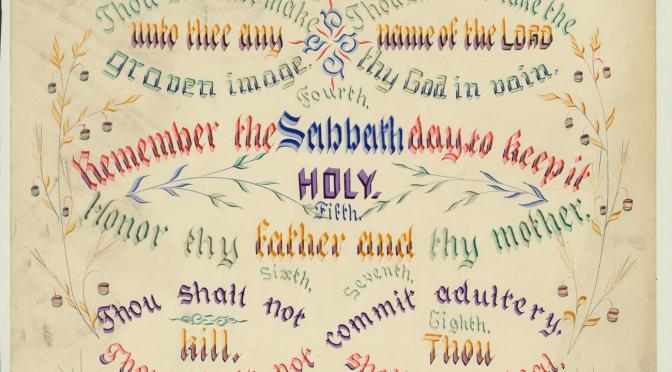
“Honour thy father and thy mother: that thy days may be long upon the land which the LORD thy God giveth thee” (Exodus 20:12). With this commandment, there is a shift of emphasis from the preceding commandments. There is less direct emphasis on man’s relationship with God, and more on man’s relationship with man. This commandment is foundational for both children and adults, stressing the importance of learning authority, which must begin in the home. Without proper respect for parents and their authority in the home, there will not be proper respect for God and His authority. 

The root meaning of the word honor [honour KJV], in the original language, is “to be heavy, or burdensome.” It is a burden for those receiving the honor to bear it properly, as well as for the giver of honor to give it as it should be given. Parents have responsibility and authority to teach their children about God. This should not be a matter of conceit for the parents, however, but should be a matter of grave concern. Parents should carefully consider what they teach their children, and ask them to do, because the ultimate authority always remains with God. Children should never be asked or expected to do that which is contrary to God’s will. As the apostles said before the authorities, “We ought to obey God rather than men” (Acts 5:29). 

Parents should be recognized as a gift to us. Children should be thankful for the gift of life through their parents, and all of the good things done by parents for children. Parents deserve loyalty, even when they are less than perfect (we know that only God is perfect). Along with that loyalty and gratitude children give to parents, they also should show their love and concern. Although it might be technically possible for children to honor their parents without loving them, it is certainly not God’s ideal. God loves and cares for His children, and often expresses that through parents. Authority without love often destroys. As Paul said, “Ye fathers, provoke not your children to wrath: but bring them up in the nurture and admonition of the Lord” (Ephesians 6:4). Honor and love go hand in hand. Jesus said, “If a man love me, he will keep my words: and my Father will love him, and we will come unto him, and make our abode with him” (John 14:23). 

Paul speaks of this commandment, saying, “Honour thy father and mother; which is the first commandment with promise” (Ephesians 6:2). This commandment offers a promise of blessing. The well being of any nation rests on the well being of the home. If things are right in the home, they will be right in the nation. Home life has incredibly far reaching results. The nation that neglects the home is headed for trouble. 

Jesus modeled obedience to the Heavenly Father, and added richness to our understanding by stressing the love of God as Father. Many of the religious leaders of the day tried to get around their obligations to their parents, but Jesus stressed how important the family is, warning them that their neglect of their parents was “making the word of God of none effect” (Mark 7 :9-13). “A wise son maketh a glad father: but a foolish man despiseth his mother” (Proverbs 15:20).

WHAT DOES THE FOURTH COMMANDMENT MEAN TO CHRISTIANS? — BOB PRICHARD

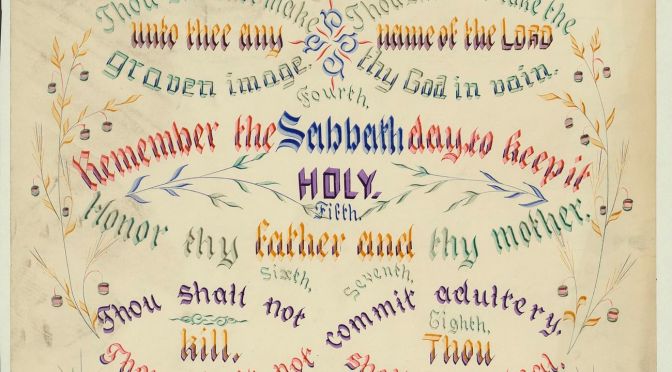
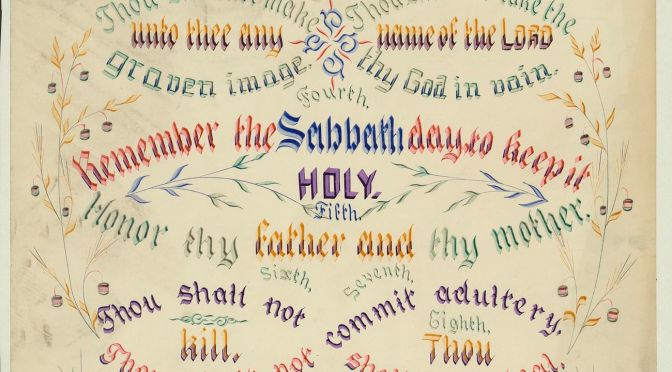
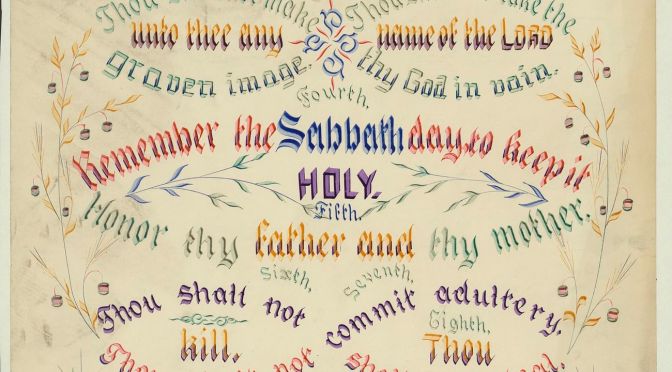
The fourth commandment says, “Remember the sabbath day, to keep it holy. Six days shalt thou labour, and do all thy work: But the seventh day is the sabbath of the LORD thy God: in it thou shalt not do any work, thou, nor thy son, nor thy daughter, thy manservant, nor thy maidservant, nor thy cattle, nor thy stranger that is within thy gates: For in six days the LORD made heaven and earth, the sea, and all that in them is, and rested the seventh day: wherefore the LORD blessed the sabbath day, and hallowed it” (Exodus 20:8-11). God gave the Sabbath as a “perpetual covenant” (Exodus 31:17) between the Jews and God. As long as the Jews were a nation, they were to keep the Sabbath. This was not a perpetual covenant with anyone else, however. 

The Sabbath lasted from sunset on Friday until sunset on Saturday. The Jews, especially the Pharisees, treated it very legalistically. They expanded, refined, and codified it until it became an intolerable burden. Jesus fought the popular distortion of the Sabbath by healing on the Sabbath, “For the Son of man is Lord even of the sabbath day” (Matthew 12:8). Jesus kept the Sabbath perfectly, something that no one else ever did. 

This commandment is the only one of the Ten Commandments that Jesus did not repeat for Christians. Jesus kept the Sabbath, but never commanded Christians to keep it. 

Although some try to keep the Sabbath today, none keep it as God commanded it. The Lord commanded that the Sabbath was the day for burnt offerings, and other elements which no one keeps today. Paul says that Christ abolished the law (Ephesians 2:15), and “took it out of the way, nailing it to his cross” (Colossians 2:14). The first covenant was taken away so that the better, new covenant could be established. “But now hath he obtained a more excellent ministry, by how much also he is the mediator of a better covenant, which was established upon better promises. For if that first covenant had been faultless, then should no place have been sought for the second” (Hebrews 8:6-7). 

While we are not commanded to keep the Sabbath, there are, however, many eternal principles to be learned from the Sabbath. All Christians should consider their use of time, and the work ethic taught in the commandment, that there are six days in which the servant of God will work. As the wise man Solomon wrote, “Go to the ant, thou sluggard; consider her ways, and be wise” (Proverbs 6:6). Paul tried to set a good example for the Thessalonians by working to support himself, giving an example (2 Thessalonians 3:7-12). “For even when we were with you, this we commanded you, that if any would not work, neither should he eat” (2 Thessalonians 3:10). 

Jesus showed the way to use the Sabbath, not by treating it as a day for idleness, but a day for service, a time for bringing blessings to others. The Christian should do no less with every day given to him. All life should be a rest from evil, and days devoted to God. Jesus said, “Seek ye first the kingdom of God, and his righteousness; and all these things shall be added unto you” (Matthew 6:33). Every Christian should evaluate his time to see how much is devoted to God, and how much is devoted to self.

WHAT DOES THE THIRD COMMANDMENT MEAN TO CHRISTIANS? — BOB PRICHARD

A name is very important, because it represents all that a person is. The third commandment warns, “Thou shalt not take the name of the LORD thy God in vain; for the LORD will not hold him guiltless that taketh his name in vain” (Exodus 20:7). When Moses asked God what he should say to the Israelites, as he came to lead them out of Egyptian bondage, “God said unto Moses, I AM THAT I AM: and he said, Thus shalt thou say unto the children of Israel, I AM hath sent me unto you” (Exodus 3:14). “I AM THAT I AM” is a form of the Hebrew for “to be,” indicating the eternal nature of God. The Israelites were so conscious of not breaking this commandment that they would not pronounce the name of God at all, instead substituting the word for Lord. 

Words, such as names, have always been important. Jesus warned that the misuse of words could destroy us, because the words indicate what is in our hearts. “Those things which proceed out of the mouth come forth from the heart; and they defile the man” (Matthew 15:18). James warns that “the tongue is a fire, a world of iniquity: so is the tongue among our members, that it defileth the whole body, and setteth on fire the course of nature; and it is set on fire of hell” (James 3:6).

Our words are especially of concern when they involve God and His name. Men often curse God, blaspheme His name, or use His name in profanity. Rather than cursing His name, men ought to hallow His name. The Old Testament punishment for such sins was stoning (Leviticus 24:10-23). This may seem harsh, but Jesus said, “That every idle word that men shall speak, they shall give account thereof in the day of judgment. For by thy words thou shalt be justified, and by thy words thou shalt be condemned” (Matthew 12:36-37). Since God’s name is often invoked in the making of vows and promises, such as the wedding vows, it is doubly important that these words be true. 

The sense of this commandment is also broken when men do not respect God’s words. You cannot reject His words, and the things His spokesmen have said, without rejecting God. Jesus told His disciples, “He that receiveth you receiveth me, and he that receiveth me receiveth him that sent me” (Matthew 10:40). Responding properly to God’s word means obedience to it. Words should match deeds. Paul condemned those whose works were not in accord with God’s word: “They profess that they know God; but in works they deny him, being abominable, and disobedient, and unto every good work reprobate” (Titus 1:16) Jesus spoke of this important connection between our deeds and the word of God, warning, “Not every one that saith unto me, Lord, Lord, shall enter into the kingdom of heaven; but he that doeth the will of my Father which is in heaven” (Matthew 7:21). 

Peter, referring to the name of Jesus Christ, said “Neither is there salvation in any other: for there is none other name under heaven given among men, whereby we must be saved” (Acts 4:12). Surely those who love Him would not want to misuse His name in songs, jokes, etc. His name should be spoken in love and obedience.

WHAT DOES THE SECOND COMMANDMENT MEAN TO CHRISTIANS? — BOB PRICHARD

The second of the Ten Commandments, found in Exodus 20, gives timeless principles concerning God’s attitude about worship. Christians, who are “delivered from the law” (Romans 7:6-7), learn principles from the Ten Commandments that allow them to live under the better covenant of Christianity (Hebrews 8:6-7) 

The commandment reads: “Thou shalt not make unto thee any graven image, or any likeness of any thing that is in heaven above, or that is in the earth beneath, or that is in the water under the earth: Thou shalt not bow down thyself to them, nor serve them: for I the LORD thy God am a jealous God, visiting the iniquity of the fathers upon the children unto the third and fourth generation of them that hate me; And showing mercy unto thousands of them that love me, and keep my commandments” (Exodus 20:4-6). Israel had to understand clearly that God would not tolerate idolatry. 

Idolatry, the worship of a creature, or inanimate object, seems inherently absurd to the modern mind. While modern man might not carve a statue, and then bow before it as ancient man did, he still has his idols, the false gods he worships. The problem of the idolater is not so much the idol as it is the spiritual blindness of the idolater. To place anything above God, whether it be possessions, family, occupation, or leisure activity, is to become an idolater. It has been well observed that sometimes the modern churchgoer may have his true god parked outside the place of worship. 

The command forbids making graven images to represent God to a worshipper. No image can ever “capture” God. As Paul told the Athenians, who worshipped so many gods, including an “unknown god,” “Forasmuch then as we are the offspring of God, we ought not to think that the Godhead is like unto gold, or silver, or stone, graven by art and man’s device. And the times of this ignorance God winked at; but now commandeth all men every where to repent” (Acts 17:29-30). God’s Word must always govern worship to Him, because man has always had a tendency to worship the thing rather than the One Whom it represents. Despite God’s care of Israel, they easily slipped back into an idolatrous way of thinking. On one occasion they took the ark of the covenant into battle against the Philistines, as a sort of “good luck charm,” and wound up losing the ark, as well as the battle (1 Samuel 4). They also began to worship the bronze serpent Moses raised as a symbol of salvation (Numbers 21:4-9), so that King Hezekiah had to destroy it with the other marks of idolatry (2 Kings 18:4). 

The commandment gives a lengthy “enforcement statement,” which stresses that God will not share His people with any other god, but will bless all those who do His will. As Jesus met with the woman at the well, who wanted to sidestep the discussion of her checkered past, He reminded her, “God is a Spirit: and they that worship him must worship him in spirit and in truth” (John 4:24). Jesus warned that worship is vain when men worship God “teaching for doctrine the commandments of men” (Matthew 15:8-9). Blessings for future generations depend on proper worship today! 

WHAT DOES THE FIRST COMMANDMENT MEAN TO CHRISTIANS? — BOB PRICHARD

The Ten Commandments, found in Exodus 20, form the basis for modern western civilization. In their summary of the proper attitude to God and one another, they provide fundamental concepts that allow people to function in obedience to God. The relevance of the Ten Commandments for the Christian lies in the timeless principles they describe. Paul explained that the Christian is no longer bound by the old covenant, including the ten commandments, because Christ brought the Jew and the Gentile together, “having abolished in his flesh the enmity, even the law of commandments contained in ordinances; for to make in himself of twain one new man, so making peace” (Ephesians 2:15). In giving His life, Christ was “blotting out the handwriting of ordinances that was against us, which was contrary to us, and took it out of the way, nailing it to his cross” (Colossians 2.14). Christians are “delivered from the law” (Romans 7:6-7) to live under the better covenant of Christianity (Hebrews 8:6-7). 

The first commandment emphasizes that God must be first in the life of His children. “And God spake all these words, saying, I am the LORD thy God, which have brought thee out of the land of Egypt, out of the house of bondage. Thou shalt have no other gods before me” (Exodus 20:1-3). As God reminded Israel that He had delivered them from Egyptian bondage, the first commandment demands, “Thou shalt have no other gods before me.”

The Israelites lived in a world of many gods vying for the allegiance of men. God demanded that they recognize Him and Him alone as God. “Thou shalt have no other gods before me” is literally “Thou shalt have no other gods before my face.” Just as a woman with two husbands would be unacceptable to either husband, God demands undivided loyalty from all who claim to follow Him. The Jews could not adopt the pagan practices of their neighbors and maintain the purity God demanded. Peter and the other apostles understood the principle, refusing to be silenced by the Sanhedrin, saying, “We ought to obey God rather than men” (Acts 5:29). In like manner, Christ demanded undivided loyalty from His followers. “He that loveth father or mother more than me is not worthy of me: and he that loveth son or daughter more than me is not worthy of me. And he that taketh not his cross, and followeth after me, is not worthy of me” (Matthew 10:37-38). 

The command, “Thou shalt have no other gods before me,” is also a demand for wholehearted love. God redeemed Israel from Egyptian bondage, and today He redeems mankind from the bondage of sin. The magnificence of His creation and the sacrifice of Christ for us shows that He truly is worthy of our love. Jesus summed up the proper attitude to the Father: “Thou shalt love the Lord thy God with all thy heart, and with all thy soul, and with all thy mind This is the first and great commandment. And the second is like unto it, Thou shalt love thy neighbour as thyself’” (Matthew 22:37-39). If we do this, we can truly insure that we put no other gods before Him. 

WHAT DOES “NO SCRIPTURE IS OF PRIVATE INTERPRETATION” MEAN? — BOB PRICHARD

Peter concludes the first chapter of his second epistle with these words. “We have also a more sure word of prophecy; whereunto ye do well that ye take heed, as unto a light that shineth in a dark place, until the day dawn, and the day star arise in your hearts: Knowing this first, that no prophecy of the scripture is of any private interpretation. For the prophecy came not in old time by the will of man: but holy men of God spake us they were moved by the Holy Ghost” (2 Peter 1:19-21). These verses of scripture are especially important because of what they tell us about the inspiration of scripture, reminding us that we have a “sure word of prophecy,” that is, trustworthy scriptures.

Unfortunately, the words, “no prophecy of the scripture is of any private interpretation,” have been misused by some religious organizations to keep people from studying the scriptures for themselves. Some prefer to keep the people in ignorance, teaching that the individual Christian cannot study or understand the scriptures themselves, but must rely on “the church” or church leaders to interpret the scriptures for them. Thus individuals may think there is no reason to study and reason for themselves. This is contrary to all the rest of the scripture, however. Saving faith comes from understanding and obeying the scriptures. All will be judged by the scriptures. 

Some suggest that what Peter was teaching in these verses is that since the words of scripture have a definite meaning, then those who interpret scripture are not free to read whatever meaning they want to into the scriptures, but must consider the context of scripture. Surely it is true that no one should be free to read into the scriptures any of their own personal opinions, and context must always be considered, but this is not Peter’s concern in this passage.

There is a better, more reasonable way to understand the words. Consider the rendering of 2 Peter 1:20-21 in the New American Standard Version: “But know this first of all, that no prophecy of Scripture is a matter of one’s own interpretation, for no prophecy was ever made by an act of human will, but men moved by the Holy Spirit spoke from God.” The prophecy of scripture did not come “by the will of man.” “No prophecy was ever made by an act of human will.” The prophets were inspired to write by God, and did not just speak what they wanted to speak, but they spoke what was revealed to them by God. That is the reason for the amazing accuracy of the teaching of scripture, and the agreement among the different writers. If each had been free to just write what he wanted to write, then there would be multiplied contradictions among all of the different portions of scripture. 

The “holy men” were “moved by the Holy Ghost,” literally “borne along” just as a strong wind propels a ship through the sea. Jesus told his disciples, “when he, the Spirit of truth, is come, he will guide you into all truth: for he shall not speak of himself; but whatsoever he shall hear, thst shall he speak: und he will show you things to come” (John 16:13) As the New Testament writers revealed the full truth of God’s revelation, the Holy Spirit guided them. Their message is one for all men study, obey, and live by.

ARE THERE “LOST BOOKS” OF THE BIBLE? — BOB PRICHARD

We have long understood that the thirty-nine books of the Old Testament and the twenty-seven books of the New Testament make up God’s complete revelation to man. The Bible does mention other ancient books, however. Joshua 10:13 says, “The sun stood still, and the moon stayed, until the people had avenged themselves upon their enemies. Is not this written in the book of Jasher?” Among the other books mentioned are the acts of Solomon (1 Kings 14:11), the books of Nathan the prophet and Gad the seer (1 Chronicles 29:29), and the books of Shemaiah the prophet and Iddo the seer (2 Chronicles 12:15). Even more interesting, in 1 Corinthians 5:9, Paul mentions a previous epistle: “I wrote unto you in an epistle not to company with fornicators.” Was the epistle telling them not to company with fornicators the original 1 Corinthians? Paul also wrote to the Christians of Colossae, “And when this epistle is read among you, cause that it be read also in the church of the Laodiceans and that ye likewise read the epistle from Laodicea” (Colossians 4.16). What is the “epistle from Laodicea”? 

The sixty-six books that make up the canon [meaning those measured] of scripture, are those books that have met the test of time, and have apostolic authority. For example, Peter warned that some of Paul’s writings are hard to understand, and thus sometimes twisted, as “also the other scriptures” (2 Peter 3:16). Thus He considered Paul’s writings to be scripture [inspired writings]. The books accepted in the canon claim inspiration for themselves, and the early Christians verified that inspiration by examining their content. These books also received virtual universal acceptance in the early church. 

We rely on the wisdom of the Jews of the first century to help in deciding which books belonged in the Old Testament canon, and the judgments of numerous early Christians help us in seeing what was accepted and rejected among the writings of the New Testament era. Among the books circulated by the early Christians, but rejected from the canon were the fourteen books of the Apocrypha. Philo of Alexandria ordered these books to be translated with the Septuagint, the Greek language translation of the Old Testament in use in the first century, but the Jews never considered them to be scripture. Many other ancient books were also considered  but rejected from the canon. Some, such as “Wisdom of Solomon,” and “Shepherd of Hermas” can be read today, but they are not inspired. In modern times, books such as the book of Mormon and other writings of Joseph Smith have been rejected because they conflict with known scripture and do not have the earmarks of inspired scripture.

Many of the books mentioned above, such as the book of Jasher, are lost. But simply being mentioned in scripture does not mean that they were inspired. Paul’s early epistle to the Corinthians apparently contained nothing that God has not repeated elsewhere in scripture. There are virtually no Bible doctrines that rely on just one mention in scripture. The “epistle from the Laodiceans” was probably just a letter from the church of Laodicea, and not scripture at all. Peter tells us that God has “given unto us all things that pertain unto life and godliness” (2 Peter 1:3). Thus we have all the scripture God intended us to have in the sixty-six books of today’s Bible. It would no doubt be interesting to read some of the “lost books,” but they would not add to God’s revelation to us. We need no other new revelations or other ancient books to give us what we need to please God.

DOES SAYING “THE SINNER’S PRAYER” SAVE? — BOB PRICHARD

Preachers sometimes invite their listeners to pray something such as, “God, I am sorry I have sinned. Please forgive me and let Jesus come into my heart. Thank you for forgiving me and giving me eternal life. In Jesus’ name I pray. Amen.” The preacher then says, “Since you have asked Christ into your life, you are now His child and your sins are forgiven.” The problem with this, however, is that the promise of forgiveness is from man, not God. God has never promised to hear or respond to “the sinner’s prayer.”

Prayer is a privilege for God’s people. James said, “The effectual fervent prayer of a righteous man availeth much” (James 5:16b). Peter quoted Psalm 34:15-16, saying “For the eyes of the Lord are over the righteous, and his ears are open unto their prayers: but the face of the Lord is against them that do evil” (1 Peter 3:12). Solomon warned, “He that turneth away his ear from hearing the law, even his prayer shall be abomination” (Proverbs 28:9). The psalmist spoke of the dilemma of the sinner: “If I regard iniquity in my heart, the Lord will not hear me” (Psalm 66:18). 

But what about the prayers of the publican and the Pharisee? While the Pharisee prayed “with himself,” the publican, “standing afar off, would not lift up so much as his eyes unto heaven, but smote upon his breast, saying, God be merciful to me a sinner.” Jesus concluded, “I tell you, this man went down to his house justified rather than the other: for every one that exalteth himself shall be abased; and he that humbleth himself shall be exalted” (Luke 18:11, 13-14). This does not set the pattern for sinners coming to Christ, however, because both the Pharisee and the publican were already in a covenant relationship with God as part of His chosen people, the Jews. They both, despite their sins, had the right to pray to God. 

What about Joel’s prophecy? He said, “It shall come to pass, that whosoever shall call on the name of the LORD shall be delivered: for in mount Zion and in Jerusalem shall be deliverance, as the LORD hath said, and in the remnant whom the LORD shall call” (Joel 2:32). To “call upon the name of the Lord” means to make an appeal through obedience. Saul of Tarsus spent three days in prayer and fasting, but did not receive salvation from the Lord until he called upon the Lord through obedience. Ananias told him, “And now why tarriest thou? arise, and be baptized, and wash away thy sins, calling on the name of the Lord” (Acts 22:16). In his baptism, he called on the name of the Lord and his sins were washed away. He would not have been saved if he had merely prayed “the sinner’s prayer,” and had refused to obey the Lord’s command. Jesus said, “If ye shall ask any thing in my name I will do it” (John 14.14). This is not a blanket promise to any person, but to those who follow Him and have the right to ask things in His name, by His authority. This promise is to the children of God. In the very next verse? He puts it simply, “If ye love me, keep my commandments” (John 14:15). The multitudes cried out at Pentecost, “What shall we do?” Peter did not respond, “Pray the sinner’s prayer,” but “Repent, and be baptized every one of you in the name of Jesus Christ for the remission of sins, and ye shall receive the gift of the Holy Ghost” (Acts 2:37-38). We will be saved if we do what the believers of Pentecost did.

WHY WE MUST BE BURIED WITH CHRIST IN BAPTISM — BOB PRICHARD

The heart of the gospel is the death, burial and resurrection of Christ. Paul began the great resurrection chapter, “Moreover, brethren, I declare unto you the gospel which I preached unto you, which also ye have received, and wherein ye stand; By which also ye are saved, if ye keep in memory what I preached unto you, unless ye have believed in vain. For I delivered unto you first of all that which I also received, how that Christ died for our sins according to the scriptures; And that he was buried, and that he rose again the third day according to the scriptures” (1 Corinthians 15:1-4).

It was their understanding that they had crucified the Son of God that made men at Pentecost cry out, “Men and brethren, what shall we do?” Peter’s response was “Repent, and be baptized every one of you in the name of Jesus Christ for the remission of sins, and ye shall receive the gift of the Holy Ghost” (Acts 2:36-38).

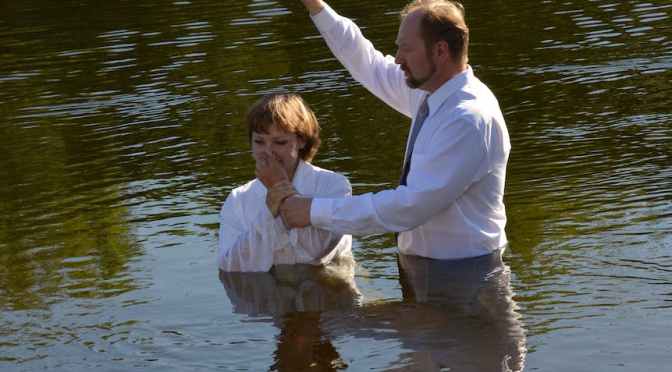
The baptism that Peter preached that day was the baptism preached in the early church. Paul reminded the Christians of Rome that he and they had both been baptized in the same way, for the same reasons. “Know ye not, that so many of us as were baptized into Jesus Christ were baptized into his death? Therefore we are buried with him by baptism into death: that like as Christ was raised up from the dead by the glory of the Father, even so we also should walk in newness of life” (Romans 6:3-4).

These verses speak of our baptism or burial into Christ, our clothing of ourselves in Him. “For as many of you as have been baptized into Christ have put on Christ” (Galatians 3:27).

I.  BECAUSE WE BELIEVE THE GOSPEL.

Our baptism pictures what we know to be true of Christ. As Jesus introduced the Lord’s Supper, He took bread and the cup and told them that his body and blood were given for us (Luke 22:19-20). We understand that Jesus suffered for us, “that he might sanctify the people with his own blood” (Hebrews 13:12).

We rejoice with the angels that said, “He is not here, but is risen: remember how he spake unto you when he was yet in Galilee, Saying, The Son of man must be delivered into the hands of sinful men, and be crucified, and the third day rise again” (Luke 24:6 -7). Every baptism proclaims the truth of the gospel.

II. BECAUSE HE IS OUR SUBSTITUTE.

He became one with us to be our substitute, because we cannot atone for our own sins. He “made himself of no reputation, and took upon him the form of a servant, and was made in the likeness of men: And being found in fashion as a man, he humbled himself, and became obedient unto death, even the death of the cross” (Philippians 2:7-8).

God “hath made him to be sin for us, who knew no sin; that we might be made the righteousness of God in him” (2 Corinthians 5:21). In baptism we acknowledge that we cannot atone for our own sins. Unless we accept His sacrifice, we must bear our own sins. “For the wages of sin is death; but the gift of God is eternal life through Jesus Christ our Lord” (Romans 6:23).

III. BECAUSE WE ARE DEAD IN SIN.

Baptism is a burial, and the man who is buried is dead. “For all have sinned, and come short of the glory of God” (Romans 3:23). What is dead needs to be buried (John 11:39).

As the head of the church, He gave Himself for the church, for us. “And he is the head of the body, the church: who is the beginning, the firstborn from the dead; that in all things he might have the preeminence” (Colossians 1:18). Buried with Him, we put the old man of sin to death.

IV. BECAUSE WE RISE TO WALK IN NEWNESS OF LIFE.

We have not suffered the true punishment of our sins. “For the wages of sin is death; but the gift of God is eternal life through Jesus Christ our Lord” (Romans 6:23). But Jesus Christ has suffered that punishment, and in our baptism we acknowledge and identify with Him in His suffering and death.

His death is our death to the old way of things. We know that God hates sin, because He was willing to see His only begotten son die for sins. “For God so loved the world, that he gave his only begotten Son, that whosoever believeth in him should not perish, but have everlasting life. For God sent not his Son into the world to condemn the world; but that the world through him might be saved” (John 3:16-17).

We are buried so that we may be alive in Him. “Yet a little while, and the world seeth me no more; but ye see me: because I live, ye shall live also” (John 14:19). That means that our perspective changes. “Set your affection on things above, not on things on the earth. For ye are dead, and your life is hid with Christ in God” (Colossians 3:2-3).

Every Christian should have the attitude of Paul: “I am crucified with Christ: nevertheless I live; yet not I, but Christ liveth in me: and the life which I now live in the flesh I live by the faith of the Son of God, who loved me, and gave himself for me” (Galatians 2:20).

“Therefore if any man be in Christ, he is a new creature: old things are passed away; behold, all things are become new” (2 Corinthians 5:17).