All posts by mainstcoc

IF GOD FORGIVES SIN, WHY IS THERE A JUDGMENT DAY? — BOB PRICHARD

One of the most arresting thoughts that any of us will ever have is that someday we must all stand before the judgment seat of God. “And as it is appointed unto men once to die, but after this the judgment” (Hebrews 9:27). Jesus warned the city of Capernaum “If the mighty works, which have been done in thee, had been done in Sodom, it would have remained until this day.  But I say unto you, That it shall be more tolerable for the land of Sodom in the day of judgment, than for thee” (Matthew 11:23-24). Truly it will be an awful experience to stand unprepared before the throne of God on the day of judgment.

The key to preparation for the day of judgment is to obey the gospel of Christ and receive the forgiveness of sins. Peter told the multitude gathered in Jerusalem for Pentecost, “Repent, and be baptized every one of you in the name of Jesus Christ for the remission [forgiveness] of sins, and ye shall receive the gift of the Holy Ghost” (Acts 2:38). “Then they that gladly received his word were baptized: and the same day there were added unto them about three thousand souls” (Acts 2:41).

For those who have received the forgiveness of sins, there is no fear of standing before the judgment seat of God. Matthew 25 depicts the great judgment scene, with all nations gathered before the throne, with the sheep separated from the goats. The sheep, those who have done God’s will, receive the Lord’s commendation, “Come, ye blessed of my Father, inherit the kingdom prepared for you from the foundation of the world” (Matthew 25:34). The goats, those who have not done God’s will, hear the sad words, “Depart from me, ye cursed, into everlasting fire, prepared for the devil and his angels” (Matthew 25:41).

John also saw the judgment scene. “And I saw the dead, small and great, stand before God; and the books were opened: and another book was opened, which is the book of life: and the dead were judged out of those things which were written in the books, according to their works. And the sea gave up the dead which were in it; and death and hell delivered up the dead which were in them: and they were judged every man according to their works” (Revelation 20:12-13). Each one is judged as to whether his name is in the book of life, and according to what the other books (probably the books of scripture) say about their obedience to the will of God.

When we picture judgment day in our minds, we frequently think of it as a trial, where our good works are balanced against our bad. A more accurate picture of judgment day, however, is that it is a day of final sentencing for those who in life decided their own eternal destiny. Those who obey the gospel of Christ and receive the forgiveness of sin will one day hear the wonderful words, “Come, ye blessed of my Father” (Matthew 25:34), while those who do not obey God will receive the sentence, “Depart from me” (Matthew 25:41).

WHAT IS A CHRISTIAN? — BOB PRICHARD

The prophet Isaiah looked to the coming Messianic age and said, “For Zion’s sake will I not hold my peace, and for Jerusalem’s sake I will not rest, until the righteousness thereof go forth as brightness, and the salvation thereof as a lamp that burneth. And the Gentiles shall see thy righteousness, and all kings thy glory: and thou shalt be called by a new name, which the mouth of the LORD shall name” (Isaiah 62:1-2). “Christian” is that new name God promised to his people. After the gospel had spread from the Jewish world to the Gentile world as well, the church in Antioch took a lead in mission efforts. Because of this “the disciples were called Christians first in Antioch” (Acts 11:26).  

The name of “Christian,” found only three times in the New Testament, is a descriptive name that conveys the idea of association and ownership, that the Christian belongs to and associates with Christ. Peter said, “if any man suffer as a Christian, let him not be ashamed; but let him glorify God on this behalf” (1 Peter 4:16). “Christian” is a name to be treasured, even if it means suffering and death. The Christian belongs to Christ and wants to serve  Him.

As Paul pleaded for Agrippa to follow Christ, Agrippa replied, “Almost thou persuadest me to be a Christian” (Acts 26:28). If Agrippa had been altogether persuaded “to be a Christian,” he would have become a child of God, a member of the Lord’s church, and one born again of the water and the Spirit (John 3:3-5).

Several names, including “the church” described the disciples or followers of Christ before they were called Christians. Luke writes of the believers in Jerusalem that “the Lord added to the church daily such as should be saved” (Acts 2:47). Thus those who had obeyed Peter’s command of Acts 2:38, “Repent, and be baptized every one of you in the name of Jesus Christ for the remission of sins,” were the saved, and members of the church. Paul reminded the Romans what they had done to become Christians. “Know ye not, that so many of us as were baptized into Jesus Christ were baptized into his death? Therefore we are buried with him by baptism into death: that like as Christ was raised up from the dead by the glory of the Father, even so we also should walk in newness of life. For if we have been planted together in the likeness of his death, we shall be also in the likeness of his resurrection: Knowing this, that our old man is crucified with him, that the body of sin might be destroyed, that henceforth we should not serve sin” (Romans 6:3-6).

As he described his conversion, Paul said of the church, “I persecuted this way unto the death, binding and delivering into prisons both men and women” (Acts 22:4). Paul was persecuting people who knew that being a Christian was a way of life. As he told the Romans, “our old man is crucified with him, that the body of sin might be destroyed, that henceforth we should not serve sin” (Romans 6:6). The Christian, who has become a “new creature” (2 Corinthians 5:17) no longer serves sin, but serves Christ. A Christian has obeyed the gospel of Jesus Christ, and lives for Him daily.

WERE CHRIST AND THE APOSTLES MISTAKEN ABOUT HIS RETURN? — BOB PRICHARD

The Lord’s second coming is one of the most often discussed subjects in the New Testament, teaching Christians to eagerly anticipate that return. In the very last section of scripture, the Lord says, “Surely I come quickly” (Revelation 22:20). Paul exhorted, “Knowing the time, that now it is high time to awake out of sleep: for now is our salvation nearer than when we believed. The night is far spent, the day is at hand” (Romans 13:11-12). James adds, “Be ye also patient; stablish your hearts: for the coming of the Lord draweth nigh” (James 5:8). Hearing these words, no doubt many Christians of the first century probably expected the Lord to return immediately. 

Balanced with these and similar passages, however, is the Lord’s assertion that “of that day and hour knoweth no man, no, not the angels of heaven, but my Father only. But as the days of Noe were, so shall also the coming of the Son of man be. For as in the days that were before the flood they were eating and drinking, marrying and giving in marriage, until the day that Noe entered into the ark, And knew not until the flood came, and took them all away; so shall also the coming of the Son of man be” (Matthew 24:36-39). No one knows when He will return, and thus all should be prepared. Paul gave this warning: “For yourselves know perfectly that the day of the Lord so cometh as a thief in the night. For when they shall say, Peace and safety; then sudden destruction cometh upon them, as travail upon a woman with child; and they shall not escape” (1 Thessalonians 5:2-3). How could Paul and Christ so clearly state that no one will know the time of the second coming, if they thought it would be “soon”?

The scriptures thus present the second coming as always imminent [about to happen], but also distant. People have always had difficulty understanding this. Luke tells us that Jesus told a parable of a nobleman giving ten pounds to ten servants, even as he went into a far country “to receive a kingdom,” because “he was nigh to Jerusalem, and because they thought that the kingdom of God should immediately appear” (Luke 19:11-13). The Christian must always “watch and be sober” because the Lord may return any time (1 Thessalonians 5:6), but He may also delay His coming.

While “quickly,” or “at hand” may imply something is to occur in a brief period of time, these terms do not always mean this. When Jesus said “Surely I come quickly” (Revelation 22:20), He was emphasizing that His coming would be sudden. In the same way, indications of something being “at hand” often meant that it was sure to happen, not necessarily immediately. Speaking for the Lord, Moses warned about the fate of Israel: “To me belongeth vengeance, and recompence; their foot shall slide in due time: for the day of their calamity is at hand, and the things that shall come upon them make haste” (Deuteronomy 32:35). This prophecy was not fulfilled for hundreds of years, because God’s standards of time are not the same as man’s. “But, beloved, be not ignorant of this one thing, that one day is with the Lord as a thousand years, and a thousand years as one day” (2 Peter 3:8). Christ and the inspired writers were not mistaken. They were preparing the unprepared for His return. We also must be prepared.

NEWS JUNKIE — BOB PRICHARD

I have always followed the news, so much that you might call me a “news junkie.” I like to know what is going on in the world. I like to hear the news on radio and TV, and I subscribe to news magazines. Going through a news magazine to tear out articles for my files, it struck me that there is much information in those news magazines that is timely and helpful, but much of it gets outdated very quickly. 

It is interesting to go back and look at an article on something such as the chances of a presidential candidate winning an election, after he or she has already dropped out. It is surprising to go back just a couple of months and find how little importance there is in some articles that were a “must read” then. 

The Bible, on the other hand, is always relevant. If we read the Bible with “first century glasses,” we not only find how the original readers saw the message, but we can also see how to apply it to our lives today. 

Current events are a reflection of man’s triumphs and tragedies, originating from man’s basic nature. Despite centuries of technological progress, little has changed. It caused Solomon to be pessimistic: “What profit hath a man of all his labour which he taketh under the sun? One generation passeth away, and another generation cometh: but the earth abideth for ever. … The thing that hath been, it is that which shall be; and that which is done is that which shall be done: and there is no new thing under the sun” (Ecclesiastes 1:3-4, 9). 

But we don’t have to be pessimistic. “I will delight myself in thy commandments, which I have loved. … Great peace have they which love thy law: and nothing shall offend them” (Psalm 119:47,165). The world makes cosmetic changes, “But the word of the Lord endureth for ever” (1 Peter 1:25).

WITH ONLY EIGHT ON THE ARK,  WHERE DID THE RACES COME FROM? — BOB PRICHARD

Genesis 7:13 gives us the census of people that were on the ark: “In the selfsame day entered Noah, and Shem, and Ham, and Japheth, the sons of Noah, and Noah’s wife, and the three wives of his sons with them, into the ark.” With these four men and four women, the earth was repopulated after the flood. Sin necessitated the flood. It was a time when “the earth also was corrupt before God, and the earth was filled with violence. And God looked upon the earth, and, behold, it was corrupt; for all flesh had corrupted his way upon the earth” (Genesis 6:11-12).

The Bible does not tell us when the races originated. It is possible that the races developed from the division of mankind at the tower of Babel, although Moses only says that God confounded their language and scattered them abroad (Genesis 11:1-9). As people scattered and separated, the races could have developed from the gene pool in each area. As people intermarried within a region, certain racial characteristics developed, as well as individual languages.

Modern science has tried to differentiate among the races, recognizing four basic races: Caucasoid, Mongoloid, Negroid and Australoid. The problem with these classifications, however, is that the dominant characteristics that are specific to a race, such as skin color or hair type, are found in the other racial groups. Skin color,  the most obvious racial characteristic, is determined primarily by the amount of melanin in the skin. Thus a “white” person may actually have darker skin than a “black” person. Although general racial characteristics may predominate among certain populations, all human beings are part of the same species, the human race.

We know that all human beings have come from the original man and woman, Adam and Eve, and also that all living human beings are descendants of Noah and his family. Paul declared that God “made of one every nation of men to dwell on all the face of the earth, having determined their appointed seasons, and the bounds of their habitation” (Acts 17:26 ASV). The words “of one,” literally mean “out of one male,” thus Adam. All mankind has descended from Adam.

Since all human beings have descended from the eight on the ark, then all racial characteristics must have been available in the genetic makeup of Noah and his family. Some suggest that Shem and his descendants were Asian, thus Mongoloid; Ham and his descendants were African, thus Negroid; and Japheth and his descendants were European, and thus Caucasoid. More likely, however, Noah and all of his family were a combination of all of our modern day races. The separation into current races was gradual over time.

Neither the biblical nor the non-biblical evidence supports the evolutionary theory, coming from racial prejudice, that the races descended from different primates or “prehuman” men. Since all races of humans can intermarry, all humans are interrelated, with the same ancestry in Adam and Eve.

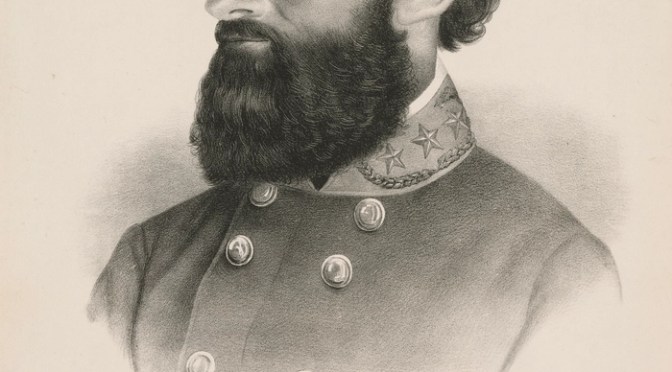
ARM OF STONEWALL JACKSON — BOB PRICHARD

One of the more unusual Civil War monuments is found in a yard next to an Antebellum house near Chancellorsville, Virginia. The small stone bears the words, “Arm of Stonewall Jackson May 3 1863.”

Thomas Jonathan Jackson, was a teacher at the Virginia Military Institute at the outbreak of the Civil War, and was well known as a man of faith, and one who was loved by the enslaved people of Lexington because of his kindness and unceasing efforts for their moral instruction. He entered the Confederate army as a major, and quickly promoted to brigadier general. Because of the rigid steadiness of his troops at critical moments in the first battle of Bull Run, he was given the nickname of “Stonewall.”

His last battle, at Chancellorsville, was his greatest victory. After the battle, on the night of May 2, 1863, he was surveying his troops, when he was mistaken for federal cavalry and shot by his own troops. His injuries required the amputation of his left arm, which ordinarily would have been cremated. Because of the Confederate general’s popularity, however, the surgeon decided to bury it there at Chancellorsville. Jackson died seven days later, and was buried at Lexington, Virginia. Robert E. Lee said that the loss of Jackson was like the loss of his right arm.

His unusual death and burial raises questions. What will happen in the resurrection? Paul promises Christians: “Behold, I show you a mystery; We shall not all sleep, but we shall all be changed, In a moment, in the twinkling of an eye, at the last trump: for the trumpet shall sound, and the dead shall be raised incorruptible, and we shall be changed. For this corruptible must put on incorruption, and this mortal must put on immortality. So when this corruptible shall have put on incorruption, and this mortal shall have put on immortality, then shall be brought to pass the saying that is written, Death is swallowed up in victory” (1 Corinthians 15:51-54). God will take care of everything.

WHY DID PAUL TELL THE CORINTHIANS,  “I THANK GOD THAT I BAPTIZED NONE OF YOU”? — BOB PRICHARD

It seems strange that Paul would tell the Corinthians that he was thankful that he baptized none of them, when he taught more about the importance of baptism than any other New Testament writer. For example, he reminded the Roman Christians of their common experience of baptism into Christ: “Know ye not, that so many of us as were baptized into Jesus Christ were baptized into his death? Therefore we are buried with him by baptism into death: that like as Christ was raised up from the dead by the glory of the Father, even so we also should walk in newness of life” (Romans 6:3-4).

Most apparent contradictions in scripture are easily be explained by looking at the context (the surrounding verses). Problems filled the church in Corinth: abuses of the Lord’s Supper, abuses of miraculous spiritual gifts, problems concerning marriage, Christians taking one another before the law, and most importantly, divisions within the church. Jesus prayed for the unity of all of His followers: “That they all may be one; as thou, Father, art in me, and I in thee, that they also may be one in us: that the world may believe that thou hast sent me” (John 17:21). The church in Corinth, however, was dividing itself into sects and denominations.

Paul wrote, “Now I beseech you, brethren, by the name of our Lord Jesus Christ, that ye all speak the same thing, and that there be no divisions among you; but that ye be perfectly joined together in the same mind and in the same judgment” (1 Corinthians 1:10). Division was so severe, however, that some were saying “I am of Paul,” and others were saying “and I of Apollos; and I of Cephas; and I of Christ.” Paul asked, “Is Christ divided? was Paul crucified for you? or were ye baptized in the name of Paul?” (1 Corinthians 1:12-13). The divisions were so severe that they were no longer simply Christians, or followers of Christ, but they were becoming “Paulite Christians,” “Apollosite Christians,” and “Cephasite Christians.” They were not following Jesus as much as they were following the preachers who had taught or baptized them.

It was because of these terrible divisions that Paul said, “I thank God that I baptized none of you, but Crispus and Gaius; Lest any should say that I had baptized in mine own name. And I baptized also the household of Stephanas: besides, I know not whether I baptized any other. For Christ sent me not to baptize, but to preach the gospel: not with wisdom of words, lest the cross of Christ should be made of none effect. For the preaching of the cross is to them that perish foolishness; but unto us which are saved it is the power of God” (1 Corinthians 1:14-18). Paul did not want to contribute in any way to the divisions within the Corinthian congregation. He was glad there were very few Corinthians who could claim to be “Paulite Christians,” because he had only personally baptized a few. This is likely the reason that Jesus did not personally baptize.  “Jesus himself baptized not, but his disciples” (John 4:2). Paul preached the whole gospel of Christ, which includes water baptism.

WHAT DOES IT MEAN TO “OBEY THE GOSPEL”? — BOB PRICHARD

The gospel of Jesus Christ is the “good news” that mankind needs. It is a message that must be received and obeyed. Paul warned that the Loving Savior will return “In flaming fire taking vengeance on them that know not God, and that obey not the gospel of our Lord Jesus Christ” (2 Thessalonians 1:8). The Lord will take vengeance on those who “obey not the gospel,” and He will reward those who do obey the gospel.  

Paul stressed the fundamentals of the gospel, reminding the Corinthians what he had preached: “For I delivered unto you first of all that which I also received, how that Christ died for our sins according to the scriptures; And that he was buried, and that he rose again the third day according to the scriptures” (1 Corinthians 15:3-4). The death, burial, and resurrection of Christ were at the heart of his message. The rest of 1 Corinthians 15 is a discussion of the importance of the resurrection. He began the chapter by reminding the Corinthians that it was the gospel he had preached to them. “Moreover, brethren, I declare unto you the gospel which I preached unto you, which also ye have received, and wherein ye stand; By which also ye are saved, if ye keep in memory what I preached unto you, unless ye have believed in vain” (1 Corinthians 15:1-2). Paul stressed that the gospel is a message to receive, and to stand in, and it is a message that brings salvation when kept in memory.

Paul asserts that we choose the master we serve. “Know ye not, that to whom ye yield yourselves servants to obey, his servants ye are to whom ye obey; whether of sin unto death, or of obedience unto righteousness?” (Romans 6:16). The master we choose is the one we obey. Jesus said, “If ye love me, keep my commandments” (John 14:15). Paul commended the Romans for the choice they had made in obeying Christ and His gospel. “But God be thanked, that ye were the servants of sin, but ye have obeyed from the heart that form of doctrine which was delivered you. Being then made free from sin, ye became the servants of righteousness” (Romans 6:17-18). They had obeyed from the heart “that form of doctrine” he had delivered to them. Doctrine refers to something taught, and Paul taught the same gospel wherever he went. Centered in the facts of the death, burial and resurrection of Christ, his message was one of the necessity of obeying the will of God and becoming a servant of righteousness.  

Earlier he stressed that they were buried with Christ in baptism to obey the gospel. “Know ye not, that so many of us as were baptized into Jesus Christ were baptized into his death? Therefore we are buried with him by baptism into death: that like as Christ was raised up from the dead by the glory of the Father, even so we also should walk in newness of life” (Romans 6:3-4). Baptism parallels the death, burial, and resurrection of Christ. Man is dead in sin, and then buried with Christ in baptism. He rises from the waters of baptism in the likeness of Christ’s resurrection to walk in newness of life. He then has the forgiveness of sin, and the joy that comes from obeying the gospel.

I AM NOT A VICTIM! — BOB PRICHARD

Under the title, “We’re All Victims,” John Leo wrote about the top 10 “victim stories” of the year, in the November 21, 2005 U.S.News. Leo pointed out that in our politically correct culture, anyone who gets offended is a victim. Leo cited the British Muslims who were “victimized” by tissue boxes picturing Winnie the Pooh and Piglet; and atheists who were “victimized” by actors who thanked God for winning Oscars, as well as students at the University of Wisconsin who were “victimized” by local bars that discontinued discount drinks on weekends in response to a federal campaign to limit binge drinking.

The dictionary defines a victim as “one who is harmed or killed by another; one who is harmed by or made to suffer from an act, circumstance, agency, or condition; a person who is tricked, swindled, or taken advantage of.” 

Yes, everywhere we look, we see victims. But I want you to know that I am not a victim. In fact, I am guilty. I know the truth of Paul’s words in Romans 3:23: “For all have sinned, and come short of the glory of God.” I know that I am a sinner, deserving of God’s punishment. But I know that I will not receive justice for my sins, but instead God’s grace.

“Being justified freely by his grace through the redemption that is in Christ Jesus” (Romans 3:24), reminds me that I have been forgiven through the grace of God when I obeyed the gospel of Christ.

“Then Peter said unto them, Repent, and be baptized every one of you in the name of Jesus Christ for the remission of sins, and ye shall receive the gift of the Holy Ghost” (Acts 2:38). Because I have repented and been baptized, my sins have been remitted.

One more definition of victim: “a living creature slain and offered as a sacrifice during a religious rite.” I am so grateful that Jesus served as that victim for me so that I could have forgiveness.

CAUSES AND REASONS — BOB PRICHARD

In his book, Why Good Arguments Often Fail (IVP, 2006), James W. Sire tries to help Christians make more persuasive arguments for Christ. He discusses logical fallacies that plague us, and ways to speak the truth without falling into these fallacies. He also draws a distinction between causes for what we believe, and reasons for what we believe, especially as they relate to faith in God.

He cites several answers that might be given for belief in God: “My parents are Christians,” “I grew up going to church,” etc. These, he says, are causes—that is, they are not based on rational thought, but have been formed by sociological forces. On the other hand, responses such as “My belief in God gives me hope,” “My faith provides meaning and direction for my life,” or “There is a lot of evidence that Jesus was and is the Son of God,” are reasons—based on rational consideration of the evidence.

Why does it matter? He gives two reasons: (1) “It is important for Christians because without some sense of why they are Christians, they may hold their faith with reservations (and thus weaken their Christian life) or lose their faith entirely.” (2) “The distinction is important because one of the charges against Christians is that they believe what they do primarily—or solely—because they have been raised in a Christian environment. They have been caused to believe. If they thought about it, skeptics say, they would change their minds” (Pages 48-49).

Sire makes me think that we really need to teach our young people to examine the evidence for their faith. Peter exhorts, “But sanctify the Lord God in your hearts: and be ready always to give an answer to every man that asketh you a reason of the hope that is in you with meekness and fear” (1 Peter 3:15). We need to be ready to give the reason for our belief—not the cause. It is of great benefit to have Christian parents, a Christian environment, and Christian influence. At the same time, our faith must be examined. Can you give the reason for your faith?

MUST THE CHRISTIAN TITHE? — BOB PRICHARD

Tithing is the custom of giving a portion (ten per cent) of products or money to a king or priest. The first biblical mention of tithing is in Genesis 14, when Abram returned from a great military victory and gave a tithe of the plunder he had acquired to Melchizedek, who was the king of Salem, and a priest of God. Later Jacob, Abram’s grandson, promised to give God a tenth: “Jacob vowed a vow, saying, If God will be with me, and will keep me in this way that I go, and will give me bread to eat, and raiment to put on, So that I come again to my father’s house in peace; then shall the LORD be my God: … and of all that thou shalt give me I will surely give the tenth unto thee” (Genesis 28:20-22). Giving a tenth was common among ancient nations, and was a part of the Old Covenant law.

Moses told Israel, “And all the tithe of the land, whether of the seed of the land, or of the fruit of the tree, is the LORD’S: it is holy unto the LORD” (Leviticus 27:30). The payment of the tithe was largely to support the Levites, who did not receive the land inheritance that the other tribes received. The priests and Levites also would sometimes give a tithe (tenth) of the tithe they received (Numbers 18:21-28). The Jews also paid a second tithe, and sometimes even a third tithe at certain times (Deuteronomy 14:22-28; 26:12). The law required all faithful Jews to tithe, regardless of income.

Christ spoke of tithing only once. “Woe unto you, scribes and Pharisees, hypocrites! for ye pay tithe of mint and anise and cummin, and have omitted the weightier matters of the law, judgment, mercy, and faith: these ought ye to have done, and not to leave the other undone. Ye blind guides, which strain at a gnat, and swallow a camel” (Matthew 23:23-24). Jesus did not condemn them for their tithing, but for their attitude in their giving. The scribes and Pharisees pretended to keep the letter of the law, but paid no attention to the spirit of the law.

This is key to understanding the Christian’s responsibility to give. The New Testament never gives any requirement for the Christian to give a tithe (10%). None of the apostles ever required the giving of a tithe, and there is no biblical example of Christians giving a tithe. The Old Covenant tithe was paid to the Levites, and no church or preacher or priest has received authority to demand a tithe of Christians. However, since the poorest of the Jews paid a tithe, surely Christians will want to give sacrificially, from the heart. Some may be able to give ten percent, some fifty per cent, some five per cent. The attitude should be to give as much as possible to the cause of Christ Who redeemed us. “But this I say, He which soweth sparingly shall reap also sparingly; and he which soweth bountifully shall reap also bountifully. Every man according as he purposeth in his heart, so let him give; not grudgingly, or of necessity: for God loveth a cheerful giver” (2 Corinthians 9:6-7). The Christian who realizes how much Christ has given will truly be a cheerful, generous  giver to the Lord’s work.

IS THE BIBLE INFALLIBLE? — BOB PRICHARD

Yes.  Infallible means “incapable of erring, sure, certain, unerring.” A close synonym for infallible is inerrant, which means “free from error.” The Bible as revealed by God in the “original autographs” (original written copies) is both infallible and inerrant. The infallible Bible does not just “contain the Word of God,” it IS the Word of God. Because it is infallible, it gives us all that we need for faith and practice in serving God.  

The Bible claims infallibility for itself. More than 2,000 times in the Old Testament “thus saith the Lord,” or a similar phrase occurs. Surely the Lord was able to communicate  His will accurately! Peter spoke of inspiration saying, “the prophecy came not in old time by the will of man: but holy men of God spake as they were moved by the Holy Ghost” (2 Peter 1:21). The inspired writers wrote what God revealed to them. It was not their own message but the message of God that they recorded. Jesus said “the scripture cannot be broken” (John 10:35), meaning that it must be true. He said, “Verily I say unto you, Till heaven and earth pass, one jot or one tittle shall in no wise pass from the law, till all be fulfilled” (Matthew 5:18). The “jot” was yodh, the smallest letter of the Hebrew alphabet and the “tittle” was a simple pen stroke, or part of a letter. Thus Jesus asserted the infallibility of the written Word of God, even in the smallest details.

The New Testament claims the same inspired infallibility for the whole Bible. “All scripture is given by inspiration of God, and is profitable for doctrine, for reproof, for correction, for instruction in righteousness” (2 Timothy 3:16). Since “all scripture is given by inspiration of God,” then it must all be regarded as authoritative and infallible. If only part of it is authoritative or infallible, how will we choose what is authoritative and infallible, and what is not authoritative or without error? If we use man’s subjective opinion, we will end up being mislead. How much better it is to just accept all that God has revealed, rather than choosing the opinions of men!

Skeptics have long attacked what they perceived as errors in the Bible. When all the evidence is considered, however, the Bible still stands without error. All too often, what are perceived as errors are not errors at all, but simply the expression of different points of view of biblical authors, or misinterpretations of obscure texts, or simple misunderstandings. Too often the “errors” come from the preconceptions of critics concerning what they think the Bible ought to say, rather than what it really says.  

What is really at stake in the question of biblical infallibility is the character of God. God cannot lie (Titus 1:2). He is omniscient or all knowing (Psalm 139). Since He knows all things and cannot lie, then His written Word, all of it, must be infallible. An infallible God can do no less than produce an infallible Bible. Just one error in His revealed Will would be enough to show that God is not God. Because we are limited in our understanding, we may not be able to explain every perceived error or inconsistency in the Bible, but we can accept it as the infallible Word of God because it comes from Him.

SHEPHERDS — BOB PRICHARD

“Being a shepherd isn’t just sitting next to your dog on the field all day, smoking a pipe,” said Hungarian Ference Selay, who was trained as an architect, but the worked as a shepherd. Professionals were being enticed to leave city life in Hungary to work as shepherds, who now have to deal with complicated European Union laws. Selay actually spent more time applying for grants than warding off wolves (World, October 29, 2005).

We know the work of shepherds from the Bible. The shepherd king David is an inspiring example of how a man can rise from a humble position to rule a nation. The shepherd defends the sheep, keeps them safe, and cares for them with tenderness. No wonder Psalm 23 is the most loved passage in the Bible. “The LORD is my shepherd; I shall not want” (Psalm 23:1).

We have lost much in that we seldom use the word shepherd to speak of those who oversee the church. Our traditional use of elder implies age and wisdom. We seem to fear using “bishop,” another scriptural word (1 Timothy 3:1-2, Titus 1:7), because it seems to have too much baggage from the denominational misuse of the word. But why don’t we use shepherd? Peter urges, “Feed the flock of God which is among you, taking the oversight thereof, not by constraint, but willingly; not for filthy lucre, but of a ready mind; Neither as being lords over God’s heritage, but being examples to the flock. And when the chief Shepherd shall appear, ye shall receive a crown of glory that fadeth not away” (1 Peter 5:2-4). “Take heed therefore unto yourselves, and to all the flock, over the which the Holy Ghost hath made you overseers, to feed the church of God, which he hath purchased with his own blood” (Acts 20:28).

Knowing how the shepherd fought the lion and bear, and developed the courage to kill Goliath, what’s wrong with the word? “Being a shepherd isn’t just sitting next to your dog on the field all day, smoking a pipe.”

DOES EXODUS 21 ALLOW FOR ABORTION? — BOB PRICHARD

No. Exodus 21 is sometimes cited as evidence that the Bible allows for abortion. Some say that Exodus 21 allows for abortion because it suggests that the life of the unborn child is of less value than the life of the mother. This passage deals with accidental injury to a pregnant woman, while abortion is the intentional killing of an unborn child. Exodus 21 actually teaches that the life of the mother and child are both protected by God’s laws.

Here is what Exodus 21:22-25 says: “If men strive, and hurt a woman with child, so that her fruit depart from her, and yet no mischief follow: he shall be surely punished, according as the woman’s husband will lay upon him; and he shall pay as the judges determine. And if any mischief follow, then thou shalt give life for life, Eye for eye, tooth for tooth, hand for hand, foot for foot, Burning for burning, wound for wound, stripe for stripe.”

Simply put, what the passage describes is a situation where men are fighting and during the fighting injure a pregnant woman [possibly an innocent bystander or one intervening to stop the fight]. If “her fruit depart from her, and yet no mischief follow,” the man is fined, but “if any mischief follow,” then the more severe “life for life, eye for eye” punishment follows.

Some teach that “her fruit depart from her, and yet no mischief follow” means that the mother has a miscarriage, and loses the child, which is punished with a fine. While “if any mischief follow” means that the woman herself dies or is severely injured. This explanation is not true to the text, or reason. Miscarriage is extremely traumatic to any mother.

What “her fruit depart from her, and yet no mischief follow,” refers to is a premature birth, in which neither the mother or child suffers serious injury. How could the death of an unborn child be considered “no mischief”? The fine was imposed because of the threat to the life of the mother and child caused by the negligence of the fighting men. Some modern translators have inserted the word “miscarriage” in verse 22, the Hebrew word used in the text means birth, not miscarriage. [There is a different word for Hebrew word for miscarriage, which Moses used in Exodus 23:26, translated “cast their young” in the KJV]. Notice the clear meaning in the NIV: “If men who are fighting hit a pregnant woman and she give birth prematurely, but there is no serious injury, the offender must be fined whatever the woman’s husband demands and the court allows” (Exodus 21:22).

The phrase “if any mischief follow” (Exodus 21:23) does not make any distinction between the mother and the unborn child. The “life for life, eye for eye” law applied equally. In fact, if any distinction is being made between the mother and the child, the more natural understanding is that “if any mischief follow” applies more directly to the child than the mother, because the focus of the passage is on what happens when “the fruit” departs from the mother. Significantly, the law of Exodus 21:22-25 applied as harshly to the accidental death or injury of the unborn child as it does to the intentional death or injury of any other innocent person. Exodus 21 upholds the value of innocent life. Abortion destroys innocent life.

CAN A SAVED PERSON EVER SO SIN TO LOSE HIS SOUL? — BOB PRICHARD

The doctrine that once a person is saved, he can never be lost, is usually referred to as the “doctrine of eternal security,” or the “impossibility of apostasy.” This doctrine comforts many, but it is contrary to the scriptures. Several Bible characters fell away.

Demas faithfully served with Paul. Paul wrote, “Luke, the beloved physician, and Demas, greet you” (Colossians 4:14), but then later wrote to Timothy, “Demas hath forsaken me, having loved this present world, and is departed unto Thessalonica” (2 Timothy 4:10). Not only did Demas forsake Paul, but we understand that he forsook the Lord as well, “having loved this present world” too much.

Philip converted Simon the Sorcerer at Samaria, and even baptized him (Acts 8:13), but then Simon sought to buy the ability to give the spiritual gifts. Peter warned him, “Repent therefore of this thy wickedness, and pray God, if perhaps the thought of thine heart may be forgiven thee. For I perceive that thou art in the gall of bitterness, and in the bond of iniquity” (Acts 8:22-23). Simon risked his soul for earthly riches and prestige. Surely he would have been lost if he did not follow Peter’s command to repent.

What about Judas Iscariot? When he betrayed Christ, not one of the other disciples suspected him. They certainly would have suspected him if he had not exercised the same spiritual gifts, healing powers, and casting out of demons as they had. He appeared to be a faithful servant of Christ to all of the other apostles. But who would argue today that he is saved?

God cares for His children, and He also gives those children free will. Each person has the right to choose to obey the gospel of Christ, or to refuse to obey the gospel of Christ, or to renounce Christ entirely. This ability to choose gives man responsibility. A man without free will would not be responsible for his sins. If a person can live any way he wishes to, and commit any sin he wants to after conversion, and he can do this without losing his soul, then that person has lost his free will to choose whether or not to be a Christian.  

Jesus said to the church at Ephesus, “I have somewhat against thee, because thou hast left thy first love. Remember therefore from whence thou art fallen, and repent, and do the first works; or else I will come unto thee quickly, and will remove thy candlestick out of his place, except thou repent” (Revelation 2:4-5). The church at Ephesus, meaning the individual Christians who made up that congregation, had “left” its “first love,” and had “fallen.” The Lord warned them of the consequences if they did not repent.

Peter lists a number of graces such as faith, virtue, and temperance, which each Christian should work to acquire, saying, “if ye do these things, ye shall never fall” (2 Peter 1:10). Peter’s promise, “ye shall never fall,” however, is a conditional statement. We are promised not to fall “if ye do these things,” but implied in the promise is that we will fall if we do not do these things. The doctrine that a child of God can do anything he pleases and never be concerned for his soul is neither scriptural nor reasonable. Every man is accountable to God for how he lives. What dangerous ground a man walks on when he chooses to sin, rather than striving with all his ability to do the Lord’s will!

SHOULD BABIES BE BAPTIZED? — BOB PRICHARD

The practice of baptizing babies, widely accepted today, was completely unknown in the early church. The first explicit mention of the practice in history is in the writings of Tertullian of Carthage, an early church leader, who lived in the third century (some two hundred years after the beginning of the church). Tertullian wrote about the baptism of children as a then new practice, reserved for children who were very sick. Tertullian opposed the practice, saying it was not biblical, but many other church leaders accepted it, and the practice became firmly established in religious tradition. It became the almost universally accepted practice until challenged by the Anabaptists in the sixteenth century, who taught that baptism was reserved for believers.

There is absolutely no mention of baptizing babies in the Bible. Some teach that the “household” conversions of Lydia (Acts 16), Cornelius (Acts 10), or the Philippian jailer (Acts 16) show that infants must have been baptized. The reasoning is that since whole households were converted, there must have been infants included. None of these accounts, however, mention any infants, and the presence of infants cannot be assumed. Every account of conversion in the book of Acts mentions at least one thing, such as believing, which an infant cannot do. There is no reason to assume that infants were present and baptized. 

It is sometimes taught that infants must be baptized because of “original sin.” “Original sin” is supposedly the sin that all humanity inherits from Adam, because we were all involved in his original sin in Eden. Although we choose to sin, we are not responsible for Adam’s sin. Every person is responsible for his own sins, and the child is sinless until he reaches the proper mental maturity to be responsible for his own sins. The prophet Ezekiel declared, “The soul that sinneth, it shall die. The son shall not bear the iniquity of the father, neither shall the father bear the iniquity of the son: the righteousness of the righteous shall be upon him, and the wickedness of the wicked shall be upon him” (Ezekiel 18:20). When Paul said, “For as in Adam all die, even so in Christ shall all be made alive” (1 Corinthians 15:22), He was talking about physical death and the resurrection. If he was saying that we inherit sin from Adam, simply by being humans, then he would also be saying that we inherit eternal life in Christ, simply by being humans. Jesus said, “Suffer little children, and forbid them not, to come unto me: for of such is the kingdom of heaven” (Matthew 19:14). He held up their sinless purity as an example for all.

Infant baptism simply cannot be right, because there is no biblical authority for it. It is an ancient tradition of men, no doubt begun with good intentions, but nevertheless contrary to the Bible. Baptism is for the penitent believer (Acts 2:38). Babies cannot repent, and have no sins to repent of. The Bible picture of baptism is a burial of believers. “Know ye not, that so many of us as were baptized into Jesus Christ were baptized into his death? Therefore we are buried with him by baptism into death: that like as Christ was raised up from the dead by the glory of the Father, even so we also should walk in newness of life. For if we have been planted together in the likeness of his death, we shall be also in the likeness of his resurrection” (Romans 6:3-5). Infant baptism changes God’s plan, and may prevent the adult believer from obeying the gospel, thinking he or she has already been baptized, even though he has not followed the biblical pattern.

IF WE ARE SUPPOSED TO FORGIVE AND FORGET,  HOW CAN WE REALLY FORGET WRONGS DONE TO US? — BOB PRICHARD

There is no doubt that if we are to be pleasing to God, we must forgive. As Jesus gave the model prayer to the disciples, he told them to pray, “Forgive us our debts, as we forgive our debtors.” He then explained, “For if ye forgive men their trespasses, your heavenly Father will also forgive you: But if ye forgive not men their trespasses, neither will your Father forgive your trespasses” (Matthew 6:12, 14-15). We cannot expect God to forgive us unless we are willing to forgive others. The question is, however, do we have to forgive and forget?

We cannot find the exact phrase “forgive and forget” in scripture, but the principle of forgiving and forgetting is certainly there, because this is the way God forgives. Speaking of the coming Christian age, the prophet Jeremiah gave the Lord’s promise, “I will forgive their iniquity, and I will remember their sin no more” (Jeremiah 31:34). David described God’s forgiveness of sin: “As far as the east is from the west, so far hath he removed our transgressions from us” (Psalm 103:12). God forgives penitent sinners completely and absolutely, and “will remember their sin no more.” But is “remember no more” the same as to “forget absolutely”? When God says he will “remember no more,” He is not saying that He cannot have any knowledge of forgiven sins, but that He has willed to no longer call to mind, or recall those sins. Where those sins are recorded in the great book of the works of men (Revelation 20:12), God has written “forgiven.” 

If we are to “forgive and forget” as God does, then we will determine that we will no longer bring to mind those wrongs that we have forgiven. The nineteenth century preacher Henry Ward Beecher said, “To say ‘I can forgive, but I can’t forget,’ is really to say, ‘I cannot forgive.’” Painful memories of what others have done to us often linger, because of the consequences of sin. When a painful memory of a forgiven wrong surfaces in one’s mind, however, if he has really “forgiven and forgotten,” he will not allow himself to bring it to mind. It is much easier to carry a grudge, or wallow in self-pity, rather than forgiving and forgetting, but we cannot do this and be pleasing to God.

Many have discovered that a good “forgettery” may be as valuable as a good memory. Forgiving as God wants us to is an act of the will. It is not easy, but time heals many injuries when we have forgiven and forgotten as God wants us to. One of the greatest tragedies of life is to see people who hold a grudge against one another, and will not forgive. Some even forget what they disagreed over, but will not forgive. Those who will not forgive will find that God cannot forgive them.

  As Jesus hung on the cross, the words “Father, forgive them; for they know not what they do” (Luke 23:34), were continually on His lips. If he could forgive even those who crucified Him, surely His followers today can be forgiving people.

IS THE BIBLE FILLED WITH CONTRADICTIONS? — BOB PRICHARD

No! Some are quick to claim, “The Bible is filled with contradictions!” This claim, however, has never been proved to be true, and it is a claim that is most often made by those who have little or no knowledge of the Bible. The Bible, as the inspired Word of God, cannot contain any contradictions. What it does contain, however, as might be expected of any literary work, are apparent contradictions, that is, passages that seem to be contradictory, but which are not contradictory at all when properly understood.

There are sometimes differences among Bible passages, but a difference is not the same thing as a contradiction. The Greek philosopher Aristotle defined contradiction: “That the same thing should at the same time both be and not be for the same person and in the same respect is impossible.” A difference would not be a contradiction if the same person was not under consideration, or if the same time period was not used for both, or if the language was not employed in the same sense.

Proverbs 26:4-5 demonstrates the principle. It gives the advice, “Answer not a fool according to his folly, lest thou also be like unto him. Answer a fool according to his folly, lest he be wise in his own conceit.” Is this a contradiction, since one verse says not to answer a fool, and the very next verse says to answer a fool? Not at all. What Solomon was saying with these verses, in the midst of a series of verses dealing with fools, was that sometimes it is better not to even answer a fool, lest one appear to be just as big a fool for answering. But sometimes the fool must be answered so that he will not think he is so wise that he cannot be answered. Whatever the situation, Solomon was saying it will be difficult to deal with a fool!

Because Matthew, Mark, Luke, and John all wrote about the events of the life of Christ, there are differences among their accounts. Differences, not contradictions! For example, Mark says that Jesus was crucified at the “third hour” (Mark 15:25); while John says that Jesus was on trial before Pilate at “the sixth hour” (John 19:14). Thus it would appear that either John or Mark is wrong, because John has Jesus on trial three hours after Mark says He was on the cross! But when one understands that John must have used Roman time, with the “sixth hour” being 6:00 a.m., while Mark used Jewish time, with the “third hour” being 9:00 a.m., then the apparent contradiction disappears.

Many other “alleged discrepancies” can be found, but as long as there is a logical way to explain the differences, then the truthfulness of the Bible stands. If we approach the Bible with an open mind and a willingness to accept its truth, we can understand. Many find “errors” in it because they do not approach it openly and honestly. God has communicated His will to us through the Bible. He expects us to understand and obey what it teaches. We can find the answer to apparent contradictions, if we are just diligent enough in our study. “For God is not the author of confusion, but of peace, as in all churches of the saints” (1 Corinthians 14:33).

DID THE PROPHETS SAY CHRIST WOULD BE “CALLED A NAZARENE”? — BOB PRICHARD

After describing the birth and early years of the life of Jesus, Matthew tells us that Joseph, having obeyed God by going down to Egypt, returned to Galilee, to Galilee, “and he came and dwelt in a city called Nazareth: that it might be fulfilled which was spoken by the prophets, He shall be called a Nazarene” (Matthew 2:23). There seems to be a problem, however, in that there is no Old Testament prophet who said, “He shall be called a Nazarene,” and the city of Nazareth is never mentioned in the Old Testament.

Some have suggested that Matthew meant a Nazarite, rather than a Nazarene. A Nazarite took vows of holiness, never cutting his hair, avoiding any contact with dead bodies, and generally living a very austere life. Some of the prophets did refer to the holiness of the Messiah, but none said He would be a Nazarite. John the Baptist may well have taken a Nazarite vow, but Jesus, who was called a glutton and a winebibber, and who touched the dead to bring them back to life, would not have been a Nazarite. Surely Matthew understood the difference between a Nazarite, one who had taken a Nazarite vow, and a Nazarene, one who was from the city of Nazareth.

A more likely explanation for Matthew’s statement that “He shall be called a Nazarene” lies in a play on words, specifically the Hebrew word “branch,” that would have been very obvious to the Jewish readers who were the target of his gospel account. Matthew stressed that Jesus was “the son of David, the son of Abraham” (Matthew 1:1), as he showed that Jesus was the fulfillment of the words of the prophets as the One who was the promised Messiah-King. The Hebrew word for “branch,” neser is very similar to the root word of Nazareth. Isaiah had prophesied of the Messiah, “And there shall come forth a rod out of the stem of Jesse, and a Branch shall grow out of his roots” (Isaiah 11:1). Of this Branch, he said, “the spirit of the LORD shall rest upon him, the spirit of wisdom and understanding, the spirit of counsel and might, the spirit of knowledge and of the fear of the LORD” (Isaiah 11:2). The prophet Zechariah said, “Hear now, O Joshua the high priest, thou, and thy fellows that sit before thee: for they are men wondered at: for, behold, I will bring forth my servant the BRANCH” (Zechariah 3:8).

Matthew’s statement, “that which was spoken by the prophets” (2:23), is a general statement, not necessarily indicating that any of the prophets specifically said, “He shall be called a Nazarene.” Elsewhere, when Matthew speaks of fulfilled prophecy, and he has a specific quotation in mind, he names the prophet, or says “the prophet,” rather than “the prophets.” His general statement indicates that a general teaching of the prophets was that the Messiah would be called a Nazarene.

There is significance in being called a Nazarene. To be a called a Nazarene was to be called “from the backwoods,” to be unsophisticated. When Philip told Nathanael, “We have found him, of whom Moses in the law, and the prophets, did write, Jesus of Nazareth,” Nathanael commented, “Can there any good thing come out of Nazareth?” (John 1:45-46).  Many of the prophets said the Branch, coming from humble beginnings, would be despised and rejected by men. Jesus was treated as a “Nazarene” by the religious authorities of His day.

WAS JESUS BORN IN A HOUSE, AS MATTHEW SAYS, OR IN A STABLE, AS LUKE SAYS? — BOB PRICHARD

Critics of the historical accuracy of the Bible often find what they believe are contradictions among the writers of the gospel accounts because there are some differences between accounts. Remember however, that a difference is not necessarily a contradiction. The differing accounts of Matthew and Luke concerning the Christ child are a good case in point. 

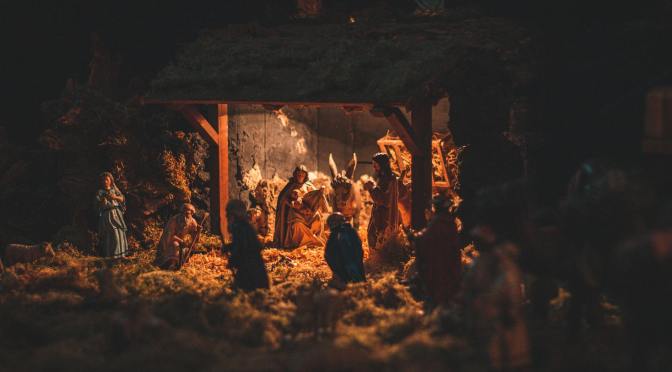
Luke describes the birth of Christ: “Joseph also went up from Galilee … unto Bethlehem to be taxed with Mary his espoused wife, being great with child. And so it was, that, while they were there, the days were accomplished that she should be delivered. And she brought forth her firstborn son, and wrapped him in swaddling clothes, and laid him in a manger; because there was no room for them in the inn” (Luke 2:4-7). Matthew described the arrival of the wise men from the East: “When they saw the star, they rejoiced with exceeding great joy. And when they were come into the house, they saw the young child with Mary his mother, and fell down, and worshipped him: and when they had opened their treasures, they presented unto him gifts; gold, and frankincense, and myrrh” (Matthew 2:10-11). Mark and John do not discuss the birth of Christ. They surely knew the details, but chose to write about other things.

The apparent contradiction between Luke and Matthew comes about from the preconceptions of the readers. There are many things “everybody knows” about the birth of Christ, which are not so. One of those Bible facts that everyone seems to “know” is that the wise men came on the night that Jesus was born. In fact, the differences between the accounts of Matthew and Luke indicate that it is highly unlikely that the wise men came on the night Christ was born, because Matthew’s account indicates that Joseph, being a good husband and father, had arranged for his family to move from the stable into a house by the time the wise men arrived. While this might have happened the night Christ was born, more than likely they were not able to move into the house for a few days, if not weeks after the birth of Christ. The fact is, Matthew does not give any details of any particular place where Christ was born, except that it was in Bethlehem, in fulfillment of the prophecy of Micah 5:2.  “For thus it is written by the prophet, and thou Bethlehem, in the land of Juda, art not the least among the princes of Juda: for out of thee shall come a Governor, that shall rule my people Israel” (Matthew 2:5-6).  

The wise men [not kings, despite “We Three Kings”] brought three gifts: gold, frankincense, and myrrh, which were all very precious. It is unlikely that just three men would have traveled this great distance to carry such a costly gift. Most people assume that there were three wise men because there were three gifts, but Matthew does not give any indication of how many wise men there were. It is important in studying the Bible to read what is there, not what we think is there! The Bible is God’s revealed Will to mankind. It is not contradictory. “For God is not the author of confusion, but of peace, as in all churches of the saints” (1 Corinthians 14:33).