WHAT IS THE DURATION OF HELL, IN LIGHT OF JUDE 7? — BOB PRICHARD

It is quite common in today’s religious world to reject the biblical teaching of the reality and duration of hell. Many claim that the old time understanding of “eternal hell fire” is out of character for a loving God, and that when this life is over, the unsaved will simply cease to exist. This is an appealing doctrine to many, because it eliminates the possibility of punishment for sin. However, Jesus said, that the wicked “shall go away into everlasting punishment” (Matthew 25:46). Paul spoke of those who do not know God, and refuse to obey Him, “who shall be punished with everlasting destruction from the presence of the Lord, and from the glory of his power” (2 Thessalonians 1:9).

Hell, the ultimate abode of the wicked, is translated from the Greek word, Gehenna. This is a different term from hades, another Greek word incorrectly rendered as hell in the King James Version. Hades is the abode of all the dead, righteous and unrighteous, before the resurrection. The literal Gehenna, from which hell is derived, was a narrow gorge near Jerusalem that represented the worst of Jewish history. Years before the Jews stained this valley with the blood of their own innocent children offered in sacrifice to the idol Baal. In Christ’s day, Gehenna was a continually burning garbage dump whose name He appropriated to describe the final abode of the wicked.

Again and again the scriptures describe hell as a place of unending punishment for the wicked. Jesus spoke of the day when His angels would gather those who do iniquity and “cast them into a furnace of fire: there shall be wailing and gnashing of teeth” (Matthew 13:42). John described hell, saying  “the smoke of their torment ascendeth up for ever and ever: and they have no rest day nor night” (Revelation 14:11). Other passages describe hell as “outer darkness” (Matthew 8:12), a “furnace of fire” (Matthew 13:42), and “eternal fire” (Jude 7).

Jude 7 speaks of Sodom and Gomorrah, the wicked cities that were “giving themselves over to fornication, and going after strange flesh, are set forth for an example, suffering the vengeance of eternal fire” (Jude 7). Some contend that since the “eternal fire” that destroyed Sodom and Gomorrah burned out, then the eternal fire of hell must do the same. The point Jude was making however, was that the wickedness of Sodom brought God’s wrath, and its destruction was so utter that the only thing to compare it with was eternal fire. Even today, the fire of Sodom is still burning in the sense that it serves as a warning to all men of the importance of obeying God.

What is the duration of hell? Jesus said that the wicked “shall go away into everlasting punishment: but the righteous into life eternal” (Matthew 25:46). Hell is just as eternal as heaven is, and in the same sense. If the fires of hell burn out, and are not eternal, then we should not expect the bliss of heaven for the righteous to be eternal. The term “eternal” literally means “always being.” Hell is eternal, and is not going to burn out. We must prepare to avoid it by obeying the gospel of Jesus Christ.

THE PRICE IS RIGHT —  BOB PRICHARD

Reginald Newman, of Kirksville, MO tried a little price change at his local Wal-Mart. After putting the price tag from a $3.17 water bottle on a $500 TV, he attempted to check out. A grand jury indicted him for attempted stealing by deceit, a charge that could get him seven years in prison and a $5,000 fine (World, May 17/24, 2008). He is paying a high price for his escapade. 

Satan changed the price tag on obeying God. “And the woman said unto the serpent, We may eat of the fruit of the trees of the garden: But of the fruit of the tree which is in the midst of the garden, God hath said, Ye shall not eat of it, neither shall ye touch it, lest ye die. And the serpent said unto the woman, Ye shall not surely die: For God doth know that in the day ye eat thereof, then your eyes shall be opened, and ye shall be as gods, knowing good and evil” (Genesis 3:2-5). Just one word, “not,” changed the price tag for mankind. 

It has been said that the best things in life are free. And there is truth in this saying. What can compare to a beautiful sunset or the hug and kiss of a precious grandchild? But most good things come at a cost. 

A great family may come at the cost of advancement in the business realm. A knowledge of the Bible may come at the cost of missing television or a day of shopping or golfing. A pure life may come at the cost of missing the latest movie or music. 

The antidote to our greatest problem came at the greatest of all costs. “Forasmuch as ye know that ye were not redeemed with corruptible things, as silver and gold, from your vain conversation received by tradition from your fathers; But with the precious blood of Christ, as of a lamb without blemish and without spot: Who verily was foreordained before the foundation of the world, but was manifest in these last times for you” (1 Peter 1:18-20). This was the right price, because God ordained it. Do we appreciate it?

WHO WERE THE WISE MEN WHO CAME TO SEE CHRIST? — BOB PRICHARD

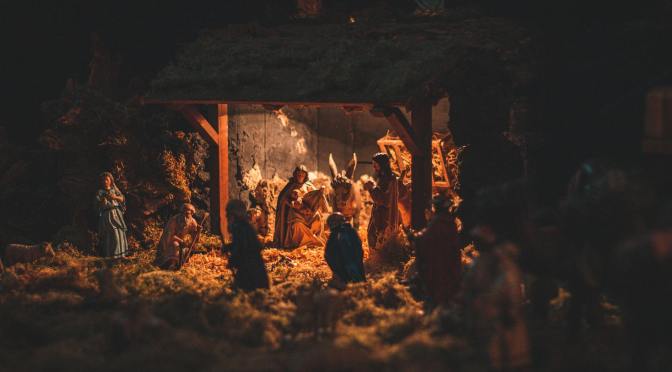
“Now when Jesus was born in Bethlehem of Judaea in the days of Herod the king, behold, there came wise men from the east to Jerusalem, Saying, Where is he that is born King of the Jews? for we have seen his star in the east, and are come to worship him” (Matthew 2:1-2). A star led these wise men, called in the original Greek text the magoi (thus often called the Magi, today). This word is rendered “sorcerer” in Acts 13:6-8, describing a false teacher named Bar-Jesus, and is rendered “astrologer” in Daniel 1-2. The general purpose of the wise men was to give advice to a king, and especially to interpret dreams and omens.

Daniel and his friends were wise men in Babylon. “Then the king commanded   to call the magicians, and the astrologers, and the sorcerers, and the Chaldeans, for to show the king his dreams. So they came and stood before the king” (Daniel 2:2). Among the wise men at any king’s court might be many magicians, astrologers and sorcerers. Astrology, the superstitious study of “signs” found in the heavenly bodies, and astronomy, the scientific study of the heavenly bodies, were linked at that time. It would appear that the wise men who came to see Christ were astronomer-astrologers, because they had observed some special star, and were aware that the star signified a special birth.

It was natural that the wise men would first go to Herod, king of Judaea, to find out what his court knew about the birth of a new king. The wise men probably served in the court of another king in the east, but likely knew little about the Jews or Herod. All that Herod’s advisers could tell him was that Micah prophesied Bethlehem to be the birthplace of the king. “And when he had gathered all the chief priests and scribes of the people together, he demanded of them where Christ should be born. And they said unto him, In Bethlehem of Judaea: for thus it is written by the prophet, And thou Bethlehem, in the land of Juda, art not the least among the princes of Juda: for out of thee shall come a Governor, that shall rule my people Israel” (Matthew 2:4-6).

The arrival of the wise men at Bethlehem was probably not at the time of Christ’s birth, as is usually thought, because He was no longer in the manger, as Luke described, but was now in a house. “When they were come into the house, they saw the young child with Mary his mother, and fell down, and worshipped him: and when they had opened their treasures, they presented unto him gifts; gold, and frankincense, and myrrh” (Matthew 2:11). Although a popular holiday song proclaims that these wise men were “three kings,” they were advisers to kings, rather than kings, and although they brought three gifts (gold, frankincense and myrrh), the Bible does not reveal how many of them there were. They might have been only two men, or many more than three.  

The reason that they were truly “wise men” is that they followed the light from God. Wise men still follow the light of God’s written word. “Thy word is a lamp unto my feet, and a light unto my path” (Psalm 119:105).

WHAT DOES “THE NIGHT COMETH WHEN NO MAN CAN WORK” MEAN? — BOB PRICHARD

As Jesus passed by, he saw a man that had been blind from birth. His disciples asked, “Master, who did sin, this man, or his parents, that he was born blind?” Their question reflected an indifference to the man’s suffering, as well as a theological misunderstanding (that it was possible for a child to sin in the womb). Jesus answered, rejecting the idea that either the man or his parents were responsible for his blindness. “Neither hath this man sinned, nor his parents: but that the works of God should be made manifest in him. I must work the works of him that sent me, while it is day: the night cometh, when no man can work. As long as I am in the world, I am the light of the world” (John 9:1-5). The words of Jesus, “the night cometh, when no man can work,” expressed the urgency He felt for His ministry.

In biblical times, people were bound to work during daylight. Artificial illumination, which allows modern man to work virtually around the clock, was very rare and expensive in the time of Christ. It was almost a proverbial statement, that daylight was the time to work. Very little could be accomplished after the sun went down. Time is always moving forward

The contrast between light and darkness is a prominent theme highlighted in John’s writings. He spoke of Jesus the incarnate Word in chapter one, saying, “In him was life; and the life was the light of men. And the light shineth in darkness; and the darkness comprehended it not” (John 1:4-5). Jesus Himself explained the necessity of working while it was day, saying, “As long as I am in the world, I am the light of the world” (John 9:5). Earlier He had announced to His detractors, “I am the light of the world: he that followeth me shall not walk in darkness, but shall have the light of life” (John 8:12). Light and life mark Christ, while darkness and death mark the world. The immediate response to the blind man was to give him sight and light.

It is significant that the words of urgency, of working while it is day, apply not only to Jesus but to His followers. The American Standard Version, based on better manuscript evidence, renders John 9:4 as “We must work the works of him that sent me, while it is day: the night cometh, when no man can work.” The “We” indicates that His followers share in the responsibility to be urgent in carrying out the will of the Father. Jesus obeys the One Who sent Him, the Heavenly Father. The followers of Christ cannot please the Father unless they are urgent in working the works of the Father, just as Jesus did. “We must” do this while it is day.

Jesus said, “This is the work of God, that ye believe on him whom he hath sent” (John 6:29). We must believe and follow Him. The writer of Hebrews spoke of the perfect obedience of Christ, and the necessity of all of His followers obeying as He did. “Though he were a Son, yet learned he obedience by the things which he suffered;  And being made perfect, he became the author of eternal salvation unto all them that obey him” (Hebrews 5:8-9).

WHAT IS GOD’S PLAN FOR THE ORGANIZATION OF THE CHURCH? — BOB PRICHARD

Jesus promised that He would build His church, saying to Peter, that “I will build my church; and the gates of hell shall not prevail against it” (Matthew 16:18). The heavenly Father “hath put all things under his feet, and gave him to be the head over all things to the church,  Which is his body, the fulness of him that filleth all in all” (Ephesians 1:22-23). Thus Christ is the Head, and the only Head of the church, which is His body. There is no room for any human authority over the church, and the only organization of the church specified in scripture is that of the local congregation. There is no biblical authority for any organization above the local congregation, such as a denomination, convention, association, diocese, or synod. These are all inventions of men.

The apostles were specifically chosen by Christ to direct the church in the beginning, and were sent forth with the promise that “when he, the Spirit of truth, is come, he will guide you into all truth” (John 16:13). That they raised the dead, healed the sick and did other miraculous works demonstrated that they were from God. Due to the special nature of their work, the apostles had no successors. There are no apostles today, nor anyone to stand in their place to speak authoritatively to the church.

The system that God established to oversee the work of the church as the apostles died out was one which allowed each congregation to be self-governed and independent. Three different kinds of leaders were mentioned: elders, deacons, and evangelists. Each congregation was to be overseen by men who are referred to in scripture as elders, bishops, pastors or overseers (all terms applying to the same leaders). The number of elders in each congregation is always plural in the New Testament. There is not even one example of an elder or pastor overseeing a congregation alone. Paul “sent to Ephesus, and called the elders of the church” (Acts 20:17). The deacons are special servants who work under the authority of the bishops, or elders. Paul addressed his Philippian letter to “the servants of Jesus Christ, to all the saints in Christ Jesus which are at Philippi, with the bishops and deacons” (Philippians 1:1). No specific number of deacons or evangelists is given in scripture. Stephen and the other servants chosen with him (Acts 6:1-6) functioned like deacons (though not specifically called deacons).

Paul’s letters to Timothy and Titus give very specific qualifications for the elders and deacons. 1 Timothy 3 gives both positive and negative qualifications for the bishops (or elders) and deacons. Paul writes, “A bishop then must be blameless, the husband of one wife, vigilant, sober, of good behaviour, given to hospitality, apt to teach; Not given to wine, no striker, not greedy of filthy lucre; but patient, not a brawler, not covetous; One that ruleth well his own house, having his children in subjection with all gravity” (1 Timothy 3:2-4). These qualifications are not optional. The qualifications begin with the admonition, “A bishop then must.” Concerning the deacons, he writes, “Likewise must the deacons be grave, not doubletongued, not given to much wine, not greedy of filthy lucre” (1 Timothy 3:8).

The primary mission of the preacher, or evangelist, is to “Preach the word; be instant in season, out of season; reprove, rebuke, exhort with all longsuffering and doctrine” (1 Timothy 4:2). Timothy was not a pastor, or bishop, but an evangelist.

There is no reason that congregations cannot be organized today just as they were in the first century, with elders overseeing the work of the church, with deacons and evangelists serving under their guidance. This is God’s pattern.