“ONE SIZE FITS ALL” — BOB PRICHARD

“Then Peter said unto them, Repent, and be baptized every one of you in the name of Jesus Christ for the remission of sins, and ye shall receive the gift of the Holy Ghost” (Acts 2:38).

Some  clothing is “one size fits all.” If we are large or small, we may question if something will really “fit all.” But Peter said repentance and baptism was for all.

At Pentecost, Jews came from around the world. They heard the disciples speak “the wonderful works of God” (Acts 2:7-11). Others were there: priests, Pharisees, Sadducees, Levites, religious people. Probably some pick-pockets and thieves took advantage of the occasion. No matter how religious or irreligious, the message that day was a “one size fits all.” Since God is “no respecter of persons” (Acts 10:34), all had the same opportunity and obligation to repent and be baptized.  God’s promise was for those people, their descendants, the Gentiles (“those afar off”), and us (Acts 2:39). None then or today could receive the remission of sins without this obedience.

All, no matter how unworthy, can receive God’s blessings because the simple gospel “fits all.”

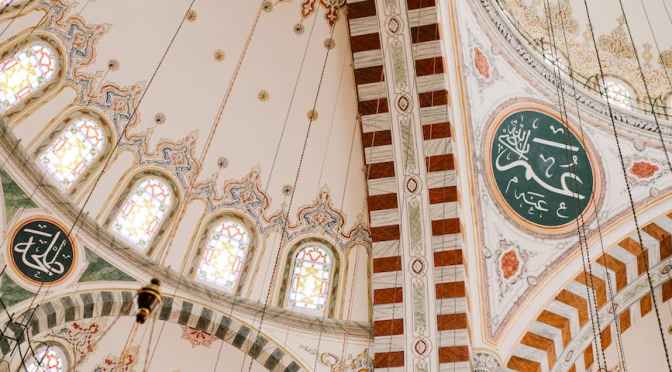
IS “ALLAH” THE GOD OF THE BIBLE? — BOB PRICHARD

Allah is the name given to the one God in the Qur’an [Koran], the holy book of Islam. When a Muslim prays, he prays to Allah. The name “Allah” is the Arabic form of a simple generic word for god found in the Semitic languages (Hebrew, Arabic, Akkadian, etc.) The biblical word is El which is found more than two hundred times in the Old Testament. It is commonly found in compound names for God, such as Elohim and El Shaddai. This is not evident in our English translations, because most of the time the words are simply translated as God or Lord. 

El Shaddai is usually translated as “God Almighty.” “I appeared unto Abraham, unto Isaac, and unto Jacob, by the name of God Almighty [El Shaddai]” (Exodus 6:3). Elohim is the most common Hebrew name for God, being found over two thousand five hundred times in the Old Testament, such as Genesis 1:1, which reads, “In the beginning God [Elohim] created the heaven and the earth.” Elohim is plural in form, but is used as a singular name with plural verbs or adjectives. “And God [Elohim] said, Let us make man in our image, after our likeness” (Genesis 1.26). This use of a singular noun with plural modifiers is sometimes called the plural of magnitude, or plural majesty, indicating the greatness of God. This is also at least a hint of the fact of the trinity. The Father is God, the Son is God, and the Holy Spirit is God. They are not three gods, but three different persons in the Godhead. As Paul said of Christ, “in him dwelleth all the fulness of the Godhead bodily” (Colossians 2:9). 

In some senses, then, Allah could be considered just another name for God. In fact, the word most often used for God in the Arabic translation of the Bible is Allah. In many ways, the story of God in the Qur’an is a retelling of the Old Testament God. In the Qur’an, Allah is the great Creator God, the God of Abraham and Ishmael (not Isaac). Allah is the God who reveals His will through His prophets. The word of the prophets is considered the very word of God. 

One striking problem with the Qur’an’s portrait of God, which shows it to be inadequate, is in what it says (and does not say) about Jesus. Jesus is mentioned some sixty-three times in the Qur’an, and is recognized as a great prophet (although Muhammad is a greater prophet). His virgin birth, and even some of His miracles (including some non-biblical miracles) are described. According to the Qur’an, however, He did not die on the cross, He is not the Son of God, He is not a member of the Godhead, and He did not sacrifice Himself for mankind. This is truly a tragedy, because Jesus said, “I am the way, the truth, and the life: no man cometh unto the Father, but by me” (John 14:6). By this He tells us that He is the only way to the Father. As Peter explained to the rulers of the Jews, it was by the authority of the name of Jesus that he and John had healed the lame man at the Beautiful gate. “This is the stone which was set at nought of you builders, which is become the head of the corner. Neither is there salvation in any other: for there is none other name under heaven given among men, whereby we must be saved” (Acts 4:11-12). “No man hath seen God at any time; the only begotten Son, which is in the bosom of the Father, he hath declared him” (John 1:18).

“ME DO IT” — BOB PRICHARD

“What? know ye not that your body is the temple of the Holy Ghost which is in you, which ye have of God, and ye are not your own?” (1 Corinthians 6:19).

Every parent of a two year old has heard the words, “me do it.” They are often the prelude to spills and messes. We want our children to learn independence, but they must also learn to be guided.

Our own spirit of independence is evident when we think of our bodies. “It’s my body. I will do with it what I want.” But once we have given our hearts to God, even our bodies belong to Him. God has invested in us, “bought with a price” (1 Corinthians 6:20), by sacrificing Christ for us and our response must be surrender of all we have and all we are.

We expect our children to grow beyond the “me do it” mentality. We too must learn the value of submission, knowing that we are not our own, but blessed with bodies that are the temple of the Holy Ghost.

WHO WILL HEAR? — BOB PRICHARD

“But the day of the Lord will come as a thief in the night; in the which the heavens shall pass away with a great noise, and the elements shall melt with fervent heat, the earth also and the works that are therein shall be burned up” (2 Peter 3:10).

In the World Trade Center rubble after 9/11, President Bush rallied the people: “I can hear you! The rest of the world hears you! And the people … who knocked these buildings down will hear all of us soon.”  

“The heavens shall pass away with a great noise.” That great noise, literally “a roar,” will come as the elements melt with fervent heat, and the earth and its works are burned up. 

Jeremiah prophesied, “At the noise of the taking of Babylon the earth is moved, and the cry is heard among the nations” (50:46). After marching quietly around Jericho, on the seventh time, “Joshua said unto the people, Shout; for the LORD hath given you the city” (Joshua 6:10), a fearful noise as the walls fell.

At the day of the Lord, those who were deaf to the will of God will hear and understand that God was serious about His commands and promises. Will we hear?

STUCK IN MY HEAD — BOB PRICHARD

A tune was stuck in my head. It was a jazzy clarinet tune.  I was racking my brain trying to figure out what it was, and where it came from, when I happened to see a Land Rover TV commercial playing the tune. I had picked up the tune without paying attention.

Without even trying, our minds scoop up what we see, hear, smell, and feel. God has created us in such a way that we can remember an event from twenty-five years ago like it happened yesterday.

Knowing it is possible for us to absorb so many things without even thinking about it, shouldn’t we be extra cautious about where we go, what we do, and what we expose our minds to? The more we fill our minds with good things, the more good things there will be to well up into our conscious or unconscious minds. We need David’s attitude: “How precious also are thy thoughts unto me, O God! how great is the sum of them!” (Psalm 139:17).

The song was “Baby Elephant Walk,” written by Henry Mancini for the 1962 movie Hatari. Listen to it, and it will probably get stuck in your head, too! Why not spend some time this week putting good things from God in your head!