Tag Archives: Wise Men

WHO WERE THE WISE MEN WHO CAME TO SEE CHRIST? — BOB PRICHARD

“Now when Jesus was born in Bethlehem of Judaea in the days of Herod the king, behold, there came wise men from the east to Jerusalem, Saying, Where is he that is born King of the Jews? for we have seen his star in the east, and are come to worship him” (Matthew 2:1-2). A star led these wise men, called in the original Greek text the magoi (thus often called the Magi, today). This word is rendered “sorcerer” in Acts 13:6-8, describing a false teacher named Bar-Jesus, and is rendered “astrologer” in Daniel 1-2. The general purpose of the wise men was to give advice to a king, and especially to interpret dreams and omens.

Daniel and his friends were wise men in Babylon. “Then the king commanded   to call the magicians, and the astrologers, and the sorcerers, and the Chaldeans, for to show the king his dreams. So they came and stood before the king” (Daniel 2:2). Among the wise men at any king’s court might be many magicians, astrologers and sorcerers. Astrology, the superstitious study of “signs” found in the heavenly bodies, and astronomy, the scientific study of the heavenly bodies, were linked at that time. It would appear that the wise men who came to see Christ were astronomer-astrologers, because they had observed some special star, and were aware that the star signified a special birth.

It was natural that the wise men would first go to Herod, king of Judaea, to find out what his court knew about the birth of a new king. The wise men probably served in the court of another king in the east, but likely knew little about the Jews or Herod. All that Herod’s advisers could tell him was that Micah prophesied Bethlehem to be the birthplace of the king. “And when he had gathered all the chief priests and scribes of the people together, he demanded of them where Christ should be born. And they said unto him, In Bethlehem of Judaea: for thus it is written by the prophet, And thou Bethlehem, in the land of Juda, art not the least among the princes of Juda: for out of thee shall come a Governor, that shall rule my people Israel” (Matthew 2:4-6).

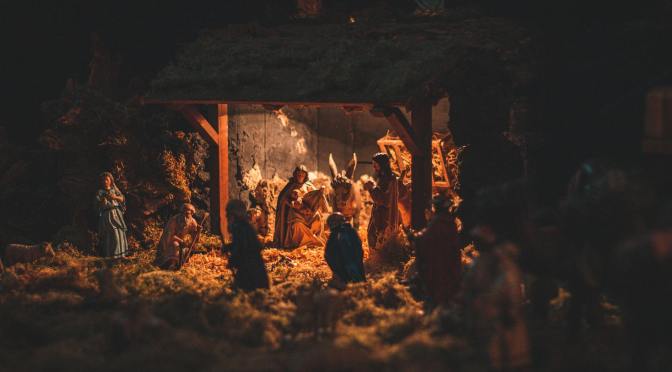
The arrival of the wise men at Bethlehem was probably not at the time of Christ’s birth, as is usually thought, because He was no longer in the manger, as Luke described, but was now in a house. “When they were come into the house, they saw the young child with Mary his mother, and fell down, and worshipped him: and when they had opened their treasures, they presented unto him gifts; gold, and frankincense, and myrrh” (Matthew 2:11). Although a popular holiday song proclaims that these wise men were “three kings,” they were advisers to kings, rather than kings, and although they brought three gifts (gold, frankincense and myrrh), the Bible does not reveal how many of them there were. They might have been only two men, or many more than three.  

The reason that they were truly “wise men” is that they followed the light from God. Wise men still follow the light of God’s written word. “Thy word is a lamp unto my feet, and a light unto my path” (Psalm 119:105).

WAS JESUS BORN IN A HOUSE, AS MATTHEW SAYS, OR IN A STABLE, AS LUKE SAYS? — BOB PRICHARD

Critics of the historical accuracy of the Bible often find what they believe are contradictions among the writers of the gospel accounts because there are some differences between accounts. Remember however, that a difference is not necessarily a contradiction. The differing accounts of Matthew and Luke concerning the Christ child are a good case in point. 

Luke describes the birth of Christ: “Joseph also went up from Galilee … unto Bethlehem to be taxed with Mary his espoused wife, being great with child. And so it was, that, while they were there, the days were accomplished that she should be delivered. And she brought forth her firstborn son, and wrapped him in swaddling clothes, and laid him in a manger; because there was no room for them in the inn” (Luke 2:4-7). Matthew described the arrival of the wise men from the East: “When they saw the star, they rejoiced with exceeding great joy. And when they were come into the house, they saw the young child with Mary his mother, and fell down, and worshipped him: and when they had opened their treasures, they presented unto him gifts; gold, and frankincense, and myrrh” (Matthew 2:10-11). Mark and John do not discuss the birth of Christ. They surely knew the details, but chose to write about other things.

The apparent contradiction between Luke and Matthew comes about from the preconceptions of the readers. There are many things “everybody knows” about the birth of Christ, which are not so. One of those Bible facts that everyone seems to “know” is that the wise men came on the night that Jesus was born. In fact, the differences between the accounts of Matthew and Luke indicate that it is highly unlikely that the wise men came on the night Christ was born, because Matthew’s account indicates that Joseph, being a good husband and father, had arranged for his family to move from the stable into a house by the time the wise men arrived. While this might have happened the night Christ was born, more than likely they were not able to move into the house for a few days, if not weeks after the birth of Christ. The fact is, Matthew does not give any details of any particular place where Christ was born, except that it was in Bethlehem, in fulfillment of the prophecy of Micah 5:2.  “For thus it is written by the prophet, and thou Bethlehem, in the land of Juda, art not the least among the princes of Juda: for out of thee shall come a Governor, that shall rule my people Israel” (Matthew 2:5-6).  

The wise men [not kings, despite “We Three Kings”] brought three gifts: gold, frankincense, and myrrh, which were all very precious. It is unlikely that just three men would have traveled this great distance to carry such a costly gift. Most people assume that there were three wise men because there were three gifts, but Matthew does not give any indication of how many wise men there were. It is important in studying the Bible to read what is there, not what we think is there! The Bible is God’s revealed Will to mankind. It is not contradictory. “For God is not the author of confusion, but of peace, as in all churches of the saints” (1 Corinthians 14:33).