Tag Archives: Trust

CAN WE TRUST THE BIBLE AS THE WORD OF GOD? — BOB PRICHARD

In an age when we have little to trust or rely upon, we may wonder if even the Bible can be trusted. There are many reasons, however, that we can trust the Bible as the word of God. First of all, we can trust the Bible because we trust God and it is God’s book, revealed to mankind, and in perfect harmony with His nature and character. “God is not a man, that he should lie” (Numbers 23:19). Just as Jesus Christ, He is “the same yesterday, and to day, and for ever” (Hebrews 13:8). What God has produced is true, perfect, and without change, in keeping with His character.

A second reason to trust the Bible is that we know it is inspired by God. Paul wrote to Timothy, “All scripture is given by inspiration of God, and is profitable for doctrine, for reproof, for correction, for instruction in righteousness” (2 Timothy 3:16). Speaking of the inspired Bible writers, Peter said, “For the prophecy came not in old time by the will of man: but holy men of God spake as they were moved by the Holy Ghost” (2 Peter 1:21). The message of the biblical writers was not their own message, but the message of the will of God. Since the Bible is God’s inspired book, it is without error and absolutely trustworthy.

A third great reason we should trust the Bible is the vast number of New Testament manuscripts that have been discovered. More than 24,000 manuscripts or parts of manuscripts have been discovered, dating all the way back to the first century. The Dead Sea scrolls, discovered in 1947, included manuscripts of Old Testament books  dating from at least one hundred to one hundred and fifty years before Christ. As scholars began to study the scrolls, they sought to see how much the text of the Bible had changed over the centuries. What they found was that the ancient manuscripts were virtually identical to manuscripts of a thousand years later. Through the careful work of the copyists and the providence of God, the inspired text has been preserved over the centuries.

A fourth great reason to trust the Bible is the truly amazing fulfillment of prophecy within biblical history. This demonstrates clearly that God controlled the writing of the book.  The prophecies fulfilled in the life of Christ alone are enough to show the Bible to be the word of God. The Old Testament prophesied that the Messiah would be born in Bethlehem (Micah 5:2), would be sold for thirty pieces of silver (Zechariah 11:12-13), would be crucified with criminals (Isaiah 53:12), would be buried in a rich man’s tomb (Isaiah 53:9), and these are just a few examples of the many other events in the life of Christ which were prophesied. This would not have been possible if the Bible had not been inspired by God.

Since the Bible is trustworthy in these areas, we can know that is is trustworthy in other areas as well. The Bible is the one book that men can trust today. Any apparent contradictions come from our misunderstanding, not from actual problems within the Bible itself, “For God is not the author of confusion, but of peace, as in all churches of the saints” (1 Corinthians 14:33).


NO RAINBOWS AT NOON — BOB PRICHARD

Rainbows are caused by the refraction (bending) of light through raindrops. The water droplets divide light into the seven basic colors of red, orange, yellow, green, blue, indigo and violet, but actually many other minor colors as well. Primary rainbows appear between 40 and 42 degrees above the horizon, with the center of the ark directly opposite the sun. Because of this, you cannot see a rainbow at noon, when the sun is directly overhead (David S. Kidder and Noah D. Oppenheim, The Intellectual Devotional, 2006, p. 235).

I cannot verify that I have never observed a rainbow at noon, but I have observed that the rainbows in my life don’t come in the noonday hours of good times. God gave the rainbow as a token of His covenant after the flood, promising that he would not again destroy the earth by a flood. “And God said, This is the token of the covenant which I make between me and you and every living creature that is with you, for perpetual generations: I do set my bow in the cloud, and it shall be for a token of a covenant between me and the earth” (Genesis 9:12–13).

The Lord says, “Come unto me, all ye that labour and are heavy laden, and I will give you rest. Take my yoke upon you, and learn of me; for I am meek and lowly in heart: and ye shall find rest unto your souls. For my yoke is easy, and my burden is light” (Matthew 11:28–30). The yoke he offers is to be yoked with Him. His yoke is easy because He pulls the extra weight in our lives. In the midst of the storm, this is often hard to see. But when the storm passes, new rainbows of joy and comfort come into our lives.

I can trust the future because I have experienced His loving care through the storms of life. “Yea, though I walk through the valley of the shadow of death, I will fear no evil,” because I know the Good Shepherd is with me, and that with His rod and staff He will comfort me (Psalm 23:4). The rainbows come—but only after the storm. “Jesus loves me this I know.”

TIME OUT! — BOB PRICHARD

My then three year-old grandson spent the weekend with his dad at a law school competition in Birmingham. He enjoyed being with his daddy on the trip, but there was quite a bit of time just sitting and waiting for the team to complete various competitions. At one point, after they had been sitting on a bench waiting for a long time, he turned to his dad and asked, “Daddy, How long do we have to stay in ‘time out’?”

Have you been in time out recently? What do we do when we are in “time out,” waiting for God to do what we need Him to do?

“Hast thou not known? hast thou not heard, that the everlasting God, the LORD, the Creator of the ends of the earth, fainteth not, neither is weary? there is no searching of his understanding. He giveth power to the faint; and to them that have no might he increaseth strength. Even the youths shall faint and be weary, and the young men shall utterly fall: But they that wait upon the LORD shall renew their strength; they shall mount up with wings as eagles; they shall run, and not be weary; and they shall walk, and not faint” (Isaiah 40:28-31).

Have you ever watched an eagle fly? As it soars in the sky, it seems that its flight is effortless. Using its strong wings, it knows how to soar as it is lifted by the wind currents.

I haven’t reached that point yet when I can soar while I wait, but I know that God has promised me that when I fully trust in Him. What seems like a child’s “time out,” may just be a time when the Lord is preparing me for greater service, or He may be offering me a test that will make me the patient Christian that I need to be. Normally I want my patience RIGHT NOW, but that is not always God’s way. His way is to trust Him RIGHT NOW, and know that He will work things in His own way, because “we know that all things work together for good to them that love God, to them who are the called according to his purpose” (Romans 8:28).

HOW STRONG IS YOUR ROPE? — BOB PRICHARD

In his book, A Grief Observed, C. S. Lewis said, “You never know how much you really believe until its truth or falsehood becomes a matter of life and death. It is easy to say you believe a rope to be strong as long as you are merely using it to cord a box. But suppose you had to hang by that rope over a precipice. Wouldn’t you then first discover how much you really trusted it?”

Consider three questions: What kind of faith do you have in God and His word? Has your faith been tested yet? Have you been in that situation where it is a matter of life and death, hanging over that precipice? If your faith has not yet been tested, you can be sure that the time is coming when it will be tested. 

James said, “Even so faith, if it hath not works, is dead, being alone. Yea, a man may say, Thou hast faith, and I have works: show me thy faith without thy works, and I will show thee my faith by my works. Thou believest that there is one God; thou doest well: the devils also believe, and tremble. But wilt thou know, O vain man, that faith without works is dead?” (James 2:17-20). 

Is your faith dead or alive? “Was not Abraham our father justified by works, when he had offered Isaac his son upon the altar? Seest thou how faith wrought with his works, and by works was faith made perfect? And the scripture was fulfilled which saith, Abraham believed God, and it was imputed unto him for righteousness: and he was called the Friend of God. Ye see then how that by works a man is justified, and not by faith only” (James 2:21-24). Abraham was ready. His rope held, even to the point of sacrificing Isaac. How strong is your rope? Will it hold? If not, now is the time to strengthen it!

MATHEW OR MATTHEW? — BOB PRICHARD

“Spell checkers” are one of the great inventions of our day. Even though I am a good speller, I am sometimes a careless typist. The “spell checker” is great for catching those transposed letters that come too often from trying to type too fast. 

I just recently made a discovery about my spell-checker, though. It is not always right. Not only will it not flag correctly spelled words which are not the words I meant, it also doesn’t catch some variants of words that I expected it to catch. It seems that I have had a problem lately in my lessons by typing Mathew when I meant Matthew. (Just one “t” missing, but it makes a difference). It seems that my software is just fine with spelling it “Mathew” instead of “Matthew.” I have relied on the “spell checker” to proofread for me, but will have to be more careful in the future, knowing that it may not catch the misspelled Matthew.

This little insight reminds me that we must be careful what or whom we trust. Not everything you read on the internet is correct or reliable. It is not uncommon for us to look to some great preacher of the past or present for wisdom or judgment. There is nothing wrong with this, but whoever it is, we need to be sure that we use our reasoning abilities and we truly search the scriptures. We may too easily accept some things because of who teaches them, but even the best of us are sometimes wrong.

  Luke commends the Christians of Berea: “These were more noble than those in Thessalonica, in that they received the word with all readiness of mind, and searched the scriptures daily, whether those things were so” (Acts 17:11). The Bereans were searching the scriptures daily to consider if what they were being taught by men like Paul and Silas was correct. If it is necessary to check up on Paul, it is also necessary to check up on our present day preachers and teachers, even including Bob Prichard. And it is also necessary to check on ourselves. Do we believe what we believe because we have really searched the scriptures, or have we just accepted what was taught? And letting someone else proofread certainly won’t hurt!

THE BOYS IN THE BOAT — BOB PRICHARD

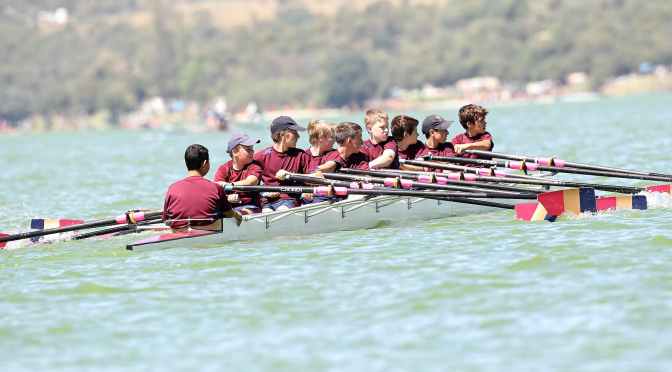
The Boys in the Boat, by Daniel James Brown (Penguin, 2013) is the inspiring story of the University of Washington eight man crew team that won the Olympic gold medal at Berlin in 1936. Crew is the ultimate team sport. With a coxswain calling or beating time, the boat only moves swiftly and smoothly if the eight rowers work in perfect unison. The rowers were all of of different sizes, strengths, and temperaments, but they learned to dip their oars in the water and pull the boat forward as one man, in perfect precision, and were able to bring home the gold medal.

This working in unison is what God plans for His church. In 1 Corinthians 12, Paul compares the church, the body of Christ, to the human body, stressing each member of the body must do its part to build up the whole body. “For by one Spirit are we all baptized into one body, whether we be Jews or Gentiles, whether we be bond or free; and have been all made to drink into one Spirit. For the body is not one member, but many.” Just as every member of our physical bodies, from foot and eye to inner organs, is important, so is each member of the spiritual body, the church. “That there should be no schism in the body; but that the members should have the same care one for another. And whether one member suffer, all the members suffer with it; or one member be honoured, all the members rejoice with it. Now ye are the body of Christ, and members in particular” (1 Corinthians 12:13-14, 25-27).

A unique challenge of six-man crew is that only the coxswain, guiding the rowers, can see the finish line. The rowers, the “boys in the boat” must trust him to guide and control them, never knowing for sure how close they are to the finish line. We understand that the “heavenly finish line” awaits us, but we cannot see it, and we never know exactly how close we are to reaching it. That is why, as we “run with patience the race set before us,” we look unto “Jesus the author and finisher of our faith; who for the joy that was set before him endured the cross, despising the shame, and is set down at the right hand of the throne of God” (Hebrews 12:1-2). He has prepared the way, and He will guide us to the finish line. And the ride is so much smoother when we listen to His counsel and row as one man.