Category Archives: Blog

CAN WE BE ONE? — BOB PRICHARD

As Jesus was preparing to face the cross, He went to the Garden of Gethsemane to pray fervently for the disciples, knowing that they would face difficulty in sharing His message of peace and love with the world. Having prayed for the disciples, he also prayed for Christians down through the ages:  Neither pray I for these alone, but for them also which shall believe on me through their word; That they all may be one; as thou, Father, art in me, and I in thee, that they also may be one in us: that the world may believe that thou hast sent me” (John 17:20-21). His prayer was that all who would believe in Him through the word of the apostles would have the same unity that He experienced with the Father. Sadly, men seek disunity and division, ignoring Christ’s prayer. The consequence of this is that many have rejected the gospel of Christ because of the divisions they see within “Christendom.”

In Paul’s day there was “one body, and one Spirit, even as ye are called in one hope of your calling; one Lord, one faith, one baptism, one God and Father of all” (Ephesians 4:4-6). Yet men today claim there are many bodies and many faiths. Most claim to be what might be called “hyphenated Christians.” A person who is a “denominational-Christian” is subject to the creeds, handbooks and bylaws of his denomination. Why not give up the denominational names and creeds? Why not just be Christians, not members of any denomination? 

Lasting unity among the followers of Christ can come only one way⎯by going back to the  Bible and  throwing out the creeds, manuals, and man-made traditions. Paul wrote to a very divided congregation at Corinth, pleading with them to have real Christian unity. “Now I beseech you, brethren, by the name of our Lord Jesus Christ, that ye all speak the same thing, and that there be no divisions among you; but that ye be perfectly joined together in the same mind and in the same judgment” (1 Corinthians 1:10). They could only find unity by being “perfectly joined together in the same mind and in the same judgment.”  Christians can have this unity of mind and judgmentonly by uniting in the teaching of the Bible, the Word of God. Creeds and handbooks can never bring unity.

Sometimes there are unity or “ecumenical” movements among the churches, and some good may be accomplished by these groups banding together for a common cause. There is usually agreement however, that doctrine will be forgotten or overlooked, or else how can one group that teaches baptism is immersion get along with another group that teaches baptism is sprinkling, etc.? Is this really being joined together in the same mind and in the same judgment? If they will not agree on the Bible, how can God’s people agree on anything?  

The Bible is not a dead letter from two thousand years ago. It is “quick, and powerful, and sharper than any twoedged sword, piercing even to the dividing asunder of soul and spirit, and of the joints and marrow, and is a discerner of the thoughts and intents of the heart” (Hebrews 4:12). The Bible, and the Bible alone must be followed for unity today.

HOW CAN GOD HAVE ALWAYS EXISTED? — BOB PRICHARD

When God called Moses to lead the Israelites out of Egyptian bondage, Moses was afraid.  “And Moses said unto God, Behold, when I come unto the children of Israel, and shall say unto them, The God of your fathers hath sent me unto you; and they shall say to me, What is his name? what shall I say unto them? And God said unto Moses, I AM THAT I AM: and he said, Thus shalt thou say unto the children of Israel, I AM hath sent me unto you” (Exodus 3:13-14). God called Himself “I AM,” indicating His eternal existence. This name implies that God always has been, and always will be. Moses recognized the eternal nature of God in Psalm 90:2: “Before the mountains were brought forth, or ever thou hadst formed the earth and the world, even from everlasting to everlasting, thou art God.”  

Perhaps the greatest difficulty hindering finite man from understanding the eternality of God is that man is a time-bound creature. We are born, we live, and we die. We live exclusively in the duration of time. But God is outside time, and not bound by time at all. Job’s “friend” Elihu said, “Behold, God is great, and we know him not, neither can the number of his years be searched out” (Job 36:26). The scriptures declare God’s eternality. “I am Alpha and Omega, the beginning and the ending, saith the Lord, which is, and which was, and which is to come, the Almighty” (Revelation 1:8).  Peter understood that God is not bound by time.  “Beloved, be not ignorant of this one thing, that one day is with the Lord as a thousand years, and a thousand years as one day” (2 Peter 3:8). Peter was not giving a mathematical formula that one day equals a thousand years, but he was indicating that God stands above time, and sees it all as present.

“The heavens declare the glory of God; and the firmament showeth his handiwork” (Psalm 19:1). The fact that there is a creation demands that there be a Creator!  The Bible begins with the words, “In the beginning God created the heaven and the earth” (Genesis 1:1). He is the Creator. Was He created? If God was created, then there would have to be a greater God Who created God. What greater God would then create that God? Obviously there must be a great “uncaused Cause.” In other words, God is eternal and has always existed, because there is no greater God that could have created Him. The universe is not eternal. Even non-theological theories such as the “big bang” suggest that the universe had a beginning. The scientific evidence suggests that the universe is wearing out, as the third law of thermodynamics demands. Since the universe clearly had a beginning, it had to have someone or something greater than it to begin it. The Bible tells us that the self-existent God created the universe, and revealed Himself to man in Jesus Christ. Christ identified Himself as eternal when he said, “Verily, verily, I say unto you, Before Abraham was, I am” (John 8:58). God “hath in these last days spoken unto us by his Son, whom he hath appointed heir of all things, by whom also he made the worlds” (Hebrews 1:20).

ONE ARK, ONE CHURCH — BOB PRICHARD

God “spared not the old world, but saved Noah the eighth person, a preacher of righteousness, bringing in the flood upon the world of the ungodly” (2 Peter 2:5).

THERE WAS ONLY ONE ARK.

Noah did not build arks. He built one ark. Jesus built one church. “There is one body, and one Spirit, even as ye are called in one hope of your calling” (Ephesians 4:4). God “hath put all things under his feet, and gave him to be the head over all things to the church, Which is his body, the fulness of him that filleth all in all” (Ephesians 1:22-23).

THERE WAS ONLY ONE PATTERN FOR THE ARK.

“Make thee an ark of gopher wood” (Genesis 6:14-16). “Thus did Noah; according to all that God commanded him, so did he” (Genesis 6:22). We must do all God commands us to do concerning the pattern of the church, found in the New Testament (Romans 6:17).

THERE WAS ONLY ONE LIGHT SOURCE.

“A window shalt thou make to the ark” (Genesis 6:16). Our light today is the light of God’s word which reveals His Son, the light of the world. “Thy word is a lamp unto my feet, and a light unto my path” (Psalm 119:105). “In him was life; and the life was the light of men” (John 1:4). “I am the light of the world” (John 8:12).  

THERE WAS ONLY ONE FAMILY IN THE ARK.

“While the ark was a-preparing, wherein few, that is, eight souls were saved by water” (1 Peter 3:20). “Now therefore ye are no more strangers and foreigners, but fellowcitizens with the saints, and of the household of God” (Ephesians 2:19).

THERE WAS ONLY ONE WAY INTO THE ARK.

“The door of the ark shalt thou set in the side thereof; with lower, second, and third stories shalt thou make it” (Genesis 6:16). “I am the door: by me if any man enter in, he shall be saved, and shall go in and out, and find pasture” (John 10:9). “Jesus answered and said unto him, Verily, verily, I say unto thee, Except a man be born again, he cannot see the kingdom of God. … Verily, verily, I say unto thee, Except a man be born of water and of the Spirit, he cannot enter into the kingdom of God” (John 3:3, 5).

THE ARK SHOWS GOD KEEPS HIS PROMISES.

“And God said, This is the token of the covenant which I make between me and you and every living creature that is with you, for perpetual generations: I do set my bow in the cloud, and it shall be for a token of a covenant between me and the earth” (Genesis 9:12-13). 

“Then Peter said unto them, Repent, and be baptized every one of you in the name of Jesus Christ for the remission of sins, and ye shall receive the gift of the Holy Ghost. For the promise is unto you, and to your children, and to all that are afar off, even as many as the Lord our God shall call” (Acts 2:38-39).

THERE WAS ONLY ONE DANGER!

The danger was being outside! Sin separates us from God (Isaiah 59:1-2). “But as the days of Noe were, so shall also the coming of the Son of man be. For as in the days that were before the flood they were eating and drinking, marrying and giving in marriage, until the day that Noe entered into the ark,  And knew not until the flood came, and took them all away; so shall also the coming of the Son of man be” (Matthew 24:37-39). We must be in the ark [the church], and remain there for safety!

(Adapted from Jack McNiel)

BEAUTIFUL HARMONY — BOB PRICHARD

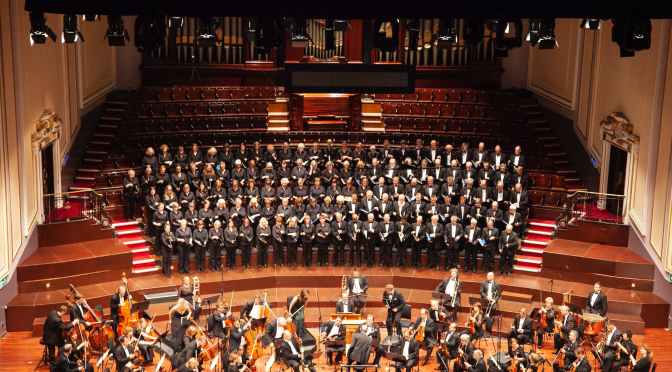
What cooperation! What unity! What harmony! I wish I was describing a congregation of God’s people, but instead, it was the Prague Symphony Orchestra. They performed in the  Knox Concert Series, and I had the chance to hear and see this great orchestra up close. The experience of hearing the orchestra reminded me anew about the importance of unity and cooperation.

The Prague Symphony Orchestra was composed of some 89 musicians, as well as a conductor, stage crew, etc. Almost a third of the musicians were violinists. It was interesting to see all of those bows moving in unison. Their skill was evident. This great skill means they used their God-given talents, and practiced endless hours. George Eliot said, “‘Tis God gives skill, But not without men’s hands: He could not make Antonio Stradivari’s violins without Antonio.” I wonder what we might accomplish in the Lord’s church if we were as diligent in honing our God-given talents and skills to be used in His service in the same way these musicians did.

All of the musicians were playing the same piece of music, and were “on the same page.” They were playing as individuals, under the direction of the conductor. As we follow Christ and scripture, we also work in unity and harmony.

From my vantage point in the concert, I could observe some of the musicians better than others. I was especially interested in the gentleman who played the tambourine during the first piece, Dvorak’s “Carnival Overture.” I never knew that anyone could be so enthusiastic playing the tambourine! It would seem this would not take as much skill as playing a violin, or a cello, or an oboe. Yet he played it with amazing energy and vigor, adding to the overall beauty of the piece, providing just the right accent needed. In the Lord’s work, there are often “parts” which seem minor─preparing the communion, counting the attendance, turning on the heat, etc., but think what a difference it makes when some of those “minor” jobs aren’t done as they should be.

As Paul reminded the Corinthians, “For the body is not one member, but many. If the foot shall say, Because I am not the hand, I am not of the body; is it therefore not of the body? And if the ear shall say, Because I am not the eye, I am not of the body; is it therefore not of the body? If the whole body were an eye, where were the hearing? If the whole were hearing, where were the smelling? But now hath God set the members every one of them in the body, as it hath pleased him. And if they were all one member, where were the body? But now are they many members, yet but one body” (1 Corinthians 12:14-20). We all have something to contribute to the Lord’s work, and we need everyone!

“Behold, how good and how pleasant it is for brethren to dwell together in unity!” (Psalm 133:1).

ASTRONOMY IN PERSPECTIVE — BOB PRICHARD

An astronomer once remarked to Fulton J. Sheen: “To an astronomer, man is nothing but an infinitesimal dot in an infinite universe.” “An interesting point of view,” Sheen responded, “but you seem to forget that your infinitesimal dot of a man is still the astronomer.”

David reminds us of what man the astronomer sees when he looks into the skies. “The heavens declare the glory of God; and the firmament showeth his handiwork. Day unto day uttereth speech, and night unto night showeth knowledge. There is no speech nor language, where their voice is not heard. Their line is gone out through all the earth, and their words to the end of the world” (Psalm 19:1-4).

In view of God’s majesty, David marveled that the Creator of the universe would have so much concern for man. “When I consider thy heavens, the work of thy fingers, the moon and the stars, which thou hast ordained; What is man, that thou art mindful of him? and the son of man, that thou visitest him? For thou hast made him a little lower than the angels, and hast crowned him with glory and honour. Thou madest him to have dominion over the works of thy hands; thou hast put all things under his feet” (Psalm 8:3-6).

Isn’t it mind boggling to realize that God has not only entrusted man with a world to care for, but also sacrificed His Son for the sins of mankind? “For when we were yet without strength, in due time Christ died for the ungodly. For scarcely for a righteous man will one die: yet peradventure for a good man some would even dare to die. But God commendeth his love toward us, in that, while we were yet sinners, Christ died for us. Much more then, being now justified by his blood, we shall be saved from wrath through him. For if, when we were enemies, we were reconciled to God by the death of his Son, much more, being reconciled, we shall be saved by his life” (Romans 5:6-11).

HOW STRONG IS YOUR ROPE? — BOB PRICHARD

In his book, A Grief Observed, C. S. Lewis said, “You never know how much you really believe until its truth or falsehood becomes a matter of life and death. It is easy to say you believe a rope to be strong as long as you are merely using it to cord a box. But suppose you had to hang by that rope over a precipice. Wouldn’t you then first discover how much you really trusted it?”

Consider three questions: What kind of faith do you have in God and His word? Has your faith been tested yet? Have you been in that situation where it is a matter of life and death, hanging over that precipice? If your faith has not yet been tested, you can be sure that the time is coming when it will be tested. 

James said, “Even so faith, if it hath not works, is dead, being alone. Yea, a man may say, Thou hast faith, and I have works: show me thy faith without thy works, and I will show thee my faith by my works. Thou believest that there is one God; thou doest well: the devils also believe, and tremble. But wilt thou know, O vain man, that faith without works is dead?” (James 2:17-20). 

Is your faith dead or alive? “Was not Abraham our father justified by works, when he had offered Isaac his son upon the altar? Seest thou how faith wrought with his works, and by works was faith made perfect? And the scripture was fulfilled which saith, Abraham believed God, and it was imputed unto him for righteousness: and he was called the Friend of God. Ye see then how that by works a man is justified, and not by faith only” (James 2:21-24). Abraham was ready. His rope held, even to the point of sacrificing Isaac. How strong is your rope? Will it hold? If not, now is the time to strengthen it!

WHO WILL HEAR? — BOB PRICHARD

“But the day of the Lord will come as a thief in the night; in the which the heavens shall pass away with a great noise, and the elements shall melt with fervent heat, the earth also and the works that are therein shall be burned up” (2 Peter 3:10).

In the World Trade Center rubble after 9/11, President Bush rallied the people: “I can hear you! The rest of the world hears you! And the people … who knocked these buildings down will hear all of us soon.”  

“The heavens shall pass away with a great noise.” That great noise, literally “a roar,” will come as the elements melt with fervent heat, and the earth and its works are burned up. 

Jeremiah prophesied, “At the noise of the taking of Babylon the earth is moved, and the cry is heard among the nations” (50:46). After marching quietly around Jericho, on the seventh time, “Joshua said unto the people, Shout; for the LORD hath given you the city” (Joshua 6:10), a fearful noise as the walls fell.

At the day of the Lord, those who were deaf to the will of God will hear and understand that God was serious about His commands and promises. Will we hear?

THE PRIESTHOOD OF ALL BELIEVERS — BOB PRICHARD

The Old Testament gave elaborate ceremonies for the ordination of priests, but the New Testament contains none. There is no New Testament ordination ceremony because the New Testament teaches the priesthood of all believers. Speaking to Christians (not clergy), Peter wrote, “Ye also, as lively stones, are built up a spiritual house, an holy priesthood, to offer up spiritual sacrifices, acceptable to God by Jesus Christ” (1 Peter 2:5). He adds, “Ye are a chosen generation, a royal priesthood, an holy nation, a peculiar people; that ye should show forth the praises of him who hath called you out of darkness into his marvellous light” (1 Peter 2:9).

Under the Old Covenant, the priest interceded between God and man, and offered the necessary sacrifices to God. Christians, “lively [living] stones,” are “an holy priesthood, to offer up spiritual sacrifices.” Paul speaks of our sacrifices: “I beseech you therefore, brethren, by the mercies of God, that ye present your bodies a living sacrifice, holy, acceptable unto God, which is your reasonable service” (Romans 12:1). God condemned King Saul for taking it upon himself to offer unauthorized sacrifices (1 Samuel 13:12-13; 15:22), so the priesthood of all believers is a significant change.

The emphasis of the New Testament is that every individual member of the church is important. “For as we have many members in one body and all members have not the same office: So we, being many, are one body in Christ, and every one members one of another” (Romans 12:4-5). As individual members of the body of Christ, all Christians, as a “royal priesthood,” and a “holy priesthood,” have a ministry to the world. There is no need for any other earthly priesthood to intercede for us with God. We all may approach God directly through prayer. At the same time, each member of this “holy priesthood” has a responsibility to seek out opportunities to minister, living a life of purity before the world.

CONTEXT — BOB PRICHARD

Webster defines it this way: con•text \ n [ME, weaving together of words, fr. L contextus connection of words] 1: the parts of a discourse that surround a word or passage and can throw light upon its meaning 2: MILIEU, ENVIRONMENT.

One of the most important elements to consider in hermeneutics [a fancy word for Bible interpretation] is context. The context often makes all the difference between understanding and misunderstanding a passage. The Bible has been divided into chapters and verses for our convenience. Without these divisions, it would be much harder to find things in the Bible. It also causes many problems, though, because the chapter and verse divisions tend to make us ignore context. We tend to think that the verse or chapter stands alone, which is almost always not correct.

Our communication is based on letters, words, sentences, paragraphs, etc. Many Bible verses are simply parts of longer sentences, and thus cannot be properly understood without considering the rest of the sentence. Further, a sentence often cannot be understood without considering the paragraph in which it is found. Beyond this, a paragraph often cannot be understood without considering the surrounding chapters, the whole book, or the entire Bible. All of this is context.

Consider this example of stringing together individual Bible passages without consideration of context:

“Then Judas, which had betrayed him … cast down the pieces of silver in the temple, and departed, and went and hanged himself” (Matthew 27:3-5). “And as ye would that men should do to you, do ye also to them likewise” (Luke 6:31). “And after the sop Satan entered into him. Then said Jesus unto him, That thou doest, do quickly” (John 13:27).

Consideration of the context is so important, because without it, we run the risk of making the Bible say what we want it to say. Instead, we need to let the Bible speak, and learn what it really says, not just what we want or expect it to say. “Then said Jesus to those Jews which believed on him, If ye continue in my word, then are ye my disciples indeed; And ye shall know the truth, and the truth shall make you free” (John 8:31-32). Context would tell us that it is not just any truth that makes us free, but the truth of God’s Word. And if we love truth as we should, we will make sure that we consider context.

THE POWER OF A COMMA — BOB PRICHARD

In her best-selling book about punctuation, Eats, Shoots & Leaves: The Zero Tolerance Approach to Punctuation,  Lynn Truss made a striking point concerning the way punctuation can change a sentence (New York: Gotham Books, 2004, p. 74). She cites Luke 23:43 as an example. The King James Version renders the verse, “And Jesus said unto him, Verily I say unto thee, Today shalt thou be with me in paradise.” Thus Jesus promised the repentant “thief on the cross” that they would be together in paradise that day. 

As Truss points out, however, the preferred Roman Catholic rendering of the verse is “Verily I say unto thee this day, Thou shalt be with me in paradise.” Notice the subtle change by moving the comma. While the KJV gives the understanding that Jesus and the thief would be together in paradise that very day, the sense of the Catholic rendering is that while Jesus and the thief would be together in paradise at some point, the time is unspecified. 

Why does this comma make any difference? The reason the placement of the comma matters is the Catholic doctrine of purgatory, defined as a place intermediate between heaven and earth, where the dead who have not done sufficient penance in life may endure suffering for a certain period of time to satisfy the demands of justice left from life. Under current teaching about purgatory, the righteous on earth can pray, burn candles, and do works of penance to help those in purgatory make that last step from temporary suffering to heaven. 

The choice of where to put the comma in Luke 23:43 is one that the translators have made, since the original autographs of the Greek do not contain commas. (Biblical Hebrew does not even have vowels!) Wherever we place the comma, however, there is no mention in the Bible of purgatory. Two false doctrines—original sin and salvation through meritorious works, made the idea of purgatory necessary. Let us be sure that we do not read into the text those things which are not there!

HOW MANY TIMES? — BOB PRICHARD

Researchers have settled that pressing question we have all been asking: “How many licks does it take to get to the middle of a Tootsie Pop (or Tootsie Roll Pop)?” Doctoral students at NYU determined it takes about 2,500 licks, as revealed in an article in the Journal of Fluid Dynamics, “Shape dynamics and scaling laws for a body dissolving in fluid flow” (World, March 7, 2015, p. 23). I don’t know how they did their research, but it was probably more fun for the lickers than for the lick counters!

I suspect everyone was counting when Naaman went down into the Jordan. His story is found in 2 Kings 5. Naaman was a great man, captain of the host of the king of Syria, a mighty man of valor, “but he was a leper” (2 Kings 5:1). Learning that the prophet in Samaria could recover him of his leprosy, he got the king’s approval and took ten talents of silver and six thousand pieces of gold to buy his healing from the king of Israel. The king could do nothing, but Elisha had a simple, though seemingly ridiculous command: “Go and wash in Jordan seven times, and thy flesh shall come again to thee, and thou shalt be clean” (10). 

 Seven is a number of perfection in scripture. Genesis tells us of a seven day creation. There are seven signs in the gospel of John, seven letters to churches in Revelation 2-3, seven trumpets, seven seals, seven beatitudes, etc. in Revelation. Israel marched around Jericho for six days, and then seven times on the seventh day. 

The issue for Naaman, though was not the number seven as such, but the necessity of doing exactly what he was told. Dipping seven times in the Abana or Pharpar of Damascus (12) would have better suited him, but it would not have been obedience to the command.

Naaman was angry at receiving such a ridiculous command, expecting Elisha to put on a big show of power, but his servants reasoned with him that he would have done some great thing if asked. “How much rather then, when he saith to thee, Wash, and be clean?” (13). Did it really make any difference how many times he washed in Jordan? Would it have been enough to wash five or six times? Of course not. “Then went he down, and dipped himself seven times in Jordan, according to the saying of the man of God: and his flesh came again like unto the flesh of a little child, and he was clean” (14). The Lord said,  “If ye love me, keep my commandments” (John 14:15). There is no other choice.

Peter commanded the multitude on the day of Pentecost, “Repent, and be baptized every one of you in the name of Jesus Christ for the remission of sins, and ye shall receive the gift of the Holy Ghost” (Acts 2:38). How many were included in “every one of you”? We don’t know, but “they that gladly received his word were baptized: and the same day there were added unto them about three thousand souls” (Acts 2:41). There must have been many who did not “gladly receive the word,” and did not obey. If Naaman had been there, he would have obeyed. How about you?

MORE THAN A CRACKER — JOSH ALLEN

One Sunday, during the Lord’s Supper, the plate of unleavened bread was being passed down our pew when my then 3-year-old son loudly announced, “Dad, I want some!” Now, this was nothing new. He had been doing it for almost as long as he had been able to speak. But that day, my usual response of, “Son, this is just for Christians”, did not suffice. He fixed me with a very knowing and confident look for a toddler and declared, “Dad, I know it is just a cracker!”

Even though I later tried to explain these things to my little boy, he continued to believe we were trying to trick him and keep this little snack for ourselves. My son, in his innocence, could not grasp that the cup and the cracker represented something far more. He is not the only one who has struggled with this distinction. Adults can also lose sight of what the wafer and the cup signify.

It is not just a cracker, it is an emblem. While the bread and fruit of the vine do not become the body and blood of our Lord, as some falsely teach, we must never look at them as “common” things (Hebrews 10:29). They serve as powerful symbols that call to mind the death of the Lord. 

Christians partake of these emblems with these words in mind “this do in remembrance of Me” (Luke 22:19). “With just a morsel of bread and a few drops of grape juice, we draw our hearts back to Him who died for us.” (Christopher Stinnett). The Corinthian church once lost sight of this purpose and made a mockery of this act of worship. They failed to observe it as a memorial but instead turned it into a common feast, thus earning the Apostle’s rebuke, “For he who eats and drinks in an unworthy manner eats and drinks judgment to himself, not discerning the Lord’s body.” (1 Corinthians 11:29).

It is not just a cracker, it is an examination. Paul taught, “…whoever eats this bread or drinks this cup of the Lord in an unworthy manner will be guilty of the body and blood of the Lord. But let a man examine himself, and so let him eat of the bread and drink of the cup” (1 Corinthians 11:27-29). The Lord designed it to be a time, at the beginning of every week (Acts 20:7), for one to examine his or her life in relation to the Cross (James 4:8).  

It is not just a cracker, it is communion (1 Corinthians 10:16). Communion means fellowship or joint participation. Jesus indeed promised, “I will not drink of this fruit of the vine from now on until that day when I drink it new with you in My Father’s kingdom.” (Matthew 26:29. Cf. Lk 22:28-29). The church is His kingdom (Mark 9:1, Acts 2:47, Colossians 1:12-13). We must never forget that as we come together on the Lord’s day to partake of this memorial meal, Jesus is our unseen guest.

It is not just a cracker, it is a proclamationIn our observation of this memorial, we proclaim our faith in the saving power of Jesus’ death, burial, resurrection, and His future coming. Paul said, “For as often as you eat this bread and drink this cup, you proclaim the Lord’s death till He comes.” (1 Corinthians 11:26). 

No, it is not just a cracker and a bit of juice. It is so much more! It is a meal shared with our Lord, which looks backward to His death, inward in self-examination, and forward toward His future return.

MODERN DAY SUPERSTITION — BOB PRICHARD

Parke Kunkle of the Minnesota Planetarium Society rocked the world of astrology on January 13, 2011, when he revealed that the traditional “star signs” used to determine horoscopes are wrong for most people.

It seems that the astrological signs codified by Ptolemy in the second century have changed since then, shifting most people to another sign. (For instance, I have changed from an “Aquarius” to a “Sagittarius.”) This means that the 25% of Americans who believe in astrology have been reading the wrong horoscopes all of their lives. Some professional astrologers claim they have always known this, but their followers certainly have not (Belinda Luscombe, “Zodiac Switcheroo,” Time, January 31, 2011).

You may have looked at a horoscope some time out of curiosity. The ones I have seen are written in such generic terms that any particular reading could apply to just about anyone, so it wouldn’t really make much difference what “sign” you were. And of course, it doesn’t make any difference anyway, because it is all nonsense at best and idolatry at worst. A newspaperman once told me that the two most read parts of the average newspaper are the letters to the editor and the horoscopes. I guess that explains why in our enlightened twenty-first century, most American newspapers, including ours, continue to carry their horoscope columns.

When Job gave his “oath of clearance,” defending himself against the charge that his suffering was the result of his sin, he denied, among other things, being engaged in astrology: “If I beheld the sun when it shined, or the moon walking in brightness; and my heart hath been secretly enticed, or my mouth hath kissed my hand: this also were an iniquity to be punished by the judge: for I should have denied the God that is above” (Job 31:26-28).

Astrology is in the same category as New Year’s good luck superstitions and number 13 bad luck. These superstitions put people in bondage to ignorance and deny the power of God. God is in control—not the stars (Romans 8:28).

WORSHIP OF ENTERTAINMENT? — BOB PRICHARD

There is no doubt that the man we know as Neil Postman described serious problems in modern culture in his insightful 1985 book Amusing Ourselves to Death. His thesis was that public discourse has been reshaped to such an extent by television and entertainment that thoughtful discourse is missing. Show business hype has affected advertising, politics, and religion. Postman’s conclusion is that none of these changes have made for improvement.

In our entertainment-oriented culture, many churches find themselves trying to out do themselves with more and more elaborate additions to worship. What began as special music by a choir becomes a full orchestra with professional soloists. A dramatic reading necessitates a full Broadway stage production. And as long as those who come to worship enjoy what is offered, anything goes. The expectation is that sermons will be shorter, wittier, and more uplifting. Anything in worship that cannot be “jazzed up” must be abandoned as boring-and there is nothing worse than being boring, we are led to believe.

The problem with this entertainment orientation is that the very object of worship is forgotten. God is the audience in worship. Jesus told the Samaritan woman that ignorant worship was unacceptable to God, even though it may have been sincere or enjoyable. “God is a Spirit: and they that worship him must worship him in spirit and in truth” (John 4:24). To worship God in spirit and truth means that worship must be from the heart, not just outward acts, and that it must be done in exact obedience to God’s commands. The worship must be directed to Him, not to the whims of the worshipers.

God’s regulations for worship as set out in the New Testament are neither boring nor out of date. They are God-centered, while entertainment is man-centered.

Cultural relevance is important-thus many churches are implementing modern technology such as projection systems to enhance sermons, and there is nothing wrong with the worshiper enjoying worship. God intended for worship to bless His children, but when worship is merely window dressing for an entertainment performance, it cannot please God. The apostle warned, “Whosoever transgresseth, and abideth not in the doctrine of Christ, hath not God” (2 John 1:9). Paul condemned things that “have an appearance of wisdom, with their self-imposed worship” (Colossians 2:23). “Self-imposed worship” is that worship fashioned after man’s desires. – Bob Prichard

Harvest Workshop 2013

We had a wonderful soul-winning workshop this year. Many of you have been asking for copies of the lessons, so I am posting links to the Videos.

The Growing Need for Everyday Apologetics
(Tim Hall, Johnson City, TN)

Common Sense Arguments for Creation
(Tim Hall, Johnson City, TN)

Common Sense Arguments for the Reliability of the Bible
(Denny Petrillo, Denver, CO)

Sharing the Uniqueness of Jesus
(Rick Kelley, Prestonsburg, KY)

Questions and Answer Session:
(Denny Petrillo, Tim Hall, Eddy Craft)

Answering Alleged Bible Discrepancies
(Eddy Craft, Elizabethton, TN)

I Believe in the One they call Jesus!
(Eddy Craft, Elizabethton, TN)

I Believe in the Church that Jesus Built!
(Keith Kasarjian, Prattville, AL)

I Believe in the Power of the Gospel!
(Denny Petrillo, Denver, CO)