WHAT DOES THE TENTH COMMANDMENT MEAN TO CHRISTIANS? — BOB PRICHARD

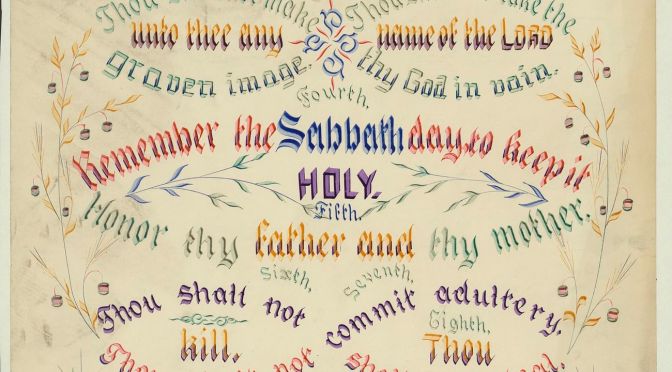
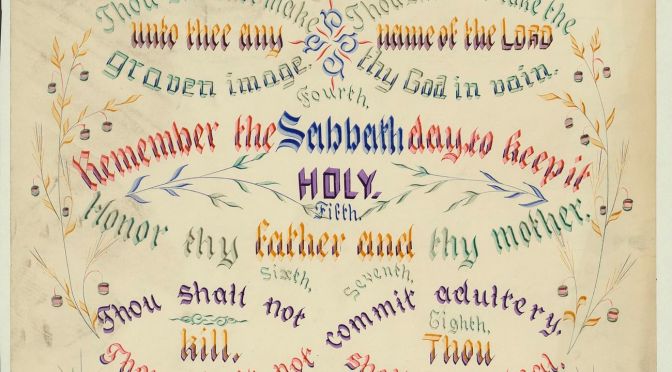
The tenth commandment deals with an “internal” sin, one that may be known only to God and the sinner. It warns against coveting: “Thou shalt not covet thy neighbour’s house, thou shalt not covet thy neighbour’s wife, nor his manservant nor his maidservant, nor his ox, nor his ass, nor any thing that is thy neighbour’s” (Exodus 20:17). Coveting is an evil desire that leads to other sins. James wrote, “But every man is tempted, when he is drawn away of his own lust, and enticed. Then when lust hath conceived, it bringeth forth sin: and sin, when it is finished, bringeth forth death” (James 1:14-15). Death is the ultimate result of coveting. Not every desire is sinful. The commandment gives a summary of basic categories of possessions, and condemns the sinful lusting for that which belongs to others.

The sin of coveting has long plagued mankind. The sin of Adam and Eve was not just in the taking of the forbidden fruit, but their desire to “be as gods, knowing good and evil” (Genesis 3:4). After their great victory at Jericho, God’s people were defeated at Ai, because of the covetousness of Achan who saw among the spoils of Jericho an expensive garment, silver and gold, which he coveted. He took them, and brought death upon the Israelites and his own family.

Many have fallen when they coveted. Ahab coveted Naboth’s vineyard, and lost his life. David coveted Uriah the Hittite’s wife, Bathsheba, and brought tremendous pain on himself, his family, and his kingdom. Paul spoke of the seriousness of covetousness: “What shall we say then? is the law sin? God forbid. Nay, I had not known sin, but by the law: for I had not known lust, except the law had said, Thou shalt not covet. But sin, taking occasion by the commandment, wrought in me all manner of concupiscence [covetous desires]. For without the law sin was dead” (Romans 7:8).

Covetousness, being a secret sin, is betrayed by actions. The life of the tax collector Zacchaeus betrayed his misplaced priorities, put right by his contact with Christ. Many show the hold covetousness has on them by where they place their treasure. Jesus said, “Lay not up for yourselves treasures upon earth, where moth and rust doth corrupt, and where thieves break through and steal: But lay up for yourselves treasures in heaven, where neither moth nor rust doth corrupt, and where thieves do not break through nor steal: For where your treasure is, there will your heart be also” (Matthew 6:19-21). Many times a covetous heart is revealed by a conversation that speaks only of money and materialism. Christians who cannot get over their worries may betray an attitude of covetousness, because the kingdom of God is not their first priority. Perhaps even worse, the attitude that “the end justifies the means” betrays a heart of covetousness. No doubt Demas tried to rationalize his sinful behavior. Paul lamented, “Demas hath forsaken me having loved this present world” (2 Timothy 4:10).

Paul warns: no covetous man “hath any inheritance in the kingdom of Christ and of God” Ephesians 5:5). Jesus focused on the heart, “for out of the heart proceed evil thoughts, murders, adulteries, fornications, thefts, false witness, blasphemies” (Matthew 15:19). Avoiding covetousness means trusting God and relying on His grace. 
WHAT DOES THE NINTH COMMANDMENT MEAN TO CHRISTIANS? — BOB PRICHARD

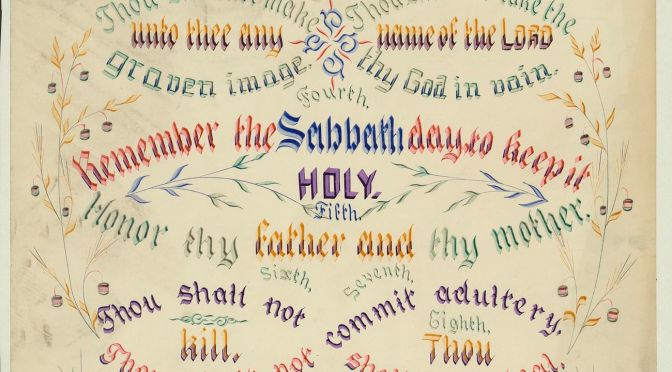
The ninth commandment states: “Thou shalt not bear false witness against thy neighbor” (Exodus 20:16). The essence of the commandment is honesty. It seems that many today believe that honesty is not only not the best policy, but unnecessary except in the most extreme circumstances. Our words do matter, though. The psalmist said, “Let the words of my mouth, and the meditation of my heart, be acceptable in thy sight, O LORD, my strength, and my redeemer”  (Psalm 19:14). The words of our mouths and the meditations of our hearts are inseparably linked. The enemies of Jesus did not use their tongues for truth. “O generation of vipers, how can ye, being evil, speak good things? for out of the abundance of the heart the mouth speaketh. A good man out of the good treasure of the heart bringeth forth good things: and an evil man out of the evil treasure bringeth forth evil things” (Matthew 12:34-35). 

The prohibition of bearing false witness is most literally the giving false witness in court. Lying under oath is always a serious crime. Paul told the Ephesians, “Wherefore putting away lying, speak every man truth with his neighbour: for we are members one of another” (Ephesians 4:25). Falsehood in court is a serious sin against one’s neighbor. For the Christian, lying hurts the very members of the body of Christ. 

Words falsely used can have devastating effect. Lies such as slander, designed to hurt others, are especially hurtful. Jesus criticized the Pharisees for their slander of John, the forerunner of His ministry. “For John came neither eating nor drinking, and they say, He hath a devil” (Matthew 11:18). Christ’s enemies would tell any lie to stop Him. “Now the chief priests, and elders, and all the council, sought false witness against Jesus, to put him to death” (Matthew 26:59). James warned that we must be kind and honest with our tongues: “Therewith bless we God, even the Father; and therewith curse we men, which are made after the similitude of God. Out of the same mouth proceedeth blessing and cursing. My brethren, these things ought not so to be” (James 3:9-10). To remain silent in the face of evil, withholding love and concern, also violates the sense of the command. 

Jesus called Satan the father of lies (John 8:43-44). When we lie because we are filled with hatred, or to make ourselves look better, or to avoid unpleasantness, or for financial gain, we place ourselves squarely in the camp of Satan. 

The words of the Christian must be words of truth. Jesus said, “I am the way, the truth, and the life: no man cometh unto the Father, but by me” (John 14:6). Solomon warned, “A false witness shall not be unpunished, and he that speaketh lies shall perish” (Proverbs 19:9). Revelation 21:8 warns: “But the fearful, and unbelieving, and the abominable, and murderers, and whoremongers, and sorcerers, and idolaters, and all liars, shall have their part in the lake which burneth with fire and brimstone: which is the second death.” Liars face the same fate as murderers and idolaters! Psalm 119, the longest chapter in the Bible has as its subject the love of God’s word and love of truth. These are fundamental to the life of the Christian!

WHAT DOES THE EIGHTH COMMANDMENT MEAN TO CHRISTIANS? — BOB PRICHARD

The eighth commandment, “Thou shalt not steal” (Exodus 20:15), is unusual among the Ten Commandments, in that almost everyone agrees that it should be followed. It is still violated very often, as society make allowances for those who want to “cut corners,” not realizing it is condoning stealing. Peter tells the Christian, “Let none of you suffer us a murderer, or as a thief, or as an evildoer, or as a busybody in other men’s matters” (1 Peter 4:15). Who wants to be known as a thief? 

The commandment deals with “things.” God has given us many blessings, including the right to have and enjoy things. Prohibiting thievery stresses this blessing. The early church experimented with the common holding of all things among the believers, as each “sold their possessions and goods, and parted them to all men, us every man had need” (Acts 2:44-45). The normal situation, however, has been for individuals to possess things. 

There is nothing wrong with having possessions, as long as the possessor understands that everything comes from God and we are merely stewards. Jesus often spoke of the need for us to be good stewards. “And the Lord said, Who then is that faithful and wise steward, whom his lord shall make ruler over his household, to give them their portion of meat in due season? Blessed is that servant, whom his lord when he cometh shall find so doing. Of a truth I say unto you, that he will make him ruler over all that he hath” (Luke 12:42-44).

Stealing is common today. Taking the property of others without just compensation, although sometimes legal, is stealing. The misuse and squandering of things, even if acquired honestly is bad stewardship, and thus stealing. Many believe that stealing by “creative bookkeeping,” false advertising, or by stealing through the computer is not really stealing, because “nobody gets hurt,” just the big corporation or government. These things are a clear violation of the intent of the eighth commandment, however. Even if no individual is harmed directly, it is still wrong. Even the frivolous wasting of resources or the miserly holding of resources, such as by Scrooge in Dickens’ A Christmas Carol, fits the definition of stealing. 

The Christian who considers stealing because of the pressures of life lacks faith. Jesus taught that we should trust God to provide as we pray, “Give us this day our daily bread” (Matthew 6:11). Christians are tempted to steal sometimes because they are self-centered, rather than being Christ-centered. The very essence of sin is to put our own desires above that of all others. Either Christ or self will rule the heart. If it is self, selfishness will follow. Another temptation to stealing comes from the natural laziness that so many have within them. Man too often wants the easy way out, and stealing offers the lure of gain without work. God expects us, however, to pray, work hard, and trust Him to provide. Jesus pleads for honesty. “Therefore all things whatsoever ye would that men should do to you, do ye even so to them: for this is the law and the prophets” (Matthew 7:12). Thinking of others will help us pursue the virtue of generosity, and avoid the sin of stealing.

WHAT DOES THE SEVENTH COMMAND MEAN TO CHRISTIANS?  — BOB PRICHARD

The message of the seventh commandment is one that modern man seems to have outgrown. The command, “Thou shalt not commit adultery” (Exodus 20:14), seems outdated in our sophisticated times. The idea of monogamous marriage seems stifling to many in an era of sexual freedom. Few realize, however, that this command opens the door to true sexual freedom and expression, and is liberating, rather than burdensome. 

The focus of scripture is not on preventing adultery as much as it is in developing fulfilling marriage. “Therefore shall a man leave his father and his mother, and shall cleave unto his wife: and they shall be one flesh” (Genesis 2:24). Marriage involves a commitment, both emotionally and physically, and when that commitment is made, the two so joined must remain committed. The seventh commandment also limits sexual intercourse to marriage, and thus forbids it to those who are unmarried. It is strictly a privilege of husband and wife. Sex is not wrong. It is God’s gift. He limits it, however, to the marriage relationship. When God’s gift is misused, calamity results. 

In the Old Testament era, some practiced polygamy. Although sometimes done for humanitarian reasons, such as the care of a widow, or of a brother’s wife, many such as Abraham, David, and Solomon reaped bitter fruit from the practice. Too many today practice “serial polygamy” by taking one mate after another, without considering the consequences. “Now the body is not for fornication, but for the Lord; and the Lord for the body. … Flee fornication. Every sin that a man doeth is without the body; but he that committeth fornication sinneth against his own body. What? know ye not that your body is the temple of the Holy Ghost which is in you, which ye have of God, and ye are not your own? For ye are bought with a price: therefore glorify God in your body, and in your spirit, which are God’s” (1 Corinthians 6:13b, 18-20). 

Jesus reprimanded the Pharisees, reminding them that adultery is a sin committed with the mind as well as the body. “Ye have heard that it was said by them of old time, Thou shalt not commit adultery: But I say unto you, That whosoever looketh on a woman to lust after her hath committed adultery with her already in his heart” (Matthew 5:27-28). Jesus considered fornication, or adultery, so serious that it is the one cause for divorce (Matthew 5:31-32; Matthew 19:3-19). 

Jesus came to seek and save the lost, and His ministry included offering forgiveness to those involved in sexual sin, such as the adulterous woman brought before Him. He showed her grace. “Neither do I condemn thee: go, and sin no more” (John 8:11). He balanced forgiveness with repentance and a desire to end sin. 

Fidelity in the marriage relationship is important, because it reflects the relationship that God wants to maintain with His people. The prophets equated the fall into idolatry with spiritual adultery. When man lusts after some of the gods of today, such as popularity, power, and sex, he commits spiritual adultery. All are subject to the lure of sin, so we must remain vigilant against all sin, especially the sin of adultery.

WHAT DOES THE SIXTH COMMANDMENT MEAN TO CHRISTIANS? — BOB PRICHARD

We may be living in the most violent time in history. There are more than a million violent crimes in the United States each year, nearly fifty thousand suicides and a million abortions. As minister Owen M. Weatherly commented, “The most crucial problem which men face today is their unfortunate habit of killing one another.” God spoke to Cain after he had murdered Abel, saying, “What hast thou done? the voice of thy brother’s blood crieth unto me from the ground” (Genesis 4:10) In contrast to the violence of today, the sixth commandment says: “Thou shalt not kill” (Exodus 20:13). 

Hebrew has at least ten words for killing. The word God chose for the sixth commandment is one rarely used, found only five times in scripture. It refers to the deliberate, violent, premeditated taking of a life, or murder. For this reason, most modern versions, such as the NIV or NASB translate the verse, “You shall not murder.” Jesus stressed that murder begins in the heart: “Ye have heard that it was said to them of old time, Thou shalt not kill; and whosoever shall kill shall be in danger of the judgment: but I say unto you, that every one who is angry with his brother shall be in danger of the judgment; and whosoever shall say to his brother, Raca, shall be in danger of the council and whosoever shall say, Thou fool, shall be in danger of the hell of fire” (Matthew 5:21-22).

Did this commandment prohibit all killing? This hardly seems possible, since the very next chapter commands killing under some circumstances. Exodus 21:12, “He that smiteth a man, so that he dieth, shall surely be put to death,” is only one of numerous passages that specify death for certain crimes. God did not contradict Himself, but merely clarified the law. While murder, the taking of the life of an innocent party is prohibited, there must be, at least in certain cases, situations in which the state is permitted, or even required to take life. Under these guidelines, the capital punishment of a convicted criminal could be permitted, while euthanasia and abortion, the taking of innocent life, are always wrong. The forbidding of murder really strikes at the roots of many sins that lead to murder, such as racism, greed, pride, lust, envy, and hatred. It is not practical for the state to pass laws against all of these sins, but the prohibition of murder certainly helps keep them in check. 

While the commandment commands a negative, “Thou shalt not kill,” there must also be implied the positive of preserving life. Jesus taught that we must love our neighbor as ourselves. That means that we will be peace loving, merciful, and caring to all. Paul reminds us, “For the whole law is fulfilled in one word, even in this: Thou shalt love thy neighbor as thyself. But if ye bite and devour one another, take heed that ye be not consumed one of another” (Galatians 5:14-15). In His Sermon on the Mount, Jesus warned that we are not to retaliate for the wrong doings of others (Matthew 5:38- 42), and that those seeking to please God will not hate others (Matthew 5:43-48).  Jesus gave us the “golden rule,” that “All things therefore whatsoever ye would that men should do unto you, even so do ye also unto them: for this is the law and the prophets” (Matthew 7:12)

WHAT DOES THE FIFTH COMMANDMENT MEAN TO CHRISTIANS? — BOB PRICHARD

“Honour thy father and thy mother: that thy days may be long upon the land which the LORD thy God giveth thee” (Exodus 20:12). With this commandment, there is a shift of emphasis from the preceding commandments. There is less direct emphasis on man’s relationship with God, and more on man’s relationship with man. This commandment is foundational for both children and adults, stressing the importance of learning authority, which must begin in the home. Without proper respect for parents and their authority in the home, there will not be proper respect for God and His authority. 

The root meaning of the word honor [honour KJV], in the original language, is “to be heavy, or burdensome.” It is a burden for those receiving the honor to bear it properly, as well as for the giver of honor to give it as it should be given. Parents have responsibility and authority to teach their children about God. This should not be a matter of conceit for the parents, however, but should be a matter of grave concern. Parents should carefully consider what they teach their children, and ask them to do, because the ultimate authority always remains with God. Children should never be asked or expected to do that which is contrary to God’s will. As the apostles said before the authorities, “We ought to obey God rather than men” (Acts 5:29). 

Parents should be recognized as a gift to us. Children should be thankful for the gift of life through their parents, and all of the good things done by parents for children. Parents deserve loyalty, even when they are less than perfect (we know that only God is perfect). Along with that loyalty and gratitude children give to parents, they also should show their love and concern. Although it might be technically possible for children to honor their parents without loving them, it is certainly not God’s ideal. God loves and cares for His children, and often expresses that through parents. Authority without love often destroys. As Paul said, “Ye fathers, provoke not your children to wrath: but bring them up in the nurture and admonition of the Lord” (Ephesians 6:4). Honor and love go hand in hand. Jesus said, “If a man love me, he will keep my words: and my Father will love him, and we will come unto him, and make our abode with him” (John 14:23). 

Paul speaks of this commandment, saying, “Honour thy father and mother; which is the first commandment with promise” (Ephesians 6:2). This commandment offers a promise of blessing. The well being of any nation rests on the well being of the home. If things are right in the home, they will be right in the nation. Home life has incredibly far reaching results. The nation that neglects the home is headed for trouble. 

Jesus modeled obedience to the Heavenly Father, and added richness to our understanding by stressing the love of God as Father. Many of the religious leaders of the day tried to get around their obligations to their parents, but Jesus stressed how important the family is, warning them that their neglect of their parents was “making the word of God of none effect” (Mark 7 :9-13). “A wise son maketh a glad father: but a foolish man despiseth his mother” (Proverbs 15:20).